Low Power Design:
The Energy-Saving Code of Electronic Products

HDMI, short for “High-Definition Multimedia Interface”, acts like a magical link that connects ultra-high-definition displays with various consumer electronics, personal computers, mobile devices, cars, and even commercial AV equipment. As a digital video/audio interface technology, its biggest highlight is the ability to transmit both audio and video signals simultaneously without the need for digital-to-analog or analog-to-digital conversion, making audio and video transmission more efficient and pure. Traditional analog interfaces, such as the commonly used VGA interface, not only require a separate audio line to connect sound but also suffer from significant signal attenuation over distance, leading to issues like blurriness and ghosting. While the DVI interface made progress in data transmission and display resolution and could transmit digital video signals, it still could not transmit audio, necessitating additional wiring for device connections. In contrast, the HDMI interface stands out due to its advantages. It simplifies the interconnections between devices and introduces intelligent features such as Consumer Electronics Control (CEC) and Extended Display Identification Data (EDID), making user operations more convenient. With just a press of the remote control, multi-device linked control can be achieved, truly enjoying a smart life.
The development history of HDMI resembles a technological evolution, with each version iteration embodying the engineers’ wisdom and relentless pursuit of an ultimate audio-visual experience. Looking back to December 2002, the HDMI 1.0 version was launched, pioneering the integration of a digital audio stream interface, undoubtedly a symbol of advancement and convenience compared to the DVI interface popular at the time in PC environments. It supports video streams from DVD to Blu-ray formats and introduces CEC functionality, making communication and control between devices easier, paving the way for intelligent control. Soon after, HDMI 1.1 followed, adding support for DVD audio, further enriching audio transmission formats to meet users’ demands for high-quality sound. In August 2005, HDMI 1.2 was released, which added support for SACD audio streaming, accommodating up to eight channels while significantly improving compatibility with computer devices, solving many issues present in HDMI 1.1, allowing HDMI interfaces to operate stably across more devices. In December of the same year, HDMI 1.2a was born, further refining CEC functionality and enhancing testing specifications, allowing users to control all home entertainment devices with a single remote, truly enjoying the convenience brought by smart homes. By May 2006, HDMI 1.3 made a stunning debut, achieving a single-link bandwidth of 340MHz, with data transmission soaring to 10.2Gbps, greatly expanding the supported color depth from 24-bit to 30-bit, 36-bit, and 48-bit, resulting in more natural and delicate color transitions, bringing images to life. It also supported 1080P and some less demanding 3D visuals, providing users with an initial 3D visual experience. In May 2009, HDMI 1.4 was released, which was highly influential at the time, supporting 1080/24p, 720/50p/60p 3D visuals, and 4K resolution, albeit limited to a maximum of 3840×2160 resolution and 30FPS frame rate due to bandwidth constraints. However, its newly added Audio Return Channel (ARC) functionality was significant, allowing TV audio to be returned via HDMI to the amplifier for output, simplifying audio connection lines. Additionally, the 100Mbps network transmission feature allowed users to share internet connections through HDMI, expanding the interface’s functional boundaries. Versions 1.4a and 1.4b primarily optimized 3D functionality, adding various broadcast 3D formats and supporting 1080/120p 3D visuals, enriching the 3D experience. In September 2013, HDMI 2.0 was launched, expanding bandwidth to 18Gbps, officially ushering in the “true 4K” era, supporting 3840×2160 resolution and a maximum frame rate of 60Hz, resulting in smoother and clearer images. Audio capabilities were greatly enhanced, supporting up to 32 channels and a maximum sampling rate of 1536kHz, providing users with an immersive multi-channel audio experience. Moreover, HDMI 2.0 is backward compatible with HDMI 1.x, ensuring that older devices can continue to function. Subsequent HDMI 2.0a and 2.0b versions added HDR support, enhancing the brightness of bright areas and darkness of dark areas, with rich details better reflecting the visual effects in real environments. In January 2017, HDMI 2.1 was launched, with interface bandwidth suddenly increasing to 48Gbps, supporting video resolutions up to 7,680×4,320/60Hz (8K@60Hz) or higher frame rate images of 4K@120Hz, providing an extremely smooth viewing experience for both HD movies and gaming. It also supports new dynamic HDR technology, further enhancing contrast and light-dark layer performance based on the light distribution of each scene or even each frame, with colors appearing more realistic. In terms of sound, HDMI 2.1 supports the new eARC technology, allowing high-bitrate 3D surround sound audio to be transmitted directly to devices, making users feel as if they are in a live music or movie scene. The most recent update was in 2022, with the introduction of HDMI 2.1a, which optimized HDMI 2.1, further enhancing compatibility and stability, ensuring reliable transmission of ultra-high-definition audio and video signals in various complex environments, providing users with a more reliable audio-visual experience.
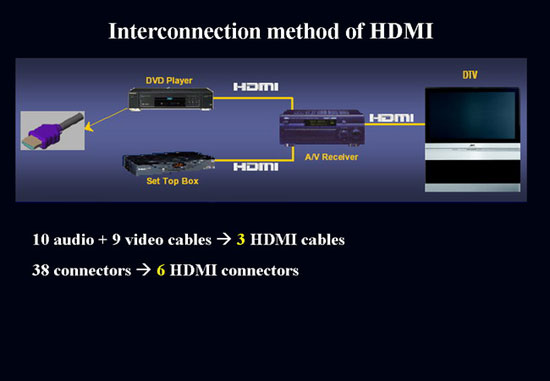
HDMI interfaces have strong compatibility and are widely used in various devices such as TVs, monitors, projectors, computers, and gaming consoles. Whether you want to connect a computer to a monitor for work, link a game console to a TV for gaming, or use a projector to play high-definition movies, HDMI interfaces can easily achieve interconnectivity between devices. HDMI interfaces also come with a series of intelligent features that make your operations more convenient. For example, the Consumer Electronics Control (CEC) feature allows you to control multiple HDMI CEC-enabled devices with a single remote. When you want to watch a movie, just press the play button on the TV remote, and the connected Blu-ray player, amplifier, and other devices will automatically work together, saving you from the hassle of operating each device individually. Additionally, the Extended Display Identification Data (EDID) function allows devices to automatically recognize and adapt to the best display mode, eliminating the need for manual adjustments to resolution, refresh rate, and other parameters, truly achieving plug-and-play, saving you time and effort. The compact size of HDMI interfaces occupies less space on devices compared to some traditional interfaces, allowing for thinner and more portable electronic device designs.
Looking to the future, HDMI technology will continue to innovate and expand the boundaries of audio and visual experiences. As 8K and higher ultra-high-definition display technologies gradually become popular, HDMI will further enhance bandwidth to meet the massive data transmission needs, ensuring that image details are crystal clear; high refresh rates will also become standard. Dynamic HDR technology will continue to advance, presenting richer light and dark details and vibrant colors, perfectly restoring real light and shadow. In terms of multi-device interconnectivity, HDMI is expected to deeply integrate with the Internet of Things, achieving seamless collaboration between smart home devices and allowing for one-click control of the entire home’s audio-visual entertainment. At the same time, it may closely combine with cutting-edge technologies such as virtual reality and augmented reality, opening the door to an immersive digital world for users, creating unprecedented interactive experiences, and continually leading the global audio-visual industry to new heights.
For more details, please contact:

China’s well-known semiconductor agent and solution design provider
Dasheng Tang Electronics Co., Ltd.
(Shenzhen, Guangzhou, Beijing, Shanghai, Xi’an, Suzhou, Hong Kong)
Hotline: 400-662-1-662
Website: www.szdst.com.cn

WeChat ID丨DST-EIEC
丨Dasheng Tang Electronics
Previous Highlights
2024’s Most Profitable Semiconductor Stocks! Have You Bought Them (Part 1)?
Domestic Photoresist: A Long Way to Go
Domestic EDA: Steadfast Progress
Chinese People: A Significant Force in Top Chip Companies
PMIC Manufacturers: Performance Rebounds
The History, Development, and Future of German Semiconductors
November Semiconductor Investment and Financing Overview
Overtaking in the Bend: A Review of Domestic Semiconductor Mergers and Acquisitions
RISC-V Has Great Development Potential
Overview of Semiconductor Listed Companies in 2024