








Learning Together
Grateful for You
In the fascinating world of coding and research, we can gain many unique insights. From the perspective of algorithm optimization, it is like carefully polishing a piece of art; each simplification of code and improvement of algorithms is akin to removing impurities, making it more efficient. This inspires us to continuously examine our methods in life and work, seeking optimization opportunities to enhance efficiency. For instance, when dealing with complex data, skillfully utilizing data structures and algorithms can transform chaotic information into an orderly format, reminding us to be adept at finding patterns and summarizing methods when faced with complex problems.

Overview

Wind Power and Radar in Conflict? Radar Signal Simulation to the Rescue
In an open wind farm, the massive blades of wind turbines rotate against the wind, continuously converting wind energy into electrical energy; not far away, a radar station’s antenna is constantly rotating, vigilantly monitoring the airspace or maritime area—these two seemingly unrelated “energy and security guardians” often find themselves in a “signal war”.
The metal blades of wind turbines reflect radar signals, acting like a “moving interference source” that can cause the radar to mistakenly identify the blades as aircraft or vessels, or directly obscure the signals of real targets. To solve this problem, wind turbine radar signal simulation technology has emerged. It is like a “preliminary battlefield simulation” that allows engineers to understand the impact of turbines on radar before construction, resolving conflicts at the source.
1. Understanding: Why Do Wind Power and Radar Clash?
The working principle of radar is simple: it emits electromagnetic waves, which reflect back after encountering a target. The radar analyzes the reflected signals to determine the target’s position, speed, and shape. Wind turbines, however, are “natural interference sources” for radar, with two core issues:
Strong Reflected Signals:The turbine blades and towers are made of metal, which strongly reflects radar waves, and the blades can rotate several times per second, causing the reflected signals to appear as “rapidly moving false targets,” resulting in a multitude of “phantoms” on the radar screen;
Wide Interference Range:A wind farm often has dozens or hundreds of turbines, creating a “signal interference zone” that can cover tens of kilometers, directly affecting the normal operation of civil aviation radar, meteorological radar, and even military radar.
In the past, this issue was often addressed through “post-remediation”—for example, adjusting radar parameters or applying absorbing materials to turbine blades, but these methods are costly and unstable. Radar signal simulation, however, addresses the problem proactively, resolving interference issues during the turbine design and wind farm site selection stages.
2. Core Principle: Using Digital Technology to “Reproduce” the Signal Interaction Between Radar and Turbines
Wind turbine radar signal simulation essentially builds a “virtual testing ground” in a computer, replicating the interaction process between turbines, radar, and electromagnetic waves in a 1:1 manner. This process may sound complex, but it can be broken down into three key steps, much like filming a “signal documentary”.
Step 1: Create Digital Models for the “Main Characters”
First, both the wind turbine and radar need to be “brought” into the computer. For the turbine, it is essential to model the shape, size, and material (whether aluminum alloy or composite) of the blades, as well as accurately simulate the rotation trajectory of the blades—such as every angle change from 0° to 180°. For the radar, core parameters such as its working frequency (whether it is the S-band used for civil aviation or the C-band used for meteorology), transmission power, and detection range must be set. The more precise these models are, the more reliable the simulation results will be.
Step 2: Simulate the Entire Process of “Signal Travel”
This is the core of the simulation, where the journey of radar waves from emission to reflection is fully restored: radar emits electromagnetic waves → electromagnetic waves travel through the air to the turbine → part of the electromagnetic waves are reflected by the blades, while part passes through the gaps in the blades → the reflected electromagnetic waves return to the radar. During this process, the simulation software calculates every detail—such as the strength of the reflected signal when the blades are at 30°; how the reflection direction changes when electromagnetic waves encounter the uneven surface of the blades.
Step 3: Analyze Signal Data to Identify the Source of Interference
After the simulation, the computer outputs a plethora of “signal data”: what interference patterns will appear on the radar screen, the frequency and strength of these interference signals, and how much they will affect the radar’s ability to identify targets. Engineers can analyze this data to accurately pinpoint the source of interference—whether it is the strong reflection from the metal edges of the blades or a clash between the rotation frequency of the blades and the radar detection frequency.
3. Key Value: From “Blind Response” to “Precise Resolution”
Radar signal simulation is not just “theoretical discussion”; it directly addresses practical issues in wind farm construction and radar operation, bringing tangible value:
Reducing Construction Costs:In the past, site selection for wind farms could lead to “pitfalls”—only to discover interference with radar after construction, necessitating costly demolition or modification, often amounting to tens of millions. Now, through simulation, site suitability can be assessed in advance, avoiding losses at the source;
Optimizing Turbine Design:Engineers can use simulations to test the interference effects of different blade shapes and materials, such as designing the blade edges to be curved or using absorbing composite materials, reducing interference without affecting power generation efficiency;
Ensuring Radar Safety:For critical areas such as civil aviation and military radar, simulations can help develop “anti-interference plans,” such as adjusting the radar’s signal processing algorithms to filter out turbine interference signals and accurately capture real targets.
4. Real-World Applications: These Scenarios Depend on It
Today, radar signal simulation has become a “standard technology” in the wind power and radar industries, playing a crucial role in various scenarios:
Offshore Wind Power Projects:Offshore wind farms are often near port radars or aviation route radars; simulations can determine the optimal height and spacing of turbines to avoid interfering with ship navigation and aircraft takeoff and landing;
Wind Power Near Military Exclusion Zones: Military radars are extremely sensitive to interference; simulations can ensure that wind farms meet energy demands without affecting military reconnaissance and early warning;
Upgrading Old Radars:For some radars that have been in operation for many years, analyzing the interference characteristics of turbines through simulations can lead to targeted upgrades of radar systems, which is more economical than building new radars.
5. Future Trends: Making Simulation More Efficient and Intelligent
As the scale of wind power expands and radar technology upgrades, radar signal simulation continues to evolve, with three important directions for the future:
Real-Time Simulation:Current simulations are mostly “pre-calculated”; in the future, “real-time deduction” will be achieved—during wind farm operation, when the blade posture changes, the simulation system can immediately calculate the changes in interference, and the radar can adjust parameters synchronously;
Deep Integration of AI:Using artificial intelligence algorithms to optimize simulation models, allowing computers to automatically learn interference patterns in different scenarios, significantly improving simulation efficiency and accuracy;
Multi-Scenario Joint Simulation:Not only simulating the interaction between turbines and radars but also incorporating natural factors such as wind speed and precipitation, for example, simulating the dual impact of rain on radar signals and turbine reflections during heavy rain, making results closer to reality.
Wind energy is the “main force” of clean energy, and radar is the “eye” of security and transportation, while radar signal simulation is the “behind-the-scenes coordinator” that allows these two “main characters” to coexist harmoniously. It uses digital technology to resolve conflicts, ensuring energy security while safeguarding airspace and maritime safety—this is a vivid embodiment of technology serving life.





Operational Results

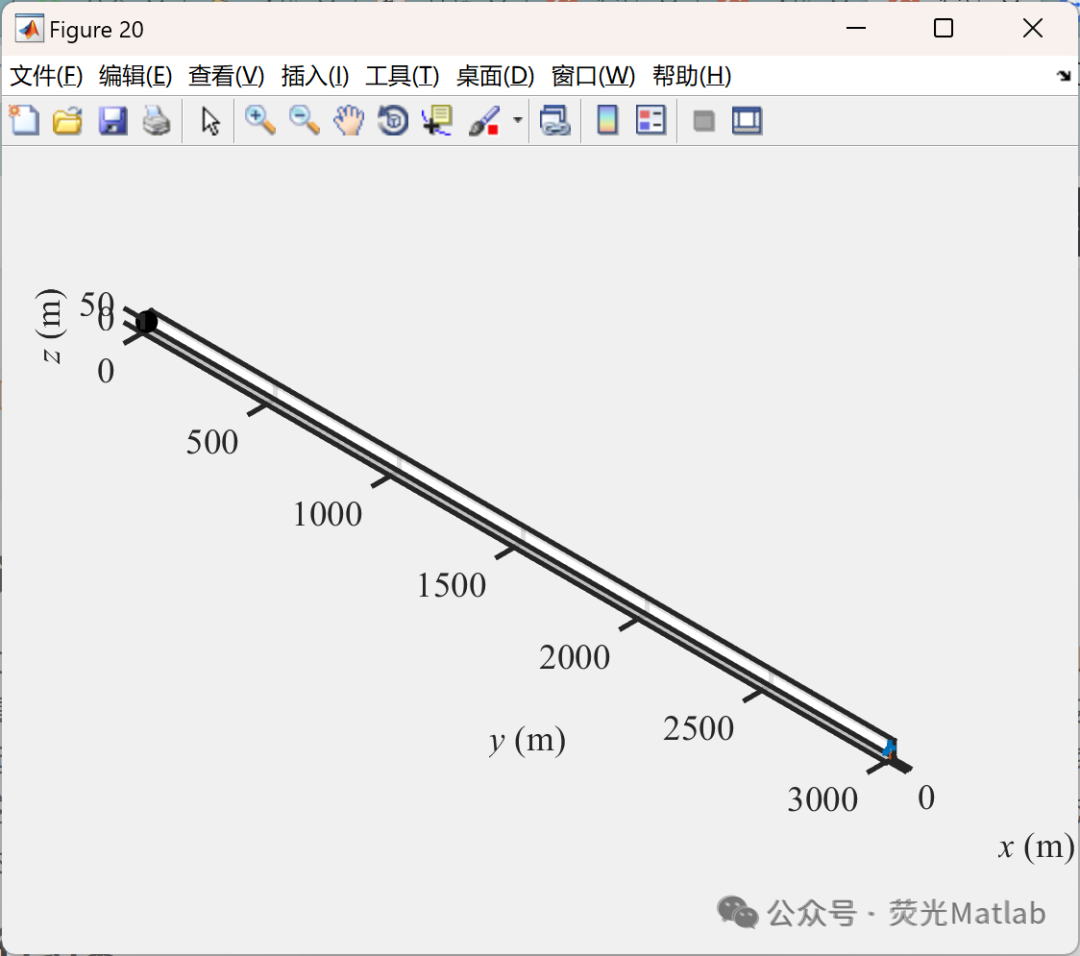
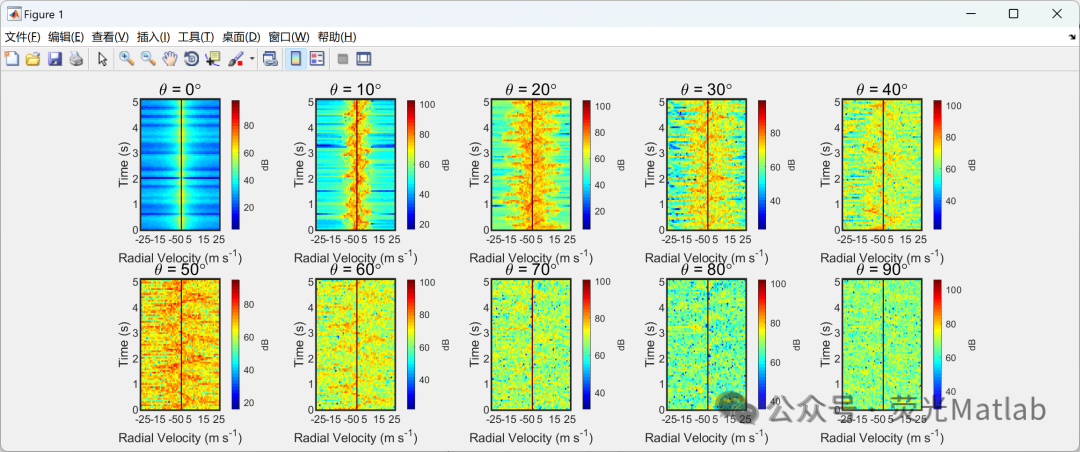


Sample Code

%% Radar
c = 2.997925e8; % Speed of light
f0 = c/0.1035; % 10.35 cm Wavelength %% 470e6;
f = f0;
M = 64; % # of Pulses
PRF = 1000; % Hz
PRT = 1/PRF; % s
SNR_dB = 50;
N = 1;


%% Turbine
blade_rpm = 25;
blade_speed_deg = blade_rpm*360/60; % 30;
xy_off = [0 0];
no_cpis = 80;
d_radar = 3e3;
plot_sim_setup = 1;


%% Nyquist
lambda = c/f0;
va = lambda*PRF/4;
dv = 2*va/M;
vaxis = -va:dv:va-dv;
taxis = (0:(no_cpis-1))*M*PRT;

References

[1] Wei Weibin, Lan Xuhui, Peng Siyong. A Method for Evaluating the Timeliness of Air Defense Early Warning Intelligence Based on Radar Detection Performance [J/OL]. Tactical Missile Technology: 1-7 [2024-02-19]. https://doi.org/10.16358/j.issn.1009-1300.20230154.
[2] Zhu Wangjiang, Guo Jianwei, Zhang Jiguang, et al. A Single-Stage Anchor-Free Optimization Network for Laser Radar Target Detection [J/OL]. Journal of Computer-Aided Design and Graphics: 1-8 [2024-02-19]. http://kns.cnki.net/kcms/detail/11.2925.TP.20240205.1024.004.html.
[3] Xiong Ying, Xia Wei, Wang Lin. Overview of Foreign Missile Defense Development in 2023 [J/OL]. Tactical Missile Technology: 1-10 [2024-02-19]. https://doi.org/10.16358/j.issn.1009-1300.20240502.
Some content in this article is sourced from the internet, and references will be noted or cited as references. If there are any inaccuracies, please feel free to contact us for removal.

Scan to contact us!