In underground coal mines, precise monitoring of methane concentration is essential for ensuring safety. The emergence of laser methane sensors is driving gas monitoring from a simple ‘presence’ assessment to a new stage of ‘precise perception’.
In the field of coal mine safety, gas explosions have always beenone of the deadliest safety threats. When the concentration of methane in the air reaches 5%-16%, it can explode upon encountering an ignition source. Traditional catalytic combustion sensors are highly susceptible to environmental interference and have high false alarm rates, while laser methane sensors, based onTunable Diode Laser Absorption Spectroscopy (TDLAS) technology, can accurately identify methane molecules, significantly improving monitoring accuracy and reliability.
Technical Breakthrough: How Lasers ‘Identify’ Gas Molecules
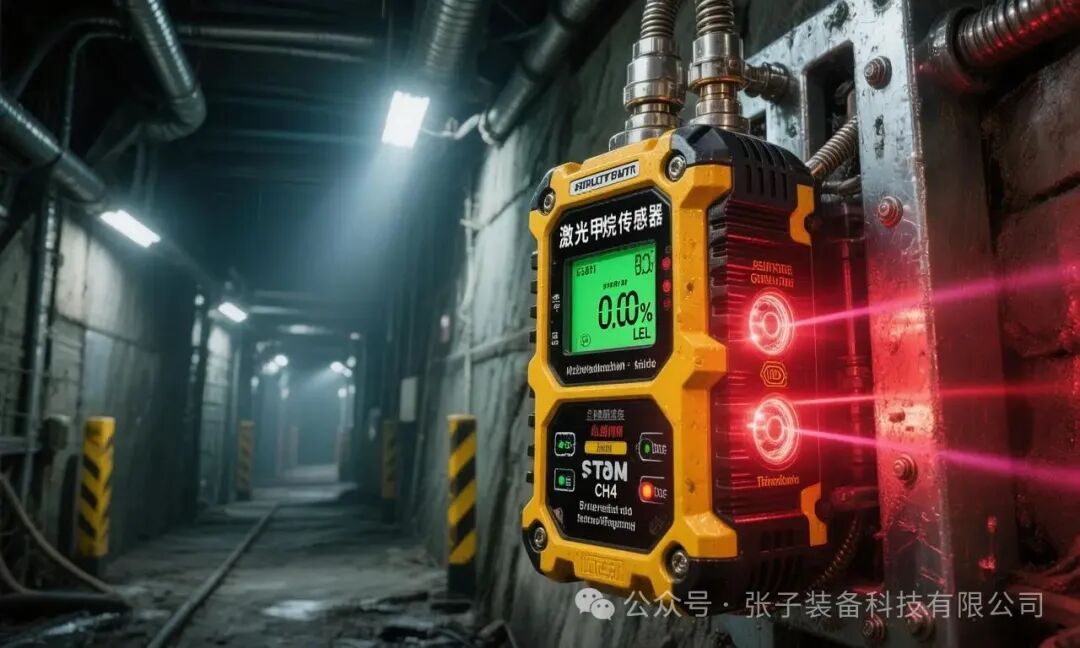
The core of the laser methane sensor isspectrum absorption analysis technology. The sensor emits a beam of laser at a specific wavelength (usually 1653.7nm). When the laser passes through the gas to be measured, methane molecules absorb specific wavelengths of light energy like ‘recognition fingerprints’, leading to a reduction in laser intensity. By detecting the degree of attenuation, the methane concentration can be accurately calculated.
Key technological breakthroughs are reflected in the precision manufacturing of the laser. China has successfully developed a 1.65μm high-performance InGaAs/InGaAsP strain multi-quantum well distributed feedback laser chip, breaking the foreign technology monopoly and providing core light source support for laser methane sensors. This type of laser has a narrow linewidth and high stability, allowing for precise matching with the absorption spectral lines of methane molecules.
Compared to traditional catalytic combustion sensors, laser methane sensors have anintrinsically safe advantage. They uselow-power lasers, which have extremely low energy and will not trigger safety incidents even in explosive environments, making them very suitable for underground coal mine environments.
Performance Advantages: Revolutionary Improvements of Laser Sensors
1. Significant Improvement in Accuracy and Stability
The measurement accuracy of laser methane sensors can reach±0.05%CH₄, far exceeding the ±0.1%CH₄ of traditional catalytic sensors. Based on optical principles, it is not affected by catalyst aging or poisoning,with minimal zero drift, significantly improving long-term stability.
2. Enhanced Anti-Interference Capability
Laser methane sensors are insensitive to common undergroundinterfering gases such as hydrogen sulfide and sulfur dioxide, effectively avoiding false alarms. Additionally, their special optical design can effectively resist the effects of moisture and dust, adapting to the harsh underground coal mine environment.
3. Optimized Lifespan and Maintenance Cycle
Due to the absence of easily worn catalytic components, the lifespan of laser methane sensors can reach5-10 years, more than double that of traditional sensors (2-3 years). The calibration cycle has been significantly extended from the traditional 15 days to a maximum of 12 months, reducing the number of calibrations by 22 times per year and greatly lowering maintenance costs.
4. Faster Response Speed
The response time of laser methane sensors is generally within20 seconds, allowing for quicker detection of gas exceedance situations, providing valuable time for emergency response. This is particularly important in areas with significant gas outburst changes, such as mining faces.
Innovative Design: Addressing Underground Monitoring Pain Points
1. Enhanced Optical Path Design
The new laser methane sensor adoptsspiral optical path groove design, allowing the laser to undergo50-60 reflections before reaching the detector, significantly increasing the optical path. Compared to traditional designs (2-3 reflections), this greatly enhances detection sensitivity and accuracy.
2. Intelligent Self-Diagnosis Function
The modern laser methane sensor integratestemperature sensors, thermistors, and semiconductor temperature controllers, enabling real-time monitoring of its own status, achieving self-diagnosis and temperature compensation to ensure accurate and reliable measurement results.
3. Wireless Transmission and Remote Monitoring
The laser methane sensor supports wireless transmission, with a communication distance of up to200 meters, and can operate continuously forover 30 days on a single charge. This not only avoids the difficulties of wiring but also enables real-time remote data transmission and monitoring.
Application Scenarios: Comprehensive Safety Assurance for Mines
1. Real-time Monitoring in Mining Faces
The mining face is the area with the highest gas outburst. Laser methane sensors can monitor changes in methane concentration in real-time, providing safety assurance for mining operations. Their rapid response characteristics can issue timely warnings to prevent gas accumulation beyond limits.
2. Electromechanical Chambers and Return Air Passages
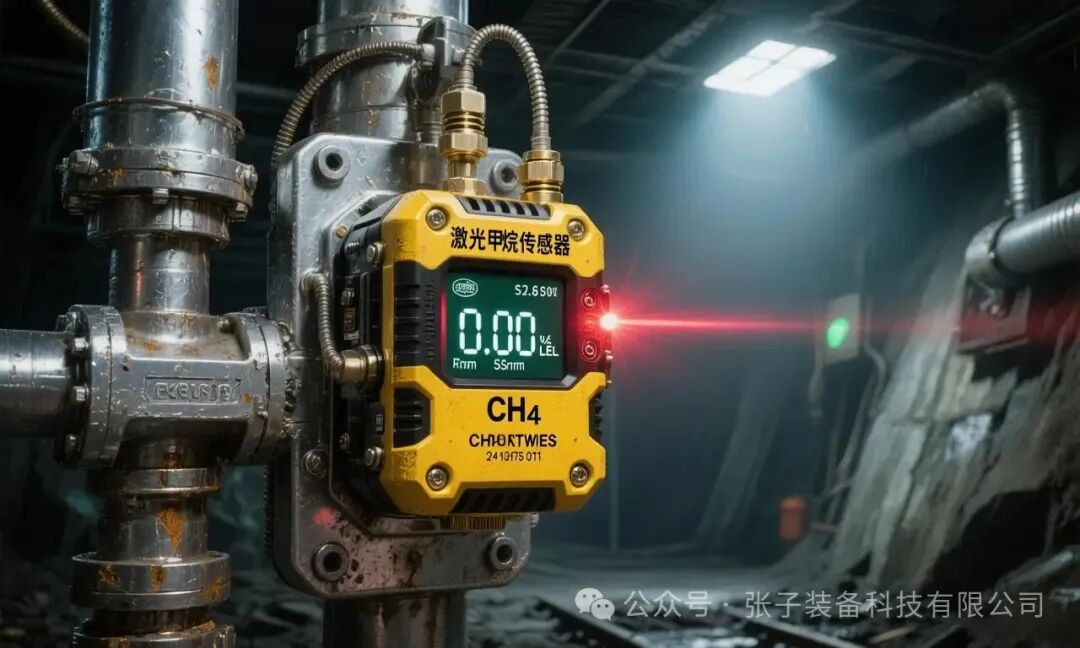
In areas concentrated with electromechanical equipment and return air passages, laser methane sensors continuously monitor the environmental methane concentration, assess the effectiveness of the ventilation system, and prevent gas accumulation. Their long-term stability ensures the continuity and reliability of monitoring data.
3. Goaf and Blind Tunnels
These areas have poor ventilation conditions and are prone to gas accumulation. Laser methane sensors can timely monitor gas outburst situations to prevent accidents. Their high-precision measurements provide reliable data support for safety management.
Future Outlook: Development Towards Intelligence and Multifunctionality
Laser methane sensors are developing towardsmulti-functional integration. In the future, sensors will not only detect methane but also monitor various gases such as carbon monoxide and ethane, providing more comprehensive environmental safety information.
Intelligent diagnosis and predictive maintenance is another important trend. Sensors will have self-diagnosis capabilities, predicting their performance degradation and achieving predictive maintenance. Additionally, by connecting to cloud platforms, they will enable deep data mining and intelligent analysis.
With the advancement of intelligent construction in mines, laser methane sensors will integrate with other safety monitoring systems to form acomprehensive and three-dimensional safety protection network, providing a more solid guarantee for safe production in mines.
With policy promotion and technological advancements, laser methane sensors are expected to achieve widespread adoption within three years, ensuring safety in coal mine production.