For more in-depth information and reports on the sensor industry, and to learn about sensor technology, sensor testing technology, IoT sensor technology, and other sensor knowledge, please follow the Sensor Expert WeChat public account and set it as a star to view past content.
A level sensor is a device used to monitor, maintain, and measure the level of liquids. Once the liquid level is detected, the sensor converts the sensed data into an electrical signal. Level sensors are primarily used in manufacturing and the automotive industry, but they can also be found in many household appliances, such as ice makers in refrigerators, washing machines that need to prevent overflow when the water level is too high, water heaters that need to automatically refill when the internal tank level is too low, and toilets that need to maintain water in the tank for leak detection or level recognition.
Functional Characteristics of Level Sensors:
1. Good stability, with full-scale and zero-point long-term stability reaching 0.1% FS/year. Within the compensated temperature range of 0 to 70 °C, temperature drift is less than 0.1% FS, and below 0.3% FS across the entire allowable operating temperature range.
2. Equipped with reverse polarity protection and current limiting protection circuits, the transmitter will not be damaged if the positive and negative terminals are connected incorrectly during installation, and in case of anomalies, the transmitter will automatically limit to within 35 mA.
3. Solid-state structure with no moving parts, high reliability, and long service life.
4. Easy installation, simple structure, economical, and durable.
Main Types of Level Sensors:
Ultrasonic Level Sensors: Used to detect the content and volume of viscous liquid substances. They operate by generating audio waves in the frequency range of 20 to 200 kHz and then reflecting these waves back to the transducer. The response of ultrasonic sensors is affected by turbulence, pressure, humidity, and temperature. Additionally, the transducer must be properly positioned to achieve better response. They can be used to control levels in mining and powder, food and beverage industries, as well as in chemical processing.
Photoelectric Level Sensors: Used to detect liquids, including stable substances, the interface between two immiscible liquids, and the presence of sediments. Their operation is based on changes in the transmission of infrared light emitted by infrared LEDs. By utilizing high-energy infrared diodes and pulse modulation methods, interference in light generation can be reduced. On the other hand, photoelectric level sensors use high-intensity lasers that can penetrate dusty environments and detect liquid substances. They are commonly used in applications such as leak detection and tank level measurement.
Microwave Optical Sensors: This type of sensor is suitable for various temperature, pressure, dirty, and humid environments, as microwaves can easily transmit energy in these conditions without involving air molecules. Microwave optical sensors can detect conductive water and metallic substances. Measurements are conducted using time-domain or pulse reflection methods. They are typically used in applications involving steam, humidity, and dusty environments, and are also used in systems with varying temperatures.
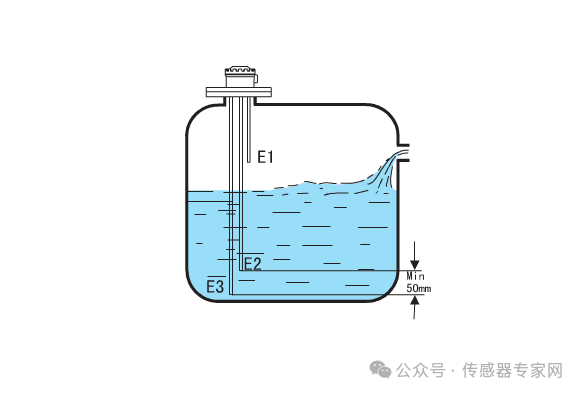
Capacitive Level Sensors: Utilize the capacitance of capacitors as the principle for level measurement. Equipped with three types of electrode sensing (main electrode/ground electrode/reference electrode), they can measure in corrosive liquids, conductive/insulating tanks, and various environments with changes in the dielectric constant of liquids. Depending on the application, integrated or separate configurations of the main electrode, ground electrode, and reference electrode can be selected. Capacitive level sensors are widely used in industries such as chemical, power, metallurgy, food, medicine, and papermaking.
Starred content = content you care about, according to the WeChat public account recommendation principle, if you do not set the Sensor Expert WeChat public account homepage as a star, you will not be able to receive the latest information in the sensor industry in a timely manner!
Source: Huanghua Electronic Components IC Supplier
Disclaimer: This article is reproduced for the purpose of conveying more information. If there are any errors in source attribution or infringement of your legal rights, please contact us, and we will promptly correct or delete it. Thank you.
If you have submission or interview needs, please send an email to:[email protected].Recommended Reading:
- China’s Sensors Depend on You! Summary of Sensor Research Information from 30 Top Universities
- Finally Understood, Modern Warfare is All About Sensors
- China’s Chip Tycoon Actually Comes from Sensors
- Waking Up to Find That Chinese Companies Can No Longer Design Sensors?!