Basic Information
Journal: Experimental Technology and Management
Publication Date: March 2022
DOI: 10.16791/j.cnki.sjg.2022.03.038

1
Abstract
Abstract
An exploratory experiment suitable for undergraduate students in environmental monitoring, environmental biology, and environmental soil science has been designed—characterizing the biological toxicity of polluted soil using a Magnetic Nanobacterial Sensor (MNPs-P.phosphoreum biosensor). The experiment includes the synthesis of the MNPs-P.phosphoreum biosensor, the response measurement of the biosensor to HgCl2 in polluted soil, and the characterization of biological toxicity in heavy metal contaminated soil. This experiment can enhance students’ experimental skills and deepen their understanding of biological detection in environmental biology and monitoring, allowing them to intuitively experience the stress responses of organisms to heavy metal contaminated soil, thus stimulating their interest in cutting-edge knowledge in environmental soil science, environmental microbiology, and environmental toxicology.
2
Background
Research Background
Heavy metals and organic pollutants in contaminated soil can cause comprehensive biological toxicity, posing serious threats to human health and ecosystems. With increasing attention to soil biological toxicity issues, accurately detecting the biological toxicity of complex contaminated soils with multiple pollutants has become a research hotspot in the environmental field. Traditional analytical chemistry methods primarily determine pollutant concentrations and use models to calculate biological toxicity, but these methods have significant limitations: pre-treatment processes such as chemical leaching can destroy the original physicochemical properties of pollutants, leading to an inability to accurately reflect the actual biological toxicity of the soil; especially when multiple pollutants exhibit synergistic or antagonistic effects, models often struggle to accurately quantify their combined toxic effects. Therefore, developing methods that can directly and rapidly characterize biological toxicity is of great significance. Microbial detection methods, which directly reflect the biological effects of pollutants, have received widespread attention in recent years. Among them, the luminescent bacteria method represented by Photobacterium phosphoreum has been applied to wastewater toxicity detection and has formed national standards due to its low cost, high sensitivity, and strong environmental adaptability. To further improve the accuracy and convenience of detecting biological toxicity in polluted soil, researchers have developed the Magnetic Nanobacterial Sensor (MNPs-P.phosphoreum biosensor). This sensor combines magnetic nanomaterials with luminescent bacteria through electrostatic self-assembly, allowing it to directly interact with soil diluents under an external magnetic field and achieve non-destructive separation, avoiding interference with soil properties from traditional methods, thus more accurately characterizing the comprehensive biological toxicity of pollutants. This technology not only helps promote the development of the environmental monitoring field but also provides a platform for undergraduate students in environmental majors to engage with cutting-edge technology. By designing relevant teaching experiments, students can intuitively understand the toxic effects of heavy metal pollution on organisms, master the basic principles and operations of biological detection, and stimulate their interest in research in environmental soil science, microbiology, and toxicology, laying a foundation for future work in environmental research and monitoring.
3
Key Conclusions
Experimental Steps
-
Preparation of Magnetic Nanobacterial Sensor
Obtain an appropriate amount of bacteria from the culture medium, wash three times with deionized water, and resuspend in water to prepare a bacterial suspension. Introduce a stable MNPs suspension into the bacterial suspension and vortex for 15 minutes to ensure sufficient binding of the bacteria to the MNPs. Use a permanent magnet to separate the bacteria coated with MNPs from the unbound bacteria, resulting in magnetized bacteria. Wash the magnetized Photobacterium phosphoreum three times with water and resuspend in a 3% NaCl solution for storage.
-
Determination of Heavy Metal Contaminated Soil Samples Using MNPs-P.phosphoreum Biosensor
Take soil samples, dilute them at a 10:1 soil-to-water ratio, and add the stored bacterial solution, applying an external magnetic field for separation. In the first column of a 96-well plate, add 3% NaCl solution as a control group, setting up three parallel samples. Starting from the second column, add standard solutions of HgCl2 soil samples, each column with a different concentration, adding 200 μL of the test solution to each well with a pipette, gently mixing before taking. Cover the plate and incubate at 37°C for 15 minutes, then place it in a microplate reader for 60 minutes to measure luminescence intensity. By detecting a series of standard samples of mercuric chloride soil and plotting a standard curve, the relative luminescence intensity of the sample corresponds to the concentration of mercuric chloride, indicating its acute toxicity equivalent, expressed in mg/L HgCl2.
-
Data Processing
All experiments set up three parallel groups, calculating their average values, standard deviations, and relative luminescence intensity ((luminescence intensity of the experimental group/luminescence intensity of the control group) × 100%). The relative luminescence intensity reflects the acute toxicity level of the portion of the soil sample that can be effectively utilized by the magnetic nanobacterial sensor. A lower relative luminescence intensity indicates a stronger acute toxicity of the sample being tested. Under the same toxicity level conditions, a lower relative luminescence intensity indicates a higher sensitivity of the sensing cells.
4
Important Charts
Experimental Principle
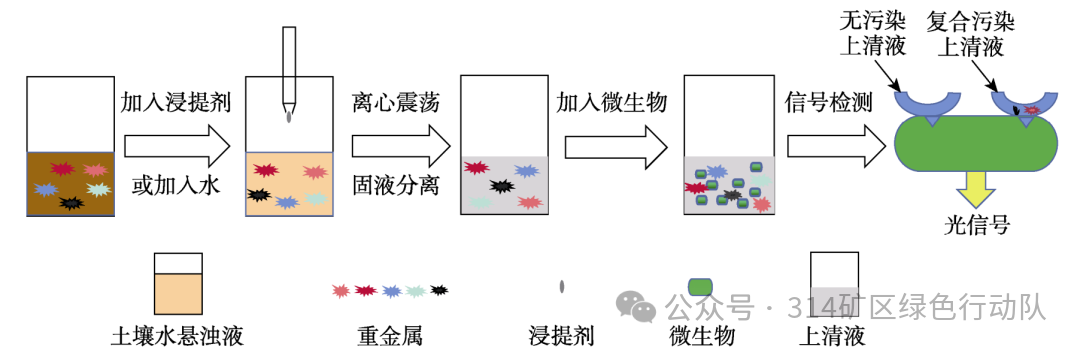
Figure 1: Diagram of Microbial Detection Method
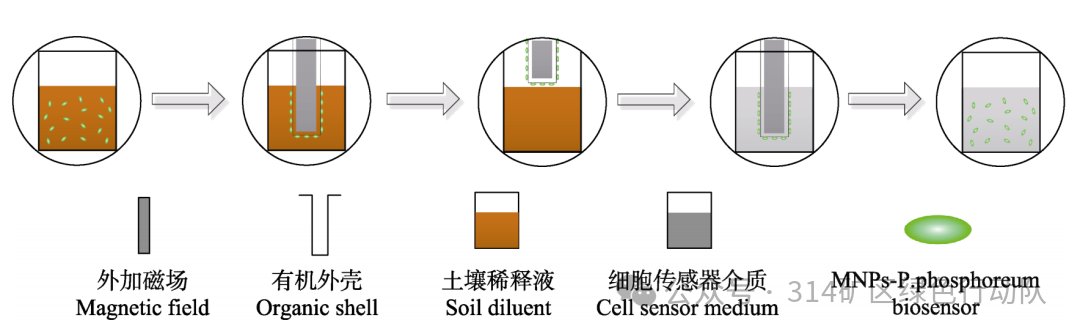
Figure 2: Principle of Characterizing Comprehensive Biological Toxicity of Polluted Soil Using Magnetic Nanobacterial Sensors
5
Conclusion
Conclusion
The use of luminescent bacteria to characterize the comprehensive biological toxicity of heavy metal polluted soil has received widespread attention in various fields such as environmental monitoring and pollutant toxicity assessment. Limited by traditional leaching and extraction methods, it is inevitable that the physicochemical properties of the soil are damaged during the transfer process, thus reducing the accuracy of detection results. Utilizing magnetic materials to magnetize bacteria or cells and directing the movement of the sensor with an external magnetic field is a new approach to solving this problem. This experiment not only enhances students’ basic experimental skills but also deepens their understanding of cutting-edge technologies in environmental biological detection, stimulating professional interest. The implementation of this experiment in the undergraduate experimental courses of environmental science and engineering at our university has achieved good teaching results.

WeChat ID丨314 Green Action Team
School of Chemistry and Environmental Engineering, China University of Mining and Technology (Beijing), 314 Research Group
Written by / Shi Kunxiao, Images by / Shi Kunxiao
Editor / Guo Hongwei
Executive Editor / Zhang Kai