Connectivity is evolving from a cost center to a value creation center.
ANNUAL REPORT
Insights: Connectivity as a Service

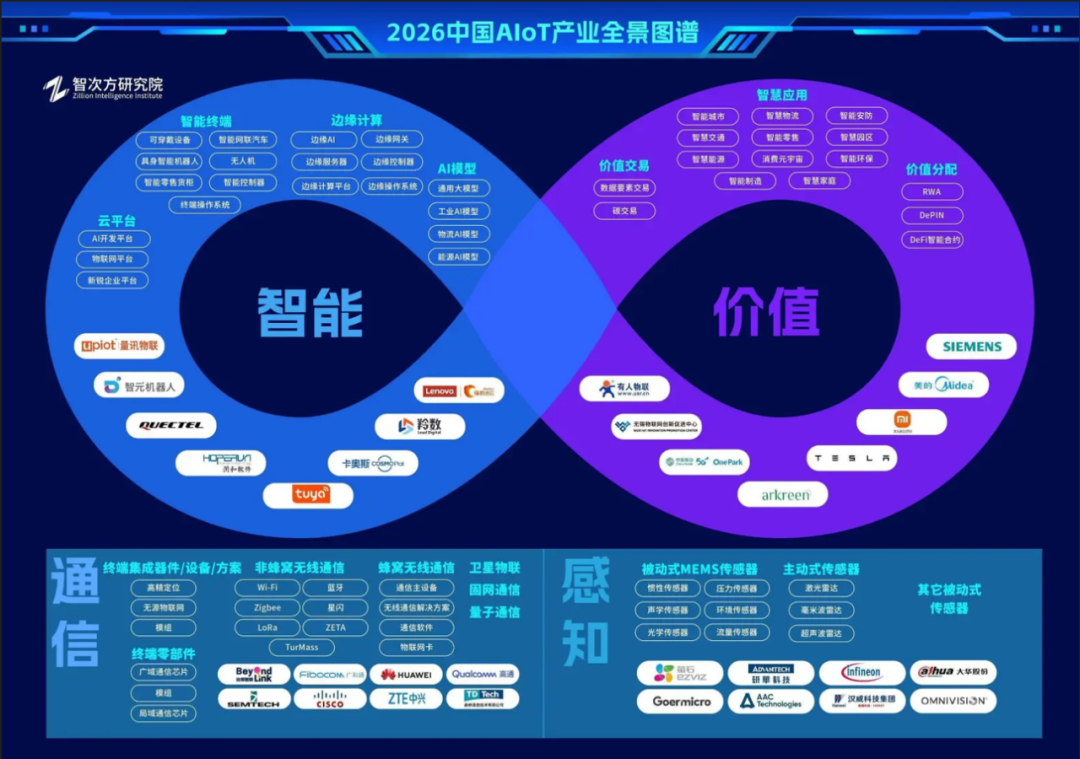
From the 2026 China AIoT Industry Panorama
Looking at the value reconstruction and paradigm shift of IoT cards

In-depth Interpretation
The triple paradigm shift of IoT cards in the AIoT architecture

The “2026 China AIoT Industry Panorama Report” reveals a key trend: IoT connectivity is undergoing a paradigm upgrade from “channel” to “platform”. When we talk about the 2 trillion market size of the AIoT industry, the underlying logic is the data value network generated by 50 billion devices, and IoT cards are the “first entry point” of this value network.

Evolution from Communication Pipeline to Intelligent Edge

In traditional understanding, IoT cards only perform basic data transmission functions. However, under the edge computing architecture, modern IoT cards have evolved into:
Edge Intelligent Carriers: Integrating lightweight AI inference capabilities to achieve localized data processing.
Computing Power Network Nodes: Participating in distributed computing resource scheduling to optimize overall network efficiency.
Security Trust Roots: Building device identity authentication systems based on hardware-level security chips.

Redefining Connection Quality

In key scenarios such as industrial internet and vehicle networking, connection quality metrics have surpassed traditional “signal strength”:
Deterministic Latency: Transmission assurance of <10ms with 99.99% probability.
Business Continuity: Supporting seamless switching across base stations and standards.
Service Level Agreement (SLA): Differentiated service quality assurance based on business needs.

From Standardized Products to Scenario-based Solutions

Smart Transportation Field: Providing high concurrency and low latency connections for shared mobility.Industrial Internet: Creating interference-resistant and highly stable workshop IoT networks.Smart Retail: Assisting vending machines in achieving real-time inventory management and payment.

The Core Capability Matrix of Next-Generation IoT Cards

Architectural Level
Cloud-Card Integration: Deep coupling of cards and cloud platforms to achieve configuration synchronization and policy collaboration.
Card Operating System: Supporting remote firmware upgrades, with continuous evolution of functions throughout the lifecycle.
Multi-modal Access: Integrating cellular and non-cellular networks to build heterogeneous connectivity capabilities.
Data Level
Data Preprocessing: Completing data cleaning, compression, and aggregation at the edge.
Traffic Intelligent Scheduling: Dynamically allocating bandwidth resources based on business priorities.
Data Sandbox: Ensuring data security isolation and compliant use for multi-tenants.

The Strategic Position of IoT Cards in AIoT Evolution

With the initiation of 6G research and the deepening of computing-network integration, IoT cards will further evolve into:
Future Outlook
Computing Power Perception Terminals
Dynamic perception of network computing resources, intelligently scheduling computing tasks.
Semantic Communication Nodes
Exceeding traditional data transmission, achieving efficient transfer of information value.
Digital Twin Entry Points
Building a precise mapping foundation between physical entities and digital models.

Our Thoughts

At this critical juncture of the AIoT industry transitioning from “connection scale” to “connection value”, IoT card suppliers need to reposition their roles –We are not only providers of connectivity services but also value partners in our customers’ digital transformation.
We are committed to continuous technological innovation, upgrading IoT cards from basic communication components to intelligent edge platforms, providing a solid foundation for the digital and intelligent transformation of various industries.

1
END
1
In-depth Cooperation Consultation
Get industry white papers and technical architecture diagramsSchedule one-on-one discussions with our solution experts
Follow us and participate in the compilation discussion of the “AIoT Connectivity Value White Paper”