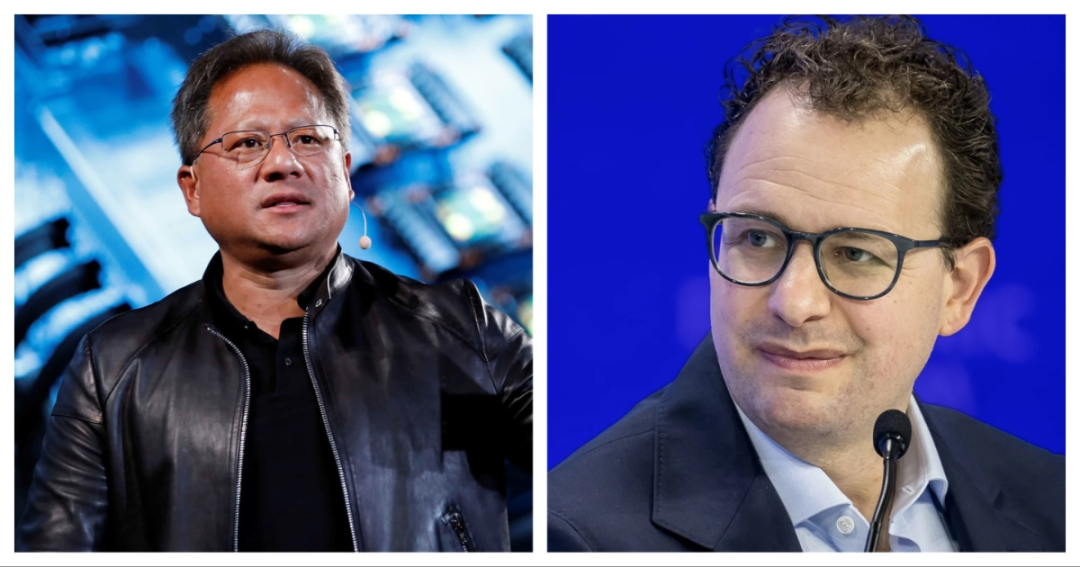
In a conference room on Capitol Hill, Anthropic CEO Dario Amodei openly criticized U.S. government officials for “doing the wrong thing regarding chip export controls.” Although he did not name specific individuals, those in Washington’s tech policy circles understood that his remarks were directed at White House “AI Czar” David Sacks and NVIDIA CEO Jensen Huang.
This debate over U.S. AI chip export policy has evolved into a clash of ideologies between two tech giants’ CEOs and will determine the future trajectory of U.S.-China tech competition.
Policy Reversal: From Strict Controls to Open Sales
In October 2022, the Biden administration implemented a series of comprehensive semiconductor export control measures aimed at restricting China’s access to advanced AI chips and chip manufacturing equipment. At the time, National Security Advisor Jake Sullivan declared, “We must maintain as large a lead as possible.” These controls were described by one observer as a “real milestone in U.S.-China relations,” while others labeled them as “acts of war.”
However, this year, after the Trump administration took office, there was a significant policy shift. The Trump administration reversed the export control measures on AI chips and chip manufacturing equipment, allowing NVIDIA and AMD to sell certain chips to China in exchange for a 15% cut of the profits.
This shift raised concerns within the U.S. national security community. Liza Tobin, who served as the director for China affairs on the National Security Council under both the Trump and Biden administrations, stated, “I don’t think the U.S. realizes that we just handed China the key to unlocking the biggest constraint in the AI race. We know China has ambitions for self-sufficiency, but they have not achieved that in advanced AI semiconductors yet. Therefore, we have built a bridge for them connecting their short-term constraints to their long-term goals.”
GAIN AI Act: A Counterattack from Capitol Hill
In response to the White House’s policy shift, hawks on Capitol Hill began to take action. In September, Indiana Republican Senator Jim Banks introduced the “Guaranteeing American AI Access and Innovation Act” (GAIN AI Act), which was included in the Senate’s “Annual Defense Authorization Act,” causing a stir in the U.S. tech industry.
Bank’s proposal requires chip developers to ensure that U.S. buyers have “priority purchasing rights” before selling AI chips to China or other U.S. adversaries. Specifically, chip companies must demonstrate when applying for export licenses that: U.S. customers have exercised their priority refusal rights; there are no backlogged U.S. orders; exports will not cause delays in inventory or manufacturing capacity for U.S. purchasers; pricing or contract terms do not favor foreign recipients; and exports will not be used by foreign entities to undermine U.S. competitors in markets outside their own.
Banks described his proposal as a way of “America First”: “The GAIN AI Act ensures that U.S. AI technology serves American AI customers before serving adversaries. Prioritizing U.S. AI dominance is a pillar of President Trump’s America First policy and AI action plan.”
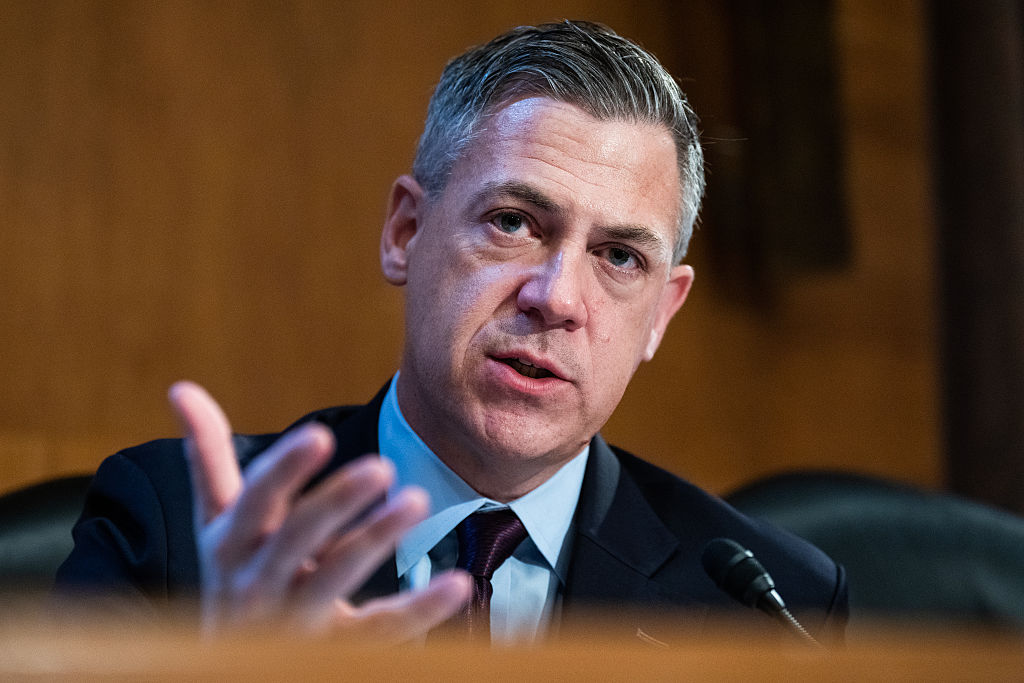
Jim Banks. Source: Getty Images
NVIDIA’s Counterattack: Jensen Huang’s Lobbying Strategy
In response to Banks’ proposal, NVIDIA quickly countered. Company spokesperson John Rizzo stated, “Selling to global customers does not deprive U.S. customers of anything—in fact, it has expanded markets for many American businesses and industries. Those experts providing false information about chip supply to Congress are trying to overturn President Trump’s AI action plan.”
NVIDIA CEO Jensen Huang took a more direct approach—bypassing the bureaucracy to reach an agreement directly with the president. The CEO of the world’s most valuable company frequently engages in lengthy discussions with lawmakers, thoroughly answering all questions and clarifying any points. He personally reached out to the House Foreign Affairs Committee, which oversees export controls, and met with lawmakers on Capitol Hill in July.
A Republican senator described the meeting with Huang: “He has a very low-key way about him, not the back-patting type. Most people are uncomfortable with silence, but he is at ease. He just looks at you and stays as long as possible to clarify the issues.”
Huang’s efforts have yielded significant results. The Trump administration approved a controversial agreement with NVIDIA and AMD, allowing these companies to continue selling certain chips to China in exchange for profit sharing. At a press conference on August 11, Trump even mentioned that Huang might discuss selling a downgraded version of his company’s powerful next-generation chip, the B300, to China again.
Anthropic’s Position: Amodei’s Independent Path
Unlike most tech companies, Anthropic and its CEO Amodei have taken a distinctive stance, advocating for stricter controls on chip exports. After spending most of September meeting with U.S. congressional lawmakers and government officials, Amodei made it clear that he is pushing for three priorities: export controls, model transparency, and addressing the threat of job displacement.
Amodei believes that the Chinese government is integrating AI into government services, industrial processes, and citizen interactions on a “massive scale.” “We cannot afford the consequences of developing the world’s most powerful technology and then deploying it slowly. It’s like developing semiconductor technology but allowing other countries to have all the chips,” he stated.
Regarding the claim by chip manufacturers that they need global sales freedom to generate enough revenue to compete with China, Amodei refuted: “China is really struggling to catch up with the U.S. Semiconductor manufacturers might say different things, but that’s not true.” He insists that as a super semiconductor user, Anthropic can authoritatively state that Chinese chips are far inferior to NVIDIA’s products.
Anthropic is willing to sacrifice revenue for this principle—the company recently decided to sever ties with Chinese-controlled companies, resulting in a loss of hundreds of millions in revenue. Amodei stated, “We are willing to sacrifice our own revenue for this principle.”
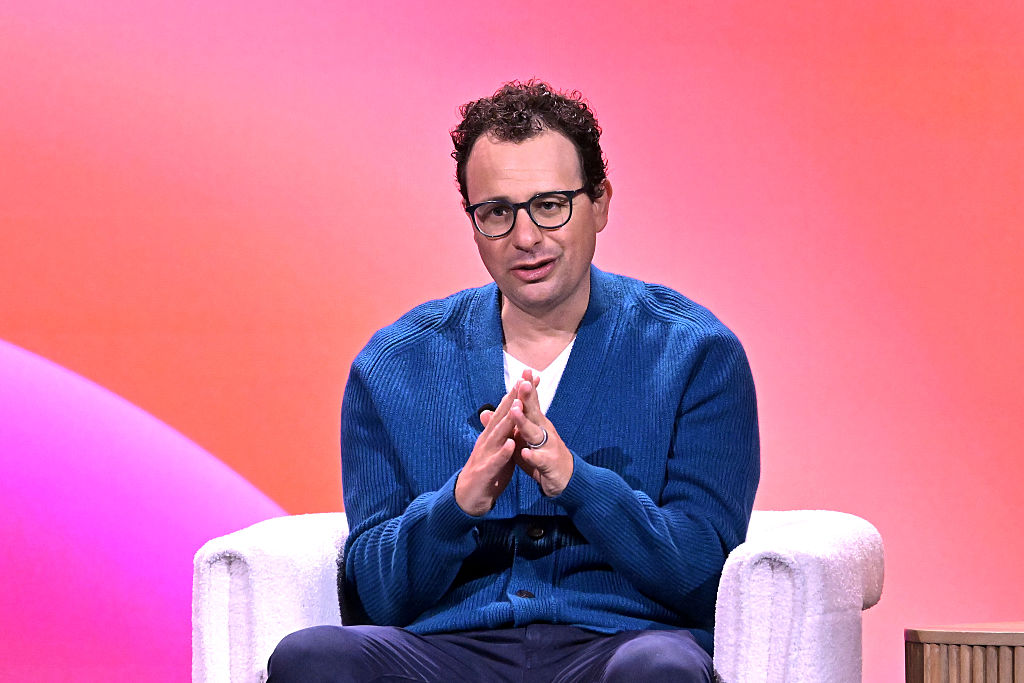
Dario Amodei. Source: Getty Images
White House Divisions: Sacks’ Industry Prioritization
Within the Trump administration, “AI Czar” Sacks became a major advocate for NVIDIA’s international sales. Sacks, a veteran Silicon Valley venture capitalist, was also one of the principal drafters of Trump’s AI action plan.
Sacks criticized the Biden administration’s “overzealous” chip control measures on the X platform, stating that these measures are based on the erroneous premise that “China cannot produce enough chips for export, so it doesn’t matter how much regulatory burden is placed on U.S. AI companies.” He called for, “It’s time to embrace President Trump’s vision; the U.S. tech stack should dominate the world.”
As industry pressure mounted, Sacks even directly called Banks to discuss the GAIN AI Act. While Sacks was not trying to “overturn” the proposal, but rather engage in “constructive” dialogue, it indicated that the White House had reservations about Banks’ proposal.
For instance, a source close to the White House criticized, “It is an open secret that Sacks is ‘controlled’ by the chip industry, and he is dragging the government down with him.”
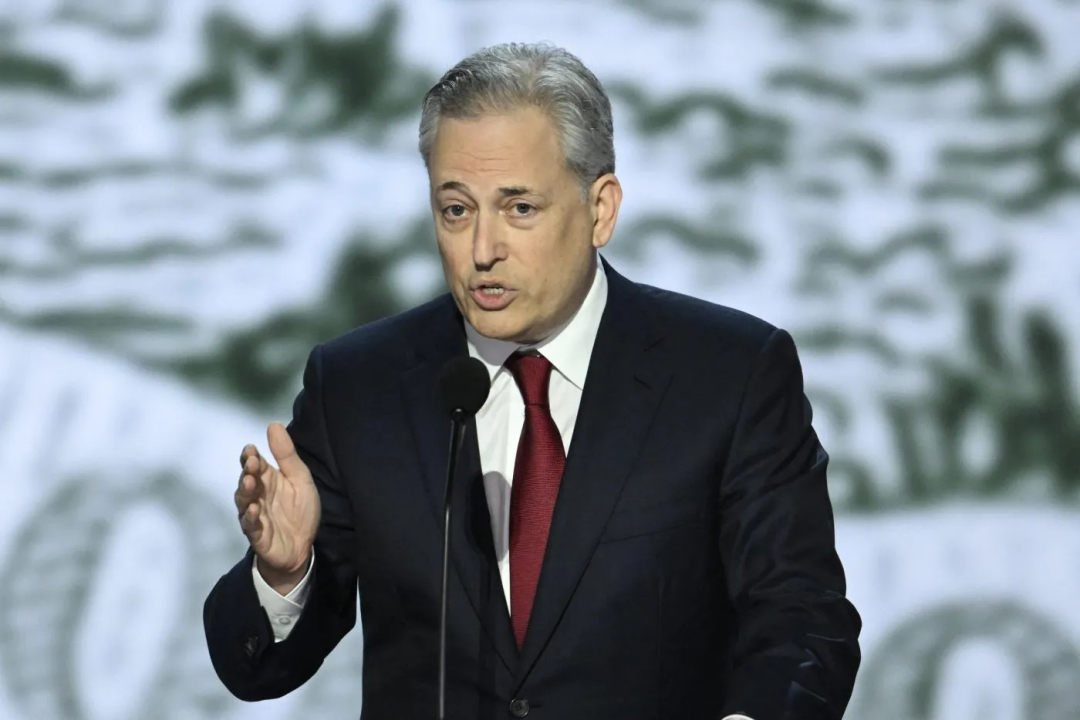
White House “AI and Cryptocurrency Czar” David Sacks. Source: Getty Images
The Game on Capitol Hill: The Battle of Legislation and Lobbying
Bank’s GAIN AI proposal has sparked intense battles on Capitol Hill. Large trade groups like the Semiconductor Industry Association (SIA) are urging House and Senate leaders to remove Banks’ provisions from the Senate version of the defense authorization bill.
The SIA stated in a letter to congressional leaders, “If signed into law, the GAIN AI Act would irreparably damage global demand for U.S. chips, directly undermining the government’s AI action plan and the goal of achieving U.S. leadership in AI, threatening significant investments in the global semiconductor industry in the U.S.”
The Information Technology Industry Council (ITI)—whose members include Apple, IBM, and NVIDIA—also warned that a series of proposed measures would create “new burdensome restrictions” on chip exports. ITI specifically objected to Banks’ GAIN AI Act, warning that the measure would add “significant complexity” to the export licensing system and further strain the resources of the Department of Commerce.
Meanwhile, those supporting increased regulation are also actively taking action. House China Task Force Chairman John Moolenaar and Democratic Chief Member Raja Krishnamoorthi proposed similar measures as amendments to the House version of the defense authorization bill. This amendment requires the Department of Defense to lead a government assessment of the impact of advanced AI falling into the hands of adversaries like China and to understand the “impact of advanced AI on national security and defense.”
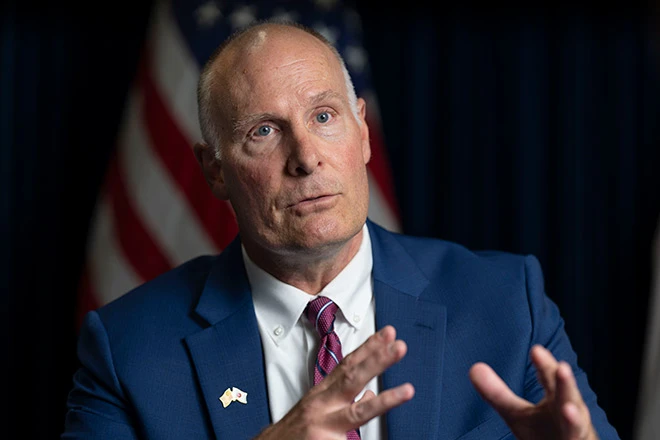
John Moolenaar. Source: Getty Images
Clash of Ideologies: The Collision of Two AI Futures
The policy conflict between Amodei and Huang essentially reflects a clash of two different visions for the future of AI.
Huang and Sacks represent a viewpoint that the U.S. should maintain its dominance by exporting its AI technology as broadly as possible, making countries like China dependent on U.S. technology rather than developing their own domestic capabilities. This perspective is embodied in Trump’s AI action plan, which calls for the development of a full-stack AI export package to make U.S. technology the “gold standard” for global AI.
Amodei, on the other hand, represents a different viewpoint, believing that AI technology has potential dangers and strategic importance that must be carefully controlled. He warned, “Imagine putting a genius country under the control of an existing country, under the control of the United States, or under the control of China or Russia. If you do either of those things, the world will go in very different directions. I think we have a strong interest in this country’s interests, and I think in humanity’s interests, it should be here and not there.”
Stalemate and Future: Compromise or Confrontation?
The Senate is preparing to advance its version of the defense authorization bill after the congressional recess in late September, and the fate of Banks’ GAIN AI proposal remains uncertain.
In private conversations, Banks indicated he might be willing to adjust the provision, but it is unclear whether any changes would fully satisfy the Trump administration’s demands. A person familiar with the discussions stated, “If the measure is seriously discussed, it will push to soften the language of the bill and narrow its scope. Banks recognizes that he will either have to accept a compromise or the bill will be thrown out; I think he will accept a compromise.”
Regardless of the outcome, this debate highlights the dilemma the U.S. faces in maintaining technological leadership in the AI era: how to ensure national security without harming industrial competitiveness; how to restrict adversaries’ access to critical technologies without hindering domestic innovation; and how to find a balance between government regulation and market freedom.
Amodei stated that he is not concerned about being seen as an outlier in the Washington AI industry: “We think less about questions like ‘Does the government like us?’ There are certain issues in AI policy that we care about, and we care about them ultimately for the public good.”
As AI chips become the core battleground of U.S.-China tech competition, the discussion sparked by the policy conflict between Amodei and Huang will continue to shape the future technological landscape and geopolitical balance.
 Images in the article are sourced from the internetThe article represents the author’s personal views and does not reflect the position of this public account
Editor: Chen Jiajun