The Internet of Things (IoT)
refers to a network of physical devices and objects that are connected and communicate through the internet. It is a system composed of sensors, software, and communication devices that enables various devices and items to connect with each other and provide smarter, more efficient, and automated functions through data exchange and analysis.
The main goal of IoT is to connect real-world objects to the internet, giving them the ability to perceive, interact, and communicate. Through IoT, applications such as smart homes, smart cities, industrial automation, agricultural monitoring, and intelligent transportation can be realized.
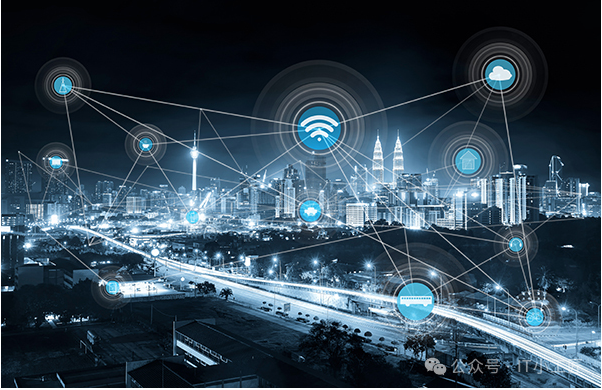
Why is IoT necessary?
As a bridge connecting the physical world and the digital world, IoT is profoundly changing the way we live and work. Here are the core reasons why IoT has become an essential technology for modern societal development:
1. Addressing Key Issues of Inefficiency
IoT significantly enhances efficiency across various industries through real-time data collection and automated processing:
Industrial Sector: Traditional factories rely on manual inspections for equipment failures, with average downtime losses reaching 500,000 yuan per hour; however, IoT sensors can provide a 72-hour advance warning for bearing wear, reducing unplanned downtime by 85%.
Urban Management: Beijing has deployed 200,000 smart manhole cover sensors, reducing damage response time from 48 hours to 15 minutes, improving emergency efficiency by 95%.
Agricultural Irrigation: After implementing soil moisture sensors in Xinjiang cotton fields, water usage decreased by 40%, and cotton yield increased by 12%.
2. Optimizing Resource Allocation and Decision-Making
IoT promotes a shift from “experience-based decision-making” to “data-driven” approaches:
Healthcare Resources: A community in Shanghai uses smart wristbands to monitor elderly health data, resolving 80% of health issues in home settings, alleviating 30% of outpatient pressure on top-tier hospitals.
Energy Management: Smart grid systems utilize 5G networks to optimize energy distribution, enhancing utilization efficiency.
Industrial Production: Industrial IoT has led to an average productivity increase of over 20% and a 30-50% reduction in equipment failure rates.
What are the advantages of IoT?
Real-time Data
IoT enables real-time collection and analysis of data generated by various sensors and devices. This data helps users better understand the status of equipment and environments, allowing for timely problem detection and corresponding adjustments and decisions.
Automation and Intelligence
IoT can achieve automated control and intelligent decision-making for devices and systems. By analyzing and learning from data, IoT can automatically execute operations based on set rules and algorithms, improving work efficiency and productivity.
Cost and Energy Consumption Reduction
IoT helps optimize the use of resources and energy, reducing waste and costs. Through real-time monitoring and control, energy consumption can be better managed, minimizing resource waste.
Providing Personalized Services and Experiences
IoT can offer personalized services and experiences by collecting and analyzing user data. For example, in smart homes, devices can automatically adjust temperature, lighting, and music based on user habits and preferences, providing a more comfortable and convenient living environment.
What are the practical applications of IoT?
The application scenarios of IoT are very broad, with some of the main application areas including:
Smart Homes
Connecting home devices and networks through IoT enables intelligent and automated control, enhancing comfort, security, and energy efficiency in homes.
Smart Cities
Connecting various facilities and infrastructures in cities through IoT enables intelligent management and optimization, providing more efficient, environmentally friendly, and convenient urban services.
Industrial Automation
Connecting and monitoring industrial equipment through IoT enables automation and optimization of production processes, improving production efficiency and product quality.
Agricultural Monitoring
Connecting sensors and devices in farmland through IoT allows for real-time monitoring of soil moisture, temperature, light, and other parameters, providing precise agricultural management and decision support.
Intelligent Transportation
Connecting transportation facilities and vehicles through IoT enables intelligent traffic management and optimization, improving traffic flow and safety.
What is the difference between IoT and the Internet?
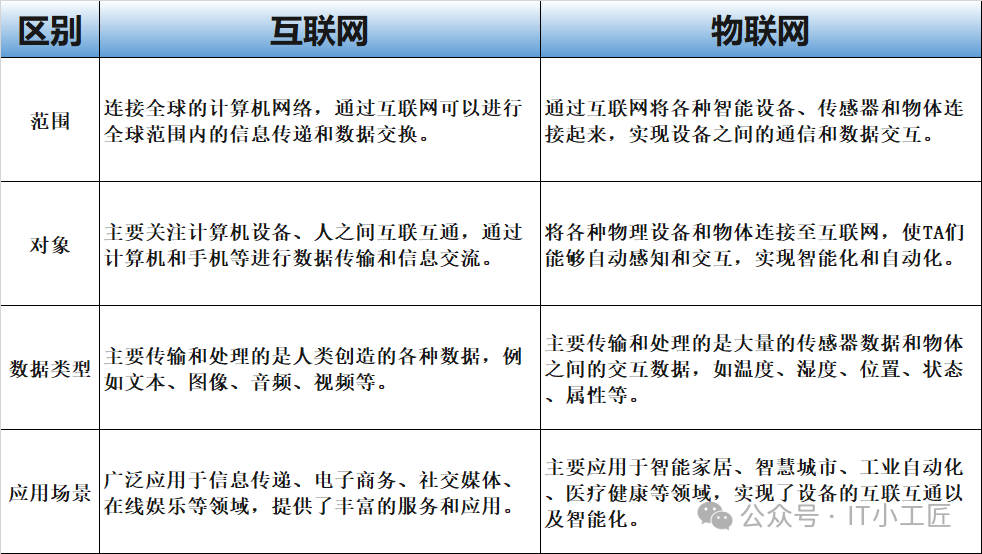
The Impact of IoT Technology on Modern Life
1. Enhanced Convenience in Life
IoT technology makes daily life smarter and more convenient:
Smart home systems allow users to remotely control appliances via mobile phones, such as turning on air conditioning or adjusting lighting brightness in advance.
The combination of voice assistants and smart devices enables more natural interaction.
Smart locks, security cameras, and other devices significantly enhance home security.
2. Revolution in Health Management
IoT has brought revolutionary changes to the healthcare field:
Wearable devices (such as smartwatches) can monitor health indicators like heart rate, blood pressure, and sleep quality in real-time.
Telemedicine systems allow patients to complete basic health checks at home, with data transmitted directly to doctors.
Chronic disease patients can achieve long-term health management through IoT devices.
3. Optimization of Urban Management
The construction of smart cities relies on IoT technology for efficient management:
Smart traffic systems optimize traffic light control through real-time data analysis, reducing traffic congestion by over 30%.
Smart streetlights automatically adjust brightness based on pedestrian traffic, achieving significant energy savings.
Environmental monitoring sensors provide real-time feedback on air quality, water quality, and other data.
4. Improvement in Industrial Efficiency
IoT drives the development of Industry 4.0, leading to leaps in production efficiency.
Industrial IoT (IIoT) enables predictive maintenance of equipment, reducing unplanned downtime.
Production line sensors monitor production processes in real-time, increasing capacity by over 20%.
Supply chain management achieves full visibility tracking through IoT.