In the precision and complexity of semiconductor manufacturing, where purity requirements are nearly stringent, every step and every material is crucial. High purity PFA pipe joint valves, as key components for transporting ultra-pure chemicals and ultra-pure water, play an irreplaceable role, acting as loyal ‘guardians’ behind the scenes of the industry.
1. PFA Material Characteristics Establishing Superior Performance Foundation
PFA, or perfluoroalkoxy, is a highly superior fluoropolymer with many characteristics that meet the needs of semiconductor manufacturing. Firstly, its chemical stability is exceptional, able to withstand extreme environments of strong acids, strong bases, and high temperatures and pressures. In semiconductor wet processes, various highly corrosive electronic chemicals are frequently used, such as hydrofluoric acid and nitric acid. PFA pipe joint valves can serve stably for long periods without corrosion, ensuring the integrity and safety of fluid transport systems. Secondly, PFA has a very high cleanliness level, and its low ion leaching characteristics ensure that no impurity ions are introduced when in contact with ultra-pure substances, thus guaranteeing the ultra-high purity of electronic chemicals and ultra-pure water. This is crucial for semiconductor chip manufacturing, as even trace amounts of impurities can have a fatal impact on chip performance and yield. Additionally, PFA materials have good processing capabilities, allowing them to be precisely manufactured into various complex shapes of pipe joint valves to meet the diverse connection and control needs of semiconductor production equipment.
2. Pipe Joints: Precision Connections Ensuring Smooth Fluid Transmission
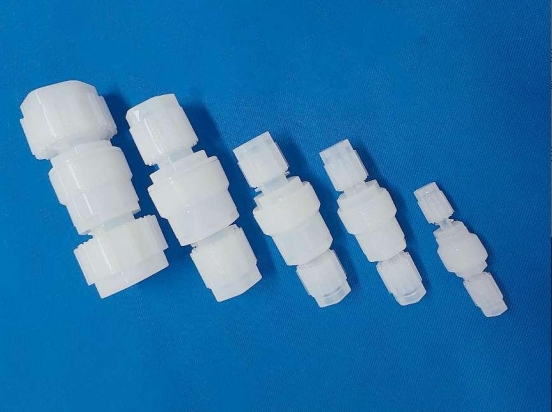
High purity PFA pipe joints play a ‘connecting hub’ role in the entire fluid transport network. Ultra-clean PFA joints are typically used in conjunction with ultra-clean PFA fittings, with a wide variety of specifications covering both imperial and metric sizes. Whether it is equal diameter tees, 90-degree equal bends, or 90-degree reducing bends, they can precisely adapt to various chemical fluid systems. The inner walls of these pipe joints are extremely smooth, combined with precision process control, effectively reducing fluid resistance during transport, ensuring that ultra-pure chemicals and ultra-pure water flow smoothly at stable flow rates and uniform flow volumes, avoiding fluid retention and turbulence that could affect purity and transport efficiency. At the same time, the pipe joints possess ultra-high cleanliness, and under stringent SEMI industry standards, their excellent chemical resistance, wear resistance, and electrical insulation properties not only ensure their lifespan under complex working conditions but also maintain the purity of the entire transport system, providing reliable assurance for high-precision process operations in semiconductor manufacturing.
3. Valves: Precise Control to Safeguard Fluid Quality and Process Safety
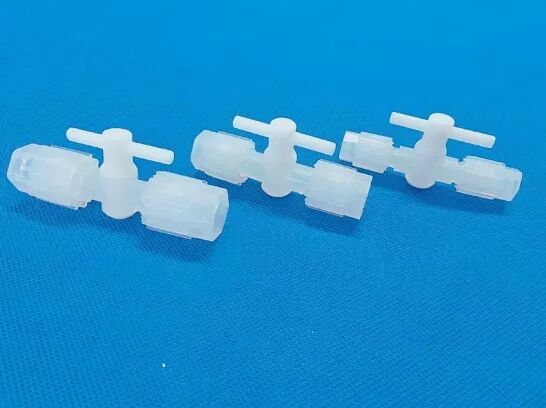
High purity PFA valves act as the ‘intelligent commanders’ in fluid transport systems, undertaking key responsibilities for flow regulation, cutoff, and control. In the liquid transport and control systems of wafer manufacturing processes, different production stages have precise and dynamic requirements for fluid flow and pressure. PFA valves can accurately adjust the opening based on preset programs or real-time monitoring data, enabling the transport, circulation, and control of ultra-pure water and electronic-grade chemicals. For instance, in critical processes such as photolithography and etching, precise control of chemical reagent flow is required. PFA valves can respond quickly, ensuring accurate dosing, thereby guaranteeing the precision and consistency of chip patterns and improving chip manufacturing yield. Moreover, in the event of emergencies, the valves can quickly cut off the fluid pathway to prevent chemical leaks and other safety incidents, safeguarding the production environment and personnel safety. Their multi-layer composite structure design endows the valves with high-strength impact resistance, ensuring stable and reliable operation in the complex and variable semiconductor production environment.
4. Industry Status and Development Trends: Accelerating Domestic Substitution Towards Higher Precision
As semiconductor technology continues to advance towards 7nm and even 5nm processes, the requirements for the purity of electronic chemicals and the precision and stability of transport systems are growing exponentially, bringing new opportunities and challenges to the high purity PFA pipe joint valve industry. In the past, ultra-pure PFA materials and related pipe joint valve products were long monopolized by foreign enterprises, leaving China’s semiconductor industry facing a ‘bottleneck’ dilemma. However, in recent years, domestic companies have been catching up, accelerating the realization of domestic substitution. For example, Shandong Qiflu New Materials’ fluorine-containing high-end electronic materials project aims to produce electronic-grade PFA materials for making semiconductor pipeline valves and their accessories. Once the project is put into production, it is expected to break the international monopoly and ensure the stability of China’s semiconductor industry supply chain. Alpha New Materials (Liaoning) Co., Ltd. has launched a series of high purity PFA pipeline products, hailed as the ‘golden veins in semiconductor processes,’ injecting new strength into the global semiconductor supply chain. Haipuri, as the first domestic company to develop and produce semiconductor-grade PVDF and PFA ultra-pure valves, pipes, joints, and instruments, has seen its products widely used in key areas such as ultra-pure water systems and chemical supply systems in wafer fabs. In the future, high purity PFA pipe joint valves will develop towards higher purity, more precise control, and miniaturization to adapt to the continuously upgrading semiconductor manufacturing processes, continuously safeguarding the vigorous development of the semiconductor industry.