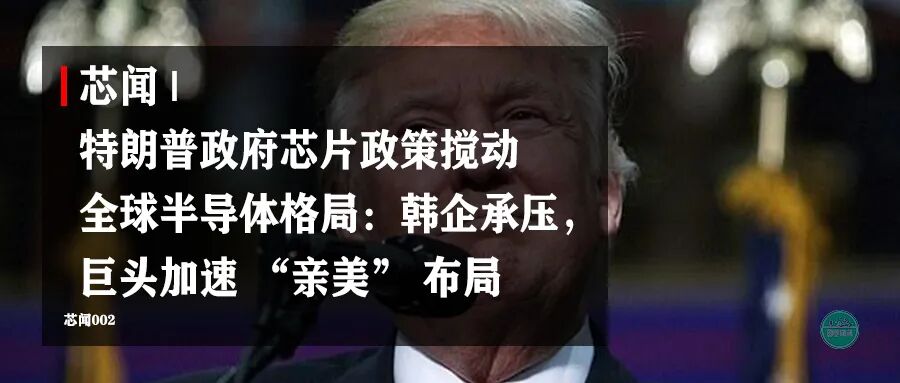
|Introduction: In early March this year, Taiwan’s TSMC announced plans to increase its investment in the U.S. by $100 billion, leading to a growing trend among global semiconductor companies to align with ‘Trump-friendly’ policies.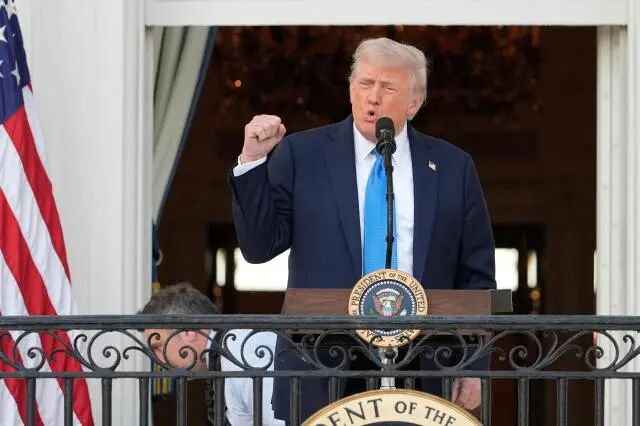 Image: U.S. President Donald Trump [Image Source: Yonhap News]Author: Tian Yuan Kai KaiSource: Asia DailyAgainst the backdrop of significant changes in the global semiconductor industry, a series of actions by the Trump administration is causing ripples in the sector. Recently, the Trump administration began to review the subsidies granted to semiconductor companies, contrasting sharply with the wave of global semiconductor companies announcing expansions of their investments in the U.S., putting South Korean semiconductor firms like Samsung Electronics and SK Hynix under unprecedented pressure.On the 12th local time, U.S. semiconductor giant Micron Technology announced a major expansion of its domestic investment to $200 billion, a 60% increase from the $125 billion plan announced during the Biden administration last year. This decision coincides with Trump’s repeated public statements asserting that there is no need to rely on government subsidies; instead, he believes that tariffs alone can encourage global semiconductor companies to increase their investments in the U.S. This statement not only showcases Trump’s unique strategic approach to the development of the U.S. semiconductor industry but also adds a strong policy color to the investment decisions of companies like Micron.In fact, Micron’s investment plan is not an isolated case. In early March, Taiwan’s TSMC, the world’s leading foundry, was the first to announce plans to increase its investment in the U.S. by $100 billion. Following this, a trend of ‘Trump-friendly’ policies emerged among global semiconductor companies, with major firms increasing their investments in the U.S. in an attempt to secure a favorable position in future industry competition.The U.S. Department of Commerce quickly responded to Micron’s expansion plan, announcing that it would provide up to $275 million in subsidies. However, the market generally views this funding as a confirmation of the preliminary agreement reached between Micron and the Biden administration last December, rather than a truly new subsidy. This means that under the backdrop of the Trump administration’s review of subsidy policies, the actual subsidy support that companies can receive in the future is filled with uncertainty.Industry analysts point out that Micron’s large-scale investment announcement is likely to become a key opportunity for the Trump administration to formally initiate a renegotiation of the subsidy terms under the CHIPS Act. Howard Lutnick, the U.S. Secretary of Commerce overseeing the CHIPS Act subsidies, stated during a congressional hearing on the 4th of this month that “some chip subsidies seem overly generous” and revealed that he is in discussions with some companies regarding the renegotiation of subsidy terms. This signal undoubtedly serves as a warning to global semiconductor companies that the costs and expected returns of investing in the U.S. will undergo significant changes in the future.For South Korean semiconductor companies like Samsung Electronics and SK Hynix, the pressure brought by the Trump administration’s policy adjustments is particularly pronounced. If they need to increase their investments in the U.S. without subsidies, these companies will have to comprehensively adjust their global production strategies, which could trigger a chain reaction throughout the industry chain and raise concerns among industry insiders about the future development of the South Korean semiconductor industry.Looking back, Samsung Electronics announced during the Biden administration that it planned to invest over $37 billion to build a new semiconductor foundry in Taylor, Texas, by 2026, and signed an agreement with the U.S. Department of Commerce last December to receive $4.745 billion in subsidies.SK Hynix is also actively laying out its U.S. market strategy, planning to build an AI storage semiconductor packaging factory in Lafayette, Indiana, by 2028, and last month signed an agreement with the U.S. side to receive up to $458 million in direct subsidies and $500 million in loans. However, under the Trump administration’s review of subsidy policies, whether these companies can fulfill their previously promised subsidies and what kind of investment environment they will face in the future remain unresolved issues.As the Trump administration continues to adjust its semiconductor industry policies, the competitive landscape of the global semiconductor industry is entering a new round of reshuffling. How South Korean companies respond to pressure and how other global semiconductor giants adjust their strategies will profoundly impact the future development direction of the global semiconductor industry.
— End —
If you have better opinions, suggestions, or criticisms, feel free to message me, but if you could also give a thumbs up and share, it would be the greatest encouragement for me. I am Tian Yuan Kai Kai, and I look forward to seeing you in the next article!
Click here👇 to follow me, and remember to star it~
(Disclaimer: All information in this article is sourced from open networks. If there is any infringement, please contact me for deletion. If there are any adverse effects on the development of the subjects discussed in this article or if important information leaks occur, please contact me for deletion. This article does not constitute investment advice; it is merely personal opinion. Investment carries risks, and caution is advised.)
Original link:https://www.ajudaily.com/view/20250613080829928