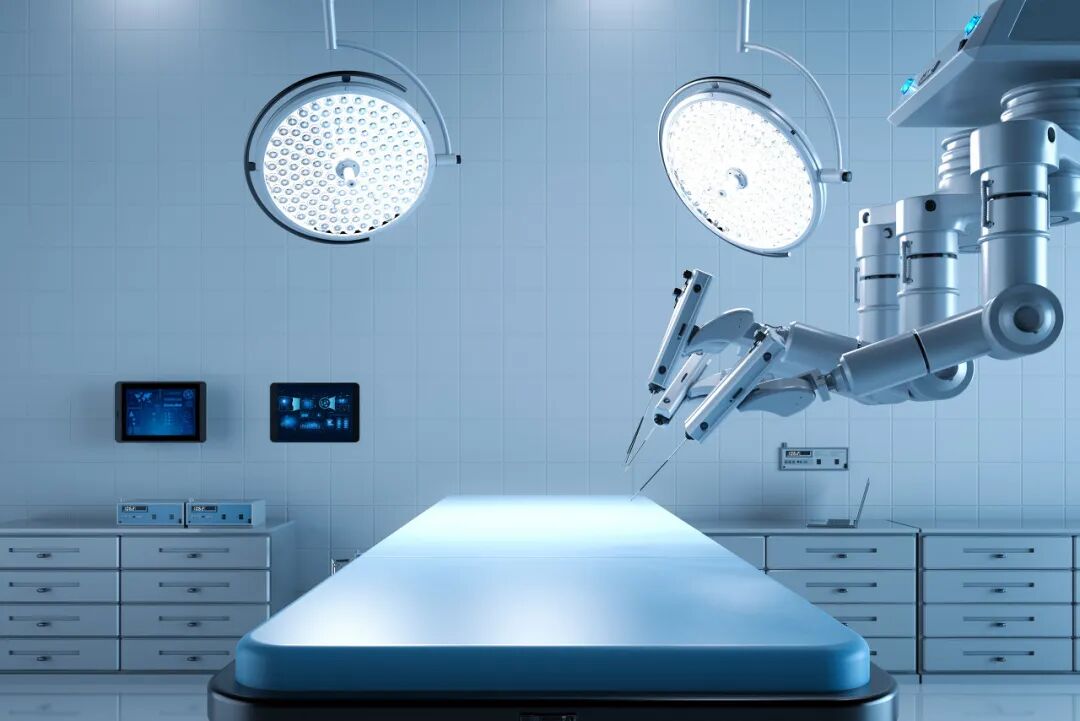
 According to statistics from Frost & Sullivan, in 2023, the terminal order volume of neurosurgery robots in China reached 76 units, with domestic companies securing the majority of orders. The leading company, Baihui Weikang, sold 40 neurosurgery robots in 2023.
 Author: Zheng Chenye Cover Image: Tuchong Creative

“A month after the surgery, the patient sent us a video of her walking in the park. In the video, she said: ‘I haven’t been able to get out of bed for two years, and if I can maintain this state for six months, I will have no regrets in my life.’” On September 25, when discussing the most impressive clinical case involving a surgical robot, Dr. Guan Yuguang, Chief Physician of Neurosurgery at Capital Medical University Sanbo Brain Hospital, said this.
The case mentioned by Guan Yuguang involved an 81-year-old female patient with Parkinson’s disease. Due to her advanced age, her physical condition was very poor. In addition to Parkinson’s disease, she also suffered from severe heart disease, stage three hypertension, and lung abnormalities. Before coming to Capital Medical University Sanbo Brain Hospital for treatment, she had been bedridden for two years and had basically lost her ability to care for herself.
For Parkinson’s disease patients, deep brain stimulation (DBS) surgery is an effective treatment method. This surgery can regulate neural signals by electrically stimulating specific areas of the brain, alleviating core symptoms of Parkinson’s disease such as tremors, rigidity, and motor difficulties. However, considering that this was an 81-year-old patient, such surgery was not easy to perform.
“At that time, almost no hospital was willing to perform this surgery for her. The reason is simple: traditionally, this surgery is performed using a stereotactic frame, usually under local anesthesia. But for this patient, local anesthesia was simply unbearable due to her severe heart and lung issues, which made the surgical risk extremely high,” Guan Yuguang recalled.
The so-called stereotactic frame is a precise positioning tool used in neurosurgery. It helps doctors accurately determine specific areas of the brain in three-dimensional space by being fixed to the patient’s head, ensuring that electrodes are implanted in the most effective positions. Typically, these surgeries are performed under local anesthesia because the patient needs to remain awake during the procedure, allowing the doctor to adjust the electrode position based on real-time feedback.
Although local anesthesia keeps the patient awake, it still places a burden on the heart and lung function. The patient that Guan Yuguang took over not only suffered from severe Parkinson’s disease but also had heart disease and stage three hypertension, meaning her circulatory and respiratory systems were extremely fragile. Under local anesthesia, she could experience a sudden deterioration in heart or respiratory function due to mental stress, pain, or surgical stress.
However, technological advancements provided Guan Yuguang and the team at Sanbo Brain Hospital with more options when faced with this dilemma.
“After repeated discussions, our hospital ultimately decided to use general anesthesia and employ a surgical robot to assist in the procedure. Why choose general anesthesia? Because under general anesthesia, we can better manage her cardiopulmonary function, enhancing the safety of the surgery. The surgical robot greatly simplified the operational steps and reduced the surgical time. The surgery time was cut by about half, which directly lowered the surgical risk,” Guan Yuguang said.
Using the neurosurgery robot, Guan Yuguang and his team successfully and safely completed the surgery, allowing the elderly patient, who had been bedridden for two years, to regain her mobility post-surgery. The advancement of neurosurgery robots, a new technology that has accelerated in recent years, is attributed to the continuous efforts of Chinese companies.
According to Frost & Sullivan, in 2023, the terminal order volume of neurosurgery robots in China reached 76 units, with domestic companies securing the majority of orders. Baihui Weikang Technology Co., Ltd. (hereinafter referred to as “Baihui Weikang”) ranked first in shipments, selling 40 neurosurgery robots in 2023.
“Compared to internationally leading surgical robots, domestic surgical robots have now achieved a leading advantage in clinical adaptability and product performance-to-price ratio, especially in neurosurgery and orthopedic surgical robots, where product advantages are particularly evident,” said Liu Da, founder and chairman of Baihui Weikang, when discussing the current state of the surgical robot market, which has long been dominated by overseas companies.
 A Special Surgery
In 2021, Li Zhonghua, Chief of Neurosurgery at Huai’an Fifth People’s Hospital, received a special patient with a brain hemorrhage while working at Baise People’s Hospital in Guangxi Zhuang Autonomous Region.
This patient had a small amount of bleeding, but the location was in a functional area of the brain. If treated with a conventional craniotomy, it could potentially cause irreversible functional damage to the patient’s brain.
Therefore, after evaluation by the relevant team at Baise People’s Hospital, they decided to request assistance from three neurosurgery experts at Xuanwu Hospital of Capital Medical University in Beijing, using 5G remote robotic assistance to complete this minimally invasive brain surgery.
On December 22, 2021, at 11 a.m., after the patient was anesthetized, the surgery began. This surgery relied on a 5G remote robotic assistance system, which connected in real-time to Xuanwu Hospital in Beijing, allowing three neurosurgery experts, including Dr. Wang Yaming, to remotely monitor every detail of the surgery.
The key step of the surgery was to accurately guide the minimally invasive surgical instruments to the bleeding site near the patient’s brain functional area while avoiding damage to surrounding healthy tissue.
After the surgery began, Li Zhonghua first marked the guiding path on the patient’s scalp and used an intraoperative imaging navigation system to create a three-dimensional model of the brain to ensure the accuracy of the surgical path. Subsequently, the remote surgical robot was activated, and the robotic arm moved slowly according to the predetermined plan, gradually bringing the controlled puncture catheter closer to the bleeding point. This process required extremely high precision, as even a 0.1 mm error could affect the patient’s motor and language functions.
During the surgery, the experts at Xuanwu Hospital provided real-time adjustment suggestions through the high-definition images transmitted via 5G. They flexibly operated the surgical robot to successfully locate the bleeding point in the patient’s brain functional area and instructed Li Zhonghua’s team to perform a minimally invasive puncture, ensuring precise drainage of the hematoma. With the assistance of the robot, the puncture error was minimized, achieving a level of precision far exceeding traditional surgical methods.
The entire surgical process lasted less than two hours. Ultimately, the surgery was successfully completed, and the patient’s brain function was maximally protected, with a very small surgical incision, avoiding the significant trauma associated with conventional craniotomy.
After the surgery, Li Zhonghua and his team confirmed through imaging review that the hematoma had been completely cleared, and the patient recovered well. A few days later, the patient regained consciousness and gradually restored her mobility, making this surgery the first successful case of 5G remote robotic application in Baise City.
“At that time, many people thought the surgery should not be performed, but the results proved to be very good. The patient recovered quickly after the surgery and was even able to walk out of the hospital. Neurosurgery robot surgeries have far surpassed other traditional techniques in reducing mortality and disability rates,” Li Zhonghua recalled.
The surgical robot used in this operation, the Ruimi neurosurgery robot, is a product of Baihui Weikang. With this surgical robot, Li Zhonghua’s department became the “star” department of Baise People’s Hospital.
Li Zhonghua told reporters that since the introduction of the first Ruimi surgical robot in June 2020, the hospital has achieved a breakthrough in its ability to treat brain hemorrhages from 0 to 1, having performed over 2000 neurosurgeries to date, including more than 1500 brain hemorrhage surgeries, breaking the previous passive conservative treatment pattern and forming a distinctive “Baise model” for emergency treatment of brain hemorrhages.
“Brain hemorrhage has a high mortality and disability rate. Before we launched the domestic brain hemorrhage surgical robot, many grassroots hospitals lacked the capability to treat brain hemorrhages. Traditional craniotomy carries high risks and costs. With the increasing clinical application of our robotic technology, surgeries that were previously impossible can now be performed, and patients who could not receive timely treatment can now be effectively treated, with excellent recovery outcomes,” Liu Da said.
 A Rapidly Growing MarketUsing surgical robots to overcome physiological limitations, high-precision robotic arms and intelligent control systems assist doctors in performing complex surgeries, achieving higher precision and more stable surgical outcomes, is becoming increasingly common.According to their technical characteristics, surgical robots can be divided into operational surgical robots and positioning surgical robots. Operational surgical robots are mainly suitable for minimally invasive surgeries and vascular interventions guided by endoscopy, relying on real-time operations by doctors to control the robotic arms to perform fine movements. These surgical robots can filter out hand tremors from doctors, reducing the range of motion and allowing for more precise minimally invasive operations.Products like the Ruimi surgical robot belong to positioning surgical robots, primarily applied in neurosurgery, orthopedics, and other fields, suitable for fine surgical operations. It can autonomously move according to the surgical plan developed by the doctor before surgery, assisting the doctor in accurately locating and efficiently executing the surgical path. Its core components include surgical planning software, navigation positioning instruments, and robotic arms. The surgical planning software constructs a three-dimensional model based on medical imaging, helping doctors simulate and plan surgeries; the navigation positioning instrument tracks the surgical scene in real-time using optical tracking technology; the robotic arm is responsible for executing operations such as puncturing and implantation according to the plan.“Surgical robots not only help us locate and navigate deep lesions but also enable multi-modal image reconstruction, making surgeries more precise and reducing trauma. For example, previously difficult deep lesion biopsies can now be more easily achieved with surgical robots. This multi-modal image combined with navigation functionality helps us perform surgeries in many complex locations, making lesion removal more precise,” Dr. Wang Yaming told reporters.In Guan Yuguang’s view, neurosurgery robots are a very popular technology in neurosurgery in recent years, representing an automation upgrade of stereotactic technology. He explained that in the past, neurosurgeons performing minimally invasive and image-guided surgeries primarily used stereotactic frames. However, frame technology has several issues: first, its operation is very complex and cumbersome; second, the frame gradually deforms with frequent use, leading to decreased accuracy; third, when doctors need to locate multiple targets, the frame requires repeated adjustments, which greatly limits the surgical space.“Surgical robots can easily solve these problems. For example, when locating epilepsy foci, it usually requires implanting 15 to 18 electrodes. If using traditional frames, I need to recalibrate repeatedly, adjusting parameters for each position, which is very complex. The surgical robot can preset multiple targets and easily complete these operations. Additionally, surgical robots can simplify many steps. For instance, in Parkinson’s surgery, traditional operations require over 100 steps, while robots can simplify more than half of them. At the same time, robots eliminate many traditional errors, including mechanical errors caused by equipment aging and human calculation errors. Another point is the flexibility of the operational space. When using frames, we need a large sterile area for disinfection, which limits the operational space. In contrast, robots only require a small sterile area, reducing the preparation time and difficulty of the surgery. Robots can also operate in a 360-degree range, which is not achievable with traditional frame technology,” Guan Yuguang said.In terms of precision, safety, and equipment durability, surgical robots have completely surpassed traditional stereotactic technology. Now, surgical robots are widely used in functional neurosurgery, epilepsy, Parkinson’s disease, pain management, skull base tumors, and neuroendoscopy.A report released by Frost & Sullivan in May this year predicts that the Chinese surgical robot market will continue to maintain a high growth rate, reaching 22.45 billion RMB and 70.85 billion RMB by 2026 and 2030, respectively, with a compound annual growth rate of 33.3% from 2026 to 2030.Notably, in the neurosurgery robot market, domestic robots are in an absolute leading position in terms of both market sales and hospital recognition.“I believe that domestic surgical robots can completely replace foreign equipment and even surpass foreign surgical robots in certain aspects. Our hospital also has an American ROSA neurosurgery robot, but I believe that in terms of both hardware and software, domestic surgical robots perform better in image processing and the development of multifunctional modules,” Dr. Wang Yaming told reporters.
A Quiet Leap Forward
Domestic neurosurgery robots have not achieved a leap over overseas manufacturers overnight.
Due to the small surgical space in brain surgery, difficulties in positioning, and the large and complex nature of traditional surgical devices, traditional neurosurgery has a high level of difficulty, and surgical robots have therefore been applied in the field of neurosurgery for a long time.
In 1985, American doctors first achieved clinical application in neurosurgery using the industrial robotic arm PUMA.
In 1997, Wang Tianmiao, honorary director of the Robotics Institute at Beihang University, established the first medical robotics research team in China, leading the key technology research of neurosurgery robots and using PUMA262 to complete the first robot-assisted stereotactic neurosurgery.
In 1998, Liu Da also joined the medical robotics research team, leading the team to overcome the key technology of robot-assisted frameless stereotactic surgery, successfully conducting the first frameless stereotactic robot surgery in China.
From a temporal perspective, China’s research in the field of neurosurgery robots is not later than that of foreign counterparts. However, it was not until 2018, nearly eight years after Liu Da’s entrepreneurial efforts, that Baihui Weikang launched the Ruimi neurosurgery robot, which obtained a Class III medical device registration certificate, marking the first domestically produced neurosurgery robot to receive NMPA certification (also known as the National Medical Products Administration certification).
The slow progress of practical application and industrialization is attributed to both insufficient technological accumulation and various difficulties in the industrialization path.
On one hand, the research and development of surgical robot technology involves interdisciplinary intersections, including mechanical design, image processing, computer vision, medical imaging, and precision control. These technologies were not mature in China at that time. Although the domestic academic community made some progress in technological exploration, transforming these laboratory results into mature devices that can be used clinically became a significant challenge.
This not only requires investment in R&D funding and technological breakthroughs but also necessitates relevant policy support, clinical trial validation, and a long industrialization process.
On the other hand, foreign companies, such as Medtronic’s ROSA surgical robot, have occupied a dominant position in the global neurosurgery robot market due to their early market advantages. For Chinese companies, entering this field is not merely a matter of imitation or following; it requires independent innovation and breakthroughs in core technologies, product performance, and clinical applicability.
“(The most impressive aspect since starting the business is) the independent research and development of core components! The core components of our early products were mainly imported, which not only limited our technology but also made it difficult to form a competitive advantage with other similar products. The process of breaking through the independent research and development of core components was quite arduous. It was not about copying mature general core components from abroad; rather, the core components of our surgical robots had to solve unique clinical problems and also be cost-effective for mass production. The successful independent research and development of core components has enabled our products to be widely used in grassroots hospitals, creating favorable conditions for rapid product promotion,” Liu Da told reporters.
In Liu Da’s view, although the industrialization process of domestic surgical robots was once slow, it ultimately achieved a “curve overtaking” in the market, primarily due to the resonance of policy, market, and technology.
Although in the early stages, domestic surgical robots’ core components, such as robotic arms and navigation systems, relied heavily on imports, leading to high equipment costs and technological constraints, the continuous improvement of domestic manufacturing levels has made the independent research and development of core components no longer a “bottleneck” issue.
Domestic surgical robot companies, represented by Baihui Weikang, have not only caught up with or even surpassed foreign products in terms of the flexibility and precision of robotic arms but have also achieved innovations in surgical planning software and image processing technology, addressing unique problems in domestic clinical scenarios.
For example, Baihui Weikang’s self-developed RM-200 robot can automatically fuse and segment CT, MRI, and PET images, constructing three-dimensional models of anatomical structures such as blood vessels, functional areas, neural fiber bundles, and the cerebral cortex, displaying any three-dimensional model while automatically assessing path safety. At the same time, the robot is equipped with a fully articulated robotic arm with an arm span exceeding 1000mm and an accuracy of no more than 0.5mm, capable of carrying various minimally invasive surgical instruments to perform high-precision surgeries such as DBS, SEEG, and endoscopy.
Moreover, domestic surgical robot manufacturers have significantly enhanced the local adaptability and clinical application of their products through rapid iteration and close collaboration with doctors.
Compared to foreign surgical robot manufacturers, Chinese companies can respond more flexibly to clinical doctors’ feedback. When encountering operational inconveniences or functional defects during surgery, domestic companies can quickly improve and upgrade their products. For instance, when doctors suggest that certain surgical paths or functional modules have room for optimization, domestic companies can usually complete improvements within weeks, while foreign companies often take months or even longer to respond. This rapid iteration capability makes domestic surgical robots more aligned with the needs of the Chinese medical market and easier to promote in grassroots hospitals.
“When our hospital was procuring, we also invited several domestic and foreign companies to showcase their products. At that time, ROSA’s demonstration was impressive, but the price was very high, exceeding 10 million RMB, with annual maintenance costs accounting for 10% of the total price, which is over 1 million RMB in maintenance fees. Considering the cost, we ultimately decided to choose Ruimi, which is less than half the price of ROSA,” Li Zhonghua told reporters.
“In terms of service quality, domestic equipment also performs better. Each surgery not only has a doctor operating but also a dedicated engineering team to maintain and debug the equipment, ensuring the smooth progress of the surgery. In contrast, imported equipment usually does not provide such attentive and timely support. Overall, our hospital currently has three surgical robots, two of which are domestic and one imported. From a usage perspective, everyone has become more inclined to use domestic robots because they perform very well in all aspects,” Guan Yuguang also emphasized to reporters.
By providing reasonably priced and easy-to-operate surgical robots, companies like Baihui Weikang have quickly filled the domestic market gap.
The high costs of surgical robots had previously deterred many grassroots hospitals, but domestic companies have helped small and medium-sized hospitals afford high-tech surgical equipment by reducing production costs and launching more competitively priced devices.
“The overall development prospects of the domestic surgical robot industry are currently controversial, specifically reflected in whether the products meet clinical needs and whether hospitals can recover costs. From the clinical feedback and purchasing situation of the Ruimi neurosurgery robot, it is rapidly growing, which also strengthens our determination to focus on developing neurosurgery robots,” Liu Da stated to reporters.


 Yu Yongding: There are only three months left this year, and we can first propose a stimulating plan
 A-shares return to 3000 points in three days! Is everything just beginning?
 A young man tipping at two in the morning