1. Overview of Communication Protocols
The PLC communication protocol is the “nervous system” of industrial automation systems, responsible for the critical tasks of data exchange and coordinated control between devices. The current mainstream protocols include:
-
Modbus: A general-purpose serial protocol that supports RS-232/RS-485
-
Profibus: A German standard fieldbus
-
Ethernet/IP: An industrial protocol based on Ethernet
-
Profinet: Real-time industrial Ethernet
-
CANopen: An open protocol based on the CAN bus
2. Detailed Classification of Communication Technologies
1. Serial Communication (Classic and Reliable)
-
RS-232: Point-to-point communication, transmission distance ≤ 15 meters, used for PLC and programming device, HMI connections
-
RS-485: Multi-point network communication, transmission distance ≤ 1200 meters, strong anti-interference, supports Modbus RTU protocol
Application Scenarios: Small devices, retrofit projects, low-cost solutions
2. Fieldbus (Industrial Backbone)
-
PROFIBUS: Divided into DP type (device level) and PA type (process automation)
-
Modbus: An industrial common language, simple and open protocol
-
CANopen: High reliability, suitable for motion control
-
DeviceNet: Rockwell system, connects lower-level devices
-
CC-Link: Dominated by Mitsubishi, popular in the Asian market
Application Scenarios: Automation in manufacturing, process control, device networking
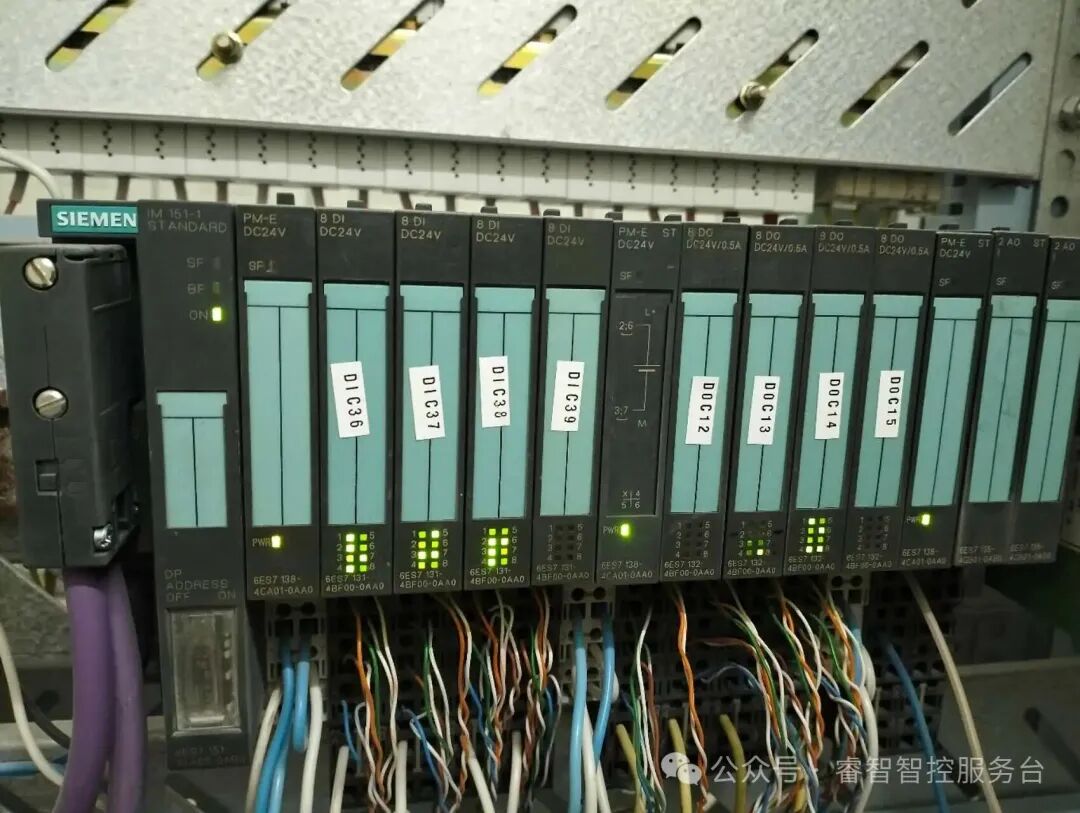
3. Industrial Ethernet (High-Speed Channel)
-
PROFINET: Siemens-led, excellent real-time performance
-
EtherNet/IP: Rockwell system, IT/OT integration
-
Modbus TCP: The Ethernet version of traditional Modbus
-
CC-Link IE: Mitsubishi’s gigabit Ethernet solution
-
EtherCAT: Developed by Beckhoff, extreme real-time performance
Application Scenarios: High-speed production lines, complex control systems, large data volume transmission
4. Wireless Communication (Emerging Trend)
-
Wi-Fi: Mobile device access, remote monitoring
-
Bluetooth: Device debugging, data collection
-
LoRa/NB-IoT: Long-distance, low-power sensor networks
-
5G: Industrial Internet, remote precision control
Application Scenarios: Mobile devices, remote monitoring, wide-area sensor networks
3. Selection Recommendations
Factors to Consider in Selection:
-
Control scale and real-time requirements
-
Device compatibility and brand ecosystem
-
Cost budget and maintenance complexity
-
Network topology and expansion needs
Typical Combination Solutions: Large systems often adopt a mixed architecture of multiple protocols to fully leverage their respective technical advantages.
4. Conclusion
PLC communication technology is evolving towards high-speed, openness, and wireless capabilities. Understanding the characteristics of each protocol and making reasonable selections based on actual needs is key to building a stable and efficient automation system. Traditional serial communication still holds value in specific scenarios, fieldbus is a mature and stable choice, industrial Ethernet has become the current mainstream, while wireless technology lays the foundation for future smart factories.