
 Written by| Haishan Source| Bowang Finance
As AI large models ignite a computational arms race and smart cars approach a critical mass, an “invisible revolution” concerning the computational foundation is quietly unfolding in the printed circuit board (PCB) industry.
Shengyi Electronics, as an industry leader, has seen its stock price soar23 times in just 20 months, reflecting the company’s forward-looking layout and deep technological accumulation in the high-end PCB sector.
With AI servers and high-speed switching devices demanding extreme requirements for PCB transmission rates, density, and reliability, Shengyi Electronics has become an indispensable key player in the AI computational supply chain, showcasing the scarce value of high-end PCBs as “hard gold” in the smart era.
01
Explosive Growth in Performance
As a leading enterprise in the PCB industry amidst the AI industrial wave, Shengyi Electronics is set to become a model of explosive growth in financial performance by 2025. The core driver lies in precisely positioning itself in a high-demand sector, achieving a qualitative leap in performance through the high-end transformation of its product structure.
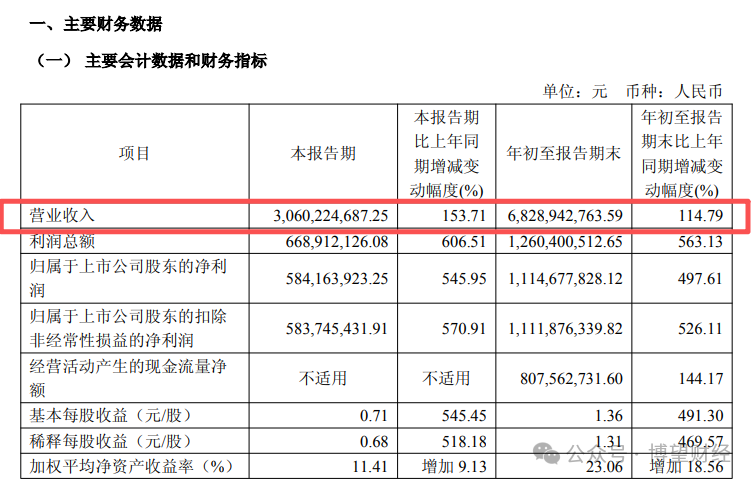
In the first three quarters of 2025, Shengyi Electronics exhibited explosive growth in performance. The company achieved operating revenue of 6.829 billion yuan, a significant year-on-year increase of 114.79%; net profit attributable to the parent company reached 1.115 billion yuan, surging by 497.61%, and the net profit excluding non-recurring items also reached 1.112 billion yuan, a year-on-year increase of 526.11%.
Quarterly, the third quarter was particularly outstanding, with revenue reaching 3.06 billion yuan, a year-on-year increase of 153.71%; net profit was 584 million yuan, a year-on-year increase of 545.95%, and the net profit excluding non-recurring items was also 584 million yuan, a year-on-year increase of 570.7%. This strong growth is not a fleeting moment but shows an accelerating trend, with the effectiveness of the high-end product strategy continuing to manifest, fully demonstrating the fundamental shift in the company’s business structure.
From the perspective of profitability indicators, Shengyi Electronics has achieved a qualitative leap. In the first three quarters of 2025, the company’s gross margin climbed to 30.39%, up approximately 10 percentage points compared to 19.5% in 2024, achieving six consecutive quarters of increase; the gross margin for the third quarter alone reached 31.98%.
In terms of net profit margin, it reached 16.32% in the first three quarters, an increase of over 10 percentage points, with the third quarter maintaining a similar level. Such a significant improvement in profitability is mainly due to the substantial increase in the proportion of PCBs used in AI servers. The proportion of these products rose from 48.96% in 2024 to over 60% in the first half of 2025, utilizing ultra-low loss materials and precision back-drilling technology, with the value of a single board being more than three times that of ordinary products, directly driving a significant increase in gross and net margins.

In terms of cash flow, Shengyi Electronics also performed excellently. In the first three quarters of 2025, the net cash flow from operating activities reached 808 million yuan, a year-on-year increase of 144.17%, with cash received from sales of goods and services reaching 5.288 billion yuan, covering 77.4% of the revenue during the same period.
This excellent performance reflects two key changes. On one hand, the high-end customer structure has significantly shortened the collection cycle. Core customers like Amazon and Tesla have adopted prepayment or shorter credit terms, greatly reducing accounts receivable risk and ensuring timely cash recovery.
On the other hand, the improvement in capacity utilization has effectively diluted fixed costs, increasing the cash flow contribution per unit product. For example, its smart computing center’s high-layer high-density interconnect PCB project has shortened the production cycle by 20%, not only improving production efficiency but also further accelerating cash turnover, providing a solid financial guarantee for the company’s sustainable development.
In 2025, Shengyi Electronics achieved explosive growth in performance through precise strategic layout and efficient operational management, demonstrating outstanding performance in both profitability quality and cash flow, showcasing strong market competitiveness and development potential.
02
Building a Moat Through Multiple Tracks
Shengyi Electronics has constructed a diversified growth system through strategic synergy and deep layout across three major tracks: “AI + Communication + Smart Cars,” while continuous investment in technological research and development provides core support for breakthroughs in various business lines.
In the core track of AI computing, the company accurately grasps industry trends, with its high-layer PCB products perfectly matching the high computing demands of AI servers.
As the global AI server market value is expected to exceed 70% of the total server industry value by 2025, the high-end boards above 18 layers that Shengyi Electronics focuses on align perfectly with the expected compound growth rate of 32.5% in the PCB market for AI/HPC servers.
The company has achieved mass delivery of 800G high-speed switch PCBs and is collaborating with core customers to advance the R&D of next-generation 224G system products, which are currently in the prototyping stage, deeply binding with top global technology companies, and establishing a leading position in the niche market of AI server PCBs, with related product revenue accounting for over 60% in the second quarter of 2025, becoming the core engine of performance growth.
Success in the communication and automotive electronics tracks has opened a second growth curve for the company. In the communication field, the low-orbit satellite communication series products that Shengyi Electronics laid out early have passed certification from multiple customers, and mass production is expected to be achieved by 2025, seizing the opportunity in the 6G era.
At the same time, as the exclusive supplier of Huawei’s 5.5G base station mainboards, leveraging Huawei’s global deployment plan of 500,000 5.5G base stations in 2025, the company has secured orders worth approximately 9 billion yuan.
The automotive electronics sector is also experiencing explosive growth, with related business revenue in the first half of 2025 increasing by over 100%, and self-developed autonomous driving domain control and millimeter-wave radar PCBs have achieved mass delivery, with projects like smart cockpits and 400V platforms entering mass production, while also advancing the development of 800V high-voltage platforms and related modules’ PCBs, completing high-voltage CAF testing and failure analysis, covering mainstream new energy vehicle manufacturers both domestically and internationally.
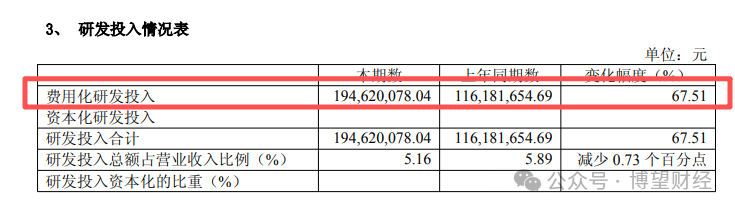
This multi-track layout effectively disperses the risk of fluctuations in a single market, forming a resonance growth trend across all fields. Technological research and development is the core guarantee and source of core competitiveness for the multi-track collaborative layout. Shengyi Electronics continues to increase R&D investment, with R&D expenses reaching 195 million yuan in the first half of 2025, a year-on-year increase of 67.51%, accumulating 369 intellectual property rights, including 282 invention patents.
The company has mastered the full-process manufacturing technology for 48-layer high-end server mainboards in the AI server field, achieving a product yield of over 95%; in the high-speed communication field, its 800G high-speed switch PCBs have a market share exceeding 30% and a yield rate of 98%; and through collaboration with its parent company Shengyi Technology, it has developed M9-grade copper-clad laminates, reducing costs by 20%.
This deep technological reserve not only enhances the competitiveness of existing products but also positions the company ahead in future tracks, collectively forming a differentiated technological moat that supports the company’s long-term growth momentum.
03
Capacity Upgrades and Global Layout as Dual Drivers
As the global AI computing race heats up, the demand for high-end PCBs will continue to explode. Shengyi Electronics has initiated a new round of capacity expansion, driven by AI computing, and this “invisible revolution” has just begun.
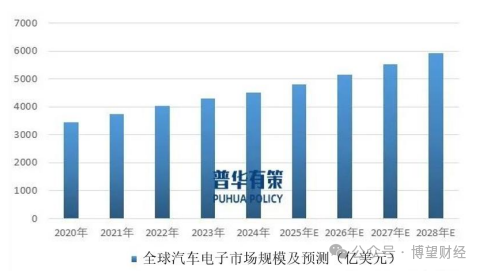
Under the drive of electronic information technology, automotive electronics technology is increasingly becoming the core of differentiated competition among vehicles. With the deepening trend of the “new three transformations” of intelligence, connectivity, and electrification, the widespread adoption of in-car navigation and entertainment systems, and the increasing maturity of the electronicization of key systems like powertrains, automotive electronics’ share of overall vehicle costs continues to rise. It is expected that by 2030, the global automotive electronics will account for 49.6% of the overall vehicle value, while the automotive electronics market is expected to reach around 600 billion dollars by 2028.
With strategic determination and precise layout, Shengyi Electronics is building core competitive barriers through capacity expansion and global collaboration, injecting strong momentum for long-term growth.
The company has invested approximately 1.9 billion yuan to create the “Smart Computing Center High-Layer High-Density Interconnect PCB Project,” which is a key strategic pivot for its deep cultivation in the high-end manufacturing field, with an annual production capacity planned to reach 700,000 square meters, phased production is expected in 2026 and 2027, focusing on core processes such as high-layer boards, high-speed back-drilling, and precision interconnection, with the value of a single board being more than three times that of traditional products, precisely meeting the supporting needs of NVIDIA’s GB200 servers and Huawei’s Ascend AI chips.
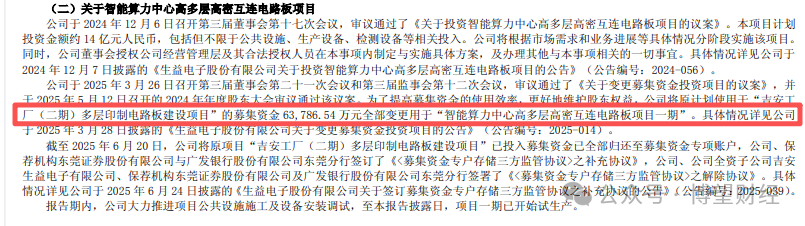
For example, its self-developed 224G high-speed switch PCB board has entered the prototyping stage, achieving international leading levels in signal integrity indicators through the use of ultra-low loss materials and embedded capacitor technology, and is expected to be mass-produced in 2026 for direct application in NVIDIA’s Spectrum-X Ethernet switches, fully meeting the stringent requirements for bandwidth density and power consumption in AI clusters..
For the 800G optical module development of 12 layer HDI boards, transmission loss has been reduced to below 0.1dB/inch, successfully becoming an important supplier for communication giants like ZTE and H3C.
This project not only shortens the production cycle by 20% through automation upgrades and digital transformation, improving yield rates to over 98%, but also builds a dual moat of technological barriers and cost advantages in the high-end PCB field through dual upgrades of “technology + manufacturing.”
Its smart factory introduces AI visual inspection systems and intelligent warehousing logistics, achieving full-process traceability from raw materials to finished products: real-time monitoring of over 2000 quality inspection points through machine learning algorithms, with a defect detection rate improved to 99.9%, significantly reducing human intervention errors; while the application of the 5G+ industrial internet platform has improved overall equipment efficiency (OEE) by 15%, and reduced unit production energy consumption by 12%, significantly enhancing the ability to undertake high-end orders.
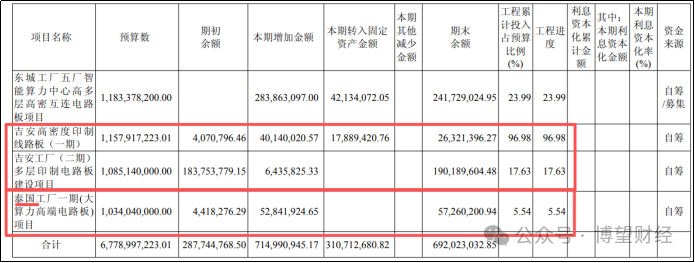
In terms of international layout, Shengyi Electronics has increased its investment in the Thailand PCB base from 100 million to 170 million dollars, with construction strictly following the standards of the “Southeast Asia Manufacturing Center,” planning to start trial production in 2026 and undertake global orders.
This base is positioned as an “overseas delivery hub,” effectively avoiding tariff costs on imports to the U.S. through certificates of origin from Southeast Asia, while shortening delivery cycles by 5-7 days.
For example, with orders from Amazon’s cloud computing division, the Thailand base can achieve “local production – regional delivery” agile responses, improving efficiency by 30% compared to domestic bases; furthermore, by radiating to the European and Middle Eastern markets, it forms a dual manufacturing base pattern of “China + Thailand,” effectively dispersing the risk of fluctuations in a single market.
It is noteworthy that the Thailand base has passed NVIDIA’s factory audit, and mass supply of AI server PCBs will begin in the fourth quarter of 2025, bringing in over 500 million yuan in additional orders in the first year, while accelerating high-end product iteration through technological collaboration: for example, jointly developing M7-grade copper-clad laminate application processes with NVIDIA, reducing high-frequency transmission loss to 0.08dB/inch, pushing the company’s technical standards to align with international giants.
A new giant is rising!