For more in-depth information, reports, and knowledge about sensor technology, sensor testing technology, and IoT sensor technology, please follow the Sensor Expert WeChat public account and set it as a star to view past content.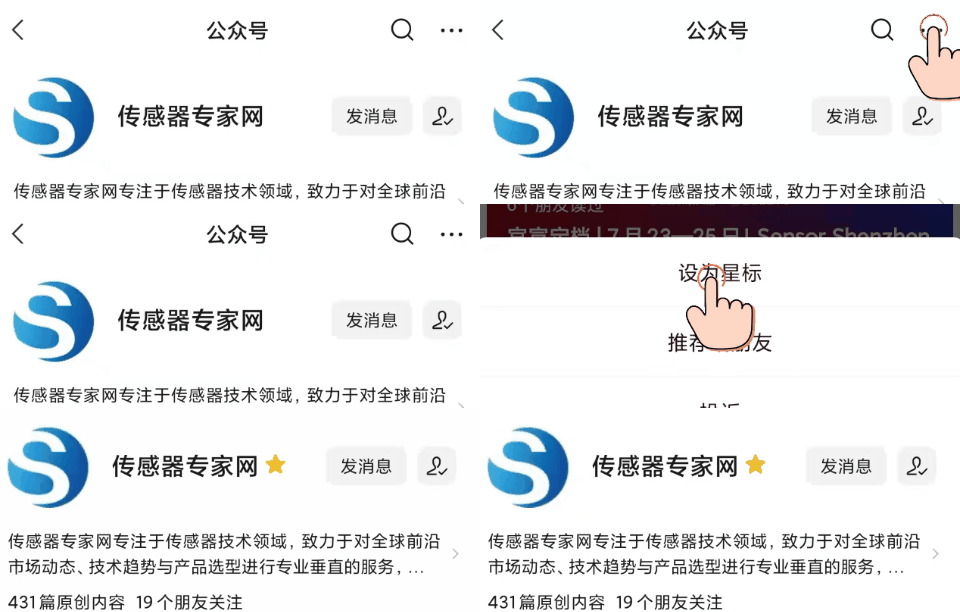 In engineering testing and material research, accurately measuring tension is crucial for ensuring structural safety and material performance. Are you curious about how the load-bearing capacity of bridges is tested? Or how tensile tests on materials ensure data accuracy? The answers to these questions point to a key technology—tension measurement sensors. This article will take you through the working principles to practical applications, providing a comprehensive analysis of this “tension sensing” technology.

Part One: Overview of Tension Measurement SensorsTension measurement sensors are devices used to measure the tension experienced by an object. Their core function is to convert tension signals into electrical signals and provide real-time monitoring data through a data processing system. From early mechanical force gauges to modern electronic sensors, tension measurement sensors have undergone multiple technological innovations and have become indispensable measurement tools in engineering testing and material research.Part Two: Working PrinciplesThe working principle of tension measurement sensors is primarily based on strain gauge technology or the piezoelectric effect. Key components include elastomers, strain gauges, and signal processing circuits. During operation, tension is applied to the elastomer, causing it to deform, which in turn deforms the strain gauge and changes its resistance value. By measuring the change in resistance, the tension value can be inferred. For example, using strain gauge technology, the sensor calculates the tension value by measuring the resistance change of the strain gauge in conjunction with the mechanical properties of the elastomer.Part Three: Types and ClassificationsTension measurement sensors can be classified based on their principles into strain gauge type and piezoelectric type. They can also be categorized by measurement range into low-range (0-100N), medium-range (100-1000N), and high-range (above 1000N). Based on application scenarios, they can be divided into sensors for engineering testing, material research, and laboratory use.Part Four: Application ScenariosIn the field of engineering testing, tension measurement sensors are used for load testing of structures such as bridges and buildings to ensure structural safety. In material research, they are used for tensile tests to ensure that material performance meets design requirements. Laboratories utilize their high precision and reliability for mechanical performance research and development. For example, in bridge testing, tension measurement sensors can monitor the load-bearing capacity of the bridge in real-time, providing data support for safety assessments.ConclusionThe important role of tension measurement sensors in engineering testing and material research is driving technological advancements in related fields. Do you have any questions or opinions about this technology? Feel free to leave a comment for discussion!
Join the largest sensor community in China: Sensor Exchange Circle for discussions.
What do you think of this article? Feel free to leave a comment and share!
Share and click to view, and help spread the dynamics of the Chinese sensor industry to more people!
Starred content = content you care about, according to the WeChat public account recommendation principle, if you do not set the Sensor Expert WeChat public account homepage as a star, you will not be able to receive the latest information in the sensor industry in a timely manner!
Disclaimer:This article is reprinted for the purpose of conveying more information. If there are any errors in source attribution or infringement of your legal rights, please contact us, and we will correct or delete it promptly. Thank you.
If you have any submission or interview requests, please email:[email protected].Recommended Reading:
- China’s Sensors Depend on You! Summary of Sensor Research Information from 30 Top Universities
- Finally Understood, Modern Warfare is All About Sensors
- China’s Chip Tycoon Actually Comes from Sensors
- Waking Up to Find Chinese Companies Can No Longer Design Sensors?!