In the scientific world of water quality monitoring, spectroscopy acts like a precise “X-ray,” decoding hidden information about water quality through three unique principles: absorption, fluorescence, and reflection. Below, we will break down their scientific logic and practical value —
PART.01Core Principles of Spectroscopy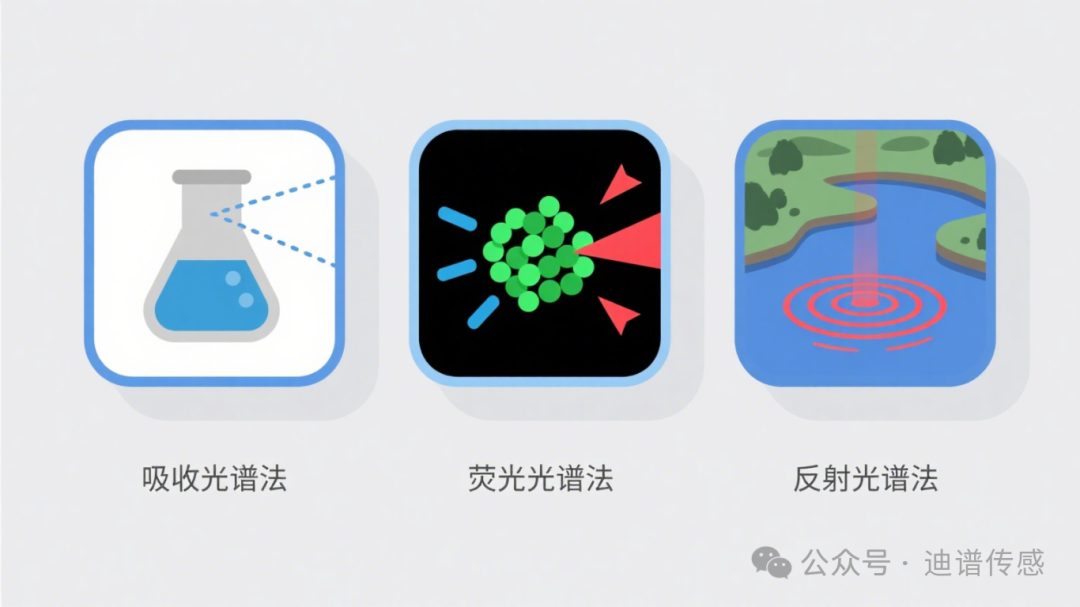
(1) Absorption Spectroscopy: The Secret of How Substances “Absorb” Light
Principle: Based on Beer-Lambert Law, pollutants in water (such as organics and heavy metals) selectively absorb specific wavelengths of light. For example, ultraviolet light at 254nm can be strongly absorbed by natural organic matter (NOM) in water. By measuring the attenuation of light absorption, the concentration of pollutants can be inferred.
Characteristics: Like UV-Visible absorption spectroscopy (UV-Vis), covering the 200-800nm range, it can quickly detect COD (Chemical Oxygen Demand), nitrates, and turbidity; infrared absorption spectroscopy (IR) excels at identifying dissolved organics and total nitrogen, requiring no chemical reagents, making it suitable for online monitoring.
(2) Fluorescence Spectroscopy: The Signal of Substances “Emitting Light”
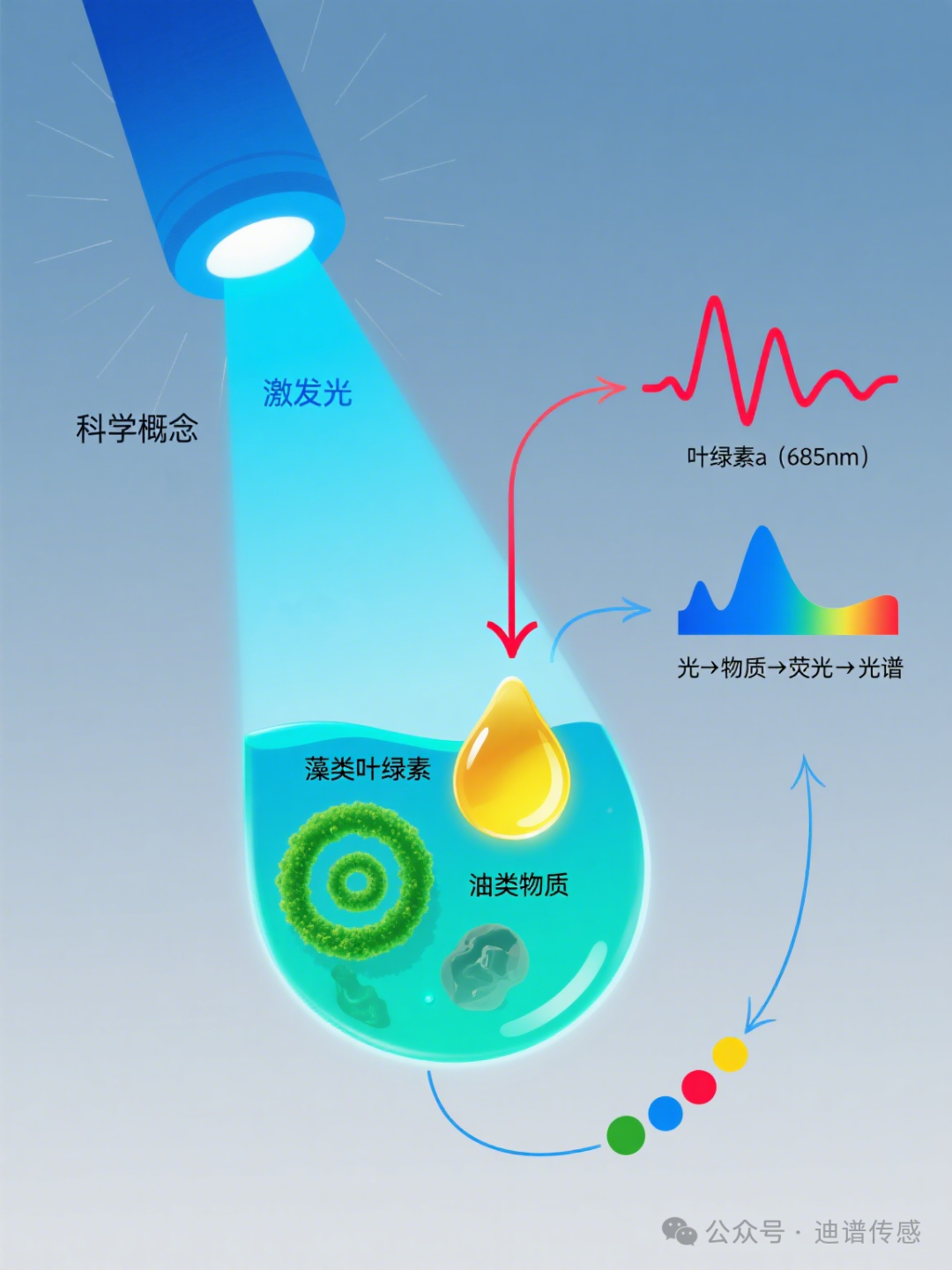
Principle: Specific substances (such as algal chlorophyll, oils, and humic substances) emit longer wavelength fluorescence when excited by ultraviolet/blue light. For example, chlorophyll a emits red fluorescence when excited by blue light. By capturing the intensity and wavelength of fluorescence, pollutants can be identified.
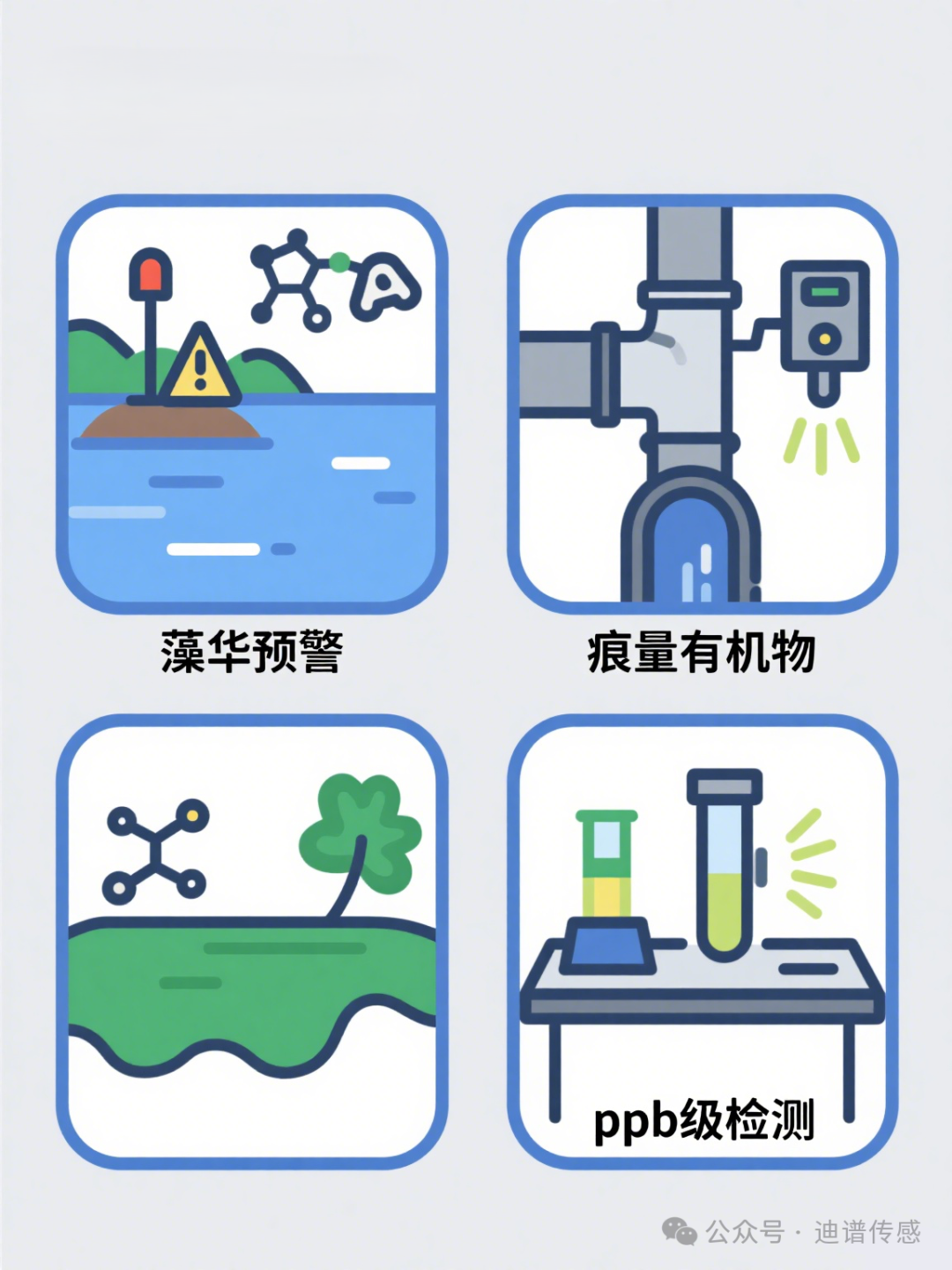
Characteristics: Extremely high sensitivity! It can detect substances at the ppb level (parts per billion) and differentiate between types of pollutants (for example, the fluorescence spectra of oils and algae are different), making it a “scout” for tracking water eutrophication and oil pollution.
(3) Reflectance Spectroscopy: Clues from Substances “Reflecting Light”
Principle: Measures the spectral characteristics of light reflected from the surface/internal of water. For example, eutrophic waters with abundant algae show significant chlorophyll reflection peaks; when an oil film covers the water surface, the reflectance differs greatly from that of clear water. Using satellite/drone remote sensing combined with reflectance spectroscopy, large-scale water quality monitoring can be achieved.
Characteristics: Non-contact and large-scale! Suitable for watershed/ocean water quality surveys, such as monitoring algal blooms in lakes and oil spill events in oceans, reflectance spectroscopy can quickly identify the extent of pollution.
PART.02Application Scenarios and Practical Value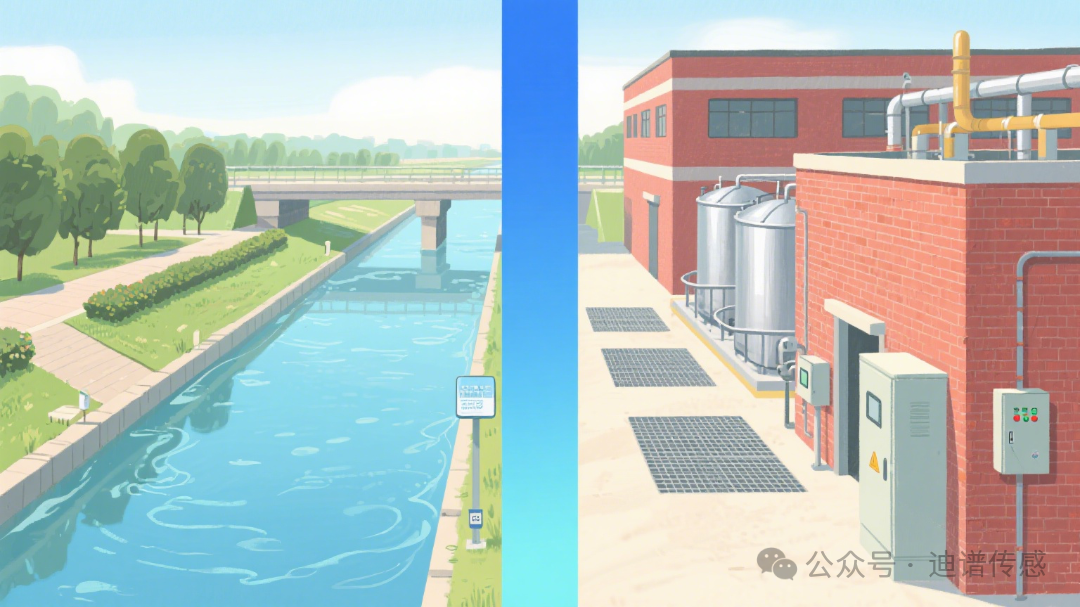
(1) Ensuring Drinking Water Safety
Monitoring Water Sources: In drinking water sources such as rivers, lakes, and reservoirs, absorption spectroscopy sensors are deployed to monitor organic matter (such as UV-Vis detection of natural organic matter content), nitrates, and other indicators in real-time. If levels exceed standards, timely warnings can be issued, and water intake strategies can be adjusted; fluorescence spectroscopy sensors can capture algal chlorophyll fluorescence to prevent water blooms in advance, ensuring the safety of raw water.
Water Treatment Process Control: In water treatment plants, absorption spectroscopy sensors continuously monitor the COD, turbidity, and color of incoming and outgoing water, guiding adjustments to coagulation, disinfection, and other process parameters; infrared absorption spectroscopy sensors monitor dissolved organics to optimize deep treatment stages, ensuring that outgoing water quality meets standards.
(2) Wastewater Treatment Supervision
Influent Monitoring at Wastewater Treatment Plants: At the influent of wastewater treatment plants, absorption spectroscopy sensors quickly detect concentrations of COD, ammonia nitrogen, and other pollutants, providing data for subsequent biochemical treatment aeration and chemical dosing, avoiding shock loads that could affect treatment efficiency.
Process and Effluent Control: During the treatment process, fluorescence spectroscopy sensors monitor the metabolic fluorescence signals of microorganisms in activated sludge to assess treatment efficiency; at the effluent outlet, absorption and fluorescence spectroscopy sensors are deployed to monitor COD, total nitrogen, total phosphorus, and other indicators in real-time, ensuring compliance with discharge standards and avoiding environmental risks.
(3) Surface Water Ecological Management
Watershed Water Quality Surveys: Utilizing satellites and drones equipped with reflectance spectroscopy technology, large-scale scans of major rivers (such as the Yangtze and Yellow Rivers) and lake groups are conducted. Based on the reflectance spectral characteristics of water, areas of eutrophication, sedimentation, and oil pollution can be identified, providing macro data for watershed ecological restoration and water quality assessment.
River Water Patrol: In urban rivers and scenic waterways, absorption and fluorescence spectroscopy sensors are deployed to monitor organic pollution and algal growth, assisting in the evaluation of the effectiveness of river dredging and ecological water replenishment measures, maintaining water ecological health.
(4) Industrial Water Environment Management
Monitoring Industrial Wastewater Discharge: Absorption and fluorescence spectroscopy sensors are installed at factory discharge outlets to monitor concentrations of industry-specific pollutants (such as phenols from chemical enterprises and dye fluorescence from dyeing enterprises) in real-time, preventing exceedances while providing data for optimizing internal wastewater treatment processes.
Monitoring Recirculating Water Systems: In industrial recirculating cooling water systems, absorption spectroscopy sensors monitor water quality turbidity and hardness, while fluorescence spectroscopy sensors detect microorganisms and oil fluorescence, guiding the addition of water quality stabilizers and system cleaning to ensure efficient operation of equipment and reduce energy consumption.
(5) Marine Environment Monitoring
Nearshore Monitoring: Buoy-type spectral sensors are deployed in nearshore waters to detect nutrients and organics in seawater using absorption spectroscopy, while fluorescence spectroscopy monitors algae (providing early warnings for red tides). Reflectance spectroscopy combined with satellite remote sensing is used to investigate oil spills from oil platforms and ship oil pollution, protecting nearshore marine ecology.
Oceanic Ecological Research: Research vessels equipped with spectral sensors conduct ocean water quality surveys, utilizing absorption spectroscopy to analyze dissolved organics and nutrient distribution, and fluorescence spectroscopy to study deep-sea microbial fluorescence characteristics, aiding research in marine ecology and carbon cycling.
PART.04Conclusion
Absorption, fluorescence, and reflectance spectroscopy form a multidimensional technical system for water quality monitoring based on the absorption, emission, and reflection laws of substances concerning light: absorption spectroscopy anchors conventional indicators, ensuring basic water quality safety; fluorescence spectroscopy focuses on trace and characteristic pollutants, uncovering hidden risks; reflectance spectroscopy breaks spatial limitations, achieving large-scale water quality management. Together, they cover the full spectrum of needs from microscopic detection to macroscopic surveys, establishing a scientific defense line for protecting water resource quality. As spectroscopy technology and algorithms continue to integrate deeply, their precision and intelligence in water quality monitoring will keep improving, advancing water environment management towards greater efficiency and refinement.
Today’s Topic:
If you have any questions about spectroscopy sensors, feel free to leave your inquiries in the comments section.
Remember to follow and bookmark, and you may receive a gift for your comments!
END Scan to Follow Dipu Sensors