High In-Plane Thermal Conductivity and Excellent Photo-Thermal Performance of Polydimethylsiloxane Composites
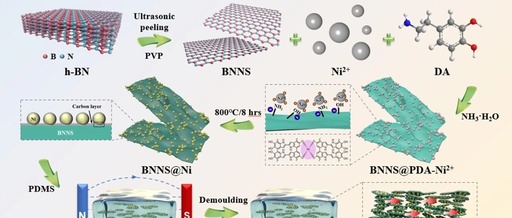
High In-Plane Thermal Conductivity and Excellent Photo-Thermal Performance of Polydimethylsiloxane Composites

Background Introduction With the development of high power and miniaturization of flexible electronic devices, their power density has increased dramatically, leading to severe heat accumulation issues. There is an urgent need for flexible high thermal conductivity materials to dissipate heat quickly and efficiently, ensuring the operational stability of electronic devices. Polydimethylsiloxane (PDMS) is widely used … Read more
The Role of Sheet Resistance in Bio-Sensor Electrode Chips: The Significance Behind a Small Parameter

The Role of Sheet Resistance in Bio-Sensor Electrode Chips: The Significance Behind a Small Parameter

In flexible electronics, biosensors, and new energy devices, screen printing technology is widely used due to its low cost and scalability. One of the key parameters determining the performance of these printed electrodes is a seemingly unfamiliar term: sheet resistance (方阻). 1.What is Sheet Resistance? Sheet resistance, measured in Ω/□ (ohms per square), describes the … Read more

Dalian University of Technology’s Wang Dazhi Team Publishes Latest Achievements in 3D Printing Technology for Flexible Circuit Conductive Structures

Dalian University of Technology's Wang Dazhi Team Publishes Latest Achievements in 3D Printing Technology for Flexible Circuit Conductive Structures

Click the blue text to follow us In the wave of rapid development of global flexible electronics technology, the research team led by Wang Dazhi and Wang Tiesheng at Dalian University of Technology has recently made a significant breakthrough by successfully developing the “tension-driven fluid-stretching 3D printing technology” with independent intellectual property rights. This innovative … Read more

Optical Biosensors: From Fingerprint Recognition to Electronic Skin

Optical Biosensors: From Fingerprint Recognition to Electronic Skin

Banner This article is produced by「Light Science Popularization Studio」. Author: Zhang Senhao Reviewer: Wang Ling Abstract In the early morning, your fingertips touch the smartphone screen—a beam of invisible light instantly emerges from beneath the screen, like an explorer climbing over the “mountains” and “valleys” of your fingerprint, transforming the uneven patterns into a password … Read more

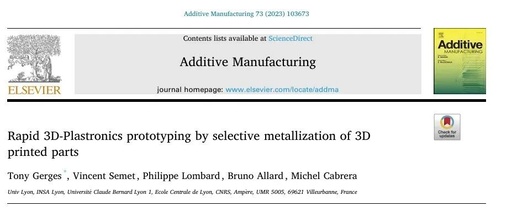
Rapid 3D Plastronics Prototyping through Selective Metallization of 3D Printed Components

Rapid 3D Plastronics Prototyping through Selective Metallization of 3D Printed Components

1. Research Background and Objectives Current Status and Challenges Traditional polymer surface selective metallization methods are costly, complex, and often use toxic chemicals (such as chromic acid), which are harmful to the environment and health. Existing technologies (such as laser direct writing and conductive inkjet printing) require customized equipment or special materials, limiting rapid prototyping … Read more

Semiconductors Welcome New Alternatives

Semiconductors Welcome New Alternatives

Remember to star the public account ⭐️ to see the push notifications in time. Source: Content from scitechdaily, thank you. Silicon and oxygen atoms were once thought to be merely insulators, but the change in the angle between silicon and oxygen atoms has opened a pathway for charge flow. A groundbreaking discovery from the University … Read more

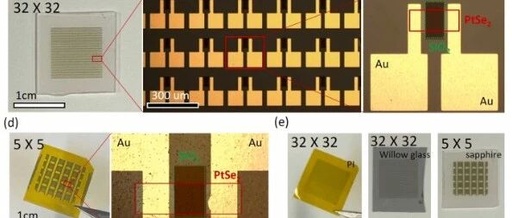
Nano Energy: Wafer-Level Flexible Two-Dimensional PtSe2 Layers with Bidirectional Wavelength Tunability for All-Optical Synaptic Operations

Nano Energy: Wafer-Level Flexible Two-Dimensional PtSe2 Layers with Bidirectional Wavelength Tunability for All-Optical Synaptic Operations

Artificial synapses are promising fundamental components in the field of neuromorphic computing, providing new pathways to overcome the inherent limitations of the von Neumann architecture. Compared to traditional memristors controlled by electricity, optically controlled synaptic devices are attracting widespread attention due to their unique advantages. This study demonstrates, for the first time, an all-optical synaptic … Read more

Arm Releases New Chip: Flexible PI Substrate at Only 10% Cost of Similar Products

Arm Releases New Chip: Flexible PI Substrate at Only 10% Cost of Similar Products

Unlike traditional semiconductor devices, flexible electronic devices are built on substrates such as paper, plastic, or metal foils, utilizing active thin-film semiconductor materials like organic/metal oxides or amorphous silicon. Flexible electronic devices offer advantages such as thinness, uniformity, and low manufacturing costs. Fabricating thin-film transistors (TFTs) on flexible substrates significantly reduces costs, allowing electronic products … Read more

Conductive Glass (Indium Tin Oxide): The Unsung Hero of Touch Screens

Conductive Glass (Indium Tin Oxide): The Unsung Hero of Touch Screens

↑ Click Above to Learn More About “Vesuvius Cellulose” In recent years, touch screens have become increasingly common in electronic devices, appearing not only in smartphones and tablets but also in navigation systems, ATMs, and other equipment. Unlike traditional input methods such as keyboards and mice, touch screens allow users to perform various operations simply … Read more

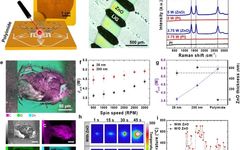
Super Sensitive Stretchable Strain Sensor Based on ZnO Nanoparticles Laser Induced Graphene

Super Sensitive Stretchable Strain Sensor Based on ZnO Nanoparticles Laser Induced Graphene

↑ Click the “Graphene Alliance” above to follow us First Author: Do Hoon Lee Corresponding Author: Kuniharu Takei Affiliation: Hokkaido University DOI: 10.1021/acsnano.4c13156 Background Introduction Laser-induced graphene (LIG) adopts a bottom-up approach, directly converting carbon precursors into porous three-dimensional graphene through laser irradiation. As a macroscopic, low-cost conductive material, LIG has enormous potential for both … Read more