Xilinx 7-Series FPGA High-Speed Transceiver TX Overview
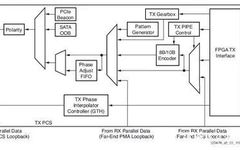
Xilinx 7-Series FPGA High-Speed Transceiver TX Overview

Win a Backpack! How Hard Is It? Give It a Try! →_→ Long Press Recognition Each transceiver has an independent transmitter, which consists of PMA (Physical Media Attachment) and PCS (Physical Coding Sublayer). The PMA sublayer includes circuits for high-speed serialization/deserialization (Serdes), pre/post-emphasis, receive equalization, clock generation, and clock recovery. The PCS sublayer includes circuits … Read more

Xilinx 7 Series FPGA High-Speed Transceiver RX Receiver Introduction

Xilinx 7 Series FPGA High-Speed Transceiver RX Receiver Introduction

Win a Backpack! How Difficult Is It? Give it a try! →_→ Long Press Recognition Continuing from the previous article:Xilinx 7 Series FPGA High-Speed Transceiver TX Transmitter Introduction The previous blog introduced the GTX transmitter, and this article will introduce the GTX RX receiver. The structure of the GTX RX receiver is similar to the … Read more

Optimizing RS-485 Timing Performance: How ADI Addresses Jitter and Long-Distance Communication Challenges

Optimizing RS-485 Timing Performance: How ADI Addresses Jitter and Long-Distance Communication Challenges

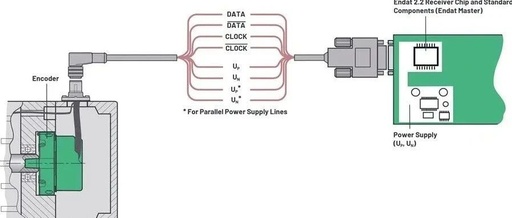
According to industry experts such as PROCENTEC, applications based on RS-485 fieldbus technology (PROFIBUS®) are continuously growing, and industrial Ethernet (PROFINET) applications are also rapidly increasing. In 2018, a total of 61 million PROFIBUS fieldbus nodes were installed globally, with a 7% year-on-year growth in PROFIBUS process automation (PA) devices. The installation base for PROFINET … Read more

How to Ground After Bus Isolation?

How to Ground After Bus Isolation?

Both CAN and RS-485 are commonly used field buses in industrial communication, and engineers are likely very familiar with bus isolation solutions. However, they may encounter situations where communication is abnormal even with an isolation scheme in place. This article will explore how to ground after bus isolation. Introduction To ensure the stability of communication … Read more

Application Note for UJA1168 Type SBC in Autosar Complex Device Drivers

Application Note for UJA1168 Type SBC in Autosar Complex Device Drivers

The UJA1168 is a micro System Basic Chip (SBC) launched by NXP, available in multiple models, suitable for automotive ECU design. The main functions of this chip include: CAN Transceiver Supports CAN 2.0 (1 Mbps) and CanFd (2 Mbps) Some models support “FD-passive” mode Low Power and Partial Network Management Supports Standby mode and Sleep … Read more

Detailed Explanation of CAN Bus

Detailed Explanation of CAN Bus

1 Introduction CAN stands for Controller Area Network, which is a serial communication network capable of achieving distributed real-time control. Advantages: The transmission speed can reach up to 1 Mbps, with a maximum communication distance of 10 km, a lossless arbitration mechanism, and a multi-master structure. In recent years, the price of CAN controllers has … Read more

Application of SIT1043 CAN Transceiver in Automotive ECU

Application of SIT1043 CAN Transceiver in Automotive ECU

The ECU, short for Electronic Control Unit, refers to all electronic control systems in a car. With the increasing number of electronic components in new energy and autonomous vehicles, the wiring has become more complex. Currently, data exchange between multiple ECUs in a vehicle is connected via the CAN bus, forming a network system for … Read more