Understanding Blepharospasm and Apraxia of Eyelid Opening in PSP Patients

Understanding Blepharospasm and Apraxia of Eyelid Opening in PSP Patients

Click the “blue words” above to follow us! Some patients with progressive supranuclear palsy (PSP) complain that their eyes “cannot be opened.” This phenomenon is often caused by blepharospasm and apraxia of eyelid opening. Today, we will share the clinical features, pathogenesis, and treatment methods of these two symptoms. 01 Clinical Features Blepharospasm (BSP) and … Read more
The Structure-Activity Relationship of ADCs

The Structure-Activity Relationship of ADCs

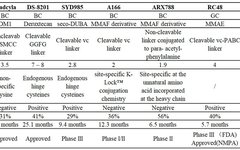
Introduction ADC drugs are a class of highly promising anti-tumor drugs that are rapidly developing. Although 14 ADCs have been officially approved, the complex structure of ADCs poses significant challenges in the development and optimization of new ADC drugs. Studying the “structure-activity relationship” of ADC drugs and understanding the intrinsic connection between the efficacy/safety of … Read more

Chinese Companies Leading the Innovation Frontier of ADCs

Chinese Companies Leading the Innovation Frontier of ADCs

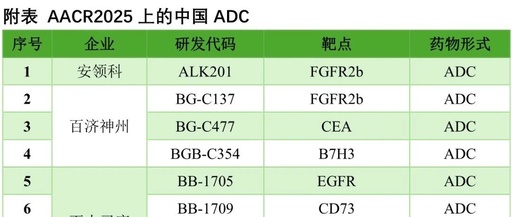
▎Armstrong The 2025 American Association for Cancer Research (AACR) Annual Meeting will be held from April 25-30 in Chicago, USA. Recently, the conference abstracts have been released, showcasing a significant presence of Chinese innovations. In the field of ADCs, the majority of reports come from Chinese pharmaceutical companies, with nearly 100 innovative ADCs covering various … Read more

Meige’s Syndrome: Understanding Its Mechanisms and Treatment

Meige’s syndrome (also translated as “Meige’s syndrome”) is also known as idiopathic blepharospasm-oromandibular dystonia syndrome. It is a rare type of segmental dystonia, belonging to a form of adult attention deficit hyperactivity disorder, characterized by blepharospasm, difficulty in opening the eyes, with or without involuntary movements of the mouth and mandible. This syndrome manifests as … Read more

Understanding Meige Syndrome: Clinical Treatments and Differences from Facial Spasms

Understanding Meige Syndrome: Clinical Treatments and Differences from Facial Spasms

Image Source | Internet 『Meige Syndrome (MS)』 is a focal/segmental cranial dystonia that involves eyelid spasms and/or involuntary contractions of the submandibular muscles, leading to segmental dystonia. As the disease progresses, it gradually affects the entire facial and even neck muscles. Currently, MS is classified into 4 types based on the affected areas of dystonia: … Read more

Overview of Research Progress on Blepharospasm

Overview of Research Progress on Blepharospasm

 Blepharospasm (BSP) is a focal dystonia characterized by involuntary closure of the eyelids and difficulty in opening them, usually caused by spasms of the orbicularis oculi muscle. Its prevalence varies significantly by region, approximately (20-133)/million, and it is more common in women aged 50-70, with a male-to-female ratio of about 1:2.3. Risk factors include … Read more

Understanding Eyelid Spasms and Their Treatment

Understanding Eyelid Spasms and Their Treatment

Eye Twitching “Eye twitching” usually refers to minor eyelid spasms related to fatigue, stress, or caffeine, which typically last from a few seconds to a few minutes before resolving on their own. This symptom is also known as eyelid tremor, characterized by repetitive, involuntary contractions of the eyelid muscles, often occurring in the upper eyelid. … Read more