

Medical Health
Hot Topic “Linking Words”
The Health Research Institute has planned a special column on popular science called “Linking Words” to explain hot vocabulary in detail, bringing the latest medical research achievements into the public eye.
What revolutionary sparks will fly when 3D printing technology meets living cells?
Today, we focus on biological 3D printing— a revolutionary technology known as “manufacturing life parts”, which is reshaping the future landscape of regenerative medicine.

What is “Biological 3D Printing”?
What exactly is it?

01
What is Biological 3D Printing?
Biological 3D printing is an innovative method that uses three-dimensional printing technology to manufacture biologically active tissues and organs. The key difference from conventional 3D printing lies in the use of “bio-ink” as the printing material— a special mixture containing live cells, growth factors, and biomaterials.
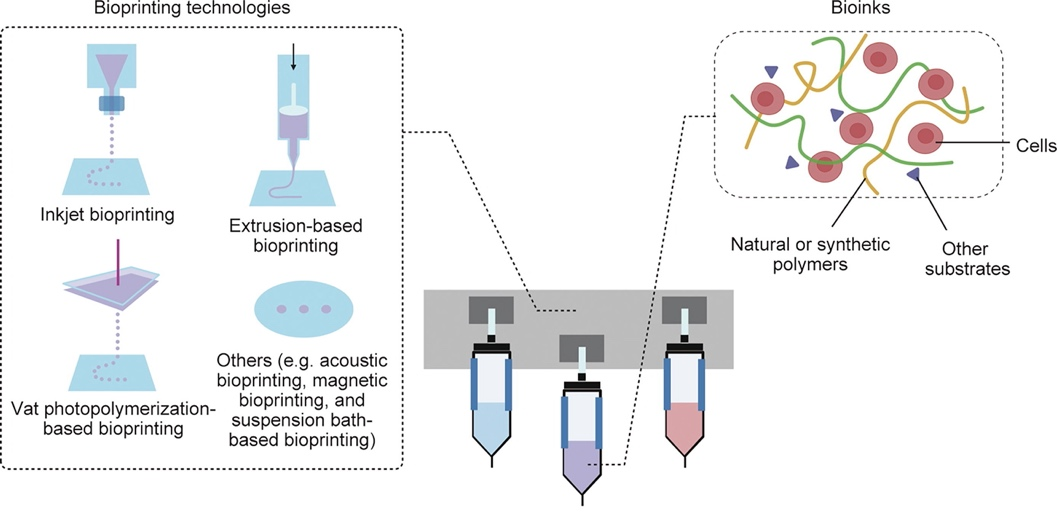
Diagram of the principle of biological 3D printing
Image source: Chinese Academy of Sciences official website
In simple terms, this technology is like a precision “life printer”: first, it obtains precise data of the patient’s lesion site through medical imaging technologies such as CT and MRI, then constructs a three-dimensional model in a computer, and finally uses a bioprinter to layer the bio-ink containing cells to build complex biological structures.
02
How to “print” living tissues?
Bio-ink: The “ink” of life
Bio-ink is the core of this technology, and it must meet three key conditions: good biocompatibility to maintain cell viability; suitable mechanical properties to maintain structure; and appropriate rheological properties (such as viscosity and shear-thinning characteristics) to ensure smooth printing. The components are similar to the “soil” for cell growth, typically containing hydrogels, live cells, and growth factors.
Printing process: The art of layer stacking
Biological 3D printing typically adopts a layer-by-layer stacking approach. For example, in a multi-scale immersion printing strategy, the printer injects bio-ink into a support bath material similar to “transparent jelly.” This material has yield stress characteristics: it becomes liquid when the printing nozzle passes through, and returns to gel state after the nozzle leaves, thus fixing the printed structure.

Heterogeneous human eye structure printed using multi-scale immersion printing strategy
Image source: Science and Technology Daily
Post-processing: Reviving the cells
After printing, the cells need to continue growing and differentiating in a suitable environment, ultimately forming tissues or organs with specific functions. Researchers use a cyclic “print-culture” process, where after printing several layers of cells, they conduct overall co-culture to induce the formation of physiologically functional connections and new capillary networks between cells.
03
Application Prospects:
From tissue repair to organ regeneration
Addressing the shortage of transplant organs
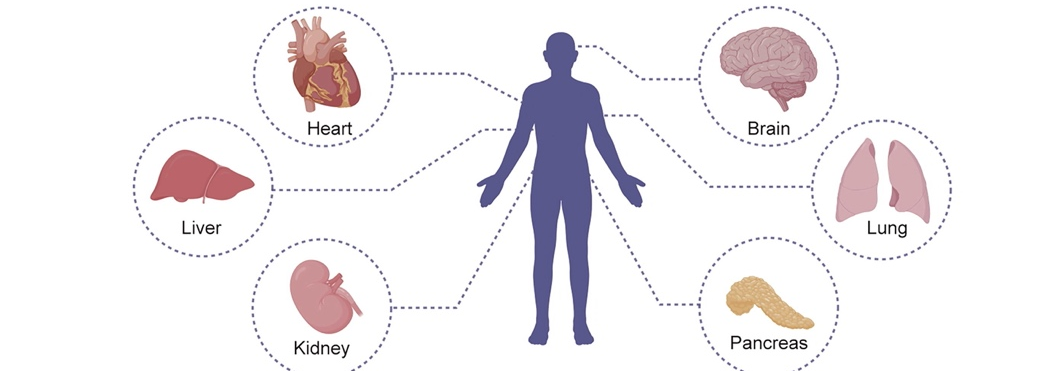
Illustration of biological 3D printing applications in organ transplantation
Image source: Chinese Academy of Sciences official website
Currently, there is a huge gap between the demand and supply of organ transplants worldwide. For example, in China, over 300,000 patients urgently need organ transplants each year, but less than 1% of patients can find suitable donors.
Biological 3D printing technology is expected to solve this problem through “on-demand printing”: experts predict that within 10 years, biological 3D printing of relatively simple tissues such as cartilage, cornea, and lens is expected to be clinically applied; while the printing of complex organs such as the heart and liver may require a longer period of technological accumulation.
New Era of Personalized Medicine
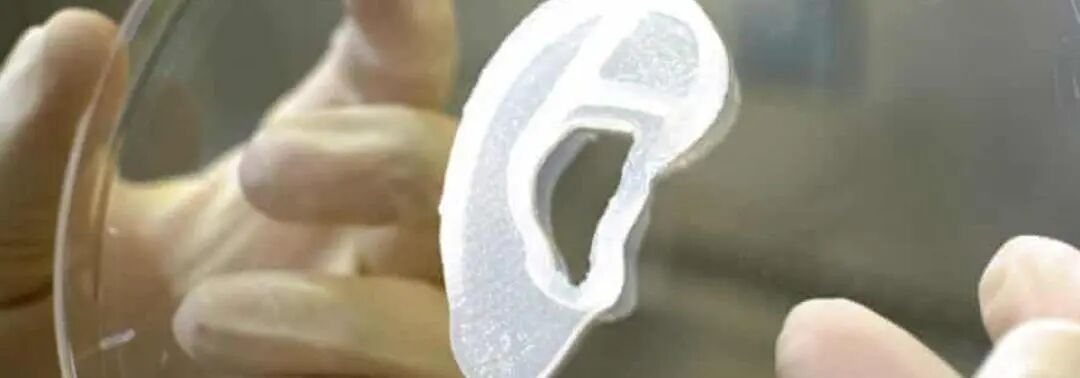
3D bioprinted ear implant AuriNovo cultivated in the laboratory
Image source: 3DBio Therapeutics
Using tissues and organs printed with the patient’s own cells can avoid immune rejection. In June 2022, 3DBio Therapeutics, a regenerative medicine manufacturing company in the United States, announced that a 20-year-old woman from Mexico received a transplant of an ear 3D printed from her own cells. This woman was born with congenital microtia, having a deformed ear, and 3DBio Therapeutics created a 3D printed transplant ear using her own living cells and performed the transplant surgery.
Disease Models and Drug Screening
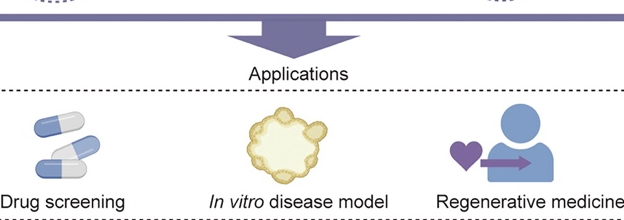
Illustration of biological 3D printing applications in disease models and drug screening
Image source: Chinese Academy of Sciences official website
The tissue models created by biological 3D printing can more accurately simulate the human environment for drug screening and disease research. For example, in cancer drug testing, three-dimensional cultured cancer cells can better simulate the real in vivo environment, providing more reliable data for drug development.
04
Challenges and Limitations
Despite the broad prospects, biological 3D printing still faces multiple challenges:
Technical Bottlenecks
Vascular network construction: How to build a complex vascular system to provide nutrients for thick tissues remains a challenge;
Multi-cell cooperation: Complex organs contain multiple cell types, and how to accurately arrange them and achieve functional cooperation is highly challenging;
Functional maturity: The printed organs need to be structurally and functionally close to natural organs, which is currently difficult to fully achieve.
Safety and Regulation
Cell survival rate: The printing process may damage cells, affecting the survival and function of the final product;
Long-term safety: The long-term effects of printed tissues implanted in the human body require more validation;
Regulatory approval: How personalized bioprinting products can pass the existing approval system is also a challenge.
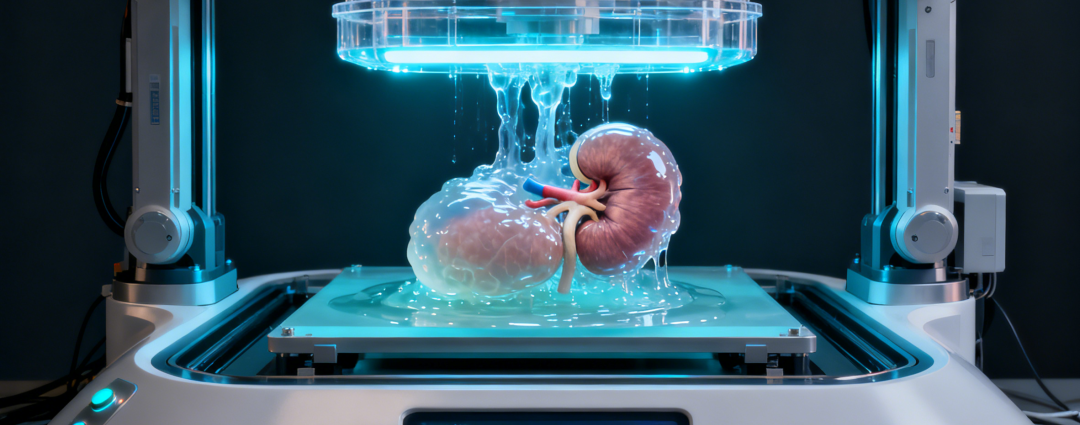
AI-generated concept image


Biological 3D printing represents the future direction of regenerative medicine. It is not only a technological innovation but also a profound understanding and reconstruction of life itself. With the deepening of interdisciplinary collaboration—integrating materials science, biology, medicine, and engineering, biological 3D printing technology is expected to achieve significant breakthroughs in the next 20-30 years.
Biological 3D Printing:
The Cutting-Edge Factory for “Manufacturing Life Parts”
References:
-
Science and Technology Daily: Multi-scale immersion printing achieves “all sizes”
-
Chinese Academy of Sciences official website: Guangzhou Branch Engineering | Latest progress of organ bioprinting in regenerative medicine
-
Popular Science China: New breakthroughs in biological 3D printing! Myocardial tissue can survive in vitro for over 6 months
-
Xinhua News: The first autologous cell 3D printed ear transplant surgery completed in the United States
-
Popular Science China: “Powering” regenerative organs! New type of bio-ink solves the challenges of 3D bioprinting
-
Su Zhou Daily: Precisely printing “life parts” with biological 3D printing
-
Science and Technology Daily: 3D printing of food, human organs, and rockets is widely expanding into various fields
This issue’s review expert:
Huang Pengyu, researcher, doctoral supervisor, tenured associate professor at Peking Union Medical College, National Excellent Young Scientist. Currently serves as the deputy director of the Institute of Biomedical Engineering, Chinese Academy of Medical Sciences, executive deputy director of Tianjin Medical Health Research Institute, deputy director of the National Key Laboratory of Advanced Medical Materials and Medical Devices, and director of the Ministry of Education Engineering Research Center for Respiratory and Critical Care Diagnosis and Treatment Technology and Equipment.
Mainly engaged in research on the construction and application of bioartificial organs based on primary adult cells, established centimeter-level bioartificial liver construction technology based on primary expanded liver cells, and was the first in the world to achieve 3D printed liver in vivo transplantation for treating liver failure in mice. The results were selected as one of the top ten scientific and technological advances in China in 2011. To date, he has published 20 papers as the first or corresponding author in internationally authoritative journals such as Nature and Cell Stem Cell, and has hosted key research and development projects for young scientists from the Ministry of Science and Technology, and has received honors such as the Special Award from the President of the Chinese Academy of Sciences and the First Prize in Natural Science from Shanghai.
END

Planning: Li Xinyu Lin Zhongwei
Copywriting: Lin Zhongwei Ma Yue
Editing: Lin Zhongwei
Proofreading: Li Kun
Review: Liu Yi Yu Yang