
Source: Scientific Reports | Compiled by: AM LINK | Date: 2025-11-25
Keywords: 3D printing medical accessories, CPAP helmet, microplastic erosion, fluid dynamics, ABS MedicalThe team from the Military University of Technology in Poland validated the safety of ABS Medical materials in the manufacture of emergency respiratory devices through CFD simulations and microplastic erosion tests, establishing a process path to eliminate microplastic risks through non-cooling printing: https://www.nature.com/articles/s41598-025-25851-2.pdf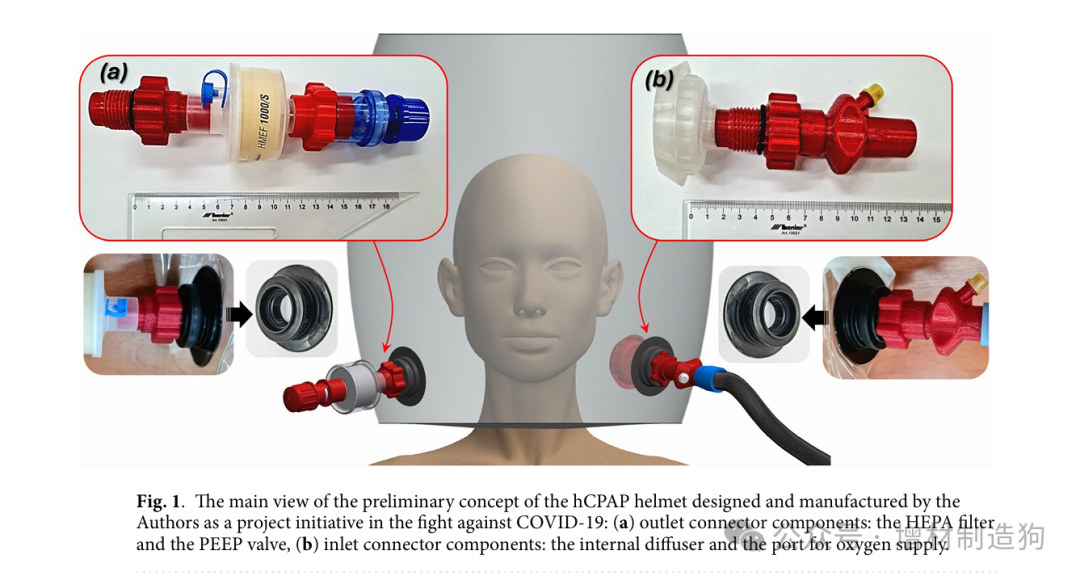
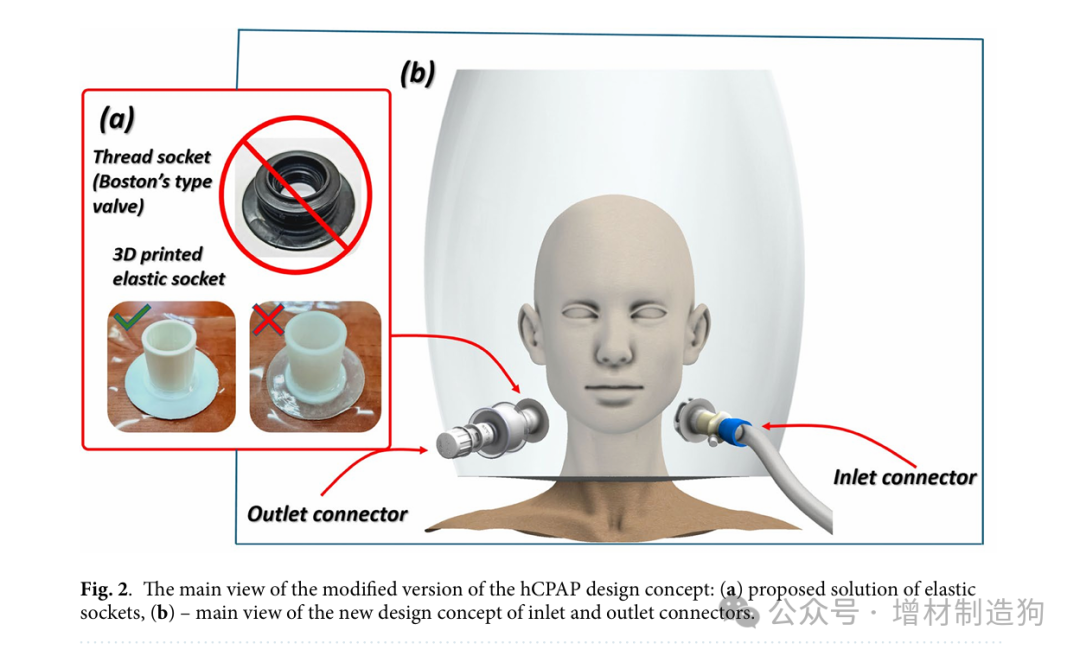
The research team from the Military University of Technology in Poland published a paper in Scientific Reports, detailing the optimization design and validation process for 3D printed accessories for helmet Continuous Positive Airway Pressure (hCPAP) devices. This study aims to address the challenges of medical resource shortages by redesigning the inlet and outlet connectors according to ISO 5356-1:2015 standards for lightweight and tool-free assembly, and validating its ergonomic performance through clinical trials with 120 participants, particularly assessing the risk of microplastic shedding at high flow rates.
The study utilized computational fluid dynamics (CFD) to optimize the geometry of the internal diffuser, integrating a umbrella valve to improve airflow distribution and reduce noise, addressing discomfort caused by direct airflow to the face. A key innovation was the material safety testing: the team compared PET-G, TPU-95, and ABS Medical materials, finding that while PET-G and ABS with cooling enabled showed risks of fine structure shedding, ABS Medical printed parts with cooling disabled did not detect microplastic release under simulated high airflow impacts in the breathing circuit, establishing its position as the preferred material for oxygen pathways.
This research marks a scientific signal of additive manufacturing’s transition in medical emergency response from “temporary substitutes” to “compliant manufacturing.” It not only demonstrates the rapid response capability of consumer-grade/semi-industrial 3D printing during supply chain disruptions but also establishes a complete validation loop that includes fluid simulation, particle erosion detection, and clinical comfort assessment. This indicates that future medical 3D printing will no longer be satisfied with shape adaptation but will shift towards meeting strict biocompatibility and physical stability standards, providing an evidence-based safety paradigm for decentralized medical manufacturing.
Original source link: https://www.nature.com/articles/s41598-025-25851-2