First Author: Li Jingjing
Corresponding Authors: Xu Xiaofeng, Wang Zhihang
Affiliation: College of Materials Science and Engineering, Ocean University of China
PaperDOI: 10.1002/adma.202517244
 Overview
Recently, Professor Xu Xiaofeng from the College of Materials Science and Engineering at Ocean University of China, along with Dr. Wang Zhihang from the University of Derby, and their research team, achieved breakthrough results in the field of efficient solar seawater desalination and salt collection through multi-material 3D printing. The research team utilized multi-material direct ink writing technology (DIW) to precisely deposit different photothermal inks at designated spatial locations, successfully constructing a 3D photothermal gradient aerogel matrix (AM), and fabricating 3D steam generators (3D SGs) and solar crystallizers (SCs) with diverse compositions, structures, and functionalities, achieving efficient solar seawater desalination and salt collection across a wide salinity range (3.5% − 25%). The photothermal ink primarily consists of fixed components such as cellulose nanofibers (CNFs), methacrylated sodium alginate (MA-SA), carbon nanotubes (CNTs), and variable components of different concentrations of zwitterionic prepolymers (e.g., PDMAPS), which synergistically enhance the printability and printing accuracy of the ink, as well as enable tunable functionalities. Under one sun and a wind speed of 2 m/s, the 3D SGs achieved a maximum evaporation rate of 17.9 kg m−2 h−1 in seawater, which is 10.5% higher than the evaporation rate in freshwater, and six times higher under still conditions, maintaining an evaporation rate of 6.6 kg m−2 h−1 even in 25% saline water. Furthermore, by rearranging the matrix units, the developed 3D SCs were used for localized salt crystallization and solute separation, achieving a salt collection rate of 269.3 g m−2 h−1 in 20% saline water. This work marks the first application of multi-material printing technology in the controlled fabrication of 3D SGs and SCs, producing photothermal materials with customizable shapes and functions, which not only exhibit higher evaporation rates in seawater than in freshwater but also operate effectively and stably under extreme salinity conditions. The related results were published in the journal Advanced Materials on October 23, 2025, under the title “Tailor-Made Solar Desalination and Salt Harvesting from Diverse Saline Water Enabled by Multi-Material Printing”.
Paper link:http://doi.org/10.1002/adma.202517244
 Background
The global shortage of freshwater resources is becoming increasingly severe, posing a significant threat to the sustainable development of human society, especially in remote areas with inadequate infrastructure, where residents face severe difficulties in accessing safe drinking water. Although traditional water treatment technologies such as reverse osmosis and membrane distillation have made some progress, issues such as high energy consumption, high costs, and potential secondary pollution limit their widespread application. In recent years, solar interfacial evaporation technology has shown unique advantages due to its sustainability and low energy consumption characteristics, as it significantly enhances evaporation efficiency by confining photothermal conversion at the air-water interface. However, traditional photothermal materials such as aerogels, hydrogels, and foams manufactured by conventional methods are limited by their isotropic three-dimensional structures, making it difficult to optimize performance and integrate functionalities; existing steam generators produced by current 3D printing technologies also face challenges such as singular internal pore structures and difficulties in controlling salt crystallization, limiting their stable operation in high-salinity environments. Therefore, how to achieve continuous manufacturing of photothermal materials with anisotropic and region-specific functionalities through 3D printing technology is a major challenge in the field of interfacial evaporation regarding structural design and fabrication.
 Highlights of the Article
1. The fixed components in the photothermal ink (CNFs, MA-SA, and CNTs) ensure the printability, structural integrity, and mechanical strength of the material, while the variable components (zwitterionic polymers) precisely regulate the lattice geometry, pore structure, capillary forces, swelling behavior, and anti-polyelectrolyte effects within the AM units. The capillary action and polymer swelling behavior synergistically promote the absorption of salt solutions and water diffusion within the AM units, while the anti-polyelectrolyte effect significantly enhances the salt resistance of the 3D SGs. By stepwise printing, rational integration, and cationic crosslinking of different AM units, heterogeneous design of composition-structure-function was successfully achieved in the 3D SGs and SCs, which is unattainable by traditional single-material 3D printing methods.
2. The lattice structure with a waffle-patterned surface and multi-scale hierarchical pore structure significantly increases the photothermal area and evaporation rate, enhancing the utilization of sunlight, airflow, and environmental energy. The introduction of zwitterions generates a significant anti-polyelectrolyte effect in seawater, shielding the interactions between polymer chain segments and exposing more ionic groups to interact with water molecules; simultaneously, the strong solvation effect of the introduced divalent cations (Ca2+, Cu2+, and Co2+) also weakens the hydrogen bonds of water molecules, disrupting the original water molecular structure. These synergistic effects increase the intermediate water content, thereby accelerating the evaporation of the 3D SGs, making them not only exhibit higher evaporation rates in seawater than in freshwater but also operate effectively and stably under extreme salinity conditions.
3. By altering the ink and rearranging the AM units, the fabricated SCs can achieve localized salt crystallization and solute separation. Additionally, other synthesized zwitterionic monomers (CBMA, SBAA, and VBIPS) were successfully introduced into the AM units, demonstrating the broad applicability of ink formulations, cationic crosslinking, and gradient structures in the manufacturing of 3D SGs and SCs. Furthermore, to evaluate practical implementation, this work also assessed the evaporation rates and salt collection rates of the 3D SGs and SCs in seven coastal cities and salt fields in China, revealing the tremendous potential of the multi-material printed 3D photothermal matrix in efficient, large-scale clean water and salt production, effectively bridging basic design with practical applications in different saline environments.
 Figure and Text Analysis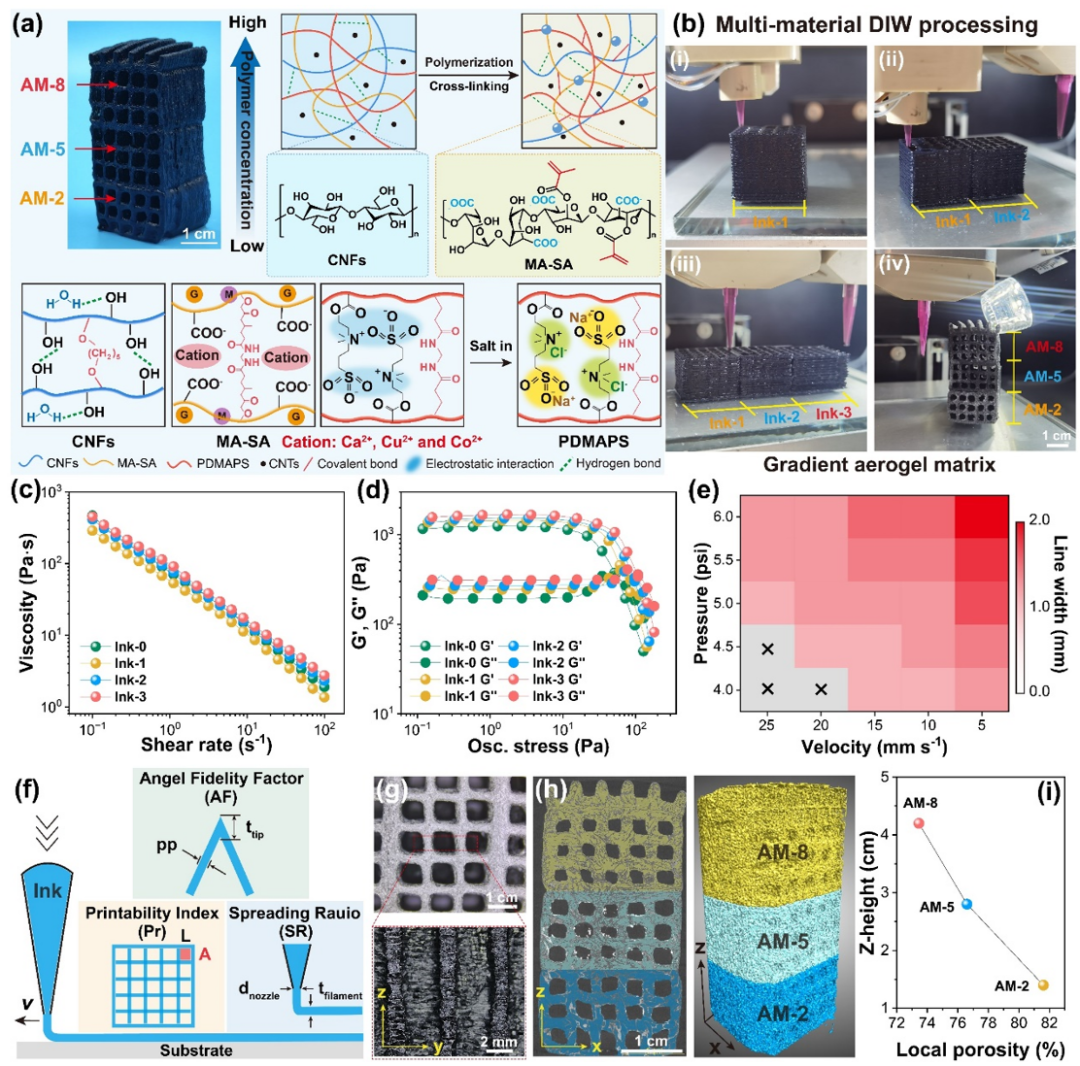
Figure 1. Characteristics of photothermal inks and optimization of printing processes.
Key Points:
1. Material Component Design and Crosslinking Mechanism:The fixed components (CNFs, MA-SA, CNTs) form the structural framework, while the variable components (zwitterionic prepolymer PDMAPS) dynamically adjust the material properties through the anti-polyelectrolyte effect. The synthesized MA-SA possesses dual functions of UV-induced covalent crosslinking and cationic ionic crosslinking, providing a foundation for constructing stable three-dimensional networks and promoting seawater evaporation. (Figure 1a)
2. Multi-Material Printing and Gradient Structure Construction:By independently controlling three nozzles and customizing printing paths, alternating deposition of four types of AM-0/2/5/8 units was achieved, forming 3D SGs with gradient pore structures and salt-resistant properties, as well as 3D SCs for localized salt crystallization and targeted salt collection. (Figure 1b)
3. Rheological Properties and Printability::All photothermal inks exhibited significant shear-thinning behavior (viscosity decreased from 468.32 Pa·s to 1.90 Pa·s), ensuring smooth extrusion; they also possessed rapid gel-fluid transition capabilities, ensuring immediate fixation of printed shapes. (Figure 1c, d)
4. Optimization of Printing Parameters and Precision Adjustment:By systematically optimizing printing pressure and nozzle movement speed, high-precision printing was achieved (Figure 1e). Figure 1f shows high printing precision: spreading ratio (SR) of 1.2 (close to the ideal value of 1), 120° angle fidelity (AF) of 1.01, and printability index (Pr) of 1.56, proving that the ink can accurately print complex three-dimensional structures.
5. Structural Characterization and Pore Regulation::Macro photos (Figure 1g) and Micro-CT (Figure 1h) visually demonstrate the structure of the gradient-printed photothermal matrix. Through densitometer testing and quantitative analysis (Figure 1i), it was found that the porosity decreased with increasing PDMAPS content, establishing a foundation for subsequent directional fluid transport.
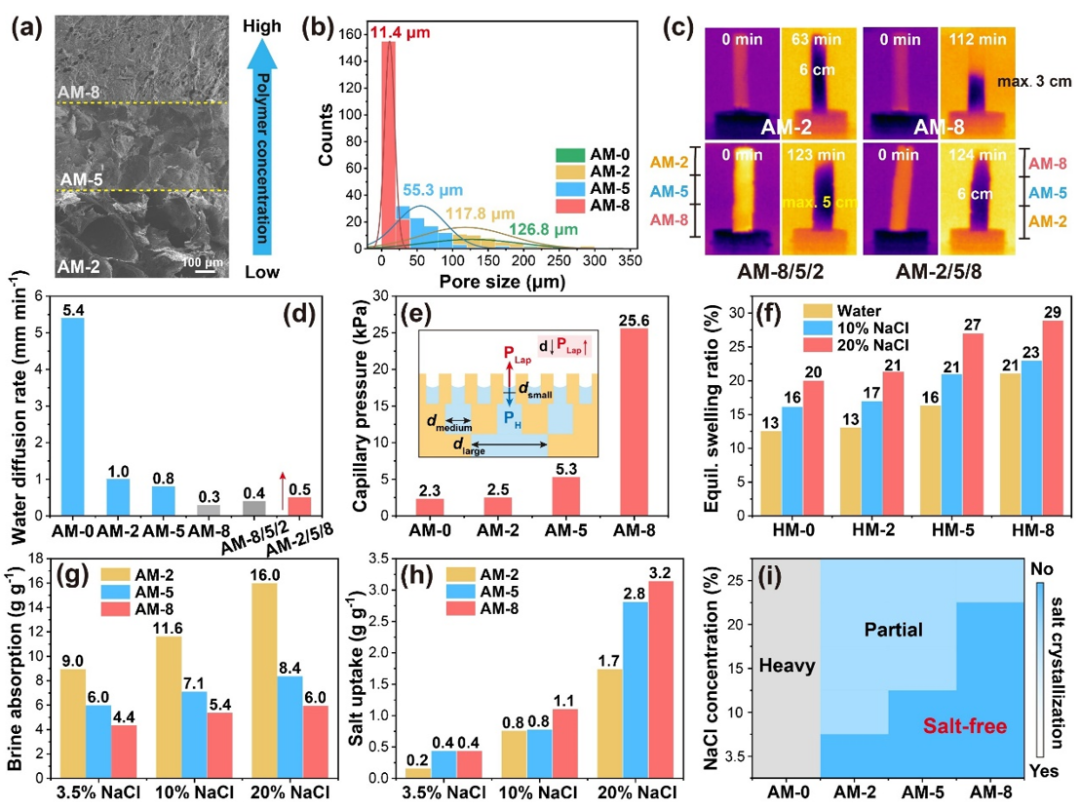
Figure 2. Pore morphology, water transport capability, and anti-polyelectrolyte performance characterization of AM.
Key Points:
1. Gradient Pore Structure and Water Transport Capability:SEM clearly shows that the AM units exhibit a change from large pore diameters to small pore diameters with increasing zwitterionic content (AM-2 average pore diameter 117.8 μm, AM-8 average pore diameter 11.4 μm) (Figure 2a, b); the gradient structure of AM-2/5/8 generates directional Laplace pressure differences (Figure 2e), successfully achieving “diode-like” unidirectional rapid water transport (Figure 2c, d).
2. Salt Response Behavior and Anti-Salt Crystallization Capability::Saltwater swelling experiments confirmed that the strength of the anti-polyelectrolyte effect of zwitterions increases with salinity (Figure 2f); under one sun, AM-8 showed no salt precipitation at 20% salinity, demonstrating excellent salt resistance (Figure 2i).
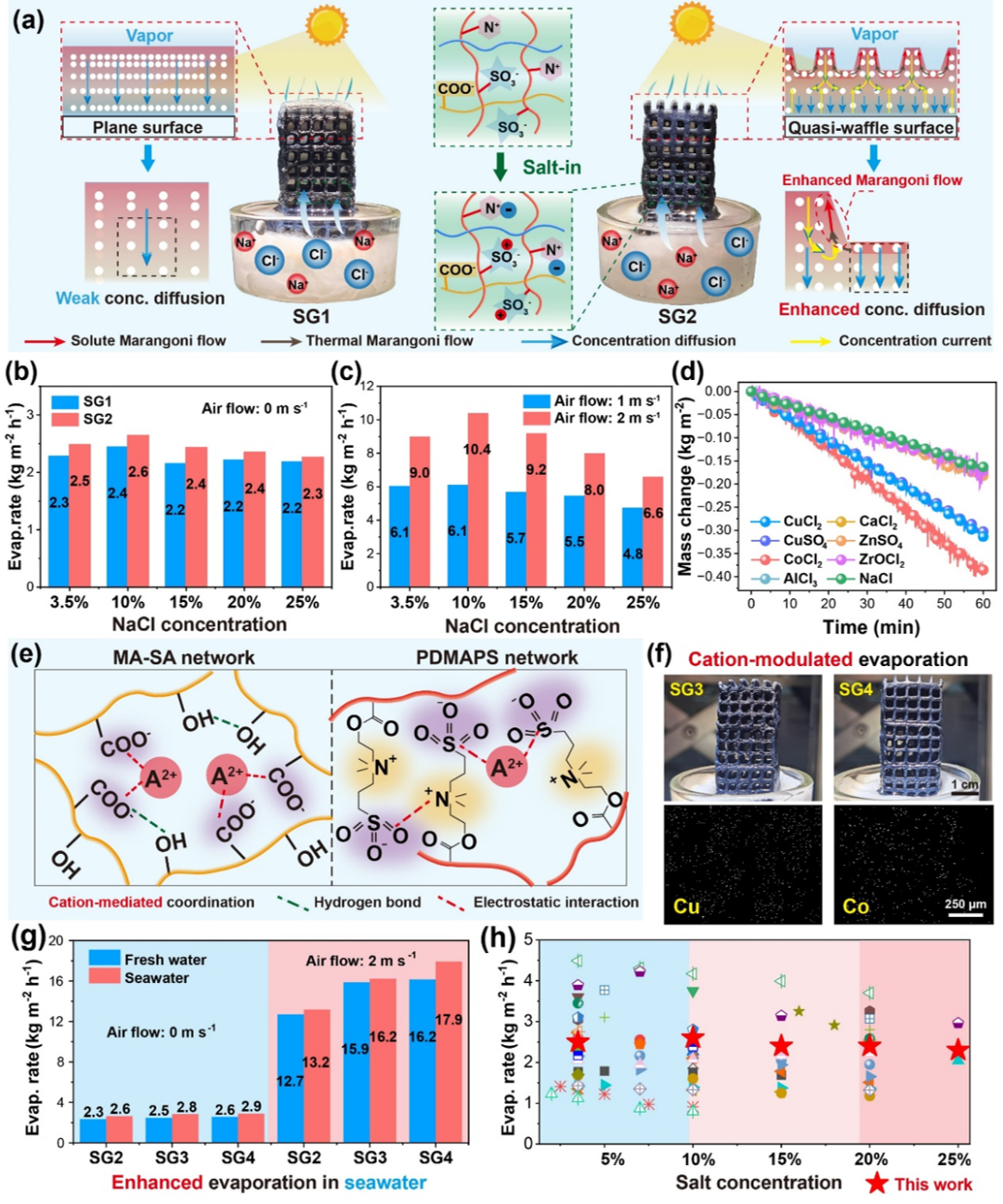
Figure 3. Solar desalination and promotion of seawater evaporation characteristics.
Key Points:
1. Surface Structure Design and Airflow Enhancement of Evaporation Performance:A flat surface and waffle-patterned surface were designed (Figure 3a), with the waffle-patterned surface and multi-scale layered pore structure significantly increasing the photothermal area and effective evaporation, thereby better utilizing sunlight, airflow, and environmental energy.
2. Synergistic Promotion of Seawater Evaporation by Introducing Zwitterions and Cationic Crosslinking Strategies::The introduction of zwitterions and divalent cations (Ca2+, Cu2+, and Co2+) interacts with salt ions and water molecules in seawater, increasing the intermediate water content and promoting rapid evaporation of seawater (Figure 3d-g).
3. Evaporation Stability Across a Wide Salinity Range:SG2-SG4 maintained stable evaporation performance across a wide salinity range (3.5% − 25%), even at 25% salinity, the evaporation rate remained at 6.6 kg m−2 h−1 with no salt precipitation (Figure 3b, c), far exceeding recent studies in this field (Figure 3f).
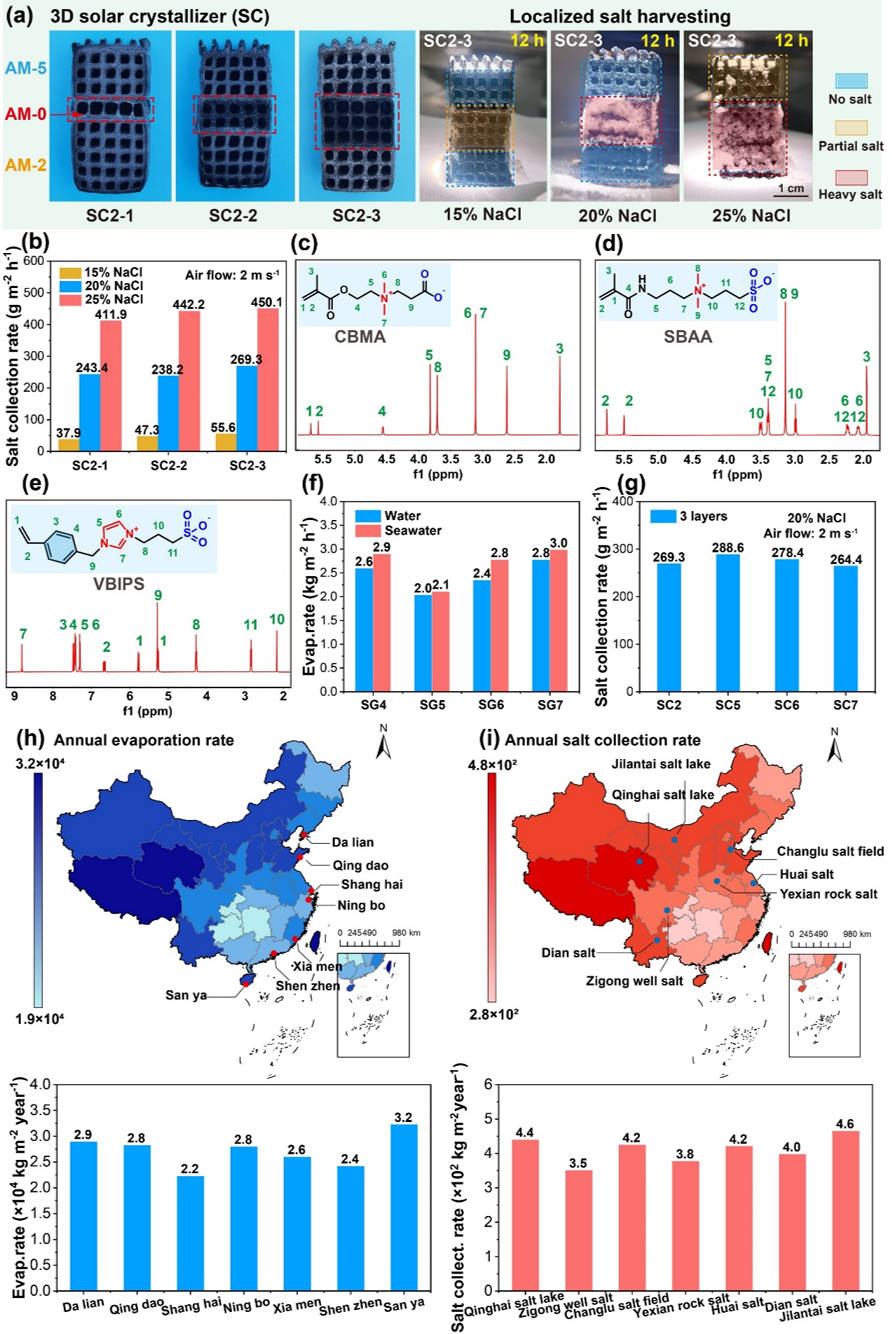
Figure 4. Salt collection characterization and nationwide prediction.
Key Points:
1. Modular Structure Design for Localized Salt Crystallization::Through multi-material printing, AM-2 (bottom, rapid water transport), AM-0 (middle, crystallization induction), and AM-5 (top, anti-salt crystallization) were spatially reorganized, and salt collection tests were conducted. (Figure 4a, b)
2. Universality of Materials and Performance Comparison::Through 1H NMR spectra, the successful synthesis of three new zwitterionic monomers (CBMA, SBAA, VBIPS) was confirmed (Figure 4c-e); simultaneously, their evaporation performance and salt collection capabilities were tested (Figure 4f, g).
3. Geographical Assessment for Scalable Applications::To evaluate practical implementation, this work assessed the evaporation rates and salt collection rates of 3D SGs and SCs in seven coastal cities and salt flats in China. (Figure 4h, i)
 Conclusion and Outlook
This research customized SGs and SCs through multi-material 3D printing technology, achieving efficient seawater desalination and salt collection across a wide salinity range (3.5% − 25%). The introduction of zwitterionic polymer in photothermal inks and the synergistic effect of cationic crosslinking photothermal matrices enabled the SGs to achieve evaporation rates in seawater exceeding those in freshwater, and no salt crystallization occurred at 25% ultra-high salinity; moreover, by rearranging the AM units, the SCs enabled localized salt crystallization and salt collection. This technology is expected to have a profound impact on the sustainable solar coupling of concentrated saline water resources.