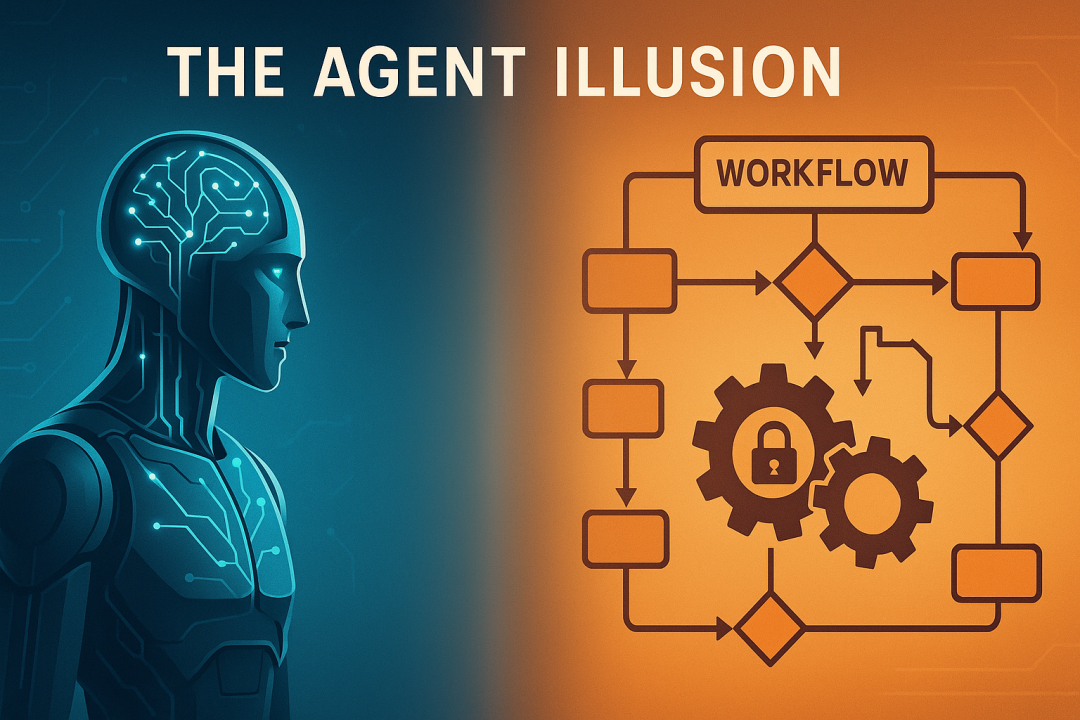
💡One-Sentence Introduction: While the entire industry celebrates the arrival of autonomous agents, 95% of enterprise AI applications still rely on traditional workflows. Behind this massive “agent hype” lies a neglected truth.
Part.01
Introduction: The Wrapped Truth
The AI industry in 2025 is playing out a peculiar contradiction. Industry headlines are touting autonomous agents as the next frontier of artificial intelligence. Venture capital is pouring into startups focused on agents. Conference keynote speeches promise to create fully autonomous systems capable of independent planning, reasoning, and action.
However, the reality is starkly different.Less than 5% of enterprise AI applications actually contain trueagents, with the vast majority still relying on workflow orchestration technologies that predate the current hype[1][51].
This gap between rhetoric and reality exposes a fundamental confusion: what exactly constitutes true agent autonomy? When frontline engineers describe the “agents” they encounter failing due to error accumulation in multi-step processes, they inadvertently reveal a deeper issue. These systems were never agents to begin with; they are workflows disguised as autonomous decision-makers.
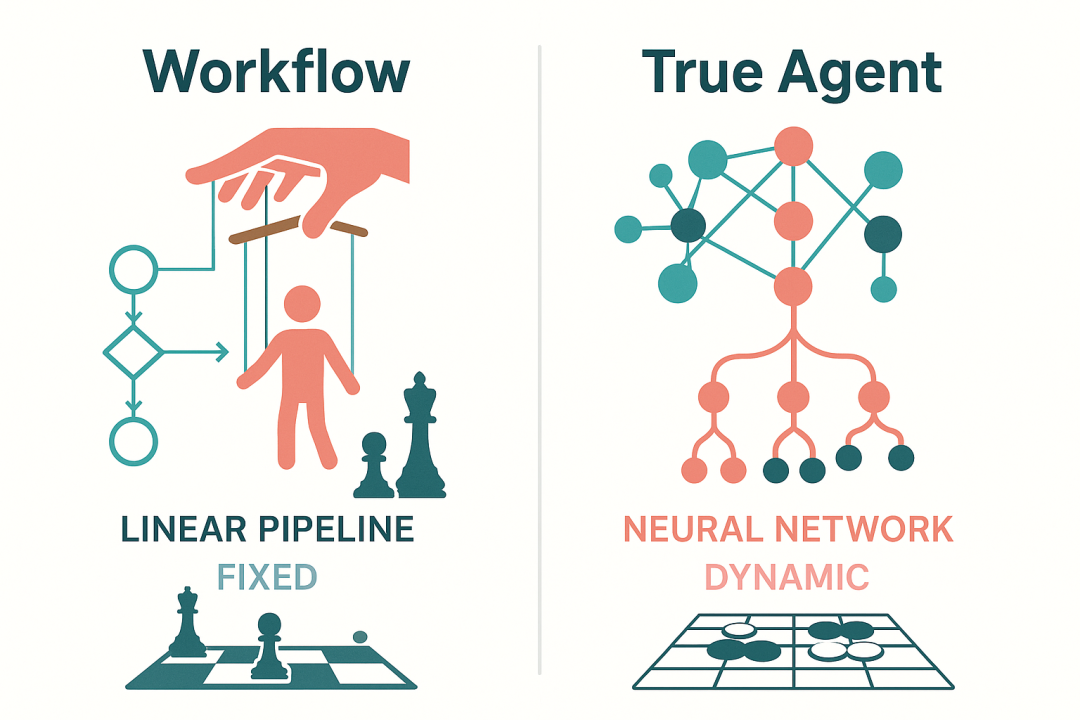
Understanding this distinction is crucial. It reveals both the limitations of current systems and points to the core challenges that true autonomous agents face. The failure cases observed in production deployments tell us that rather than a lack of agent capabilities, it is an architectural mismatch. There is an essential difference between what organizations build and what they claim to build.
Part.02
Taxonomy of Autonomy: Planning Capability Determines System Nature
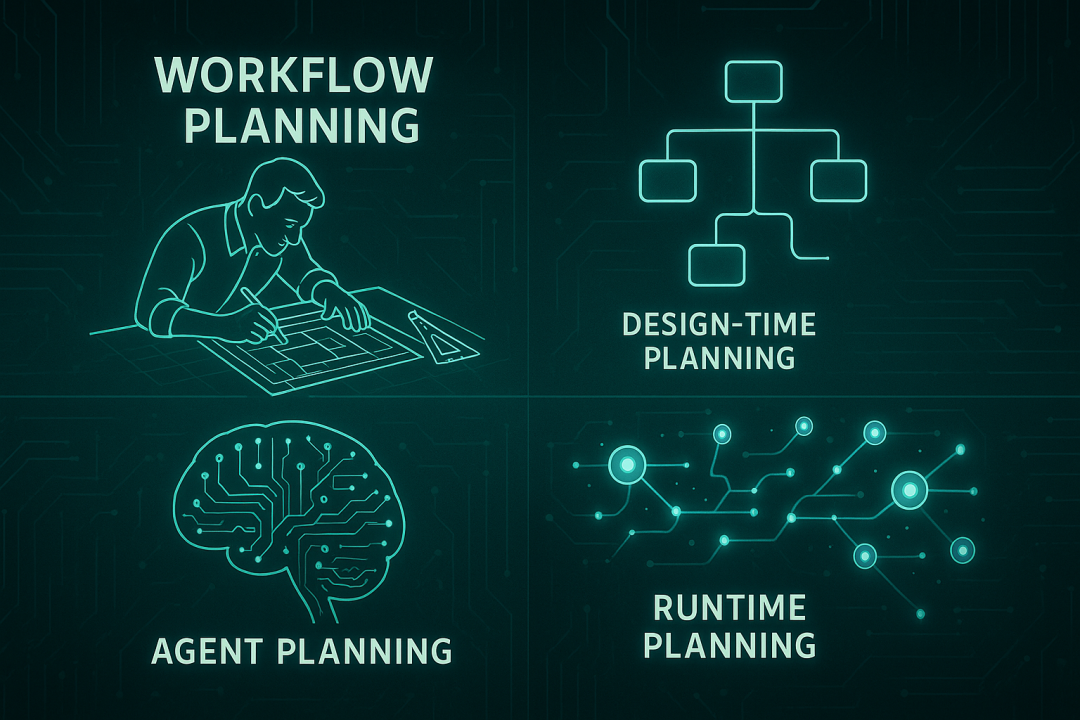
The essence of an agent lies not in its ability to execute tasks, but in the ownership of its decision-making authority. We can refer to this principle as the “Planning Locus Criterion.” It distinguishes true agents from complex automated systems.
●Workflow Orchestration: Externalized Planning Logic
Traditional workflow systems operate through predefined execution graphs. RPA (Robotic Process Automation) and workflow engines follow static, rule-based sequences, with each decision point predetermined by human designers[21][22].The system has no ability to deviate from the established path. When faced with new situations, it either halts or fails outright.
For example, in a claims processing workflow: documents arrive, OCR extracts data, a rules engine validates fields, calculates payout amounts, checks approval thresholds, and sends notifications. Each step inevitably derives from the previous one. The so-called “intelligence” exists entirely in the initial design, with no decision-making capability during execution. Such systems are deterministic and task-based, rather than dynamic and outcome-oriented.
This architecture has significant advantages. Deterministic behavior supports rigorous testing and certification. Fixed pipelines with known LLM calls are more cost-effective than systems that engage in unpredictable reasoning iterations. Predefined processes facilitate monitoring, logging, and compliance auditing[51][52]. For high-risk areas like financial services or healthcare, this predictability remains crucial.
●True Agents: Emergent Planning Capability at Runtime
True agents operate on a completely different mechanism.AI agents must possess reasoning and planning capabilities to achieve autonomous action, although the precise definition of these capabilities is still under ongoing debate[1][41]. The key distinction is that agents dynamically generate plans based on environmental conditions, rather than following a predetermined sequence.
Planning agents can predict future states and generate structured action plans before execution, making AI planning a core capability for tasks requiring multi-step decision-making, optimization, and adaptability[41]. This foresight enables agents to evaluate multiple potential paths, weigh pros and cons, and select the strategy most likely to achieve their goals.
In multi-agent systems, complexity increases exponentially. Agents must not only plan their actions but also consider the actions of other agents and how their decisions interact with others[41][49]. Coordination emerges from the interactions of independent decision-makers rather than being imposed by central orchestration.
 ●Misunderstanding the Spectrum
Some practitioners describe the distinction between workflows and agents as a spectrum rather than an absolute boundary. While this perspective is pragmatic, it blurs the fundamental architectural boundaries. One camp believes that agentic approaches and workflow approaches are not binary opposites, but exist on a spectrum. The other camp insists they are fundamentally different paradigms.
The reality is: systems either possess autonomous planning capabilities or they do not. A hybrid architecture that overlays agent-like reasoning on top of workflow execution ultimately derives its behavior from the orchestration layer. Agent components act as complex decision modules within a larger deterministic framework. This is useful for many applications but should not be confused with true autonomy.
Part.03
Pathology of Planning: Why Autonomous Agents Fail Differently
If true agents are so rare in production systems, we must ask: what prevents their deployment? The answer involves not only engineering challenges but also the fundamental limitations of current AI systems in planning and reasoning.
●Illusion Cascade in Long-Term Planning
Large language models excel at generating plausible text and solving bounded problems. However, they underperform when tackling complex challenges, especially when interacting with the environment through generating executable actions. This primarily stems from a lack of built-in action knowledge to guide planning trajectories, leading to planning hallucinations[15].
Planning hallucinations manifest as: LLMs generate seemingly reasonable action sequences without considering environmental constraints, resource limitations, or logical dependencies. Recent research indicates thatthe reasoning chains of agents may act as “error amplifiers”. Small initial errors can be continuously amplified and propagated through subsequent actions, ultimately leading to catastrophic failures[33].
This error amplification explains the failure patterns observed in multi-step workflows. Each reasoning step introduces the possibility of deviating from correct execution. In real benchmark tests like TravelPlanner, agents must satisfy multiple constraints, and even advanced models have a minuscule success rate in generating accurate plans[16][19]. The probabilistic nature of LLM outputs means that cumulative uncertainty across multiple steps results in exponentially declining reliability.
●Reasoning Paradox: More Intelligence, More Errors
Counterintuitively,enhanced reasoning capabilities are associated with increased hallucination rates. Reasoning models designed for stepwise complex task analysis introduce new failure points at each reasoning step, and while analytical capabilities improve, the actual error rate increases[31]. When asked to summarize public information, new reasoning models exhibit significantly higher hallucination rates than their predecessors[36][37].
This phenomenon stems from the architectural design of reasoning systems. Reasoning models do not provide the most likely answers but attempt to validate each logical step to reach a solution. They pursue multiple lines of thought and then present the best answer. Throughout the problem-solving process, undetected errors compound continuously[37].
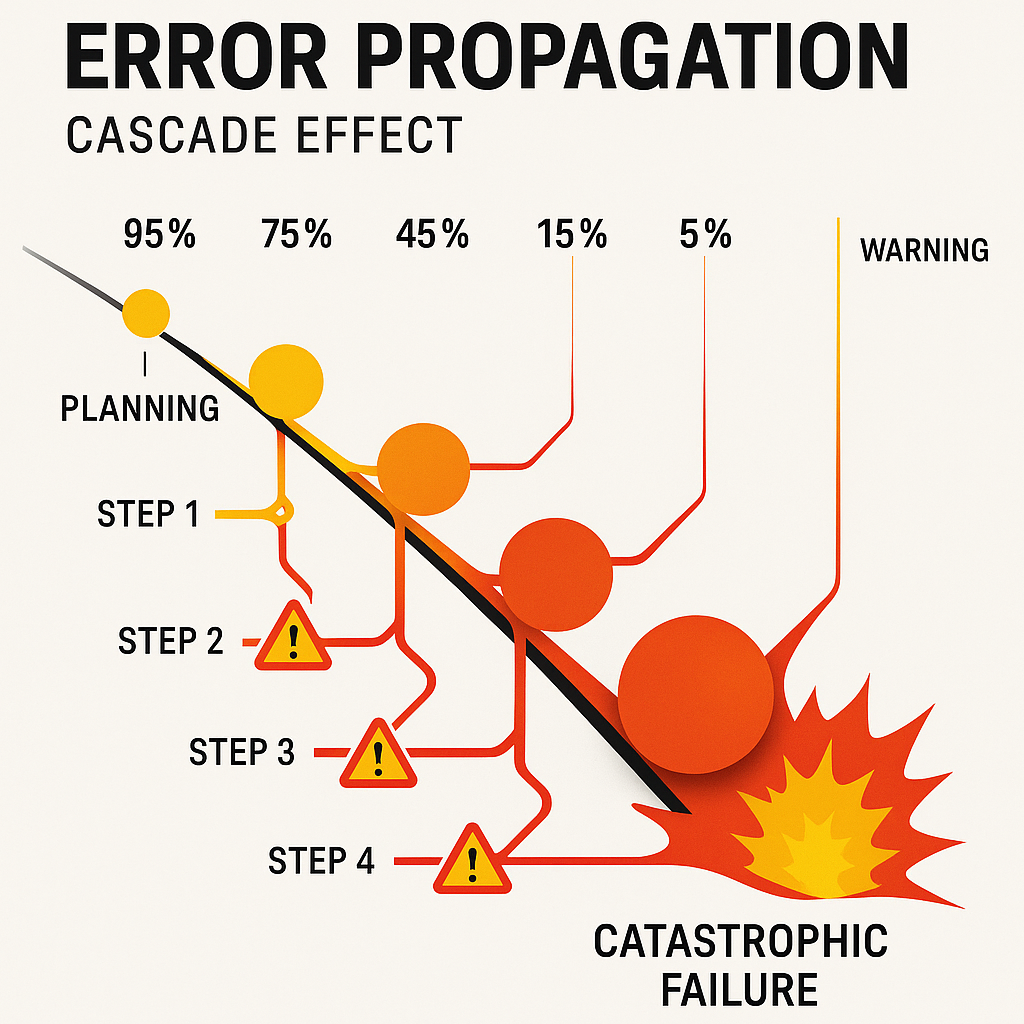
The implications for agent design are profound. Mechanisms that achieve complex planning, including breaking down complex goals into sub-tasks, evaluating multiple solution paths, and iterative optimization methods, create more opportunities for errors to arise and propagate.
●Attention Dilution and Context Collapse
Long-term planning requires maintaining coherent understanding across extended interaction sequences. However, when LLMs encounter longer contexts, attention scores become diluted, and score distributions flatten, leading to information loss[16]. This attention dilution effect means that key constraints mentioned early in planning may be forgotten by the time the agent generates subsequent action steps.
The practical consequence is that agents struggle to maintain consistency in plans involving numerous steps or complex interdependencies. Lengthy and noisy contexts severely impact planning capabilities, and providing more sample examples does not necessarily guarantee performance improvements in long-context scenarios[16].
●Numerical Reasoning Deficiencies
Effective planning often requires quantitative assessments of costs, resources, time, and trade-offs. LLMs have consistently shown significant limitations in numerical and metric reasoning, a deficiency that restricts their ability to accurately assess, understand, and critique the costs associated with proposed plans[14].
This limitation undermines plan quality in areas where quantitative optimization is crucial. Agents may generate seemingly reasonable supply chain reorganization plans but fail to accurately calculate inventory holding costs or transportation fees. As a result, the plans meet logical constraints but are economically unfeasible.
Part.04
Production Realities: Why Workflows Dominate
Given these planning pathologies, it becomes understandable that workflow-based systems dominate in production environments. Organizations choose workflows not out of ignorance of agent capabilities, but based on a sober assessment of reliability requirements.
●Reliability Above All
For enterprises to use autonomous agents, reliability is paramount.In most cases, doing things correctly is not enough[2]. Financial services cannot tolerate systems that correctly handle transactions most of the time. Medical applications cannot accept diagnostic tools that occasionally exhibit hallucination symptoms. Regulatory compliance cannot rely on agents that may forget key constraints at times.
Workflows provide the deterministic behavior required in these domains. Each step is predictably executed. Testing validates the correctness of all code paths. Failures occur at identifiable points, with clear remediation procedures[51][52].
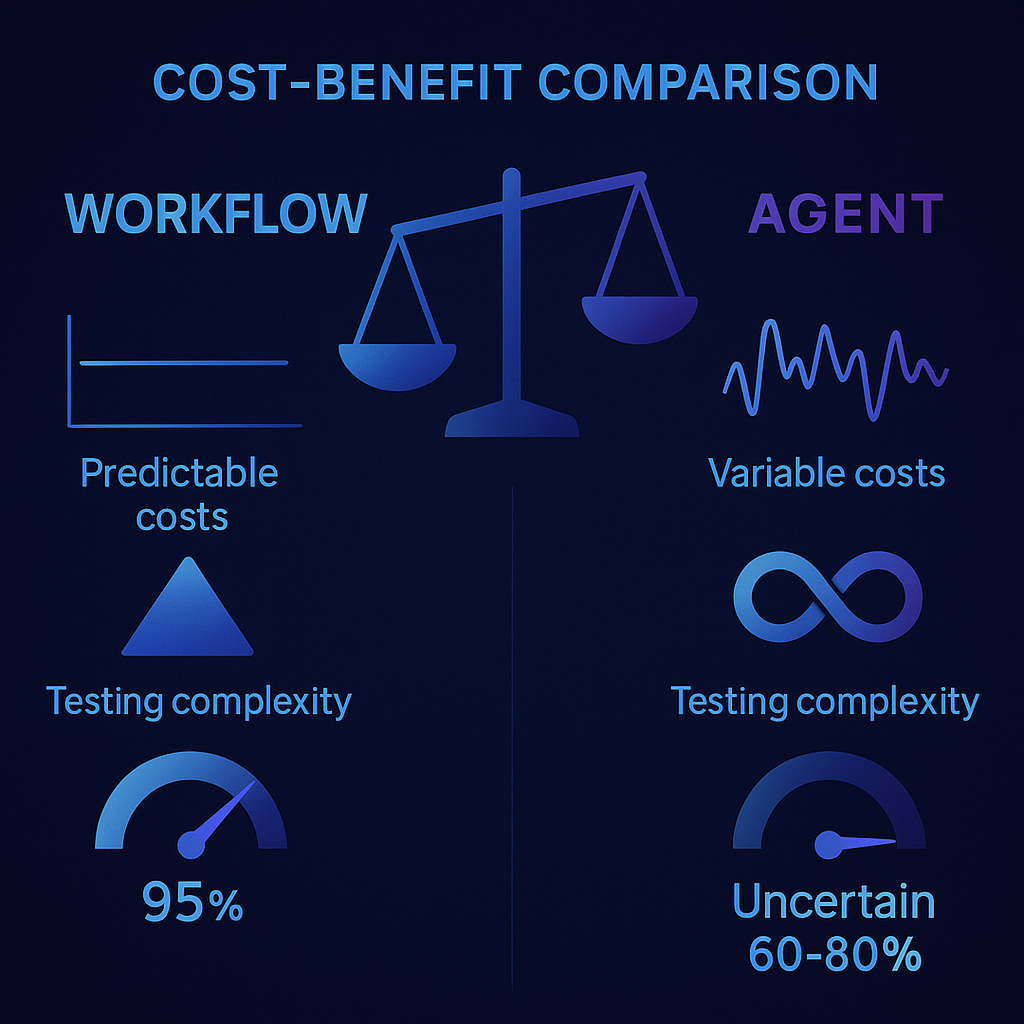
●Cost-Effectiveness Calculations
Even if encouraging signs of reliability emerge by the end of 2024,autonomous and reliableagents remain a goal rather than a reality. Incremental improvements in accuracy and independence help enterprises achieve early productivity goals[2]. Organizations weigh the potential benefits of agent autonomy against the costs of managing unpredictable behavior, increased error rates, and expanded attack surfaces.
For many use cases, workflows provide more easily testable, debuggable, and compliant deterministic behavior, along with cost efficiency from fixed pipelines and known LLM calls. The promise of adaptive intelligence is less compelling than the guarantee of consistent execution.
 ●Expertise Paradox
Deploying truly autonomous agents requires deep expertise across multiple domains: AI system design, production engineering, safety, compliance, and specific application areas. In testing, AutoGPT-style agents often fall into redundant task loops, go off track, or produce irrelevant outputs. Core issues include weak foundations, chaotic memory management, and lack of termination logic[54].
A more effective approach is to design narrow-scope, clearly definedagents with clear responsibilities and structured handoffs[54]. This approach effectively trends towards workflow orchestration with agent components rather than purely autonomous agents.
Part.05
Architectures for True Autonomy
If current agents fail to achieve true autonomy, what is required for genuinely autonomous systems? The answer involves architectural shifts rather than incremental improvements.
●Planning Integrated with Action Knowledge
KnowAgent introduces a novel approach aimed at enhancing planning capabilities by integrating explicit action knowledge. It employs an action knowledge base and knowable self-learning strategies to constrain action paths during planning[15]. This architecture recognizes that effective planning requires not only general language knowledge but also a specific understanding of action preconditions, effects, and constraints.
Shifting from purely LLM-based planning to hybrid systems that combine neural and symbolic components offers a path forward. Classical planners provide rigorous state space search and correctness guarantees. LLMs contribute common-sense reasoning and semantic understanding[11][14]. The integration of both capabilities achieves more robust planning than either approach alone.
●Hierarchical Decomposition and Verification
At higher levels of autonomy, agents plan and execute tasks over long time horizons, making all decisions independently. When encountering obstacles, they iteratively refine solutions until resolved or modify approaches to circumvent obstacles[43]. This capability requires mechanisms to decompose complex goals into manageable sub-tasks and verify at each level.
Effective hierarchical planning is not just about task decomposition. It requires clear representation of goal structures, dependencies between sub-tasks, and checkpoints to assess progress. Agents must identify when sub-task execution fails and have strategies for recovery or re-planning.
●Multi-Agent Coordination through Shared Protocols
In multi-agent systems, autonomy operates without direct human intervention. Agents possess social capabilities, using defined protocols to interact with other agents. They are reactive, perceiving and responding to environmental changes in real-time. They are proactive, taking initiative to achieve goals[49]. True coordination emerges from agents negotiating a shared understanding of goals and constraints rather than following centrally directed plans.
This shift towards decentralized coordination requires robust communication protocols, shared ontologies describing world states and actions, and mechanisms to detect and resolve conflicts between agent plans[49].
Part.06
The Path Forward: Hybrid Architectures and Bounded Autonomy
The future of autonomous systems may not be purely workflows or fully autonomous agents, but rather carefully designed hybrid architectures.
●Workflows for Execution, Agents for Adaptation
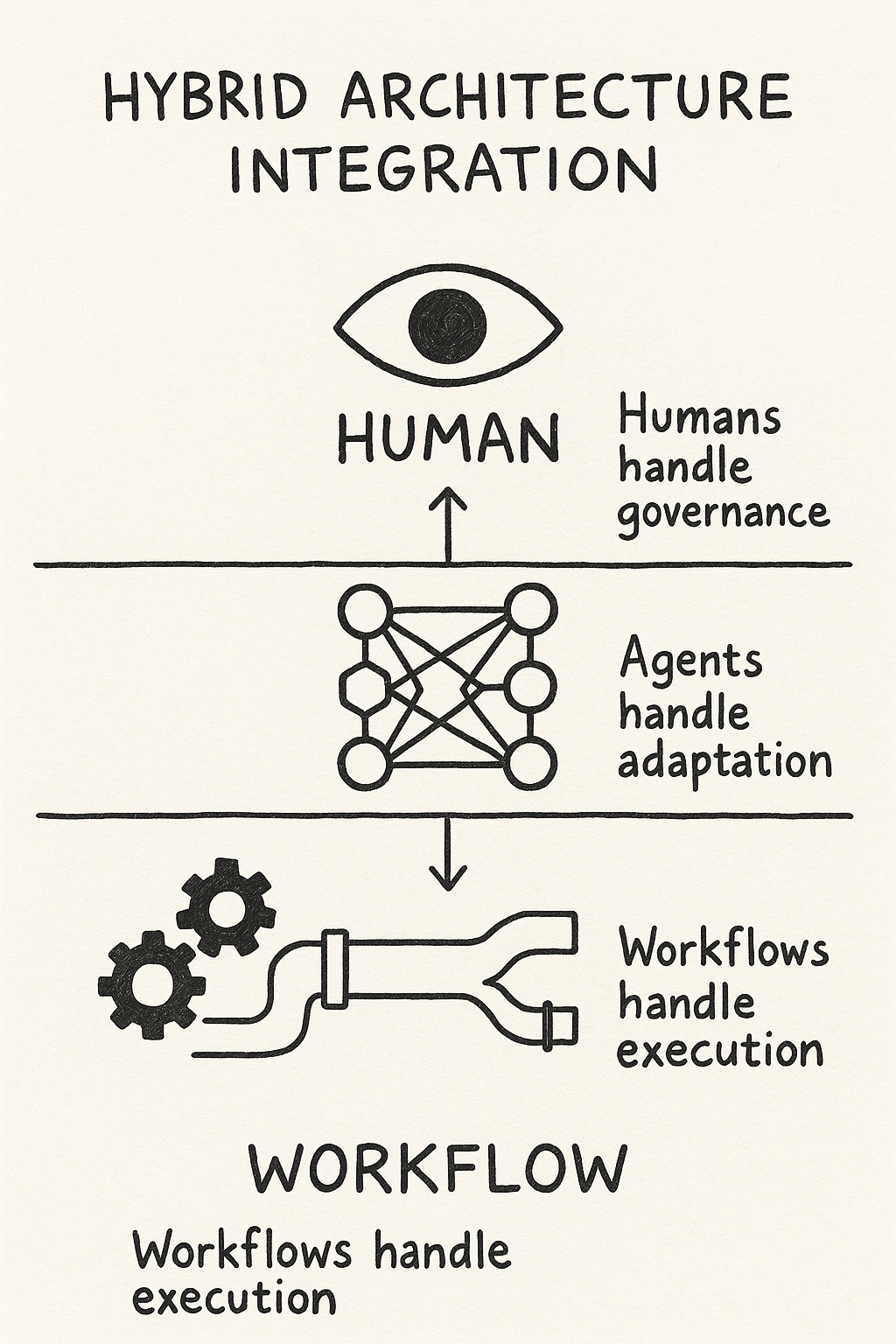
A hybrid future may emerge:AIagents handling higher-level orchestration and decision-making while operating within a foundational workflow framework[52][60]. In this model, stable processes execute through deterministic workflows, while agents manage exception handling, optimization, and adaptation to changing conditions.
For instance, a medical diagnostic system may employ agents to interpret complex symptom patterns and decide which diagnostic tests to order. However, each test execution follows a validated workflow with known reliability characteristics. Agents provide intelligence in decision-making, while workflows ensure execution integrity.
 ●Levels of Autonomy as Design Choices
Autonomy can be an intentional design decision. Autonomy certificates communicate this decision to relevant stakeholders in the agent ecosystem, enabling targeted risk assessments and improving safety framework designs[43]. Organizations should not pursue maximum autonomy but calibrate agent independence according to application needs and risk tolerance.
Low-risk applications with high fault tolerance can deploy more autonomous agents. High-risk areas require agents to operate under stricter constraints and more frequent human oversight. The question shifts from “Can we build fully autonomous agents?” to “What level of autonomy is most suitable for this use case?”
●Complementary Paradigms
The future does not belong to isolatedagents or workflows, but to carefully architected systems. They leverage the strengths of each approach to create intelligent automation. This automation combines the adaptability of agents with the reliability of workflows, operating under the governance of a robust orchestration framework[51][57].
Success requires recognizing that agents and workflows solve different problems. Workflows excel at repetitive processes with clear logic. Agents excel at handling novelty, ambiguity, and situations requiring contextual judgment. Systems that appropriately deploy each approach will outperform those committed to a single paradigm.
Part.07
Insights for System Designers
These insights provide several practical principles for those building AI systems:
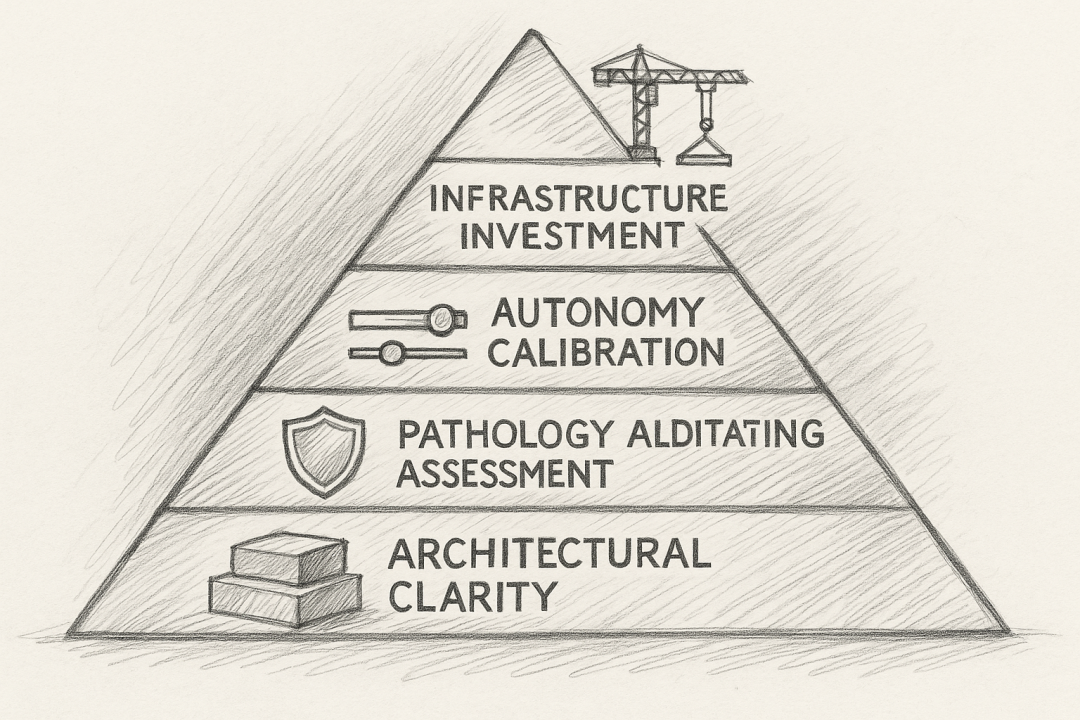
First: Make architectural statements clear. Systems that use LLMs within workflows are fundamentally still workflow systems, regardless of how complex the LLM components are. A clear understanding of system architecture supports appropriate testing, deployment, and governance strategies.
Second: Recognize that planning capability determines the essence of agents. If a system cannot generate new plans to respond to unexpected situations, it is not an agent. This understanding helps match system capabilities with application needs.
Third: Consider planning pathologies in agent design. Error amplification through reasoning chains, attention dilution in long contexts, and numerical reasoning deficiencies are fundamental challenges rather than temporary limitations. System architecture must incorporate mitigation strategies: explicit verification steps, bounded reasoning chains, and hybrid symbolic-neural approaches.
Fourth: Calibrate autonomy according to reliability requirements. More autonomy is not always better. The best systems strike a balance between independence and predictability based on application criticality and fault tolerance.
Fifth: Invest in infrastructure that supports safe agent deployment. Strong oversight mechanisms ensure agents operate within ethical and regulatory boundaries. Anticipate that regulation will increasingly focus on AI-driven decisions, necessitating frameworks for auditing and verifying autonomous agent actions[60].
Part.08
Reflections for Chinese Developers 🇨🇳●Localized Application Scenarios
The Chinese market has unique advantages and challenges in deploying AI agents. For domestic developers, several key considerations are worth noting:
Regulatory Compliance First: Unlike the U.S. focus on innovation, domestic regulatory requirements for AI systems are stricter. The “Interim Measures for the Management of Generative Artificial Intelligence Services” and “Regulations on Algorithm Recommendations” require systems to have interpretability and traceability.Workflow architectures have a natural advantage in meeting these requirements. Deterministic processes are easier to pass algorithm filing and safety assessments.
Enterprise-Level Scenario Adaptation: When building AI applications on platforms like DingTalk, WeChat Work, and Feishu, a hybrid architecture model is more practical. Core business processes (such as approvals, reimbursements, and customer management) ensure compliance and consistency through workflows. Agent capabilities are used for intelligent recommendations, anomaly detection, and natural language interactions.
Cost Control Strategies: Compared to overseas markets, domestic enterprises are more sensitive to the costs of AI applications. The fixed LLM call costs of workflows are predictable, facilitating budget control. Fully autonomous agents may incur uncontrollable token consumption. It is recommended to adopt a “workflow framework + localized agent optimization” architecture, introducing agent capabilities at critical decision points rather than full-process automation.
Technical Selection Recommendations:
-
Internal Systems: Prioritize using domestic large models (such as Wenxin Yiyan, Tongyi Qianwen) to build workflows, ensuring data security
-
Client-Side Applications: Choose hybrid architectures based on scenarios, using agents at the user interaction layer to enhance experience
-
Financial/Healthcare Fields: Must adopt workflow-dominant architectures to pass regulatory reviews
●Opportunity Window
There are significant opportunities in the current domestic market:
-
Localization of Workflow Tools: Deeply customize overseas tools like Zapier and n8n for the domestic SaaS ecosystem (such as Kingdee, Yonyou, and Fanwei)
-
Vertical Industry Workflow Templates: Standardized workflow solutions tailored for manufacturing, retail, and logistics industries
-
Middleware for Hybrid Architectures: Technical products that help enterprises seamlessly integrate agent capabilities into existing workflow systems
Remember:In China, compliance and cost control often outweigh technological advancement. First, use workflows to streamline business processes, then introduce agent capabilities at appropriate points for optimization; this is a more robust path.
Part.09
Conclusion
The current confusion between workflows and agents is not merely a terminological dispute but reflects a fundamental uncertainty about what autonomous AI systems should be and what they should do. Failures observed by frontline engineers in production systems often stem from architectural mismatches. Workflow systems are given expectations suited for agents, or the agents being built lack the planning infrastructure necessary for true autonomy.
As the field matures, this confusion may be resolved through clearer architectural distinctions. Organizations will deploy workflows where determinism is critical and agents where adaptability is essential. Hybrid architectures will emerge, cleverly combining both approaches.
The true measure of progress is not the number of systems labeled as agents but the number of systems that genuinely achieve autonomous planning capabilities while maintaining acceptable reliability. This goal remains distant.Current systems that fail due to error accumulation in multi-step processes reveal not the limitations of agents but the limitations of workflows masquerading as agents..
The path to true autonomy requires: an honest assessment of current capabilities, a clear understanding of architectural foundations, and patient development of the planning infrastructure necessary for genuine agents. Organizations that recognize this will build systems that meet their actual needs rather than chase labels and marketing narratives.
💡Key Takeaway: 95% of so-called “AI agents” are actually workflows. The real challenge is not to build more systems labeled as “agents” but to clearly distinguish between these two paradigms and apply the right architecture in the right scenarios.
Part.10
References
[1] IBM Insights.AI Agents in 2025: Expectations vs. Reality. https://www.ibm.com/think/insights/ai-agents-2025-expectations-vs-reality
[2] Deloitte Insights.AutonomousGenerative AI Agents. https://www.deloitte.com/us/en/insights/industry/technology/technology-media-and-telecom-predictions/2025/autonomous-generative-ai-agents-still-under-development.html
[11] ArXiv.Can LLM-Reasoning Models Replace Classical Planning? A Benchmark Study. https://arxiv.org/html/2507.23589v1
[14] ArXiv.A Survey onLarge Language Models for Automated Planning. https://arxiv.org/html/2502.12435v1
[15] ArXiv.KnowAgent: Knowledge-Augmented Planning for LLM-Based Agents. https://arxiv.org/abs/2403.03101
[16] ArXiv.Can We Rely onLLM Agents to Draft Long-Horizon Plans? Let’s Take TravelPlanner as an Example. https://arxiv.org/html/2408.06318
[19] ArXiv.Can We Rely onLLM Agents to Draft Long-Horizon Plans? Let’s Take TravelPlanner as an Example(Abstract). https://arxiv.org/abs/2408.06318
[21] Fluid AI.Could AI Agents ReplaceRPA? Why Enterprises Are Quietly Moving Beyond Bots. https://www.fluid.ai/blog/why-enterprises-are-quietly-moving-beyond-bots
[22] UiPath.What is Agentic Automation?. https://www.uipath.com/automation/agentic-automation
[30] Multimodal.dev.Agentic AI vs.RPA: What’s the Difference?. https://www.multimodal.dev/post/agentic-ai-vs-rpa
[31] Techopedia.48% Error Rate: AI Hallucinations Rise in 2025 Reasoning Systems. https://www.techopedia.com/ai-hallucinations-rise
[33] ACM.AI Agents Under Threat: A Survey of Key Security Challenges and Future Pathways. https://dl.acm.org/doi/10.1145/3716628
[36] Pryon.Reasoning Models Hallucinate More — Marking Trouble for AI Agent Adoption. https://www.pryon.com/resource/reasoning-models-hallucinate-more—-marking-trouble-for-ai-agent-adoption
[37] Aventine.AI Hallucinations and the Future of RAG. https://www.aventine.org/ai-hallucinations-adoption-retrieval-augmented%20generation-rag/
[41] IBM.What is AI Agent Planning?. https://www.ibm.com/think/topics/ai-agent-planning
[43] ArXiv.Levels of Autonomy for AI Agents Working Paper. https://arxiv.org/html/2506.12469v1
[49] Aalpha.How to Build a Multi-Agent AI System: In-Depth Guide. https://www.aalpha.net/blog/how-to-build-multi-agent-ai-system/
[51] Towards AI.AI Agents vs AI Workflows: Why 95% of Production Systems Choose Workflows. https://pub.towardsai.net/ai-agents-vs-ai-workflows-why-95-of-production-systems-choose-workflows-b660f85adb30
[52] IntuitionLabs.AI Agents vs. AI Workflows: Why Pipelines Dominate in 2025. https://intuitionlabs.ai/articles/ai-agent-vs-ai-workflow
[54] Netguru.The AI Agent Tech Stack in 2025: What You Actually Need to Build & Scale. https://www.netguru.com/blog/ai-agent-tech-stack
[57] DEV Community.The Complete 2025 Guide: Agent vsWorkflow—Key Differences, Synergies, and Future Trends in AI Systems. https://dev.to/czmilo/the-complete-2025-guide-agent-vs-workflow-key-differences-synergies-and-future-trends-in-ai-1jak
[60] Arya.ai.Understanding Agentic Systems: Workflows vs. Agents. https://arya.ai/blog/agentic-systems
Part.11
About the Author安涛, Master of AI from the University of Hawaii at Pacific, founder of Feimu Technology and head of ShouLian Research Institute. He leads a team to independently develop the Wuzhi AI platform, serving multiple provincial and municipal government departments and central state-owned enterprises in areas such as smart cities, judicial services, and industrial compliance. His research focuses on natural language processing and knowledge graphs, aiming to promote the deep integration of AI technology and industry. Copyright, please contact [email protected] for reprints.