According to the “Implementation Opinions on Promoting Innovation and Development of Future Industries” (Ministry of Industry and Information Technology, No. 12 [2024]) and the “Action Plan for Building Shanghai into a High Ground for Future Industry Innovation and Expanding Future Industry Clusters” (Shanghai Municipal Government Document No. 11 [2022]), starting from 2023, the Shanghai Municipal Economic and Information Commission, in conjunction with the Organization Department of the Municipal Party Committee, the Development and Reform Commission, the Education Commission, the Science and Technology Commission, the Market Supervision Administration, and the State-owned Assets Supervision and Administration Commission, has held two consecutive global “Future Industry Star” competitions in Shanghai. This dual-driven model of “projects + talent” provides a power support for Shanghai to build a high ground for future industry innovation.
This year’s competition has achieved five major upgrades in “track fields, regional coverage, evaluation rules, competition rewards, and exhibition linkage.” A total of 575 projects and talents were attracted, covering 21 provinces (municipalities, special administrative regions) in China and 26 countries overseas. For the first time, separate competition areas for the West, Asia-Pacific, and Europe-America were set up, further promoting the globalization and high-end development of the competition.
This year’s competition selected a number of cutting-edge and leading innovative achievements in future industries. The “Excellent Project Showcase” column will comprehensively introduce outstanding projects from the competition, showcasing cutting-edge technologies and the style of enterprises in future industries.
Future Health
Biomanufacturing
In the finals of the 2024 Global Future Industry Star Competition, Tang Xin became an outstanding representative in the field of future biotechnology due to her innovative achievements in biological 3D printing and industrial practices in precision medicine and regenerative medicine.
“Shanghai has established a relatively systematic support system for promoting the transformation of scientific and technological achievements, especially demonstrating foresight in policy guidance, project funding, and industry docking,” said Tang Xin, Chief Scientist of Saibo (Shanghai) Intelligent Technology Co., Ltd., in an interview with China News Service.
Since her undergraduate studies, Tang Xin has been deeply engaged in the field of biomedical engineering, from photoacoustic imaging to biomaterials, and then to photopolymerization-based biological 3D printing. Her research path has always revolved around the integration of life sciences and engineering technology. During her studies at the University of California, San Diego, Tang systematically researched how to use photopolymerization 3D printing technology to construct models of different organs and precisely control the mechanical and microstructural properties of tissues, forming a relatively mature technical system and research approach.
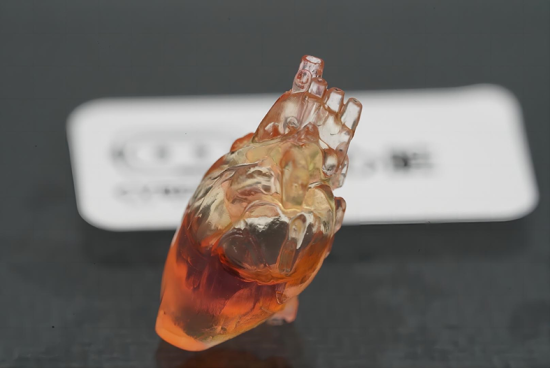
The charm of biological 3D printing lies in its role as a bridge between engineering manufacturing and life sciences,” Tang Xin stated. “This technology not only reconstructs complex human tissue structures but also accurately simulates patient-specific pathological states in vitro, thereby promoting new drug screening, personalized treatment, and tissue repair. Every technological innovation has the potential to be rapidly translated into practical applications, providing tangible solutions to enhance treatment efficacy, reduce animal testing, and accelerate drug development.”
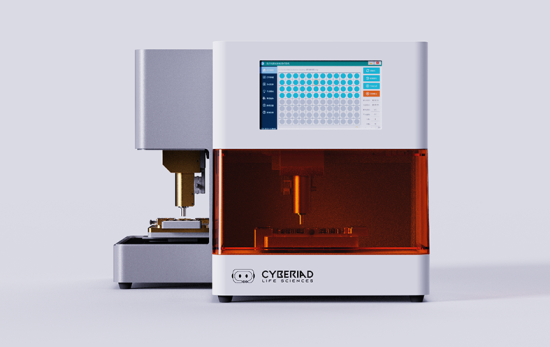
Currently, Saibo Bio’s related research achievements have successfully achieved clinical application transformation. The Saibo team constructs tumor models based on 3D printing, quickly builds in vitro microenvironment models using patient tissue samples, tests various drug combinations, and ultimately selects the most effective treatment plan, providing personalized medication recommendations to multiple cancer patients, which have been successfully applied in clinical treatment, significantly alleviating patients’ conditions.
“This direct transformation path from basic research to real patient benefits is the core motivation for me to continuously promote this technology towards clinical application,” Tang Xin stated. Currently, Saibo Bio has completed a large number of patient sample modeling and drug screening work, and will gradually expand into the fields of organ transplantation, cardiovascular diseases, and other chronic major diseases in the future.
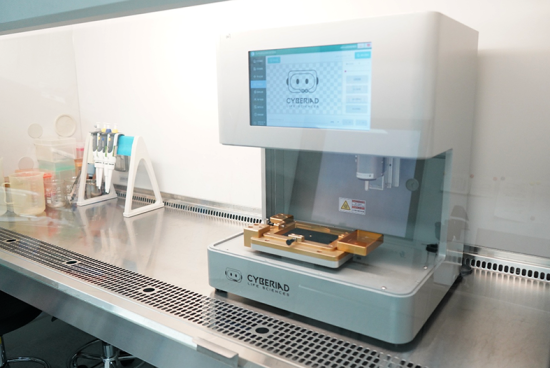
When discussing the talent situation in the field of biomanufacturing, Tang Xin pointed out that the current talent system in China’s biomanufacturing field is in an accelerated construction phase, but the relative scarcity of interdisciplinary integrated talents remains one of the limiting factors. She suggested strengthening talent cultivation and reserves from three aspects: first, establishing an interdisciplinary education mechanism to promote the integration and joint training of “engineering + life sciences + medicine” courses; second, promoting the construction of industry-education integration platforms, relying on real projects from enterprises to build practical teaching mechanisms; third, improving research and industry incentive mechanisms to encourage researchers to participate in exploration of cutting-edge fields.
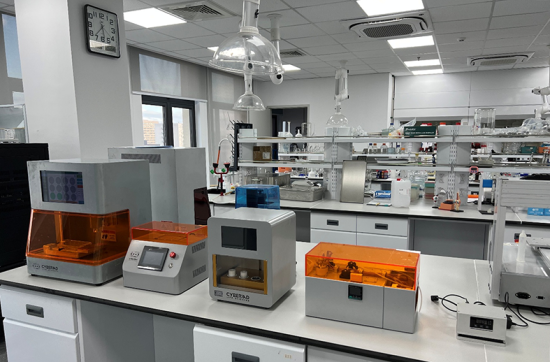
Shanghai has demonstrated a strong leading role in promoting the transformation of scientific and technological achievements and the construction of a modern industrial system. Dr. Tang Xin stated that Saibo Bio received support from Shanghai’s “Science and Technology Innovation Action Plan” and the Zhangjiang Special Fund at the company’s inception, providing key guarantees for technology validation and early achievement accumulation. At the same time, Shanghai’s complete modern industrial system also provides good support in terms of talent, resources, and industrial chain for the development of biomanufacturing.
“Shanghai’s strategic layout is providing a complete growth ecosystem for emerging technology companies like ours,” Tang Xin said. “We have established long-term deep cooperative relationships with several top-tier hospitals in the city, and key upstream and downstream enterprises are concentrated in the Yangtze River Delta region, greatly shortening the product development and validation cycle.”
The story of Tang Xin and Saibo Bio is not only a growth journey of a researcher but also a microcosm of the innovative development of the biomanufacturing field in Shanghai and even China. With the continuous improvement and strong support of relevant policies, it is believed that more “Saibo” will emerge in Shanghai’s future biotechnology industry.
Source:China News Online ShanghaiEditor: Shanghai Industry Promotion Association