In nature, organisms have evolved various sensory capabilities for survival. Among these, non-contact perception—the ability to detect environmental changes and potential threats without direct contact—plays a crucial role in the survival strategies of many animals.
Among the various non-contact sensing methods, human vision, which has the highest resolution, also comes with the highest energy consumption, using over40% of the brain’s perceptual processing energy. In contrast to the visual system, spiders have chosen a different evolutionary path. Their light receptors are 20 times less dense than those of mammals, yet their bodies are covered with a very high density of hair-like sensoryreceptors, with up to400 per square millimeter. These hair-like sensoryreceptors can convert external non-contact stimuli (such as airflow caused by prey) into sequences of neural pulses, consuming less than100 pJ of energy per event, which is hundreds of times lower than that of the visual system.This strategy achieves wide sensory coverage while minimizing energy consumption and overcoming many limitations of visual perception.Suchefficient andenergy-saving perception methods are providing profound insights for modern robotics technology and artificial intelligence (AI) perception systems.
Recently, a research team from Nanjing University, inspired by this, proposed aFlexible Spiking Hair Sensillum (FISH), mimicking spider hair receptors, capable of real-time conversion of airflow signals into electrical pulses, thus achieving non-contact perception. Its power density is below100 nW/cm², with an energy consumption of about 660 pJ per sensing event, comparable to spider hair receptors, and is two orders of magnitude lower than that of traditional non-contact sensors.
This achievement was published in the internationally renowned journal Science Advances under the title “A flexible spiking hair sensillum for ultralow power density noncontact perception.”
▍Structural Features of the Flexible Spiking Hair Sensillum (FISH)
So, how is this ultra-low power sensor achieved? The core design of the research team lies in its unique structure.This new sensor, named the Flexible Spiking Hair Sensillum (FISH), is composed of hair-like sensors based onpolyimide (PI) and flexible TS memristors based onAg/PI/LIG/PI, capable of converting airflow information into pulse sequences for non-contact perception.
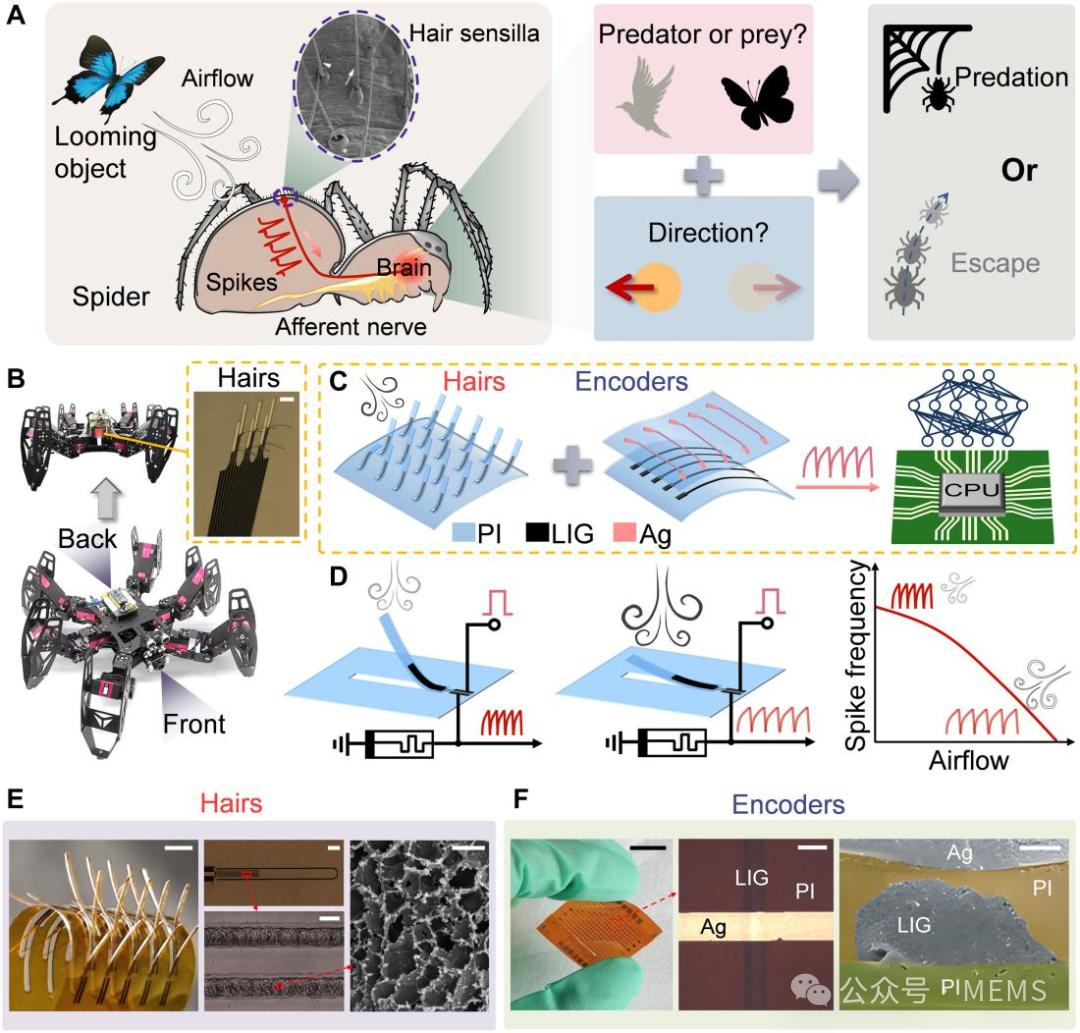
Concept design and structural features of FISH
Hair-like Sensors: The Essence of Bionic Design
The hair-like sensor of FISH utilizes laser-induced graphene (LIG) technology to create sensing elements with a width of only about 25 micrometers on a polyimide substrate. Scanning electron microscopy shows that LIG presents a foam-like porous structure, which not only enhances the sensor’s response sensitivity but also ensures good flexibility.
The sensor can detect airflow speeds as low as0.4 m/s, and by adjusting the thickness of the PI substrate, it can even achieve a minimum detection limit of 0.04 m/s. At an airflow speed of 7.0 m/s, the sensor’s response and recovery times are approximately 40 milliseconds and 26 milliseconds, respectively. After 4500 cycles of testing, the sensor still maintains stable performance, demonstrating excellent reliability.
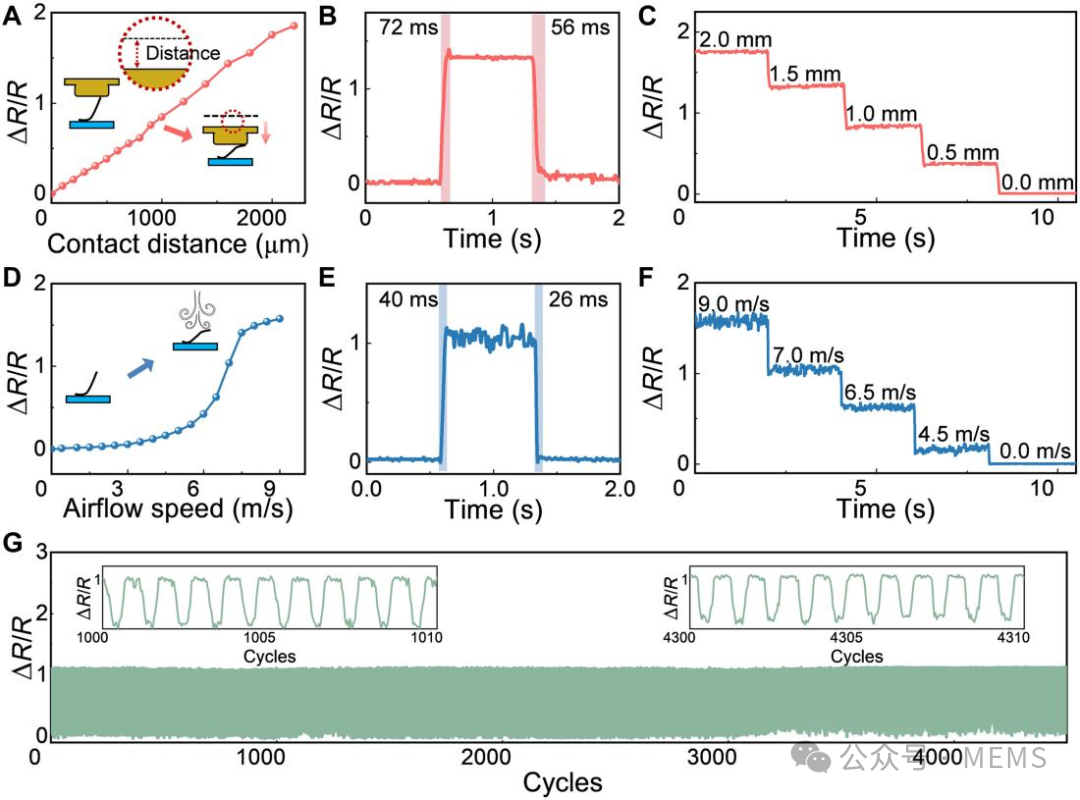
Electrical characteristics of the hair-like sensor
Flexible TS Memristor: The Core of Pulse Encoding
The flexible TS memristor is key to FISH’s pulse encoding. It exhibits typical synaptic behavior: when the applied voltage exceeds a threshold, the device switches from a high-resistance state to a low-resistance state; when the voltage drops below the holding voltage, it spontaneously returns to a high-resistance state. This characteristic allows the memristor to generate self-oscillations under current bias, outputting voltage spikes with adjustable frequencies.
The memristor shows excellent stability: after1000 repeated cycles, the coefficient of variation for the high-resistance and low-resistance states is only 7.71% and 10.71%, respectively; it maintains stable operation under different bending radii (3-20 mm) and temperature conditions (40-200°C). When the input current increases from 100 pA to 200 nA, the spike frequency can be increased from 155 Hz to 2650 Hz.
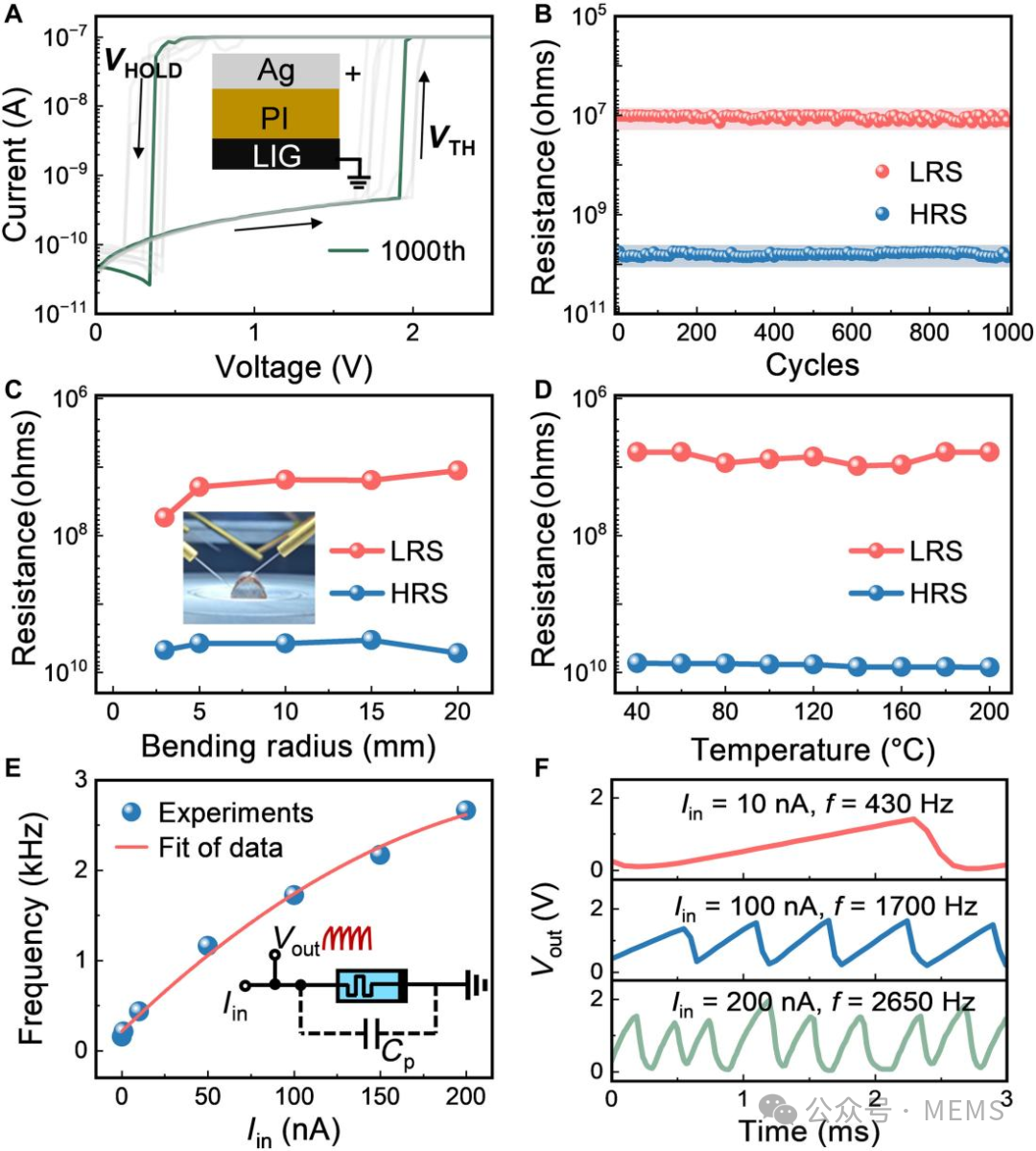
Electrical characteristics of the flexible TS memristor
Cooperation: From Airflow to Pulse Sequences
When FISH detects airflow or contact stimuli, the resistance of the hair-like sensor changes, thereby altering the current flowing through the TS memristor.This change triggers the self-oscillation characteristics of the memristor, encoding the sensing information into a frequency-adjustable pulse sequence. At a bias voltage of 2.4 volts, the spike frequency generated by FISH is approximately 500 to 1500 Hz, with a power consumption of only about 600 nW, and an energy consumption of about 660 pJ per event, very close to the energy consumption level of spider mechanoreceptors.
Most importantly, the power density of FISH is below 100 nW/mm², at least 100 times lower than reported non-contact sensing devices, making it possible to realize large-scale sensor arrays.
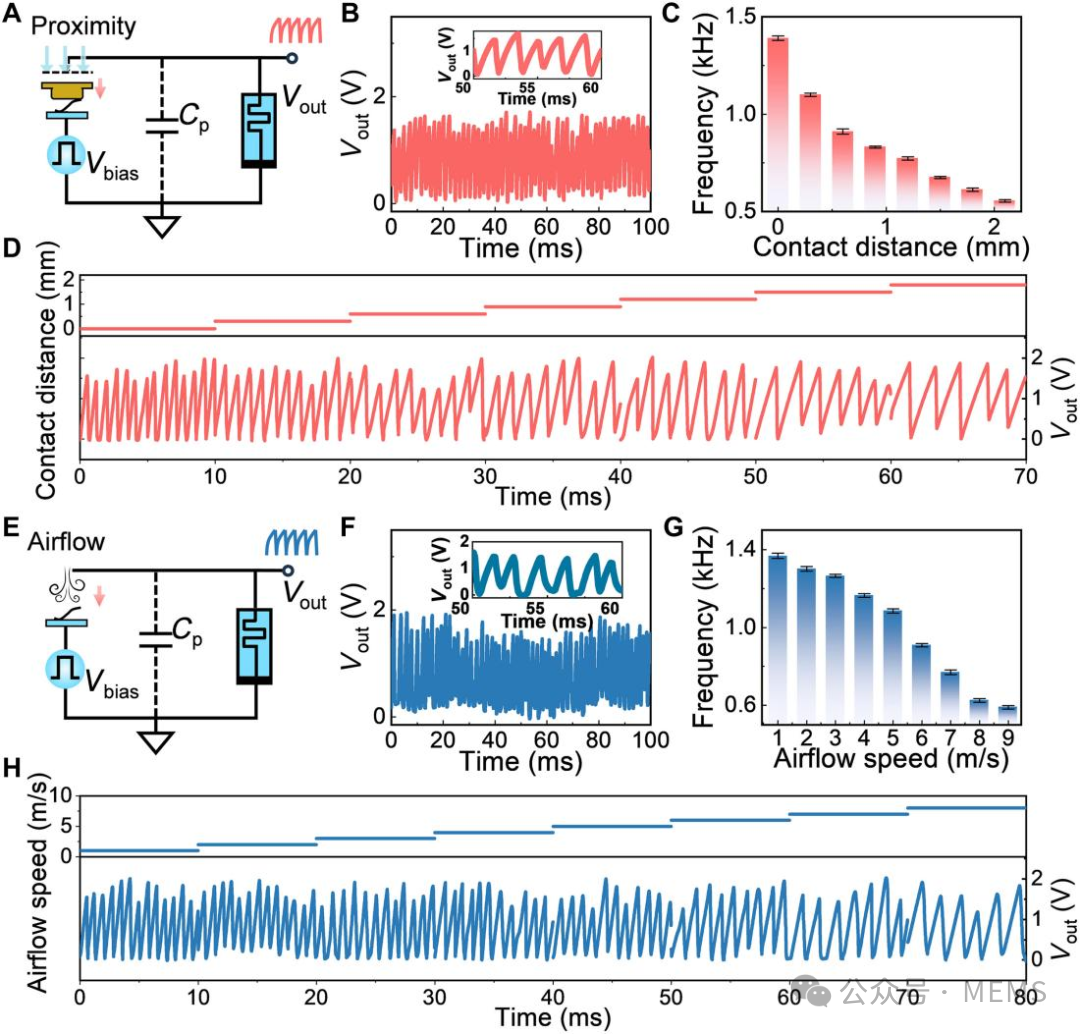
Spike encoding behavior of FISH
▍Building a Complete Non-Contact Tactile Perception System Based on FISH Matrix and Spiking Neural Networks
The research team further combined the FISH matrix with spiking neural networks (SNN) to construct a complete non-contact tactile perception (NCTP) system, which mimics two key mechanisms in biological sensory processing: population coding and receptive field integration.
Population Coding: A single FISH can only sense “airflow,” but when 25 FISH work together, they can capture the “spatial distribution” of airflow— for example, a butterfly-shaped airflow pattern will cause FISH at different positions to produce pulses at different frequencies, collectively forming a pulse image of the butterfly.
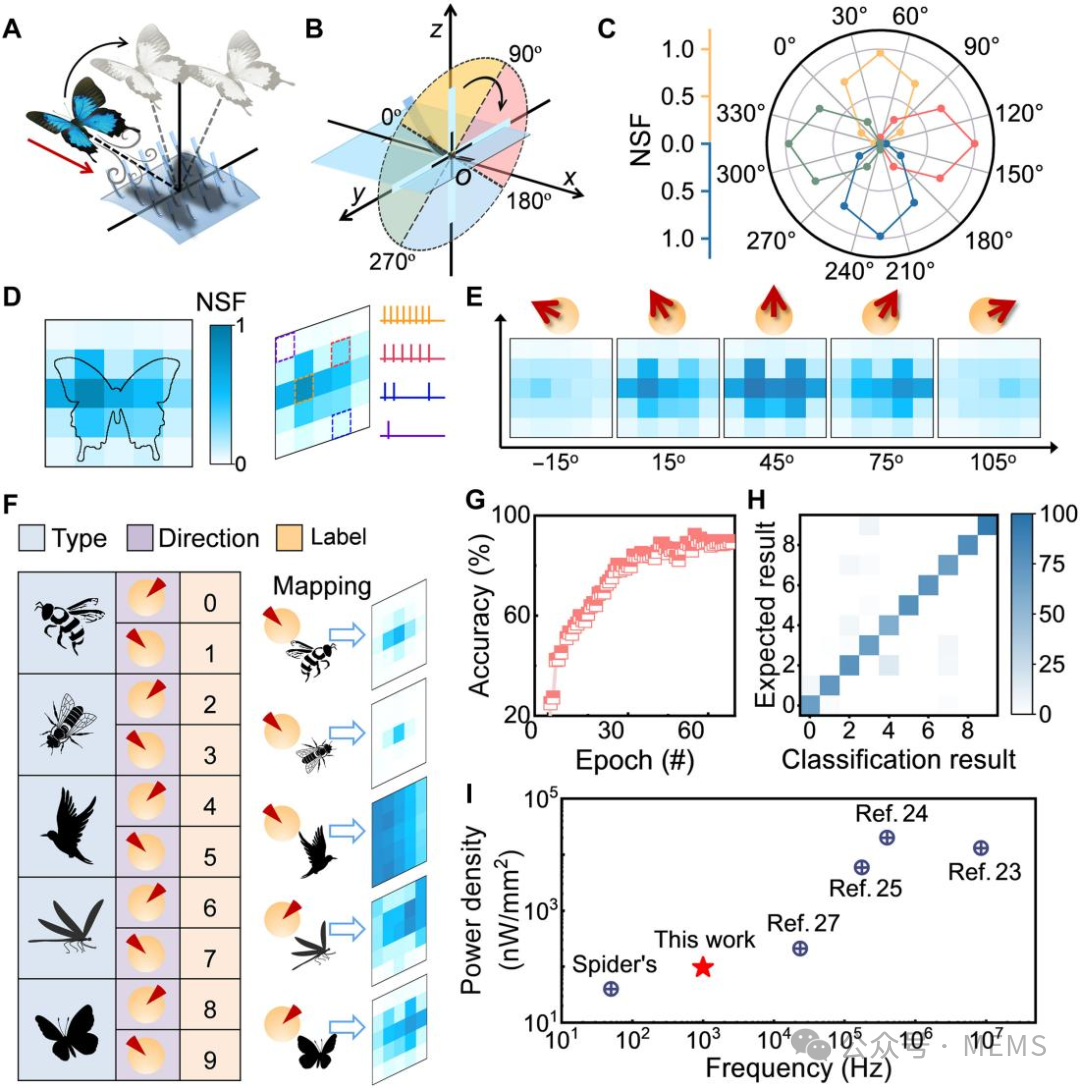
Based on the NCTP system, non-contact recognition mediated by airflow is achieved
Receptive Field Integration: Each FISH is responsible for sensing a “small area,” and the SNN integrates the signals from these small areas to analyze the “type” (e.g., whether it is a butterfly or a moth) and “direction” (whether it is coming from the left or right) of the target.
The research team constructed a custom dataset containing 10 labels representing five different pattern types and two directional conditions. After 70 training cycles, the spiking neural network achieved a multidimensional recognition accuracy of over 92% for these non-contact targets. This indicates that through the population coding of the FISH matrix, the system can effectively extract multidimensional information about airflow patterns and directions.
▍Integration and Scene Validation of NCTP Enhanced Spider Robot
To validate the practical performance of the NCTP system, the research team integrated a 2×3 FISH matrix into a spider robot. The front end of the robot is equipped with a commercial digital camera for visual perception, while the back end is installed with the FISH matrix for non-contact tactile perception.
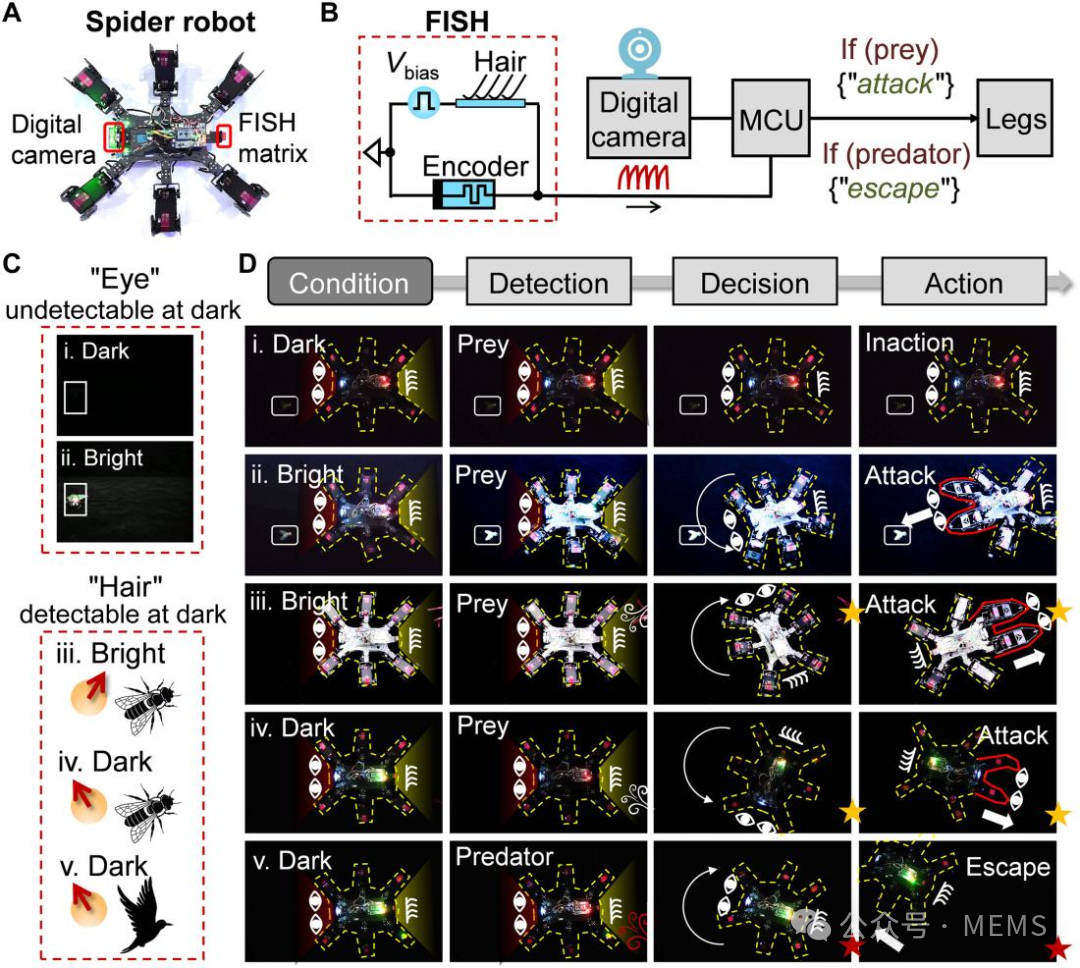
Demonstration of the NCTP enhanced spider robot
In five different experimental scenarios, the spider robot demonstrated intelligent responses to visual and non-contact tactile stimuli:
In dark environments, where the visual system fails, the robot remains stationary; under illuminated conditions, the visual system detects prey ahead, prompting the robot to attack; regardless of lighting conditions, when airflow indicates that prey is behind the robot, the FISH matrix triggers the robot to turn and attack; when a predator’s airflow pattern is detected from behind, the robot quickly escapes in a safe direction.
These experiments demonstrate that the NCTP system can effectively extend the environmental perception capabilities of robots, overcoming the limitations of visual perception in darkness, low visibility, or blind spots.
Further Reading:
“Robot Sensor Technology and Market – 2022 Edition”
“Sensor Technology and Market – 2024 Edition”