
In recent years, AI has penetrated the entire lifecycle of additive manufacturing with unprecedented depth and breadth, from intelligent design at the front end, intelligent production and quality control in the middle, to supply chain management at the back end, achieving a fundamental paradigm shift from “experience-driven“ to “data-driven“. Through methods such as machine learning, deep learning, and computer vision, the industry continues to expand the application of AI in design, process optimization, and quality monitoring.

Analysis of Leading Companies and Cutting-Edge Application Cases in Europe and America
Leading AI-AM Technology Companies in Europe and America and Their Core Solutions
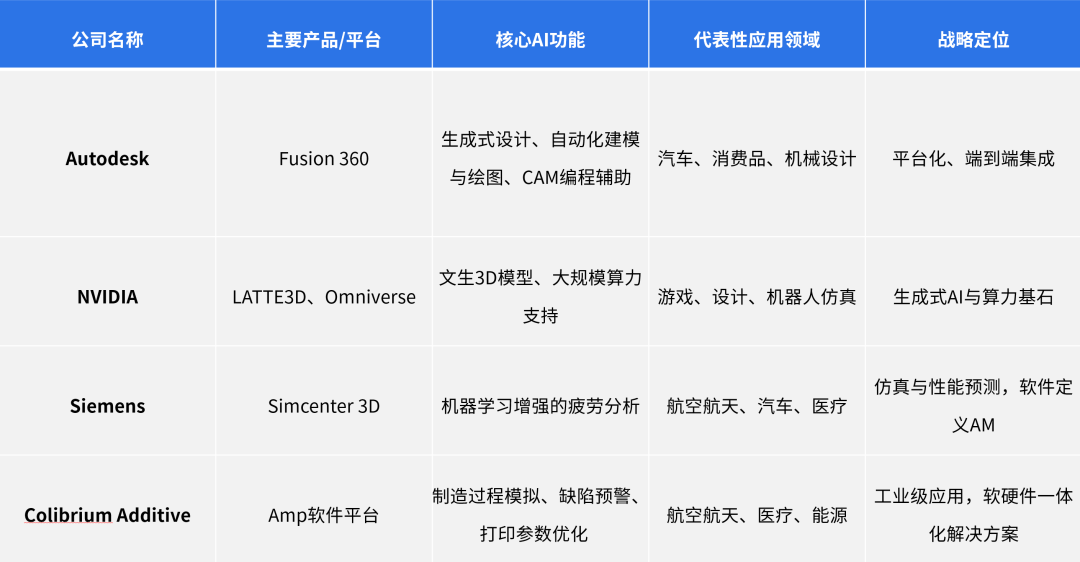
Autodesk: AI Full Process Integration from Design to Manufacturing
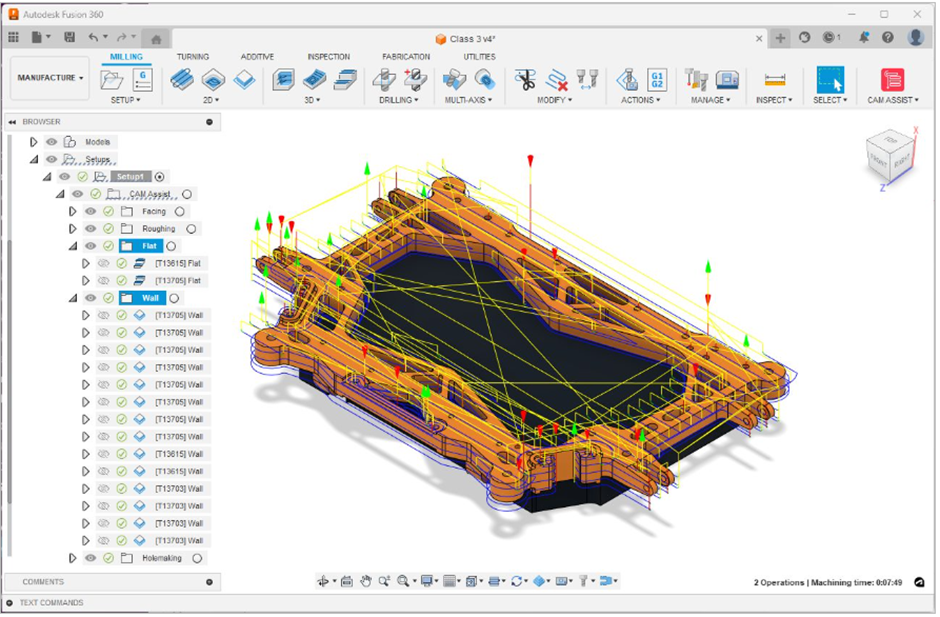
Autodesk is a typical case of AI empowering additive manufacturing. The core product Autodesk Fusion 360 integrates functions such as CAD, CAM, and CAE into a single cloud platform. Core AI functions include: Generative Design Optimization, which can quickly generate multiple lightweight and high-performance design options based on performance, material, and manufacturing constraints; automated modeling and drawing (AutoConstrain, Drawing Automation), which uses AI to automatically complete tedious tasks such as sketch constraints and 2D engineering drawing, freeing engineers from repetitive work; and CAM programming assistance, which, through collaboration with companies like CloudNC, uses AI natural language prompts to reduce CNC machining path programming time by up to 95%.
Siemens & Dassault Systems: Software-Defined Additive Manufacturing
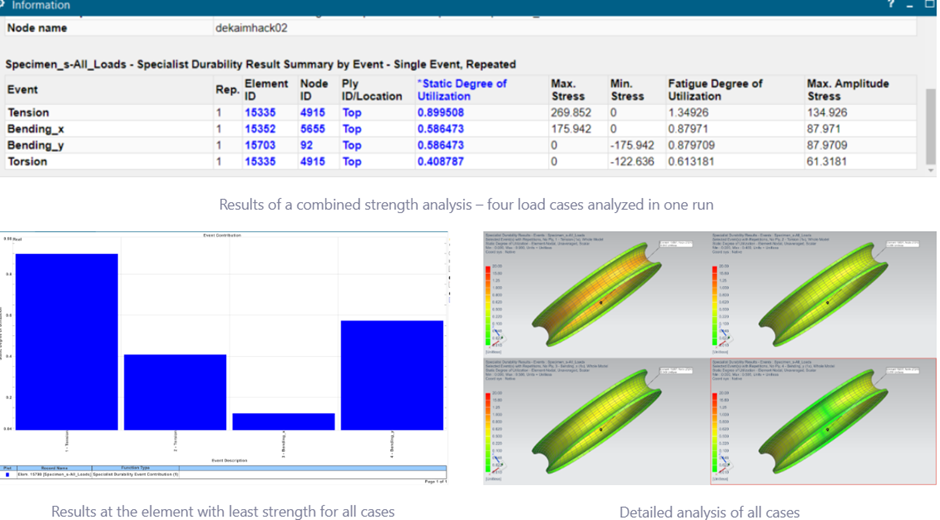
Siemens‘s Simcenter 3D software uses machine learning to address the inherent “fatigue challenges“ of additive manufacturing. By analyzing local defects during the manufacturing process (such as surface roughness and porosity), this tool can accurately predict the fatigue life of components, providing necessary trust and assurance for the production of safety-critical components (such as aerospace). Meanwhile, Dassault Systems, as a leader in the 3D CAD field, provides a foundation for complex AM design through its software platform, forming the core of the overseas additive manufacturing software ecosystem together with companies like Siemens.
Colibrium Additive: A Pioneer in the Aerospace Field
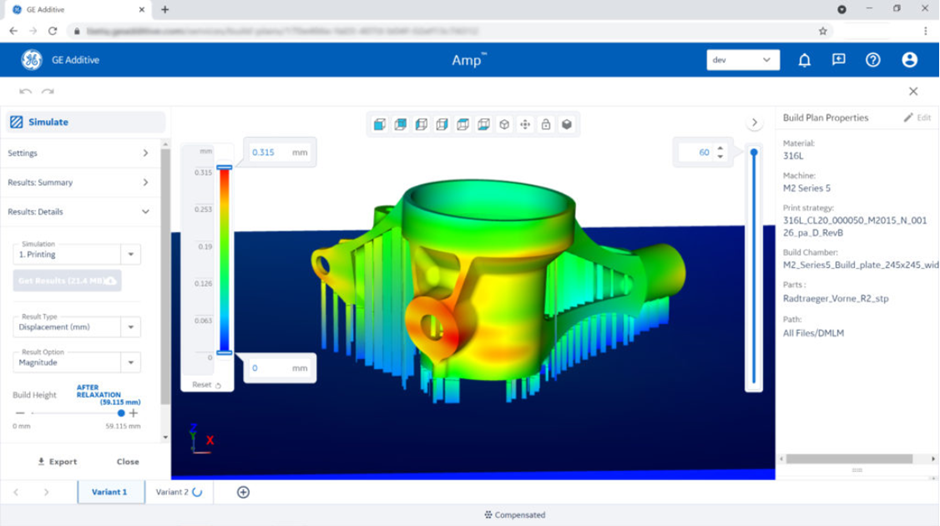
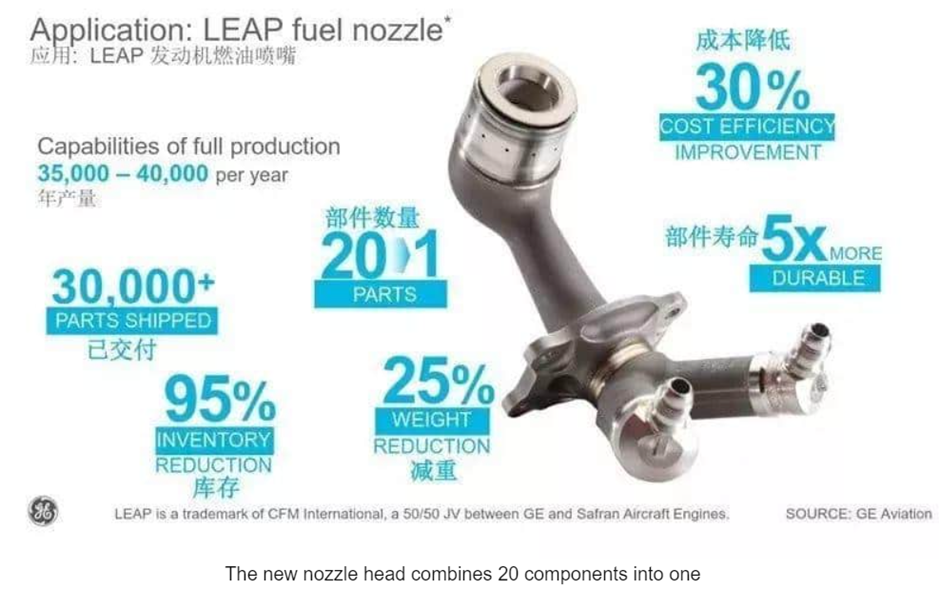
Colibrium Additive is one of the largest users of metal additive manufacturing technology globally, and its application in the aerospace field is a classic case of AI-AM integration. The core case is the fuel nozzle of the LEAP jet engine. Colibrium Additive engineers used AM technology to combine what was originally 20 parts into a single, lighter, and more durable component that is 5 times stronger. The Colibrium Additive Amp software platform integrates design, simulation, and compensation tools, aiming to reduce trial and error in the production process and provide a “recipe“ to optimize printing parameters, significantly improving production efficiency and yield.
EOS: Intelligent Monitoring and Process Insights
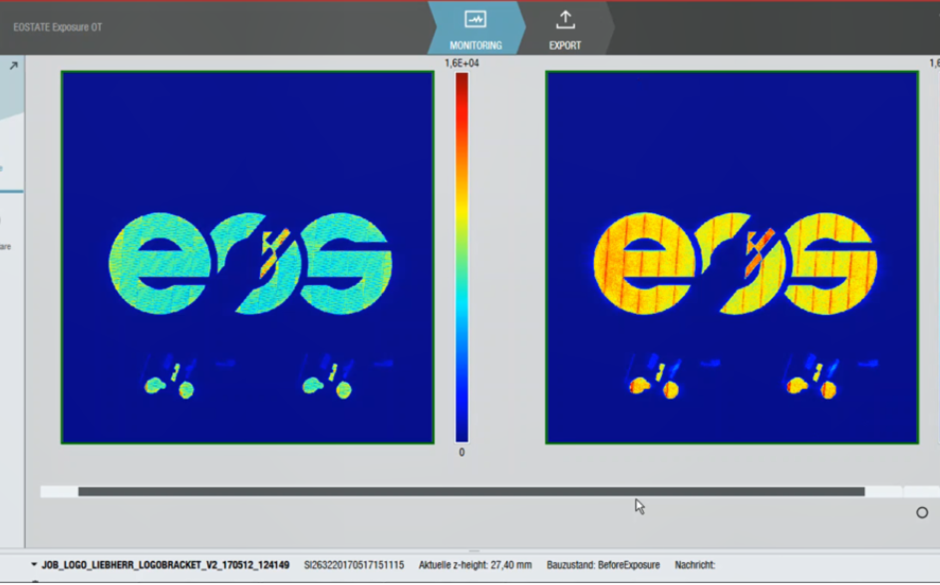
As a leading industrial 3D printing equipment manufacturer, EOS‘s EOSTATE Exposure OT system demonstrates the application of AI in real-time quality control. This system uses high-resolution cameras to record the printing process in real-time and provides a toolbox for process defect analysis through algorithms, thereby reducing waste rates and improving production reliability.
3D Printing Technology Reference Observes: The application of AI in the European and American additive manufacturing market presents two main characteristics:
-
First, the “software-defined additive manufacturing” led by software giants,
-
Second, the “end-to-end solutions” driven by industry pioneers.
Top overseas companies do not view AI as an isolated tool, but deeply integrate it into their core products and platforms, building an end-to-end “intelligent ecosystem” from design to delivery.
Overview of AI Applications in the Additive Manufacturing Process of Leading Companies in Europe and America
Generative Design: Liberating Creativity
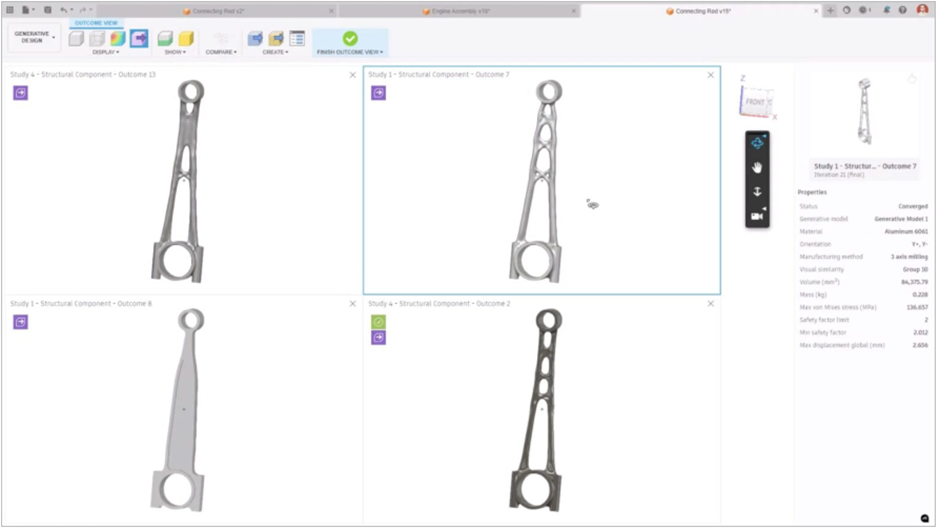
AI technology is rapidly simplifying the conversion process from abstract ideas to printable 3D models. For example, Autodesk Fusion 360’s built-in generative design feature uses algorithms and machine learning to automatically explore and generate thousands of innovative design options based on user-defined constraints and objectives (such as material type, manufacturing method, load conditions, etc.). These options are often lighter than traditional designs, capable of integrating multiple parts into a single component, and effectively enhancing the performance of the final product. This tool transforms the design process from a linear model of “designer manual modeling + tedious iterations” to an exponential model of “human-machine collaboration + parallel exploration“.
More forward-looking applications come from generative AI. Researchers at NVIDIA have developed the LATTE3D model, a revolutionary text-to-3D generative AI that can convert text prompts into 3D models usable in virtual environments in just one second. This technology shortens the cycle from idea to design draft by an order of magnitude. This “instant shaping” capability provides a new and efficient tool for video game development, marketing design, and even the construction of virtual training grounds for robots. This shift not only accelerates the design cycle but, more importantly, it can discover innovative solutions that human designers might find difficult to conceive intuitively, thereby enhancing the performance and quality of the final product and providing new possibilities for the development of high-value products (such as aerospace components).

Topology Optimization and Performance Enhancement
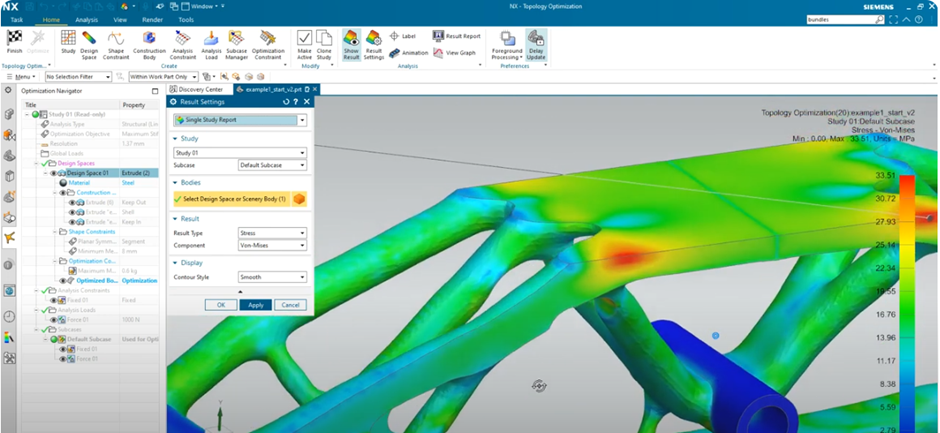
Topology optimization is a key technology for achieving lightweight and performance maximization in additive manufacturing, capable of designing geometrically complex components that are difficult to manufacture using traditional methods. However, due to the unique nature of additive manufacturing processes, the quality of components (such as fatigue life) can be severely affected by local defects (such as uneven surface roughness, porosity, and microstructure). Siemens and other companies have developed the Simcenter 3D software, which integrates machine learning algorithms to accurately analyze the fatigue life of additive manufacturing components. This tool takes complex local defects as input parameters and predicts their impact on the final product’s performance. This method not only significantly reduces the amount of physical testing required but also enables precise performance predictions for safety-critical load-bearing components, providing essential trust for the application of additive manufacturing in high-demand fields.
Intelligent Production and Automation
AI plays a core role in production by achieving “seamless and automated processes” that connect previously discrete manufacturing steps into an efficient, traceable digital thread. Traditional additive manufacturing processes often face the challenge of “interruptions in the digital process chain” where different suppliers’ software lacks interoperability, leading to additional manual conversion steps that not only reduce efficiency but also affect final quality.
To address this issue, integrated platforms like Colibrium Additive’s Amp software and Autodesk Fusion have emerged. They integrate design, simulation, production, and inspection data through a single database, breaking down traditional workflow silos. Colibrium Additive’s Amp platform is designed for its equipment customers, integrating CAD, build preparation, simulation, and inspection tools, and providing preset “printing recipes” through built-in industrial knowledge and best practices, significantly reducing trial and error and repetitive tasks in the development process.
AI and automation tools can automate repetitive tasks, significantly improving production efficiency and reducing human error. For example, Autodesk Fusion 360’s AI features include automated drawing and tool path programming, which can shorten tasks that originally took hours or even days to just seconds. This integration not only accelerates production but, more importantly, it provides end-to-end data traceability, which is crucial for industries like aerospace and medical that require strict certification. This concept of “digital twins“, representing the digital representation of physical assets, lays the foundation for product lifecycle management.
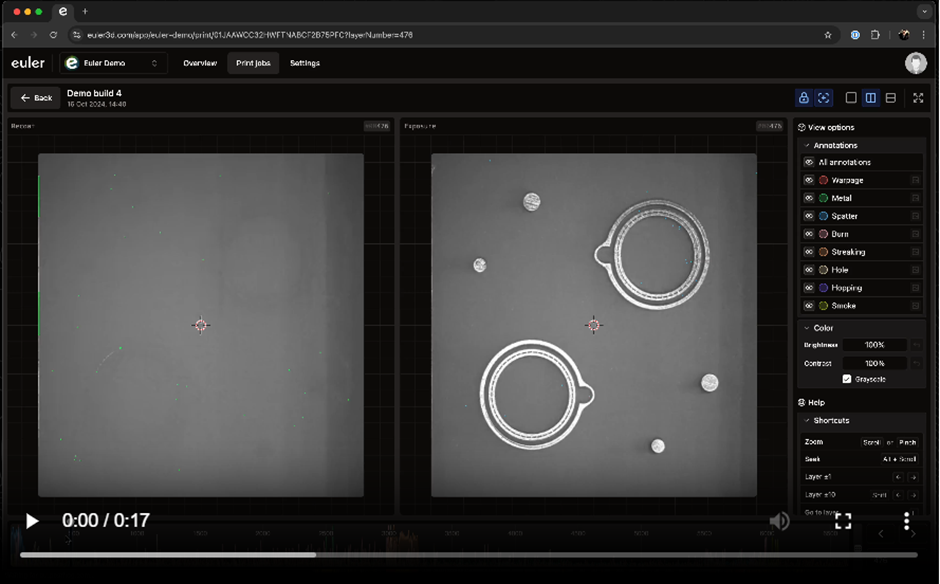
Additionally, in collaboration with Icelandic startup Euler, Autodesk has introduced printer sensor data into the design process on the Autodesk Fusion 360 platform, using computer vision models to detect defects such as spatter and melt pool deformation in real-time during the powder bed melting process, successfully bridging the information flow between design and manufacturing.
Intelligent Quality Control and Predictive Maintenance
AI has shifted its role in quality control from traditional “post-inspection” to “preemptive prediction and real-time intervention“, fundamentally changing the quality management model. In the 3D printing process, defects such as stringing and holes are difficult to detect in real-time. AI-driven computer vision methods can analyze video streams during the printing process in real-time, constructing deep convolutional neural networks to identify issues. This approach allows printers to interrupt printing or issue alerts before defects escalate, significantly reducing material waste and production costs.
EOS’s EOSTATE Exposure OT system utilizes high-resolution near-infrared cameras and analytical algorithms to monitor and assess process quality in real-time. This system reduces reliance on expensive downstream quality assurance and destructive testing by providing a toolbox for process defects, thereby lowering waste rates and improving production reliability.
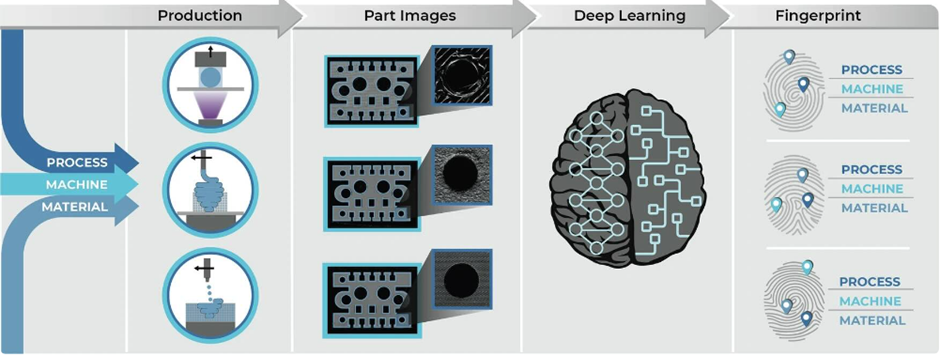
More innovative applications come from research at the University of Illinois, where researchers use AI to identify unique “fingerprints” from part photos, even tracing back to the specific machine that manufactured the part. Researchers found that even when using the same materials and process settings on two identical machines, the final parts carry unique, identifiable “manufacturing fingerprints“. This technology provides revolutionary means for supply chain transparency, quality control, and supplier verification, offering unprecedented trust for high-value components.
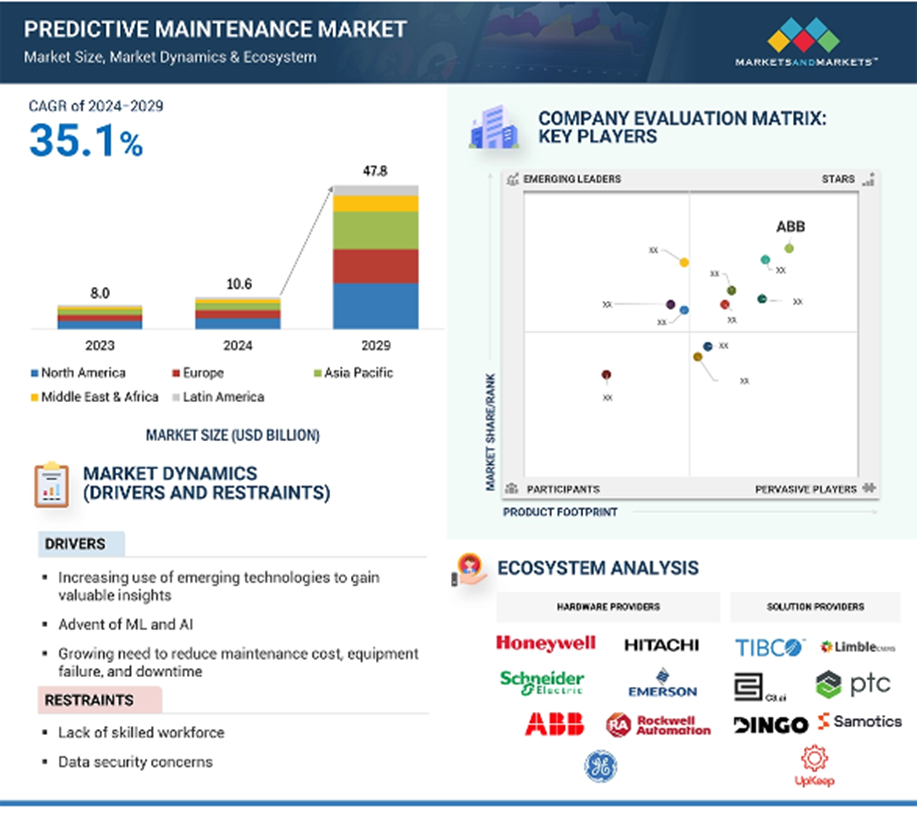
Moreover, unplanned downtime is a significant challenge in manufacturing. AI can predict when equipment needs maintenance by analyzing Internet of Things (IoT) sensor data, such as vibration and temperature, thus avoiding costly repairs and downtime losses. A report by Markets and Markets indicates that AI-driven predictive maintenance can reduce operational downtime by up to 30%. This shift significantly reduces waste rates and improves production reliability and consistency, thereby clearing key obstacles for the widespread application of additive manufacturing in high-demand industries.
The value chain of additive manufacturing is a complex process from conceptual design to final product delivery. The deep integration of AI technology is transforming every link in this chain into a data-driven, interconnected “digital thread” that realizes a fundamental shift from “linear processes” to “integrated intelligent processes“.
3D Printing Technology Reference Observes: The ultimate value of AI in additive manufacturing lies not only in its efficiency improvements at the technical level but also in its ability to reshape the entire industry’s business model by addressing core challenges (such as trust, reliability, and standardization). Future competition will shift from single technology competition to “platform + ecosystem” competition. AI systematically addresses the key bottlenecks of reliability and repeatability in additive manufacturing through technologies such as real-time monitoring, predictive maintenance, and “digital fingerprints“, enabling additive manufacturing to produce safety-critical components and enter high-value markets such as aerospace and medical. Once trust is established, AI-driven on-demand manufacturing and distributed production networks will become viable business models, replacing traditional volume-based pricing. Companies can shift from merely “selling equipment” or “selling services” to providing “full lifecycle support” based on digital inventory and global production networks, thus opening up new revenue growth points.
Note: This article is created by 3D Printing Technology Reference and is not authorized for reproduction without contact. Welcome to share
Industry Expert Communication Group:Q Group:248112776
Further Reading:
1. 14 3D Printing Forums | Coming next week, very interesting
2. Domestic 3D printing titanium wire exported abroad; 3.8 million bidding; Adidas’ latest patent is very disruptive; ultra-high elastic materials; open-source desktop machine shell prevents indoor pollution
3. Yimai showcases high-temperature series 3D printing solutions in drones, robots, and medical fields
4. What are high-performance metal 3D printing powders? What can they do in the robotics industry?