Table of Contents
1. Introduction
2. Microcontroller: The Compact and Flexible “Unsung Hero”
3. PLC: The “Mainstay” of Industrial Automation
4. Head-to-Head: A Comprehensive Comparison
4.1 Hardware Level
4.2 Software Programming
4.3 Performance
4.4 Cost Considerations
5. Case Studies of Practical Applications
5.1 Microcontroller Case Study
5.2 PLC Case Study
5.3 How to Choose the Right Controller
6. Future Outlook
7. Conclusion
1. Introduction
In the wave of modern technology, microcontrollers and PLCs (Programmable Logic Controllers) are like two invisible “unsung heroes”. Although they are not often mentioned by the public, they play a crucial role in various fields. Have you ever wondered how your smart rice cooker precisely controls the cooking time and temperature? How do those large machinery in factories achieve efficient and stable operation? Behind all this, the “silent contributions” of microcontrollers and PLCs are indispensable.
A microcontroller, or Single-Chip Microcomputer, is a highly integrated microcomputer that often hides in various small smart devices, such as smart wristbands and toys. Despite its small size, it can achieve intelligent operation of devices through its powerful computing and control capabilities. On the other hand, PLCs are the backbone of industrial automation, responsible for controlling complex production processes in large industrial scenarios like automotive manufacturing and chemical production, ensuring efficiency and stability in production.
While they both seem to perform control tasks, they have many differences in practical applications. Next, let us delve into the distinctions between microcontrollers and PLCs, unveiling their mysterious veils.
2. Microcontroller: The Compact and Flexible “Unsung Hero”
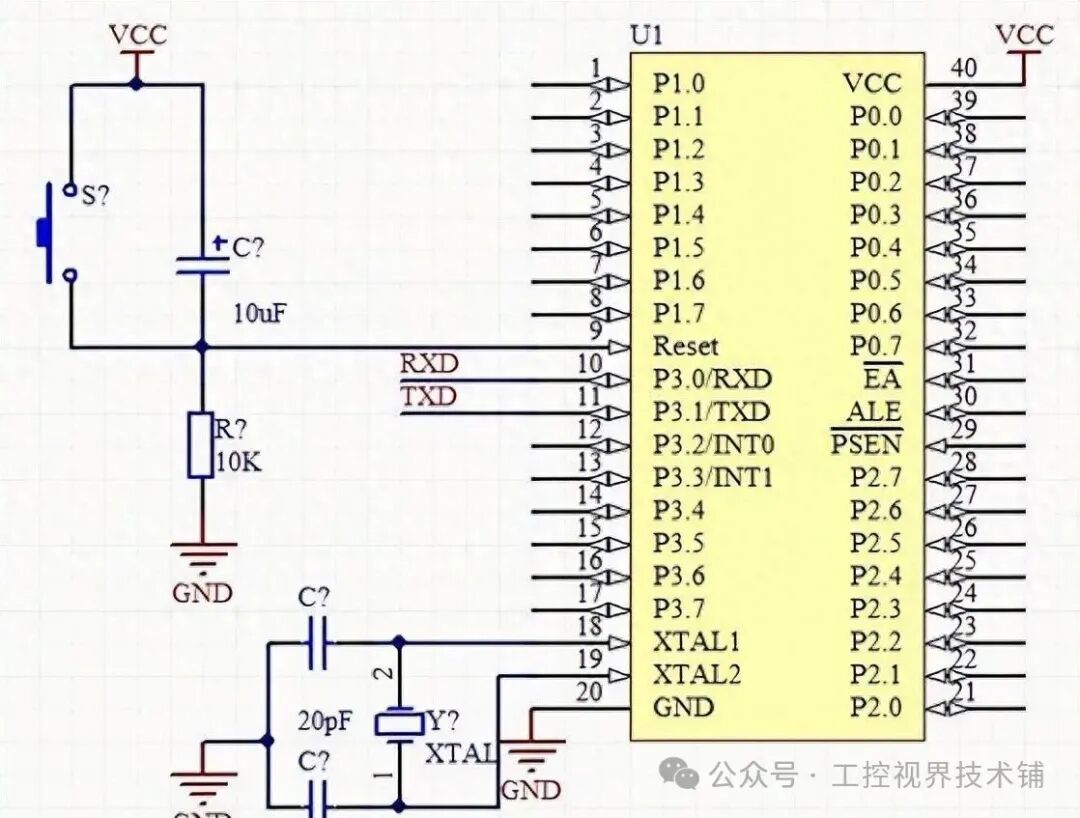
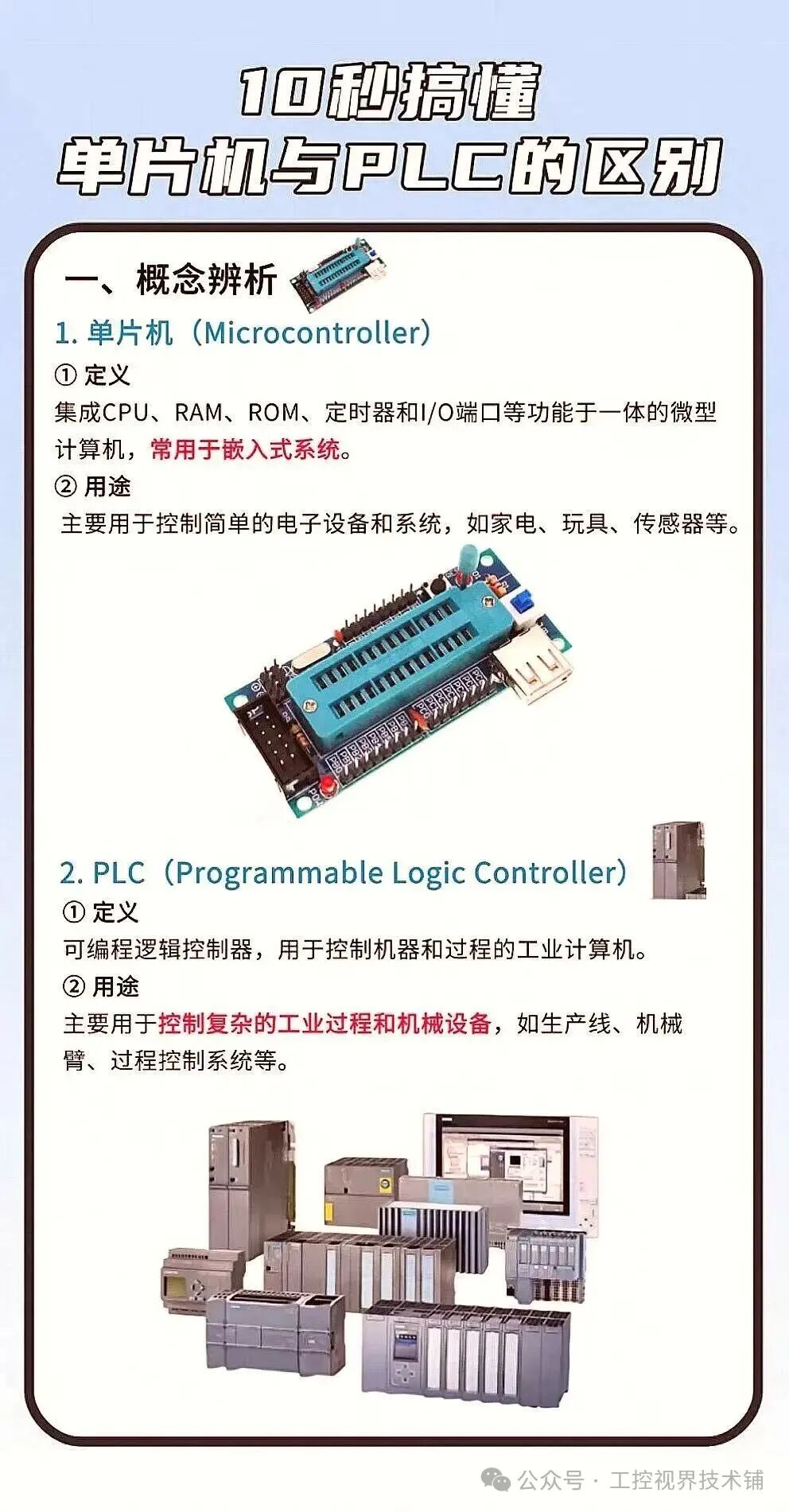
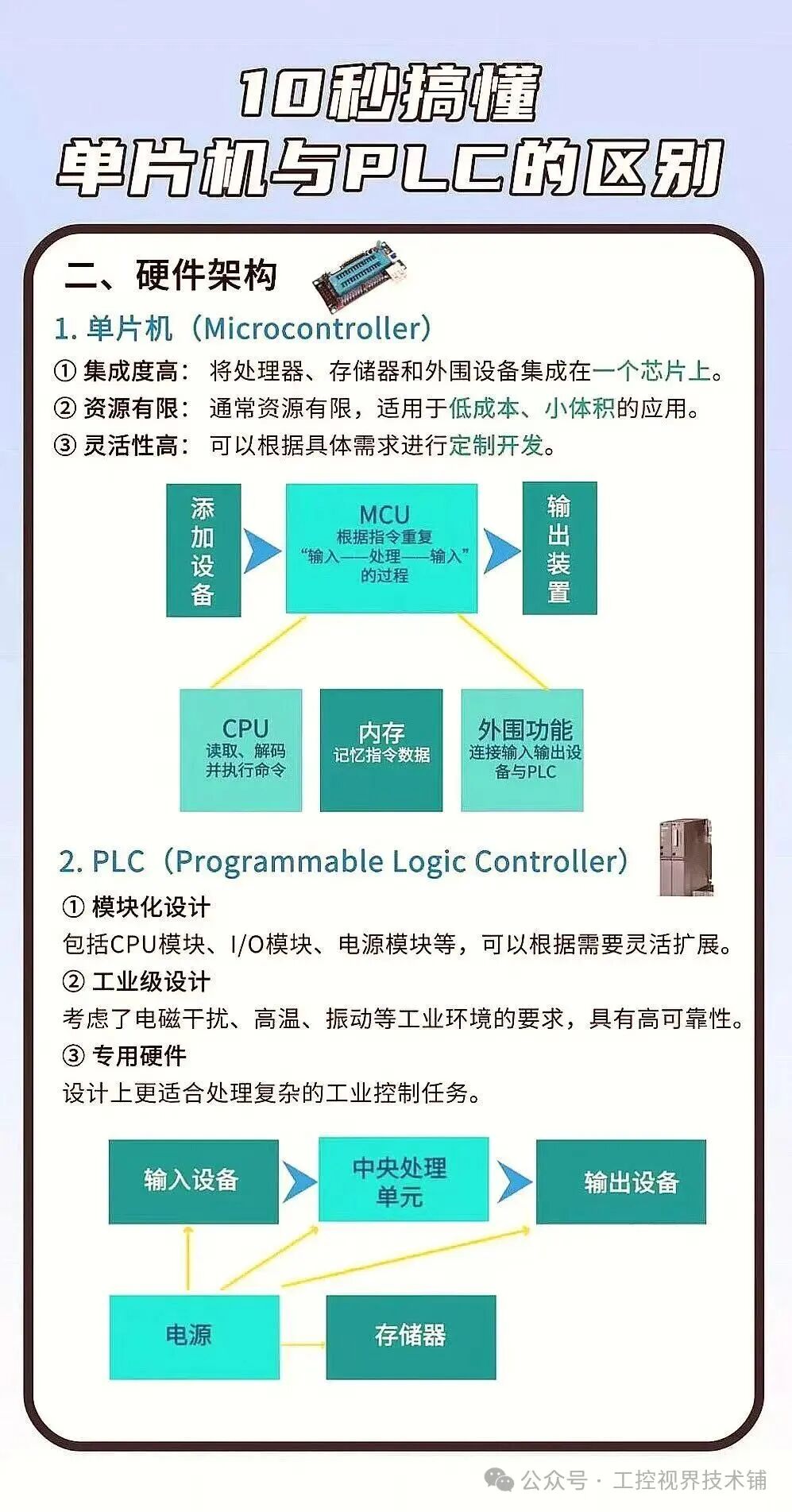
A microcontroller, or Single-Chip Microcomputer, is a microcomputer system that integrates a Central Processing Unit (CPU), Random Access Memory (RAM), Read-Only Memory (ROM), various Input/Output (I/O) interfaces, and may even include display driver circuits, Pulse Width Modulation circuits, Analog Multiplexer circuits, and A/D converters, all on a single silicon chip. In simple terms, it condenses the core components of a computer into a tiny chip; small but complete.
Structurally, a microcontroller mainly consists of six parts: the CPU, memory, timer/counter, input/output interfaces, interrupt control system, and crystal oscillator circuit. The CPU acts as the “brain” of the microcontroller, executing various instructions and processing data; memory is used to store programs and data; the timer/counter can achieve precise timing and event counting; the input/output interfaces serve as the “bridge” for communication between the microcontroller and the external world, facilitating data exchange with various peripherals; the interrupt control system allows the microcontroller to pause its current task and prioritize urgent events when necessary; the crystal oscillator circuit provides a stable “metronome” that supplies the reference clock signal for orderly operation of all components.
The greatest features of microcontrollers are their high integration, small size, low power consumption, low cost, and strong flexibility and programmability. With these advantages, microcontrollers are ubiquitous in our lives. In the smart home sector, they control the temperature of smart air conditioners, the brightness and switching of smart lights, making our lives more comfortable and convenient. In industrial control, they can precisely control the operation of automated production lines, improving production efficiency and product quality. In automotive electronics, functions like engine control and airbag deployment rely heavily on microcontrollers. Additionally, they play significant roles in medical devices, wearables, toys, and many other fields.
3. PLC: The “Mainstay” of Industrial Automation
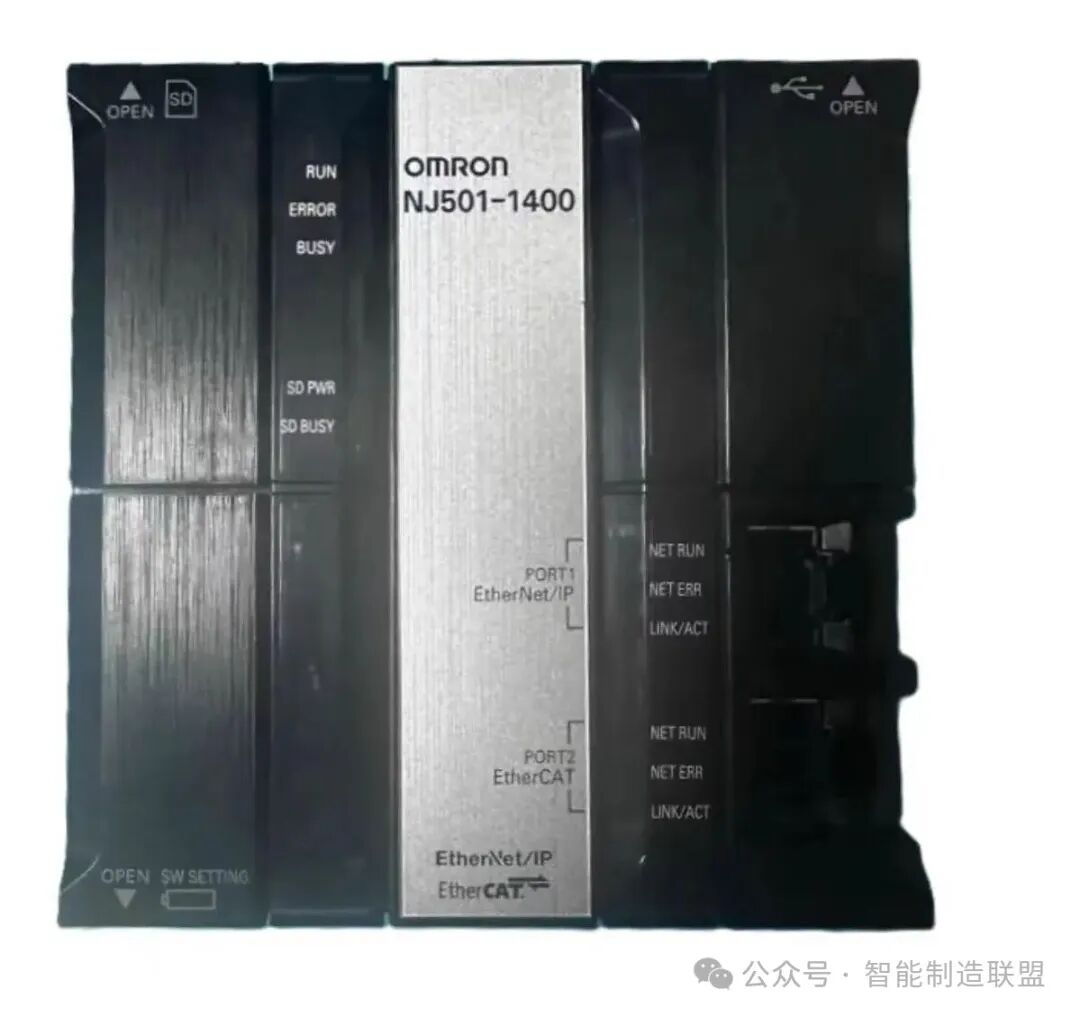
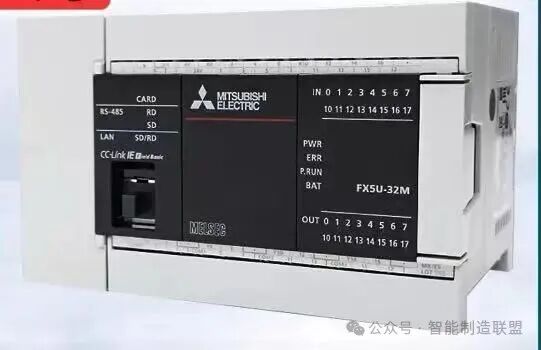
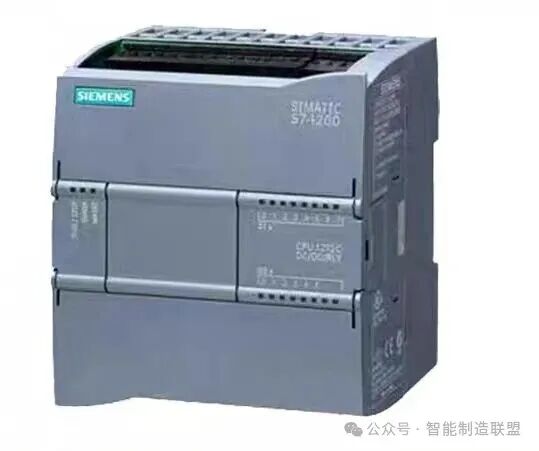
PLC, or Programmable Logic Controller, is a digital operation electronic system designed specifically for industrial environments. It acts as the “commander” in the field of industrial automation, controlling and coordinating industrial processes through pre-written programs that execute a series of logical and arithmetic operations.
In terms of structure, the main unit of a PLC consists of a Central Processing Unit (CPU), memory (EPROM, RAM), input/output units, peripheral I/O interfaces, communication interfaces, and a power supply. The CPU is the control center of the PLC, responsible for receiving and storing user programs and data, checking system status, and diagnosing syntax errors in user programs; memory includes system memory and user memory, where system memory stores management programs and user memory stores application programs and working data; the input/output units convert signals from external devices into digital signals and generate corresponding output signals based on program logic; communication interfaces are used for communication with host computers and other PLCs, forming a distributed control system.
The working process of a PLC generally consists of three stages: input sampling, user program execution, and output refresh. Completing these three stages is called a scan cycle. In the input sampling stage, the PLC reads all input states and data sequentially and stores them in the corresponding units in the I/O image area; in the user program execution stage, the PLC scans the user program from top to bottom; in the output refresh stage, the CPU refreshes all output latch circuits according to the corresponding states and data in the I/O image area, then drives the corresponding peripherals through the output circuits.
PLCs have many notable features. Their programmability allows them to be programmed according to different control needs, enabling complex control logic; modular design allows flexible configuration of CPU modules, input/output modules, communication modules, etc., based on actual applications; they also exhibit high reliability, capable of operating stably in harsh environments with high temperatures, high pressures, and strong electromagnetic interference; additionally, PLCs possess real-time capabilities, with high-speed data processing capabilities that enable real-time control; furthermore, they have strong communication functions, typically featuring multiple communication interfaces such as RS232, RS485, and Ethernet, allowing communication with host computers and forming distributed control systems.
With these powerful characteristics, PLCs play a crucial role in industrial automation. In automotive manufacturing plants, PLCs are used for the automatic control of body welding production lines, achieving automated adjustments and efficient production through precise control of welding robot actions, significantly improving production efficiency and product quality. In chemical production, PLCs monitor various process parameters such as temperature, pressure, and flow in real-time, taking corresponding control measures immediately if any parameters become abnormal, ensuring the safety and stability of the production process. In power systems, PLCs are used for automation control in substations, enabling remote monitoring and operation of power equipment, enhancing the reliability and management efficiency of power systems. Additionally, PLCs are widely used in many industrial fields such as food processing, textiles, and metallurgy.
4. Head-to-Head: A Comprehensive Comparison
4.1 Hardware Level
Microcontrollers, as highly integrated chips, combine the CPU, memory, I/O interfaces, and other core components on a small chip, making them compact, like a “concentrated essence”. Their storage capacity is relatively small, with internal RAM typically ranging from tens of KB to hundreds of KB, and ROM from a few KB to several tens of KB, with a limited number of I/O interfaces, usually around 20. Due to their high flexibility, developers can connect various circuits externally based on specific needs to meet different functional requirements.
In contrast, PLCs adopt a modular design, typically consisting of CPU modules, input/output modules, power supply modules, communication modules, and other components, making them relatively larger. They have a larger storage capacity, capable of storing a significant amount of programs and data to meet the demands of complex industrial control. Their I/O interface count is numerous and can be easily expanded based on actual application needs, allowing easy connection to various sensors, actuators, and other devices. Moreover, PLCs use industrial-grade components, featuring dust-proof, moisture-proof, and shock-proof characteristics, enabling stable operation in harsh industrial environments with high temperatures, high pressures, and strong electromagnetic interference.
4.2 Software Programming
In terms of programming languages, microcontrollers primarily use C language, assembly language, and other text-based programming languages. C language offers high flexibility and portability, allowing developers to fully leverage hardware control capabilities; assembly language is closer to the hardware level, enabling efficient code execution, but it is relatively more challenging to program, requiring developers to have a deep understanding of hardware register configuration, interrupt handling, and other low-level knowledge.
PLCs typically use graphical programming languages such as Ladder Diagram (LD), Sequential Function Chart (SFC), Function Block Diagram (FBD), and high-level programming languages like Structured Text (ST). Among these, Ladder Diagram is the most commonly used, based on electrical control circuit diagrams, using graphical symbols to represent control logic, making it intuitive and easy to understand, allowing even engineers without a strong programming background to quickly get started.
Regarding development difficulty and duration, microcontroller development requires developers to possess hardware design and low-level programming skills, making the process relatively complex and the development cycle longer. Developers must not only write control logic code but also consider hardware circuit design, debugging, and driving various peripheral devices. In contrast, PLC development environments are user-friendly, with relatively simple programming and shorter development cycles. Since PLCs have integrated various hardware function modules, developers can focus on writing control logic programs, completing programming through simple drag-and-drop and wiring operations, and can utilize specialized programming software for online debugging and simulation, greatly improving development efficiency.
4.3 Performance
Microcontrollers have fast processing speeds, capable of meeting the demands of applications requiring high data processing speeds, such as high-speed data acquisition and real-time algorithm processing. However, due to their limited hardware resources, they may struggle with complex control logic and large amounts of data. Additionally, the stability and reliability of microcontrollers depend to some extent on the quality of peripheral circuit design and software programming; if poorly designed, they can be susceptible to interference in complex electromagnetic environments, leading to unstable operation or even crashes.
PLCs possess strong processing capabilities, able to handle complex control tasks. They utilize high-speed processors and optimized algorithms to quickly process large amounts of input and output signals and complex control logic. Furthermore, PLCs have hard real-time capabilities, able to respond to external events within milliseconds, ensuring real-time control of production processes. Additionally, PLCs undergo strict quality control during design and manufacturing, featuring EMC electromagnetic interference resistance design, wide temperature operation (-25°C to 70°C), redundant power supplies, and have passed industrial safety certifications (such as CE, UL), ensuring high stability and reliability for long-term operation in industrial environments.
4.4 Cost Considerations
In terms of hardware costs, the cost of a single microcontroller chip is relatively low, especially for some general-purpose microcontrollers, which may cost only a few yuan or even less. However, when developing a complete application system, various external circuit components such as power circuits, reset circuits, clock circuits, and storage circuits need to be connected, and development tools and simulators may also need to be purchased, which can lead to an increase in overall development costs.
PLC hardware costs are relatively high, especially for high-end PLC systems, which can be quite expensive. However, due to the modular design of PLCs, developers can select appropriate modules based on actual needs during development, reducing unnecessary hardware expenses. Moreover, PLCs have short development cycles, are easy to debug, and can be quickly put into use, thereby lowering development and time costs. Additionally, PLCs have low maintenance costs; their modular design makes troubleshooting and replacement more convenient, reducing equipment downtime and improving production efficiency.
5. Case Studies of Practical Applications
5.1 Microcontroller Case Study
For example, in smart temperature control systems, many smart home devices such as smart air conditioners and smart water heaters use microcontrollers to achieve precise temperature control. In this system, temperature sensors are responsible for real-time collection of environmental temperature data and transmitting this data to the microcontroller. The microcontroller calculates the corresponding control signals based on the preset temperature values and the actual temperature data collected, then outputs control signals to adjust the operation of heating or cooling devices, thereby achieving precise control of environmental temperature.
For instance, in a smart air conditioner, when the indoor temperature exceeds the set temperature, the microcontroller controls the compressor to start cooling; when the indoor temperature falls below the set temperature, the microcontroller stops the compressor or activates the auxiliary heating function to maintain the indoor temperature within the set range. This microcontroller-based smart temperature control system offers advantages such as fast response speed, high control accuracy, and low cost, providing users with a more comfortable and energy-efficient living experience.
5.2 PLC Case Study
In the body welding production line of an automotive manufacturing plant, PLCs play a crucial role. The entire production line consists of multiple welding robots, conveyor equipment, fixtures, etc., and the coordinated operation of these devices requires precise control and scheduling. As the core of the control system, the PLC is responsible for receiving signals from various sensors, such as position sensors and pressure sensors, and monitoring the operational status of the production line in real-time.
Based on pre-written programs, the PLC analyzes and processes these signals, then outputs control signals to precisely control the actions of each welding robot, including welding position, welding current, welding time parameters, as well as the speed and direction of conveyor equipment, and the clamping and releasing operations of fixtures. Through the precise control of the PLC, the body welding production line can achieve efficient and stable operation, significantly improving production efficiency and product quality.
Additionally, PLCs have fault diagnosis and alarm functions; once they detect equipment faults or production anomalies, they can promptly issue alarms and take corresponding measures, such as stopping the production line to avoid greater losses. Furthermore, PLCs can communicate with host computers to upload production data to management systems, facilitating production monitoring and data analysis by management personnel.
5.3 How to Choose the Right Controller
In practical applications, the choice between a microcontroller and a PLC needs to consider multiple factors comprehensively.
First is the project requirements. If the project has strict cost control and the control tasks are relatively simple, such as controlling small electronic devices like smart toys and remote controls, microcontrollers, with their low cost and high flexibility, are usually a good choice. However, for industrial automation projects that require high stability, reliability, and real-time performance, with complex control logic and a need for numerous I/O interfaces, PLCs, with their powerful processing capabilities, high reliability, and extensive I/O interface expansion capabilities, are more suitable.
Secondly, budget considerations are also important. Microcontrollers have low single-chip costs, but when developing a complete system, the need for various external circuit components and development tools can increase overall costs. PLC hardware costs are relatively high, but their short development cycles and ease of debugging allow for quick deployment, reducing development and time costs, and their low maintenance costs make troubleshooting and replacement more convenient, minimizing downtime and improving production efficiency.
Moreover, technical capabilities should not be overlooked. If the development team has strong hardware design and low-level programming skills, choosing a microcontroller can fully leverage its flexibility to achieve highly customized functions. Conversely, if the development team is more familiar with graphical programming and wishes to complete project development quickly, the user-friendly development environment and simple programming of PLCs will be a better choice.
Additionally, scalability is another consideration. If the project has significant future functional expansion needs, the modular design of PLCs allows for easy addition of various functional modules to meet system upgrade requirements. In contrast, the expansion capabilities of microcontrollers are relatively limited, and they may face challenges when addressing large-scale functional expansions.
6. Future Outlook
Looking ahead, both microcontrollers and PLCs have their respective development directions. Microcontrollers will evolve towards higher performance, lower power consumption, and higher integration, continuously enhancing computing speed and storage capacity while further reducing power consumption, enabling their application in more mobile devices and power-sensitive scenarios. Additionally, with the development of the Internet of Things (IoT), microcontrollers will focus more on integration with various sensors and communication modules to achieve stronger intelligent perception and data transmission capabilities, providing richer node devices for IoT applications.
PLCs, on the other hand, will achieve greater breakthroughs in intelligence, networking, and openness. On one hand, PLCs will integrate more intelligent algorithms and data analysis functions, enabling more complex adaptive control and predictive maintenance, enhancing the level of intelligence in industrial production. On the other hand, with the rise of the Industrial Internet, PLCs will further strengthen their integration with network technologies, enabling more convenient remote monitoring, data sharing, and collaborative control, driving industrial production towards digitization, networking, and intelligence. At the same time, the openness of PLCs will continue to increase, making interconnectivity between different brands of PLCs and between PLCs and other industrial devices easier, supporting the construction of more flexible and efficient industrial automation systems.
In the future of technological integration, microcontrollers and PLCs may also learn from each other and develop collaboratively. For example, in some small industrial control systems, the low cost and flexibility of microcontrollers can be combined with the reliability and ease of programming of PLCs to develop more economical and practical controllers. Furthermore, with the development of emerging technologies such as edge computing and fog computing, both microcontrollers and PLCs can serve as edge computing nodes, playing important roles in data acquisition, preprocessing, and local control, jointly providing technical support for achieving industrial intelligence.
In summary, as important technological means in the modern control field, both microcontrollers and PLCs are continuously evolving and innovating. They will continue to play significant roles in their respective areas of expertise while also promoting each other through technological integration, contributing to technological advancement and industrial upgrading.
7. Conclusion
Microcontrollers and PLCs, as two major technologies in the modern control field, each have unique characteristics and application scenarios. Microcontrollers shine in small smart devices and cost-sensitive projects with their compact, flexible, low-cost, and highly customizable features; while PLCs, with their powerful processing capabilities, high reliability, ease of programming, and excellent industrial adaptability, have become an indispensable core force in the field of industrial automation.
For professionals and technology enthusiasts in related fields, a deep understanding of the differences between microcontrollers and PLCs can not only help make more suitable technical choices in project development but also broaden technical horizons and enhance professional competence. In this rapidly evolving technological landscape, both continue to evolve and innovate, bringing us more opportunities and challenges.
If you are interested in microcontrollers and PLCs, consider further learning and practice to explore their applications in different fields. You will surely gain a lot in this fascinating world of technology.