Driven by the wave of digitalization, the Internet of Things (IoT) is uniquely transforming the landscape of industrial automation. Among these changes, the MQTT protocol plays a crucial role in this revolution due to its lightweight and efficient nature. Data acquisition and protocol parsing from PLCs (Programmable Logic Controllers) are key technologies in the field of industrial automation, involving the extraction of data from PLC devices and converting it into understandable and usable information.
The Intersection of IoT and Industrial Automation
The core of IoT technology lies in connecting everything, and industrial automation is a key area of this vision. PLCs, as the brain of industrial automation, have their data acquisition capabilities directly related to production efficiency and the level of intelligence. However, traditional PLC data acquisition faces numerous challenges, such as protocol diversity, data acquisition frequency limitations, and high hardware costs. Common data acquisition issues include:
1. Communication Port Limitations
- Physical Interface Limitations: Some older PLC devices may only have a limited number of physical communication interfaces, such as RS232 or RS485, which may already be occupied by other devices, preventing direct connection to data acquisition devices.
- Network Interface Limitations: Some PLCs may not support modern network protocols, such as Ethernet, or have a limited number of network interfaces, restricting the flexibility and scalability of data acquisition.
2. PLC Program Encryption
- Security Issues: To protect intellectual property or prevent unauthorized access, PLC programs may be encrypted, making it difficult to directly read data points from the program.
- Decryption Difficulty: Even if decryption methods are available, they require specialized knowledge and time, and may involve legal risks..
3. Lack of Data Point Documentation
- Lack of Documentation: Equipment manufacturers may not provide detailed data point documentation due to commercial confidentiality, complicating the data acquisition process.
- Custom Protocols: Different manufacturers’ PLCs may use different communication protocols, and these protocols may be proprietary, lacking publicly available documentation.
4. Complexity of Protocol Parsing
- Protocol Diversity: There may be various PLC brands and models in industrial settings, each using different communication protocols, increasing the complexity of protocol parsing.
- Real-time Requirements: Industrial automation has strict real-time requirements for data acquisition, necessitating fast and accurate protocol parsing to avoid production delays.
- Diverse Data Formats: Even under the same protocol, different PLCs may use different data formats and encoding methods, complicating the parsing process.
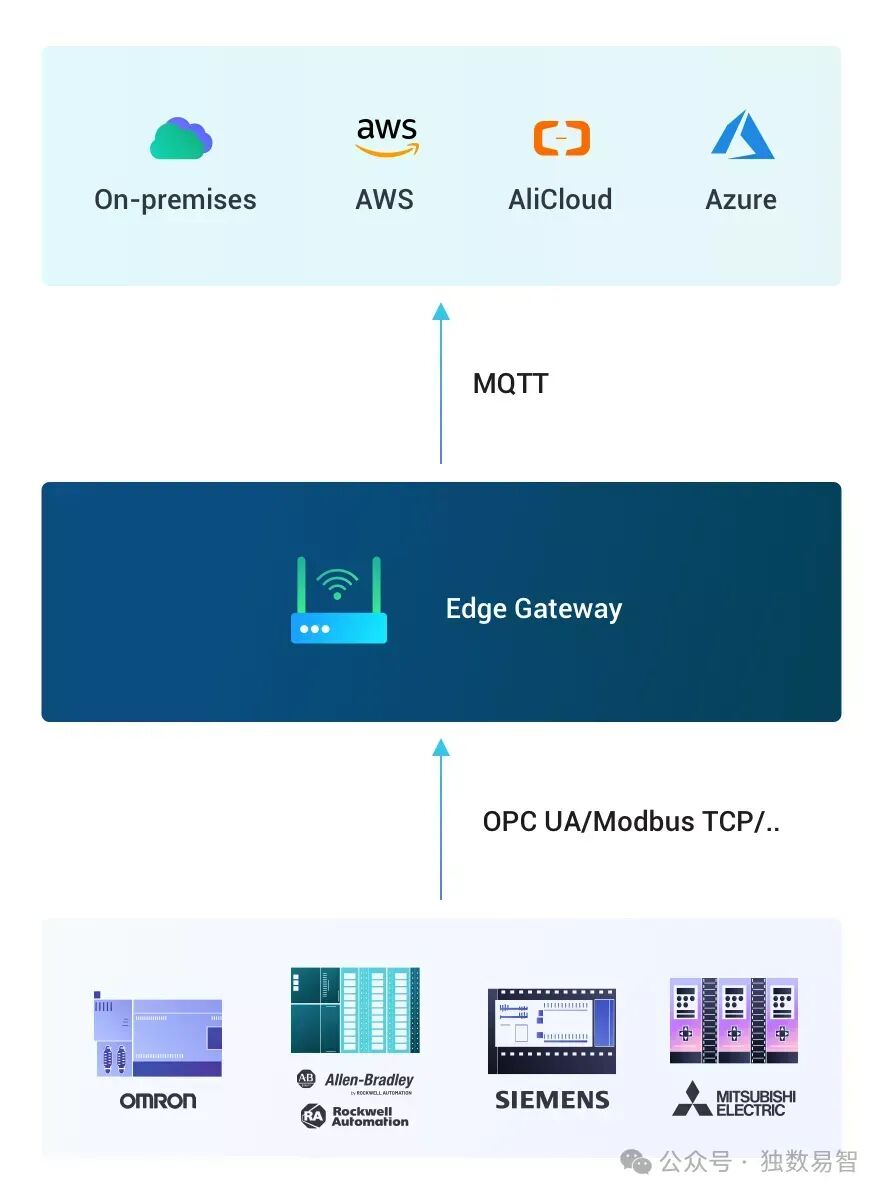
MQTT Protocol: The Light Cavalry of IoT
The MQTT protocol, with its lightweight and efficient design, bidirectional communication, reliable message delivery, support for unreliable networks, and security features, has become the preferred protocol for IoT communication. It not only reduces device resource consumption and optimizes network bandwidth but also establishes a stable and efficient communication bridge between devices and the cloud.
Lightweight and Efficient: The MQTT client is compact, with a very small message header, requiring minimal bandwidth and storage, making it suitable for bandwidth-constrained environments.
Bidirectional Communication: MQTT supports bidirectional message delivery between devices and the cloud, enabling remote monitoring and control.
Reliable Message Delivery: MQTT defines three levels of service quality, ensuring message delivery reliability to meet the needs of different business scenarios.
Support for Unreliable Networks: MQTT’s support for persistent sessions reduces the time for clients to reconnect with brokers, making it suitable for unstable connections like cellular networks.
Security: MQTT supports TLS encryption and modern authentication protocols, such as OAuth, ensuring the security of communications.
Integration of MQTT with PLCs
With the development of IoT technology, the MQTT protocol is beginning to be integrated into PLCs, a trend that is reshaping the landscape of industrial data acquisition.
Simplified Resource Configuration: PLCs integrated with MQTT do not require additional edge gateways, reducing costs and simplifying configuration.
Millisecond Timestamps: The combination of MQTT and PLC can achieve millisecond-level data reporting, providing precise data support for big data analysis.
Flexible Data Point Configuration: MQTT supports flexible configuration of data points within PLCs and reports them in a unified JSON format, achieving data format unification between OT and IT domains.
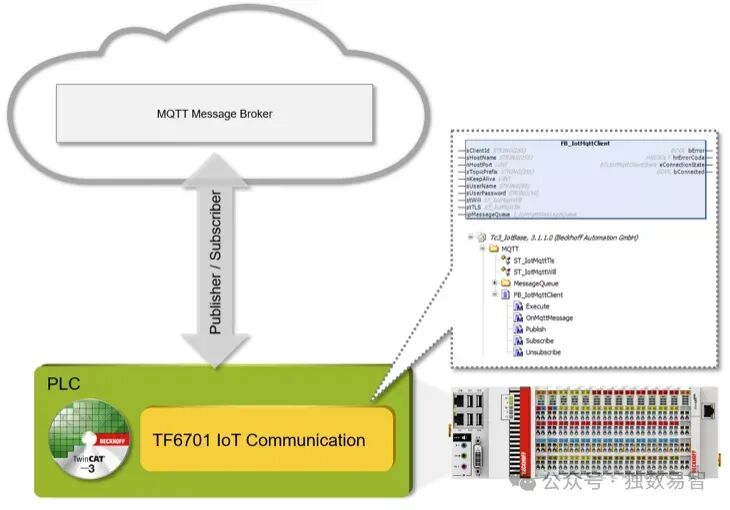
MQTT Empowering Industrial Data Application Scenarios
The integration of MQTT with PLCs not only simplifies the data acquisition process but also provides strong data support for industrial intelligent applications. Predictive maintenance of drive chain components: By collecting and analyzing data in real-time, warning models can be established to reduce the probability of failures and avoid losses. Remote device diagnostics: PLCs integrated with MQTT can quickly report data to the cloud for remote fault diagnosis, enhancing equipment utilization. Intelligent scheduling of power grids: The low-latency communication link of MQTT directly reaches PLCs, quickly responding to commands for power grid frequency modulation and reactive power compensation, advancing the intelligence of power grids.
1. Cost Savings
- Reduced Hardware Requirements: No need for additional edge gateways, lowering hardware costs.
- Simplified Configuration: Automation engineers can configure directly on the PLC without worrying about wiring and software configuration of edge gateways, saving labor costs.
2. Flexibility and Scalability
- Flexible Data Point Configuration: Data points can be flexibly configured within the PLC, quickly adapting to changes in production processes.
- Unified Data Format: Data is reported in a unified JSON format, simplifying data integration and analysis processes.
3. Predictive Maintenance and Fault Diagnosis
- Real-time Monitoring and Analysis: Real-time collected data can be used to monitor equipment status and predict potential failures.
- Remote Diagnosis: PLCs integrated with MQTT can quickly report data to the cloud for remote fault diagnosis, reducing equipment downtime.
The MQTT protocol, with its unique advantages, shows great potential in the field of industrial PLC data acquisition. As Industry 4.0 continues to develop, the MQTT protocol will help industrial automation achieve a more efficient, intelligent, and secure transformation.