In the field of precision PCB design, engineers rely on a range of specialized tools to ensure the performance and reliability of circuit boards. Below is a list of essential measurement and testing tools for PCB design engineers:
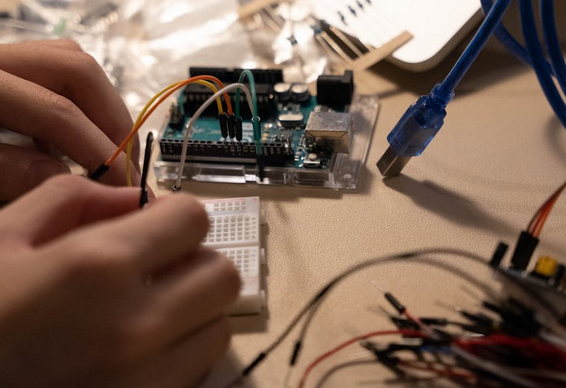
1. Basic Electrical Characteristic Measurement
Digital Multimeter: Measures basic parameters such as voltage, current, and resistance with an accuracy of 0.05% + 3, such as the Fluke 87V.
Oscilloscope: Captures signal waveforms and analyzes timing and ripple, such as the Rigol DS1054Z which supports a bandwidth of 50MHz.
2. Signal Integrity Analysis
Vector Network Analyzer (VNA): Measures S-parameters and analyzes impedance matching, such as the Keysight E5063A.
Time Domain Reflectometer (TDR): Detects impedance discontinuities in transmission lines and locates open/short circuits, used for high-speed differential line testing.
3. Manufacturing Defect Detection
Automated Optical Inspection (AOI): High-resolution cameras detect solder joint defects and component misalignment, such as the Omron VT-S730.
Flying Probe Tester: Moves probes to test continuity and insulation, supporting test points with a pitch of 0.1mm without the need for dedicated fixtures.
X-ray Inspection System: Visualizes BGA solder ball voids and defects in inner-layer routing of multilayer boards.
4. Environmental and Mechanical Stress Testing
Thermal Imaging Camera: Visualizes PCB thermal distribution and locates overheating components, such as the FLIR T540 with thermal sensitivity ≤ 0.03℃.
Thermal Shock Test Chamber: Simulates extreme temperature changes to assess PCB reliability and solder joint strength.
5. Advanced Design and Debugging
Logic Analyzer: Captures multi-channel digital signals and protocol decoding, such as the Saleae Logic Pro 16 which supports 16 channels.
Impedance Tester: Ensures characteristic impedance of high-speed signal lines, using time-domain methods to measure single-ended/differential impedance.
This article is an original piece by Fanyi Education, please indicate the source when reprinting!