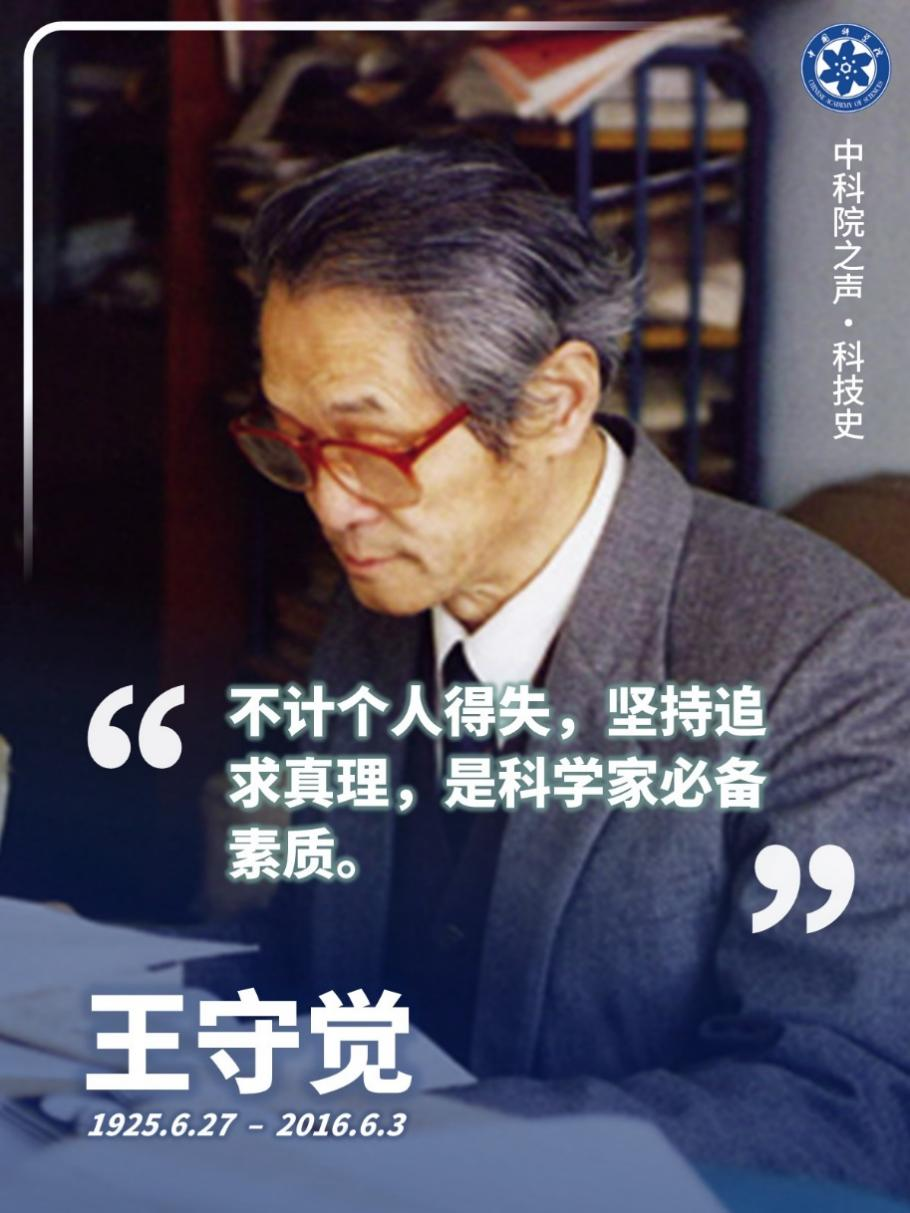
“Science is about constantly breaking through authoritative theories and pursuing truth. This is a difficult process that requires people to continuously change their thinking and innovate.”
——Wang Shoujue
Wang Shoujue
(June 27, 1925 – June 3, 2016)
Semiconductor Electronics Expert
Academician of the Chinese Academy of Sciences
Today marks his centenary birthday
01
The Long Journey of Learning
June 27, 1925
A child was born
In a family rich in scientific tradition
Named “Wang Shouping”
His father Wang Jitong and uncle Wang Jilie
Were both renowned new-style intellectuals and industrialists
Amidst the chaos of war and his frail health
Wang Shouping had to drop out after completing junior high school
As a teenager
He worked as a machinist, repaired watches, and made door locks…
The strong atmosphere of valuing knowledge at home
And his personal experience of “being beaten for technological backwardness”
Made him determined to overcome difficulties and self-study
He self-studied high school courses in six months
Decided to take the university entrance exam with equivalent academic qualifications
However, the lack of a high school record limited him to applying for a junior college
Unwilling to accept this, he presented his brother’s university transcript before his name change
Transforming into a refugee student named “Wang Shoujue”
Thus obtaining the qualification to apply for a bachelor’s degree
In 1942, he successfully enrolled in the Electrical Engineering Department of Tongji University
From then on
The world lost a laborer named “Wang Shouping”
And gained a future semiconductor electronics expert “Wang Shoujue”
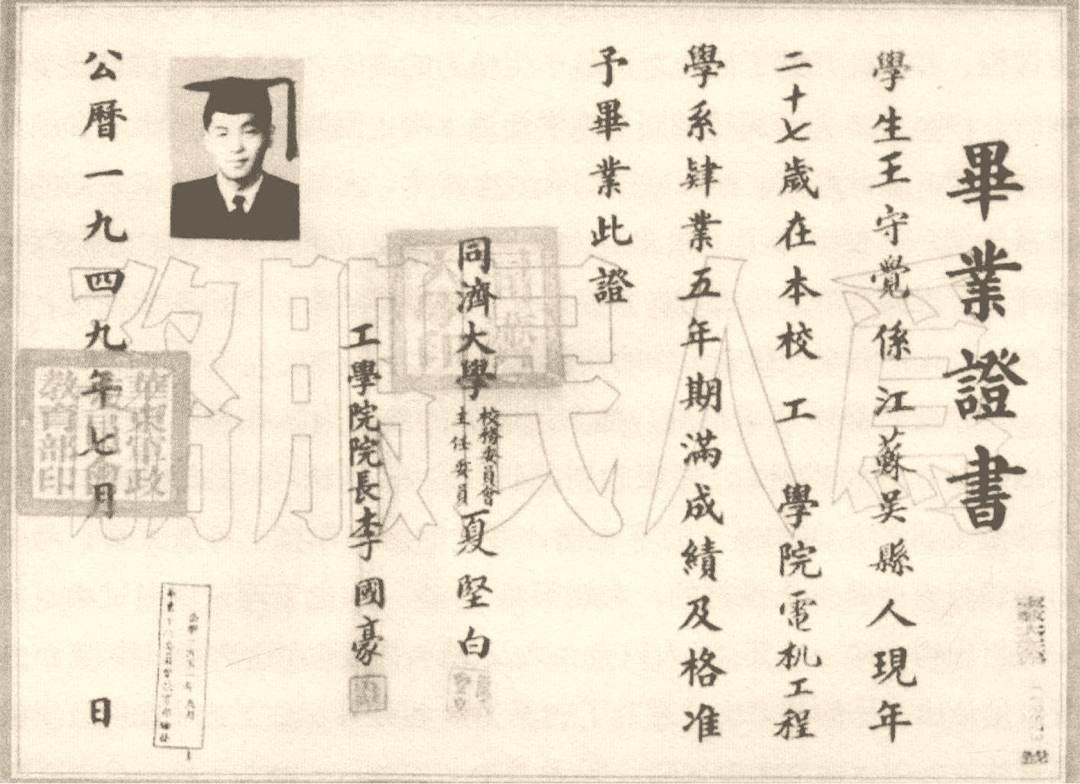
▲Wang Shoujue’s university diploma (Image source: “Gongxing Chuzhen Zhi Wang Shoujue Biography”)
02
Connection with Semiconductors
In 1949
Wang Shoujue entered the Physics Research Institute of the Peking Research Academy
Under the guidance of crystal physicist Lu Xueshan
He developed copper oxide rectifiers
In a short time
The rectifiers they developed surpassed foreign counterparts that had been improved for over 20 years
Wang Shoujue also officially connected with semiconductors
In 1956
The Central Committee of the Communist Party issued a call to “march towards science”
The Chinese Academy of Sciences undertook
Four urgent measures in four fields
Among them
The newly established Semiconductor Research Laboratory of the Applied Physics Institute
Was led by Wang Shoujue’s brother Wang Shouwu
Wang Shoujue was transferred to this team
Creating a story of “Big Wang and Little Wang working together”
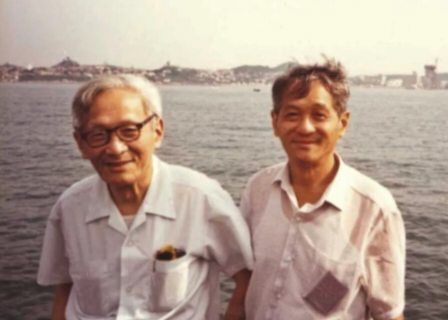
▲Wang Shoujue (right) and Wang Shouwu (left, Academician of the Chinese Academy of Sciences, semiconductor device physicist) (Image source: Institute of Semiconductor Research, Chinese Academy of Sciences)
The invention of the transistor and the deepening of semiconductor theory
Are the prelude to microelectronics science
At the end of 1956
Wang Shoujue and his colleagues produced China’s first germanium alloy transistor
They then prepared a new generation of semiconductor material, silicon single crystal
In 1957
Wang Shoujue went to the Soviet Union to study semiconductor electronic device design
Contributing to the research of germanium diffusion transistors
Later
He published an article titled “Transistor with N-type Negative Resistance Characteristics”
In the academic journal of the Soviet Academy of Sciences
After returning to China
They successfully developed a germanium alloy diffusion high-frequency transistor with a cutoff frequency exceeding 200 MHz
Opening the door to transistorized electronic computers in China
03
Challenging the World’s Forefront
In early 1960
Upon learning that foreign countries had first produced silicon planar transistors
Wang Shoujue recognized the vast future of this technology
He abandoned the existing technology that had already yielded results
And gathered the entire team to explore silicon planar technology
Boldly using this technology as a basis
He undertook some high-performance silicon device development tasks in strategic missile projects
In conditions of extreme poverty
They initiated the first attempt of photolithography technology by Chinese people
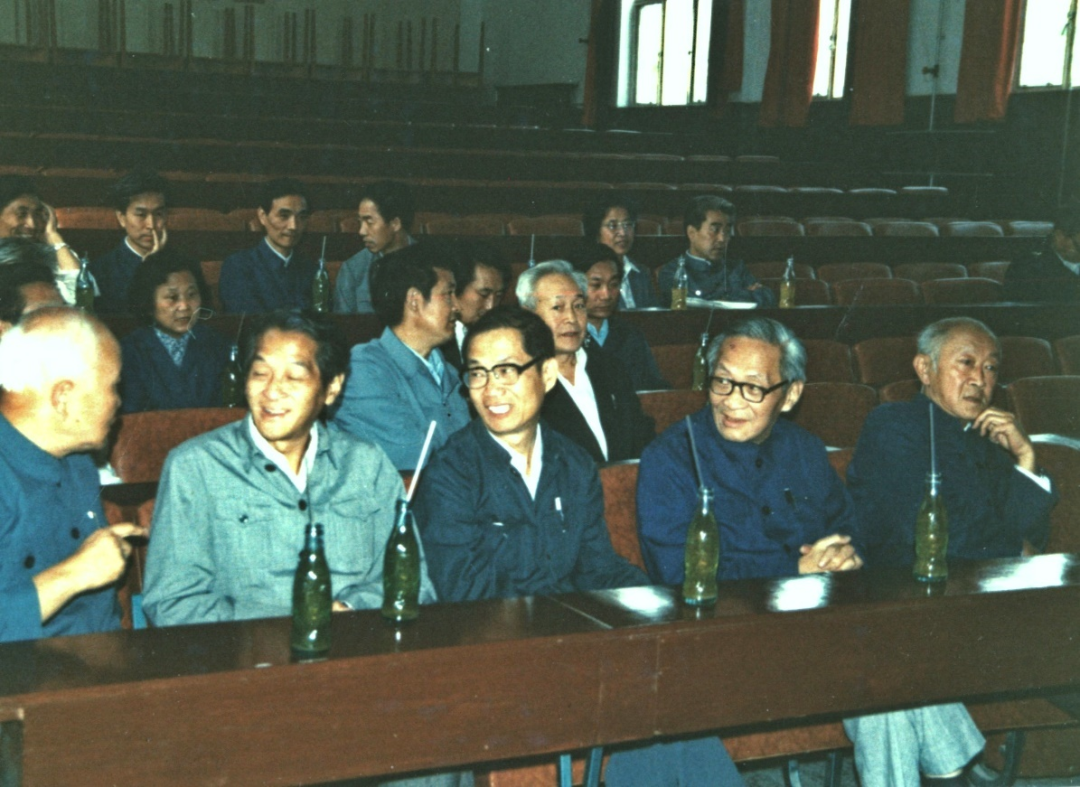
▲Wang Shoujue (2nd from left), Wang Shouwu (2nd from right), and Huang Kun (1st from right) (Image source: Chinese Academy of Sciences Academy Library)
Without photoresist
They manually coated and etched silicon chips under a microscope
Without a photolithography machine
They built a rudimentary version using a microscope and ultraviolet light
In April 1964
The five types of silicon planar devices submitted by the Semiconductor Institute
All passed the acceptance inspection by the Ministry of Defense’s Fifth Academy
And won the first prize at the National Industrial New Products Exhibition
The smallest transistors using the new process weighed only 0.03 grams
Which is a fraction of the weight of ordinary transistors
People joyfully called it the “Sesame Tube”
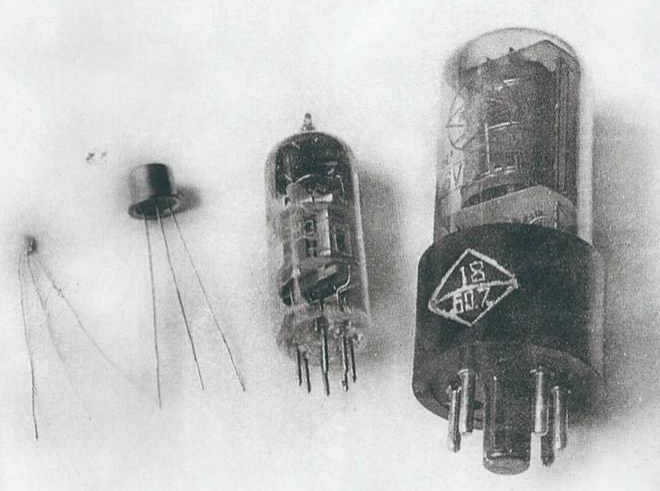
▲Comparison of the “Sesame Tube” (left) and ordinary transistor (right) (Image source: Institute of Semiconductor Research, Chinese Academy of Sciences)
Since 1958
From the 109B machine to the 109C machine
Wang Shoujue led researchers and workers
To develop devices for China’s large transistor computers
Comrade Zhang Jinfou later recalled
“Scientists Wang Shouwu and engineer Wang Shoujue,
Along with Lin Lanying, who returned from the United States to work on semiconductor materials,
Made outstanding contributions to China’s transistor computers.”
The successful explosion of China’s first hydrogen bomb
Was supported by the transistor computer
Calculating hundreds of thousands of times per second
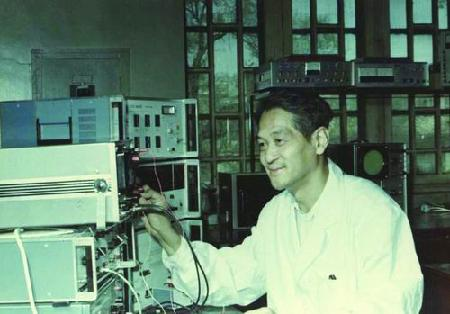
▲Wang Shoujue debugging equipment (Image source: Chinese Academy of Sciences Academy Library)
At this time, Wang Shoujue was constantly on the move
Taking an important step in another new technology
In November 1964
He produced China’s first silicon solid circuit
In a package smaller than a watermelon seed
It contained 6 transistors, 7 resistors, and 6 capacitors
This was the integrated circuit that was gaining popularity worldwide
China successfully achieved integrated circuits
Only two years later than international peers
In 1965
Wang Shoujue proposed a new method for graphic generation and plate making
This idea was ahead of the international academic community
04
Innovation Knows No Bounds
In 1978
Wang Shoujue pioneered integrated high-speed fuzzy logic circuits
Making communication between computer digital signals and humans more convenient
Ten years later, by chance
He recalled this “not outdated” old technology
And decided to give computers a “human brain”
From then on
Wang Shoujue turned to the field of neural computing research
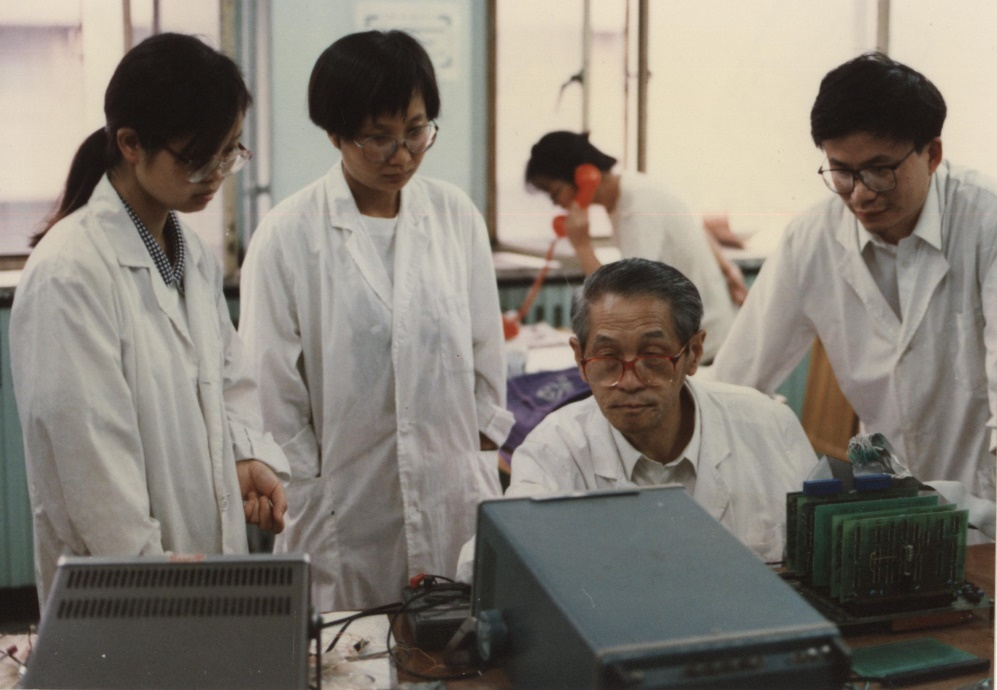
▲Wang Shoujue working with students in the laboratory (Image source: Chinese Academy of Sciences Academy Library)
He once pondered
For China to achieve technological leadership
It must be like the race between Tian Ji’s horses
“With my top horse against their inferior horse”
And he himself was such a “top horse”
Combining his own advantages
He explored the direction of hardware implementation for artificial neural networks
In 1995
China’s first small neural computer was born
The subsequent vigorous development of neural networks
Confirmed Wang Shoujue’s keen judgment and foresight at that time
Wang Shoujue often said
Scientists should not carry the burden of being “old experts”
Do not think that age means “old” and stop innovating
Do not think that becoming a “head” means stopping innovation
Do not only focus on one’s own field
And do not be dragged down by “family”
In this regard
He always led by example
On June 3, 2016
Wang Shoujue passed away
In the memories of his disciples
“Life is endless, and struggle never stops”
Is the most fitting portrayal of his life
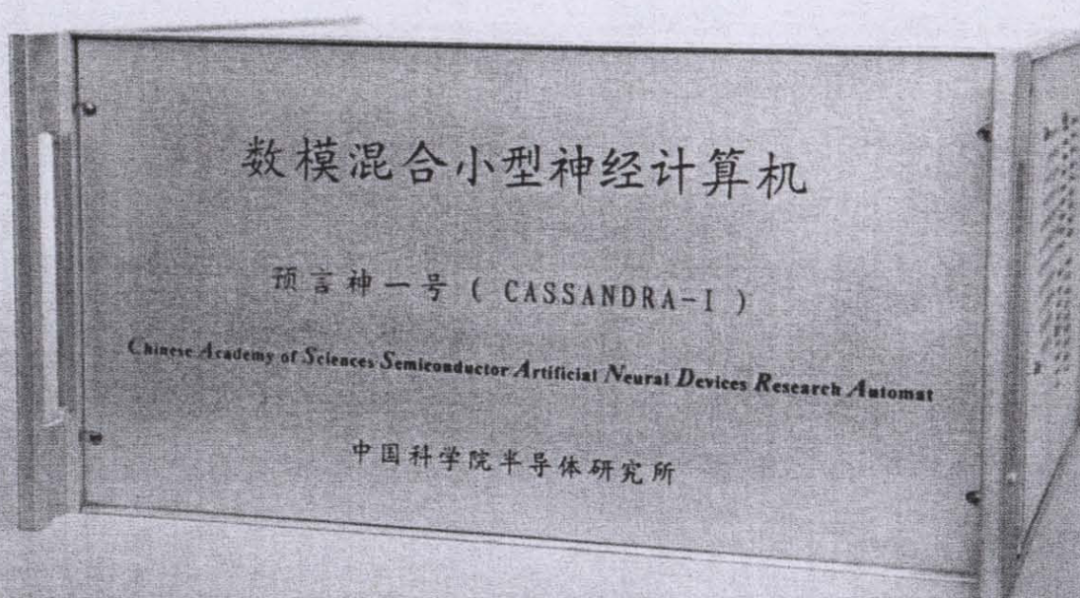
▲ The small neural computer “Prophet No. 1” (Image source: Chinese Academy of Sciences Academy Library)
Source: Chinese Academy of Sciences University
Editor: Song Tongzhou