Behind this chip, which is only the size of a fingernail, lies the collaboration of thousands of precise processes and hundreds of expensive machines. Many marvel at the precision of photolithography machines, but few know who is orchestrating this massive factory to operate with clock-like precision.Who is in charge of this vast factory?
This role is called MES Engineer. If the semiconductor factory is a precise body, then the MES system is its “central nervous system,” and the MES engineer is the builder and guardian of this nervous system.
1. Why is MES indispensable in the semiconductor industry?
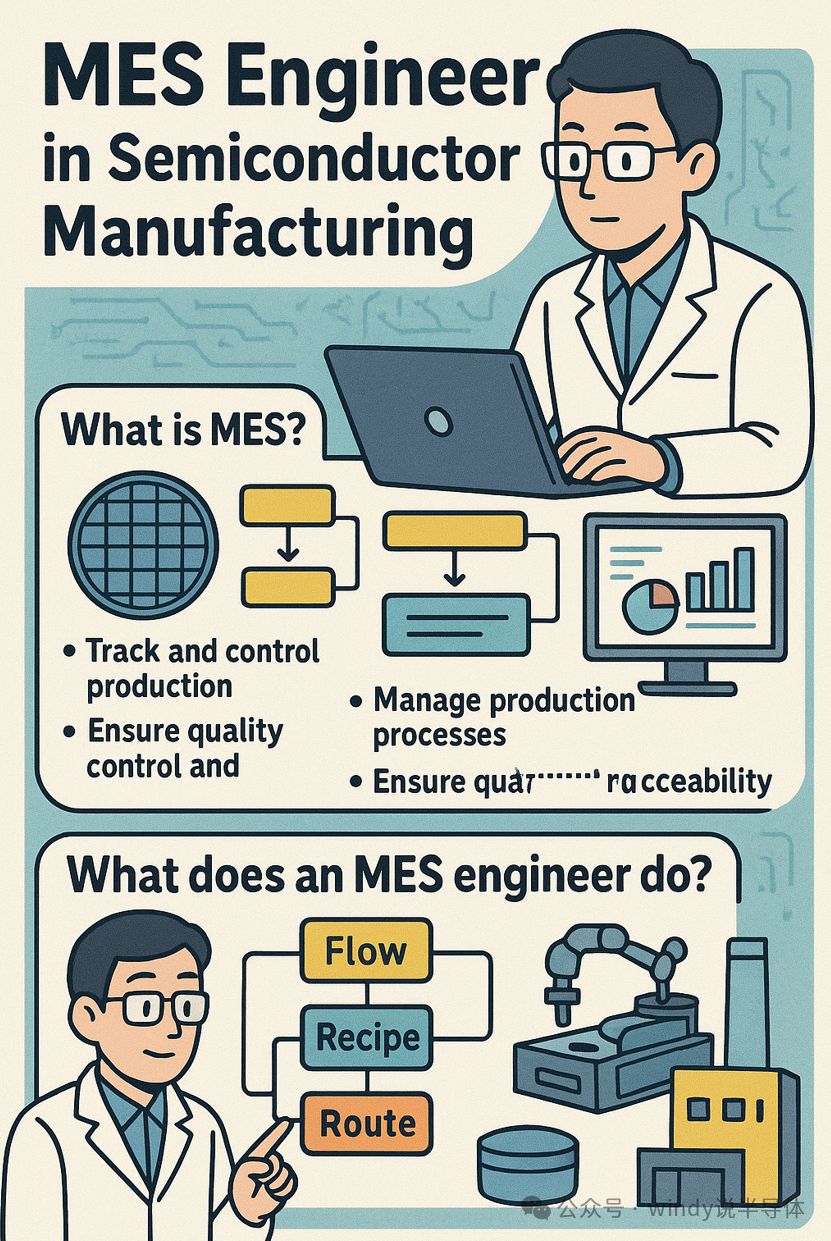
In semiconductor manufacturing (Fab), the production cycle of a wafer can last 2-3 months and involves hundreds of processes. Without MES, the factory would struggle to function. We can visually see the core value of the MES system through the table below:
| Dimension | “Raw Factory” Without MES | “Smart Factory” With MES |
| Tracking Method | Relies on paper “process cards” to follow the wafer flow, which can easily be lost or damaged. | Fully Digital Tracking. The location, status, and history of each wafer are visible in real-time within the system. |
| Error Prevention Capability | Relies on manual checks by operators, which can easily lead to “wrong machine” or “wrong parameters” situations. | System-Level Error Prevention (Interlock). If the process is incorrect, the machine will automatically reject the operation and enforce a lock. |
| Data Collection | Manual transcription of readings, which is delayed and not always accurate. | Automated Data Collection (EAP). Millisecond-level capture of temperature, pressure, and yield data for real-time analysis by engineers. |
| Decision-Making Efficiency | Problems require meetings to discuss, leading to slow responses. | The system automatically triggers alarms and can even automatically reschedule based on rules. |
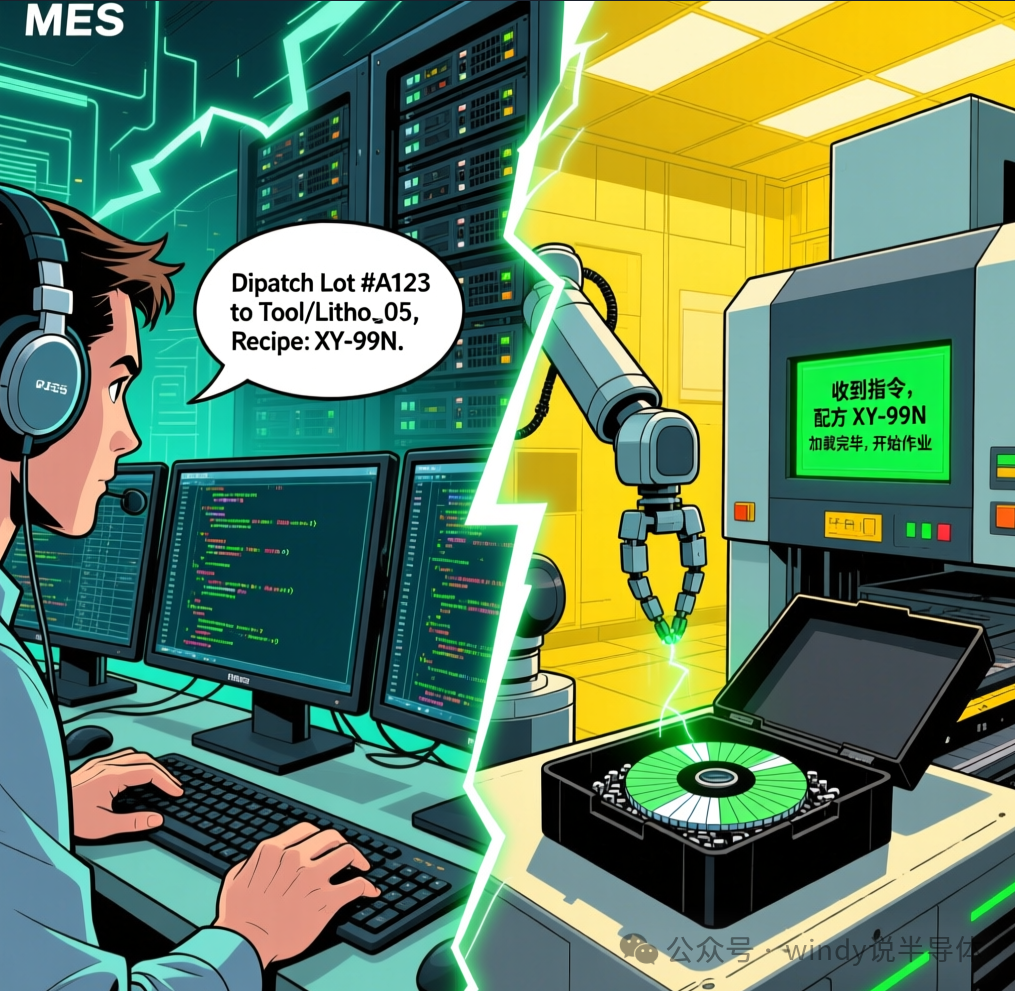
2. What exactly does an MES Engineer do?
The work of an MES engineer is not just about writing code; they arethe translators between IT technology and factory management. To help you better understand their workflow, I will break down their core responsibilities as follows:
| Core Module | Responsibility Description | Specific Work Content of Engineers (The “How”) |
| 1. Modeling |
Building a Digital Skeleton Mapping the physical factory in reality to a virtual system. |
Defining Sites (Route): Setting the 500+ steps that the chip must go through from “Start” to “End”. Setting Constraints: Specifying which products can enter which machines and which require special handling. Version Management: Continuously iterating the production process versions in the system as the process development updates. |
| 2. Machine Automation (EAP) |
Making Machines “Talk” Achieving bidirectional communication between the MES system and expensive production equipment. |
Issuing Instructions: Writing logic to automatically inform the machine “This is batch X, please use recipe Y”. Status Monitoring: Real-time capture of machine status (running, idle, fault) and updating icon colors in the system. |
| 3. Production Logic (WIP Logic) |
Establishing Traffic Rules Managing the flow logic of wafers (WIP) on the production line. |
Batching and Merging: Writing code to handle the splitting (Split) and merging (Merge) of wafers. Rework Logic: Automatically triggering the process code to “go back one step” or “enter the rework area” when defects are detected. |
| 4. Dispatching |
Directing Traffic The “brain” that decides production priorities. |
Algorithm Scheduling: When 10 batches are queued, writing rules to determine which batch to process first (e.g., prioritizing those nearing expiration or those with the same recipe to reduce machine adjustment time). |
3. Unique Career Attributes: Differences from Internet Development
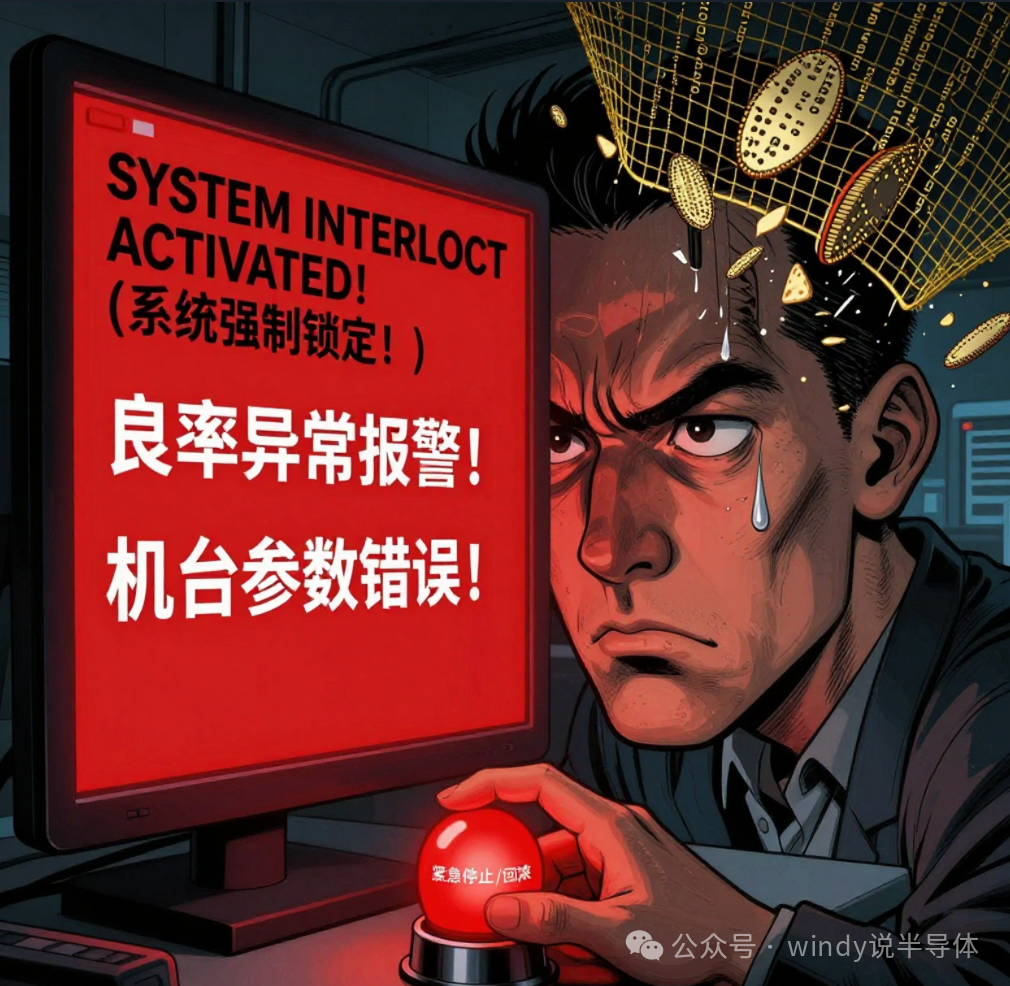
Being a semiconductor MES engineer is fundamentally different from backend development in large internet companies. This is not just a technical difference, but also a difference inmindset.
| Comparison Item | Internet Software Engineer | Semiconductor MES Engineer |
| Work Goals | Pursuing user experience (UX), high concurrency, and monetization of traffic. | Pursuing stability, accuracy, and zero downtime. |
| Cost of Failure | Slow webpage loading, users complain, and code can even be rolled back. | Entire factory downtime (Down). Every minute of downtime can result in tens of thousands of dollars in losses, even leading to wafer scrapping. |
| Technology Stack | Pursuing the latest frameworks (Go, Rust, Microservices). | Leaning towards mature and stable technologies (C#/.NET, Java, Oracle), with many older factories still using legacy systems. |
| Work Environment | Office, flexible working hours. | Office + Clean Room. Often required to wear cleanroom suits to debug on the production line, and usually under 24-hour on-call pressure. |
4. Overview of Core Skill Set
If you want to become a semiconductor MES engineer, here is your “toolkit”:
| Skill Category | Essential Skills | Application Scenarios |
| Programming Languages | C# / .NET or Java | These are the mainstream languages for MES system development, used for writing business logic and server-side programs. |
| Database | Oracle / SQL Server | Semiconductors generate massive amounts of data, requiring proficiency in SQL queries, stored procedures, and performance optimization. |
| Communication Protocols | SECS/GEM | This is a unique industry barrier. Must understand how to communicate with semiconductor equipment through these protocols. |
| Middleware | TIBCO / RV / MQ | Used to handle high-concurrency message queues, ensuring instructions are not lost. |
| Business Knowledge | Fab Process Flow | Must understand what Lot, Wafer, Cassette, Metrology, Photolithography are. |
Conclusion
Semiconductor MES engineers are those who weave a “yield protection net” with rigorous logic outside the cleanroom.
They do not need to physically touch the wafers, but every line of code they write determines the fate of billions of dollars worth of products. In the wave of Industry 4.0 and smart manufacturing, this position is becoming increasingly critical—transitioning from a mere “recorder” to the “smart brain” of the factory.