HLX43 for injection is an innovative targeted PD-L1 antibody-drug conjugate (ADC) developed in collaboration between Henlius Biotech Co., Ltd. and Suzhou Yilian Biotechnology Co., Ltd. This drug is based on a fully humanized IgG1 anti-PD-L1 monoclonal antibody, conjugated with a novel tripeptide linker and a topoisomerase I inhibitor (derived from camptothecin compounds), forming a stable structure with a drug-antibody ratio (DAR) of approximately 8.
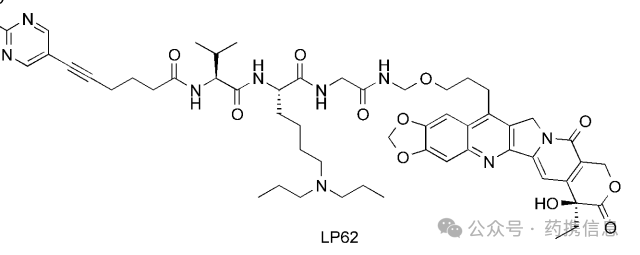
(Speculated from WO2024230755 about the linker and payload structure of HLX43. DAR=8)
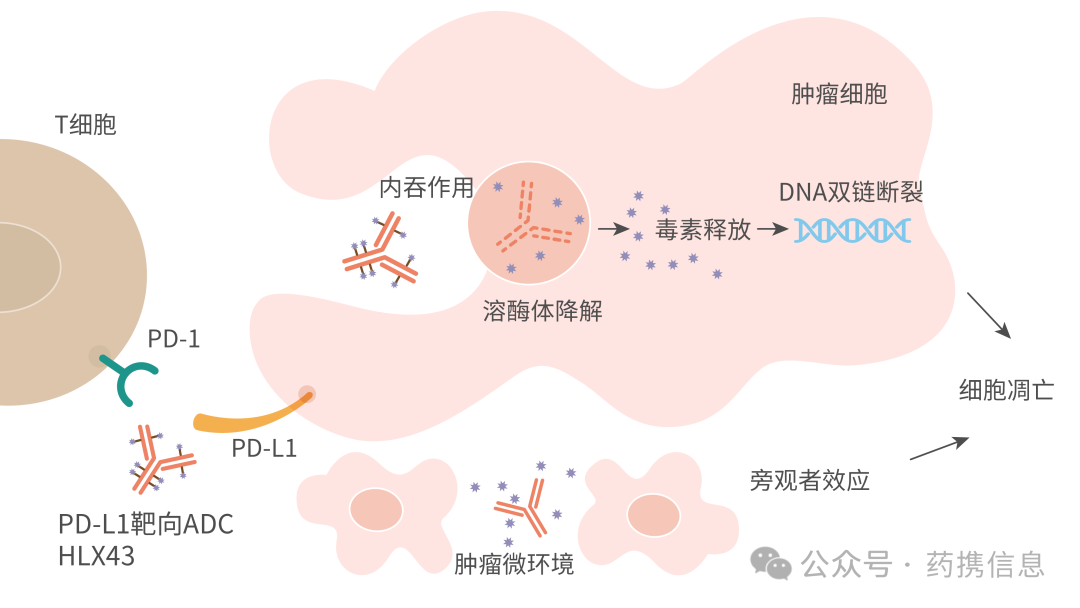
The unique mechanism combines the precise cytotoxicity of ADCs with the dual action of immune checkpoint blockade: the antibody specifically binds to PD-L1 highly expressed on the surface of tumor cells, inducing efficient endocytosis and releasing toxins in the lysosome, blocking DNA replication and leading to tumor cell apoptosis; simultaneously, the toxins can selectively cleave in the tumor microenvironment, exerting a bystander killing effect, penetrating adjacent cells with low PD-L1 expression; moreover, PD-L1 blockade activates T-cell immune responses, enhancing the overall anti-tumor effect. Compared to traditional PD-1/L1 monoclonal antibodies, HLX43 overcomes the issue of immune therapy resistance, especially suitable for PD-L1 negative or low-expression patients, and its short half-life toxin reduces systemic toxicity, expanding the therapeutic window.
Current Clinical Status Domestically and Internationally
- International Clinical Status: HLX43 is led by Henlius and has entered Phase II. Key trials include HLX43-NSCLC201 (NCT not published, Phase II MRCT, assessing advanced NSCLC, first dose in the US in August 2025, September in Australia, expected readout in 2026, n≈200); HLX43-FIH101 (NCT06115642, Phase I FIH, China, first dose in November 2023); HLX43-ESCC201 (CTR20244846, Phase II, ESCC, first dose in 2025); HLX43-TC101 (Phase I, US, October 2025 FDA orphan drug + IND, TET cohort). Combination trials: HLX43 + serplulimab (Ib/II, CTR20250349, solid tumors, first dose in April 2025); HLX43 + HLX07 (Ib/II, September 2025 NMPA approval, solid tumors). Over 400 cases enrolled globally, >170 cases in NSCLC; no Phase III, expected to start NSCLC Phase III in 2027.
- Domestic Clinical Status: China leads Phase I/II (CTR20233493 Phase I solid tumors, CTR20244846 Phase II ESCC, CTR20250349 Ib/II combination). NMPA IND approved in 2023, Ib/II single/combination approval in 2024. Expected to support local NDA with PoC data in NSCLC by 2026. No independent overseas leadership.
Current Clinical Results
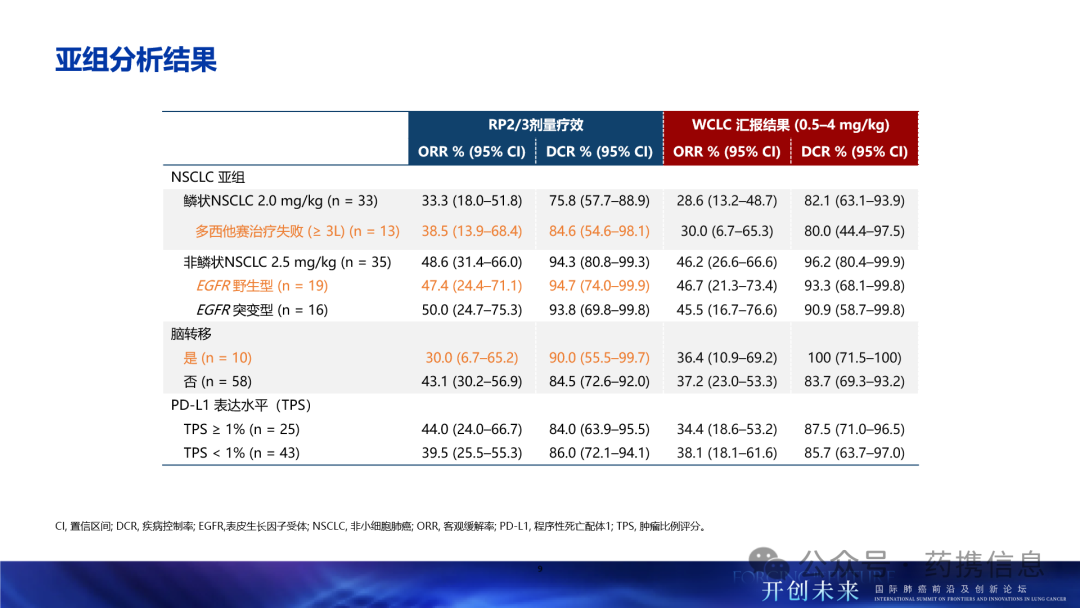
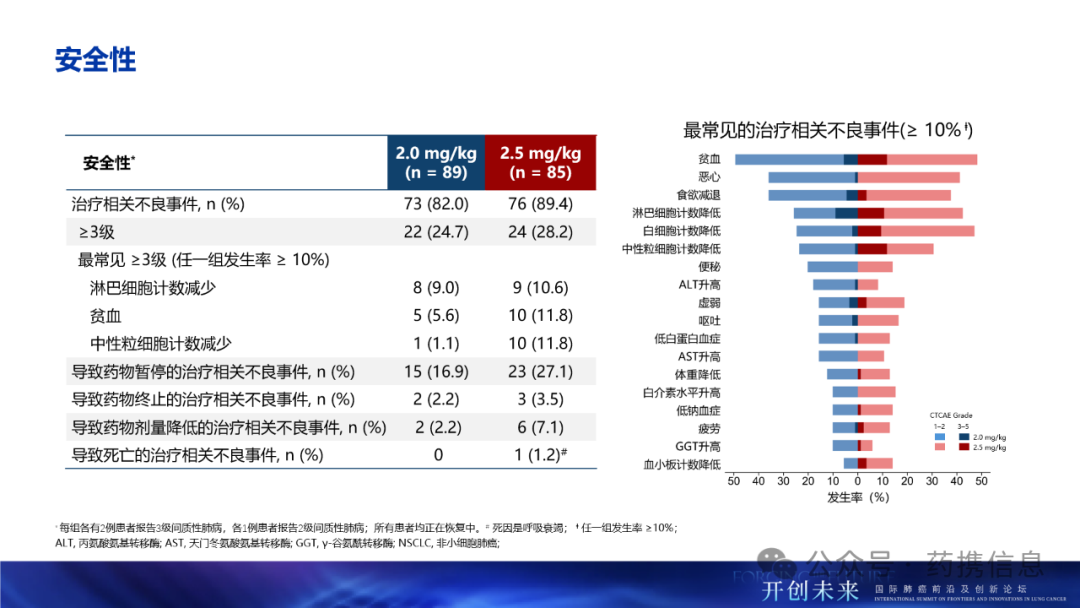
Interpretation of Clinical Results:
| Patient Subgroup | Dose | n (assessable) | ORR (%) | DCR (%) | Key Highlights and Clinical Significance |
|---|---|---|---|---|---|
| Total Population: Squamous NSCLC | 2 mg/kg | 33 | 33.3 | 75.8 | Significantly higher than docetaxel (ORR 9-12%), suitable for third-line and later patients, showing broad-spectrum activity. |
| Total Population: Non-squamous NSCLC (including EGFR wild-type/mutant) | 2.5 mg/kg | 35 | 48.6 | 94.3 | Superior efficacy, DCR close to 100%, ORR reaches 50.0% in EGFR mutant patients (n=16, DCR 93.8%), filling the gap in targeted therapy. |
| Docetaxel Failure: Squamous NSCLC (third-line and later) | 2 mg/kg | 13 | 38.5 | 84.6 | Outstanding potential, ORR 2-3 times higher than standard regimens after docetaxel failure, indicating HLX43 as a rescue treatment option. |
| EGFR Wild-type Non-squamous NSCLC | 2.5 mg/kg | 19 | 47.4 | 94.7 | Significant advantage for EGFR wild-type (accounting for 70-85% of NSCLC), ORR higher than chemotherapy standard (~20%). |
| Brain Metastasis NSCLC | – | 10 | 30.0 (cORR) | 90.0 | Significant benefit for patients with brain metastases, DCR as high as 90%, indicating good cerebrospinal fluid permeability, superior to many systemic therapies. |
| PD-L1 Negative (TPS <1%) | – | 43 | 39.5 | 86.0 | Not limited by PD-L1 expression, ORR comparable to PD-L1 positive (~32%), covering a broader patient population, differentiating from traditional PD-1/PD-L1 inhibitors. |
| Overall NSCLC (All Cohorts) | – | 69 | 37.0 | 87.0 | Overall response is strong, ORR 32.8% in CPI resistant patients, supporting further Phase III validation. |
1. Overall efficacy is strong, and dosage may affect outcomes
Squamous carcinoma (2mg/kg): ORR 33.3%, DCR 75.8%. This data is quite good for third-line treatment of lung squamous carcinoma.
Non-squamous carcinoma (2.5mg/kg): ORR 48.6%, DCR 94.3%. This data is extremely impressive. As a third-line treatment, nearly 50% objective response rate and over 90% disease control rate far exceed current standard chemotherapy (such as docetaxel, ORR usually below 15%) and even some immunotherapies in later lines. Higher dosage (2.5mg/kg vs 2mg/kg) may have led to better efficacy, suggesting a dose-effect relationship.
2. Tackling hard-to-treat populations, addressing unmet clinical needs
Patients with squamous NSCLC after docetaxel failure: This is a clinical treatment challenge. In this group of patients with extremely poor prognosis (n=13), HLX43 achieved ORR 38.5%, DCR 84.6%. This is not only “effective” but also “efficient.” It clearly shows that HLX43 can overcome docetaxel resistance, providing new hope for this group of patients with almost no available drugs.
Patients with brain metastases: Brain metastasis is a common fatal complication of advanced lung cancer, and many drugs are ineffective due to inability to cross the blood-brain barrier or insufficient intracranial activity. In a small sample of n=10, ORR 30.0%, DCR 90.0% strongly suggests that HLX43 has significant intracranial activity. This means it can not only control systemic lesions but also effectively target brain metastases, which is a huge differentiating advantage.
3. Efficacy is not limited by key biomarkers, applicable to a wide population
Effective for both EGFR mutant and wild-type: In non-squamous carcinoma, regardless of EGFR status, ORR is close to 50% (wild-type 47.4%, mutant 50.0%). This is crucial. For EGFR mutant patients, after TKI resistance, treatment options are limited, and chemotherapy is often ineffective. HLX43 provides a highly effective new option for this large population.
Efficacy is not limited by PD-L1 expression: This is one of the most disruptive highlights. In PD-L1 negative (TPS<1%) patients (n=43), ORR 39.5%, DCR 86.0% is very strong. Current standard immunotherapies generally perform poorly in PD-L1 negative patients. This characteristic of HLX43 means it may free itself from dependence on PD-L1 testing, able to cover those patients who benefit little from existing immunotherapy, greatly expanding the potential applicable population.
Domestic and International Competitive Landscape (in the PD-L1 ADC field)
International:
- Pfizer PF-08046054 (formerly SGN-PDL1V): Phase I/II, ORR≈33%, high risk of ILD, expected to start Phase III by the end of 2025
- Henlius HLX43: Fastest globally, already in Phase II, leading in efficacy and safety
Domestic:
- Rongchang Biotech RC98: Phase I/II, slightly lower efficacy, higher toxicity
- AT-001 ADC (Anpu Biotech):conjugated to vc-MMAE or GGFG-Dxd
- IMD2126 (Affinity Biotech): Dual-payload ADCs
Conclusion: HLX43 is in the absolute top tier both domestically and internationallyPotential Analysis
HLX43 demonstrates dual potential as best-in-class (BIC) and best-in-disease (BID), addressing the pain points of PD-1/L1 resistance, applicable to 70%-85% of EGFR wild-type NSCLC patients (over 100,000 new cases annually in the US), with post-line ORR 30%-60% far exceeding docetaxel, DCR over 80% indicating stable disease benefits, potentially extending PFS by 6-12 months. Huge potential for first-line expansion, low hematological toxicity supports combination with chemotherapy/IO, preclinical synergy data suggests a 20% increase in ORR when combined with Hansu®; thymic carcinoma ORR 75% fills the gap in rare tumors, ODD accelerates FDA pathway. The market potential is vast, with the global NSCLC ADC market expected to exceed $20 billion by 2025, and the PD-L1 ADC subfield projected to reach $5 billion by 2030, with HLX43 peak sales expected to exceed $3 billion (70% contribution from NSCLC), and annual sales in China exceeding 1 billion yuan. Differentiating advantages include independence from biomarker screening, coverage of PD-L1 negative populations (accounting for 40%), and enhanced bystander effects improving microenvironment penetration, reducing off-target risks. Challenges lie in ILD management and Phase III validation, but global multicenter data supports NDA in 2026, expected to rapidly penetrate later lines post-launch, gradually advancing into first-line/combinations, driving tumor immunity from “single combat” to “multimodal collaboration,” injecting new hope for patients with advanced solid tumors.
https://www.henlius.com/en/NewsDetails-4350-26.html

Follow us for more cutting-edge discussions in the next issue. Health begins with awakening! Please like and share!