Xilinx 7 Series FPGAs are composed of four categories, addressing the complete system requirements from low-cost, small size, cost-sensitive, high-capacity applications to the most demanding high-performance applications with ultra-high-end connectivity bandwidth, logic capacity, and signal processing capabilities.
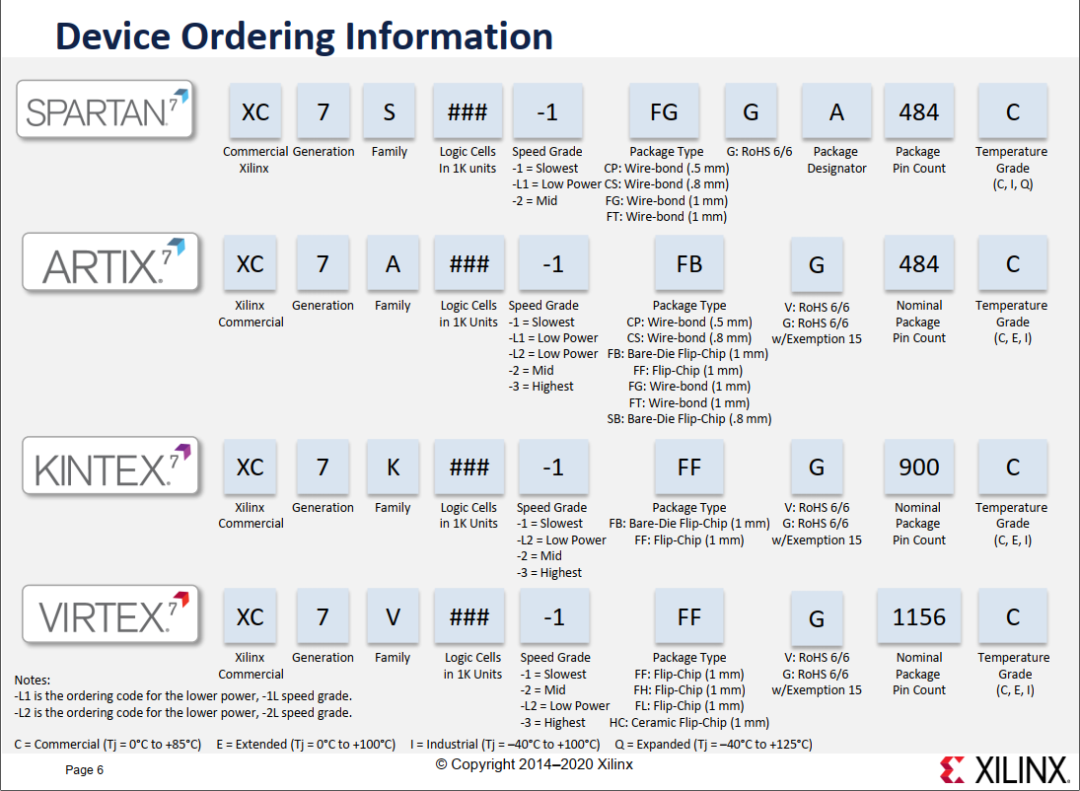
First, let’s take a look at the naming conventions for Xilinx 7 Series FPGAs.
01
Spartan-7 Series
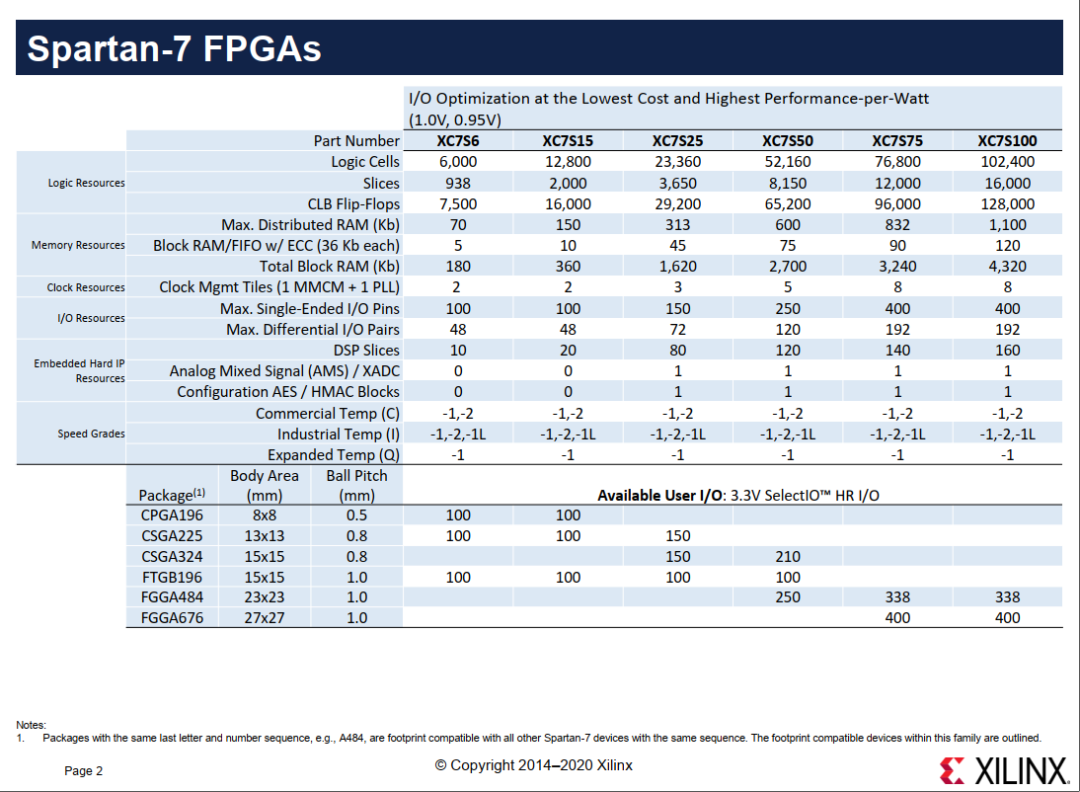
Optimized for low cost, lowest power consumption, and high I/O performance. Low price, low power, minimal size, and lowest design difficulty.
The following figure shows the list of logic resources for all Spartan-7 series FPGAs.
02
Artix-7 Series
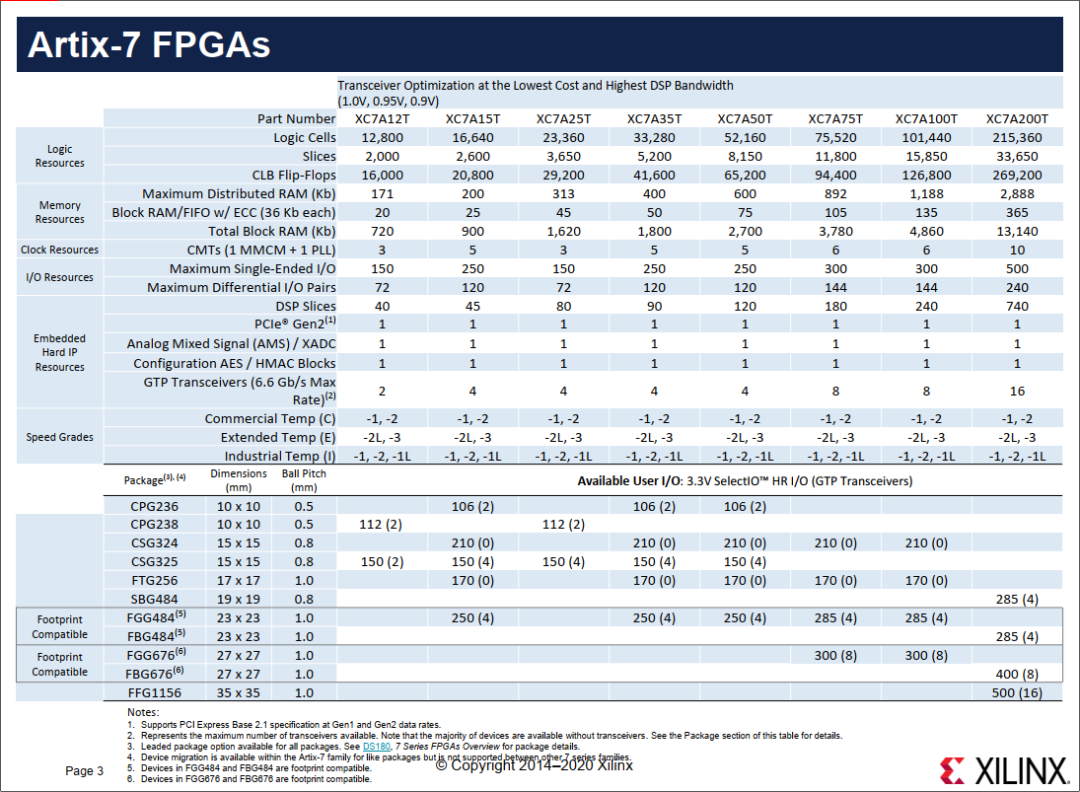
Artix-7 series: optimized for low-power applications that require serial transceivers and high DSP and large logic throughput.
The following figure shows the list of logic resources for all Artix-7 series FPGAs.
03
Kintex-7 Series
Compared to the Artix-7 series, the Kintex-7 series is optimized for cost-performance ratio, possessing the best cost-performance ratio among all series, meeting the needs of mid-range, as well as some high-end applications, both in terms of hard core quantity and logic capacity.
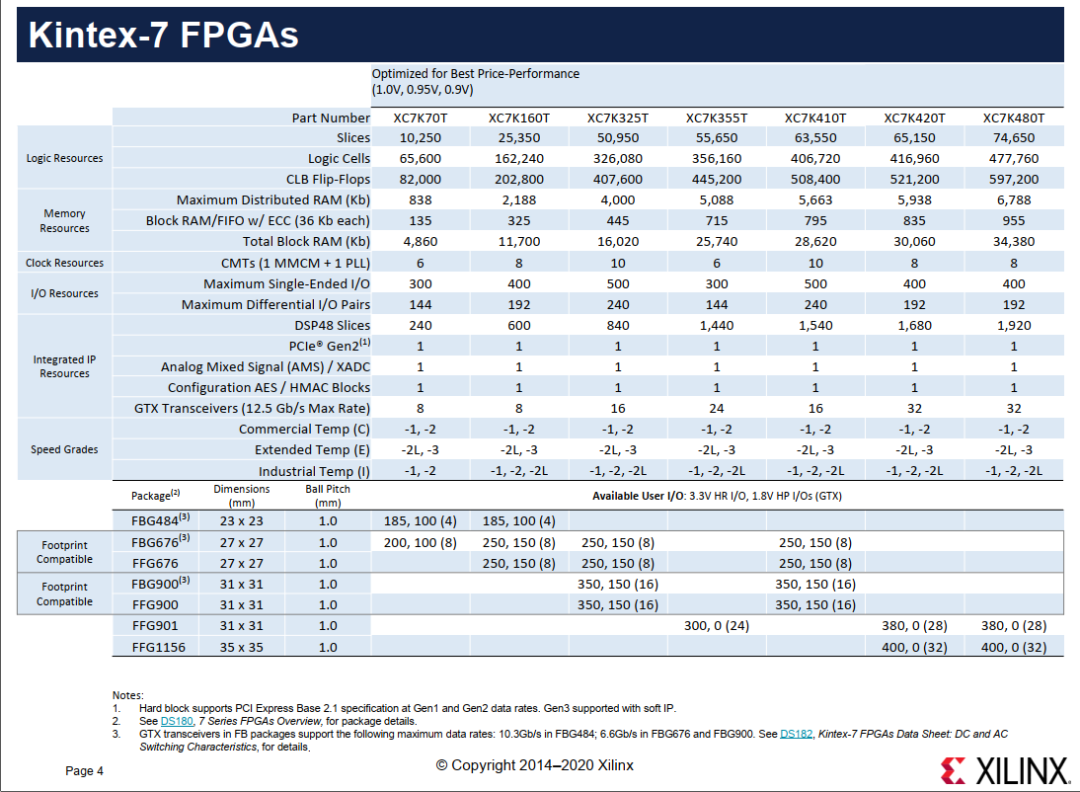
The following figure shows the list of logic resources for all Kintex-7 series FPGAs.
04
Virtex-7 Series
Virtex-7 series: optimized for the highest system performance and capacity, doubling system performance. The highest capability devices realized by SSI technology.
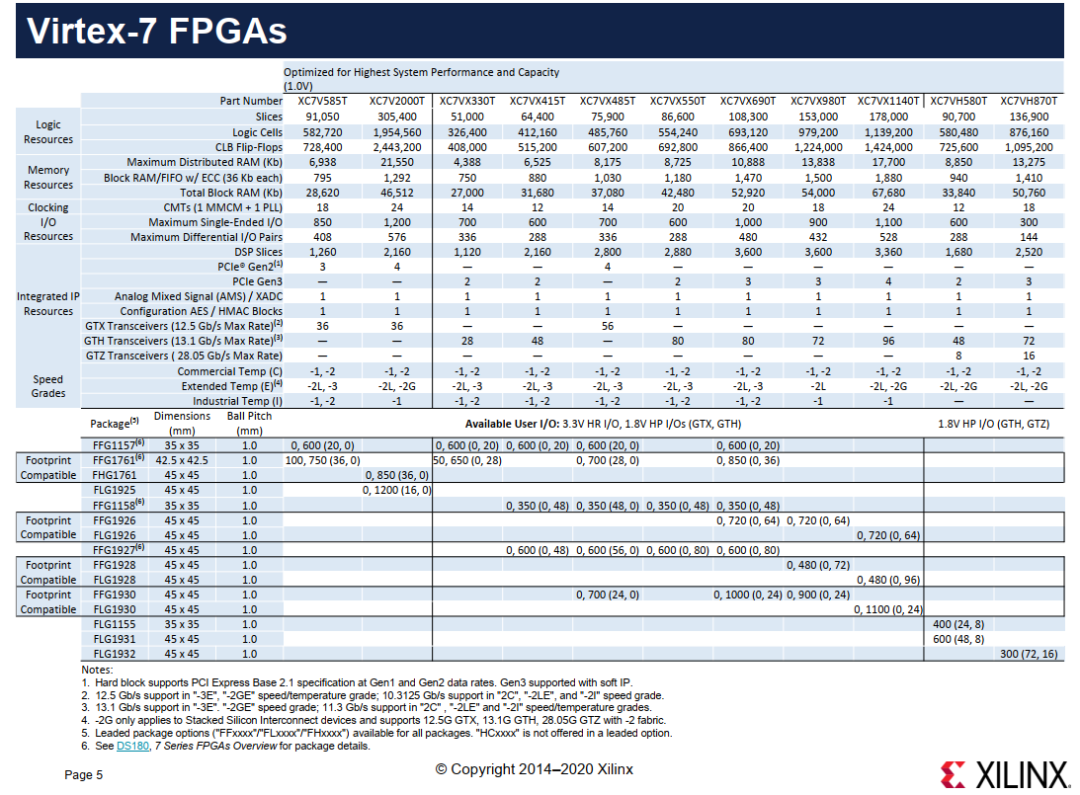
The following figure shows the list of logic resources for all Virtex-7 series FPGAs.
05
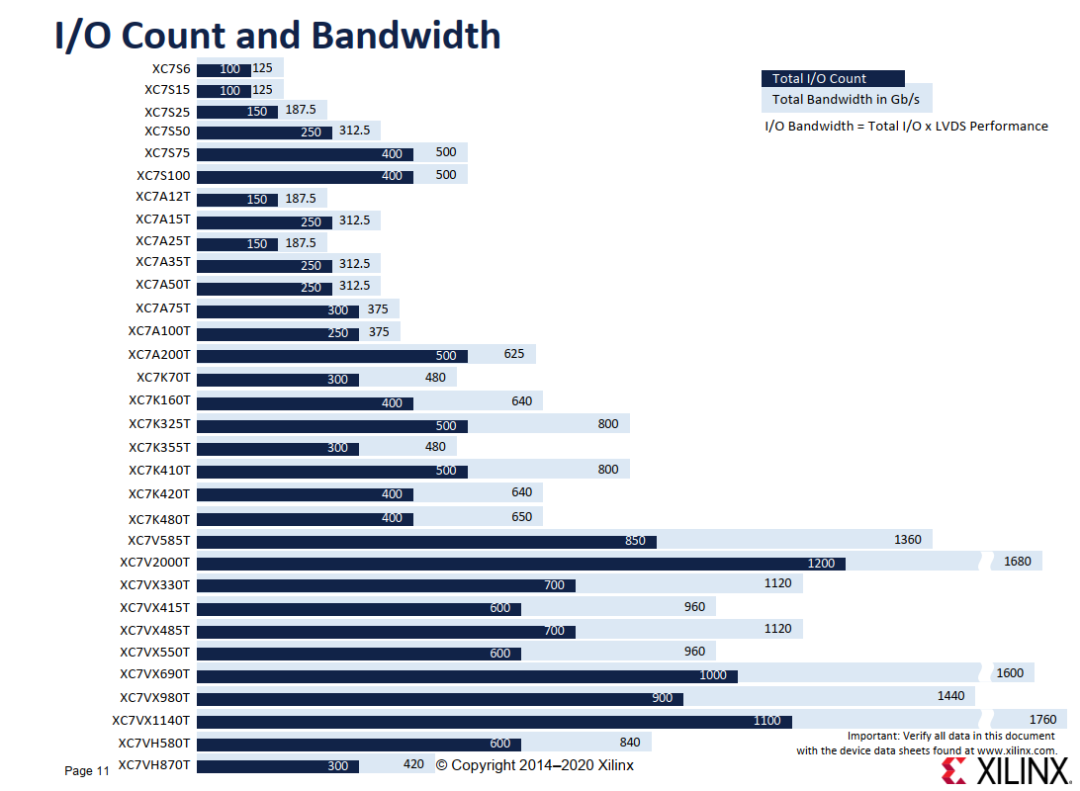
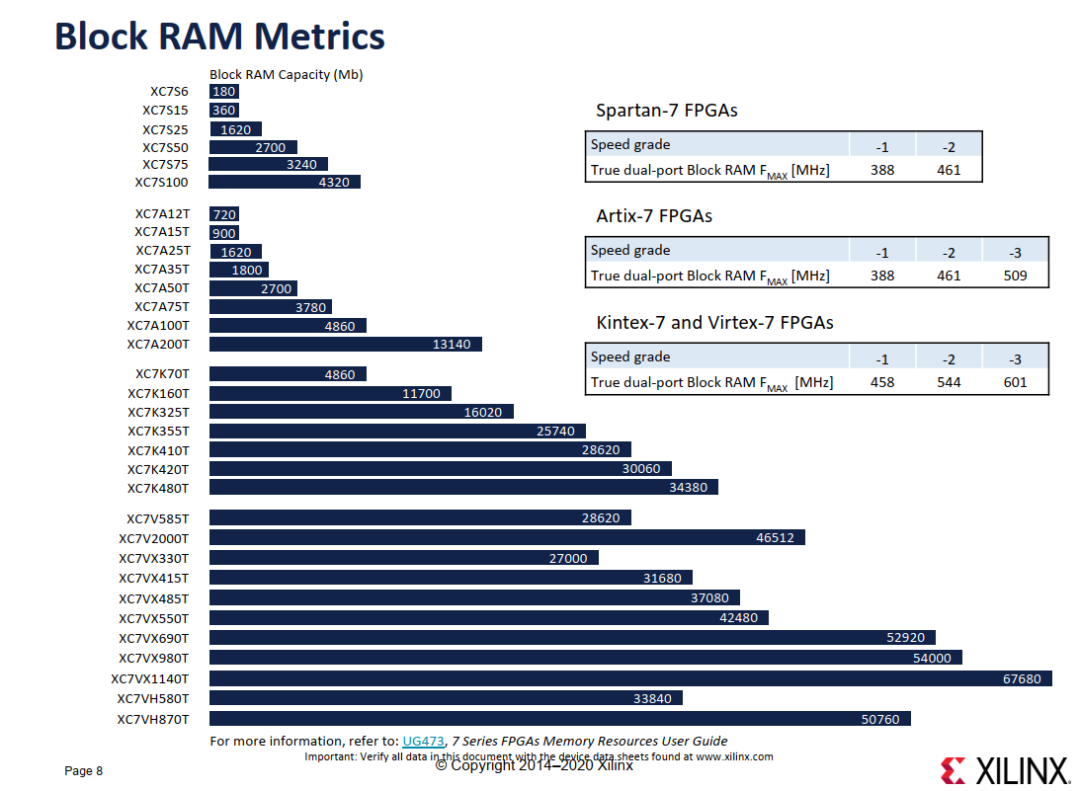
Xilinx-7 Series FPGA Resource Comparison
First, here are the bar charts of the I/O ports for each device.
Block RAM resource bar chart
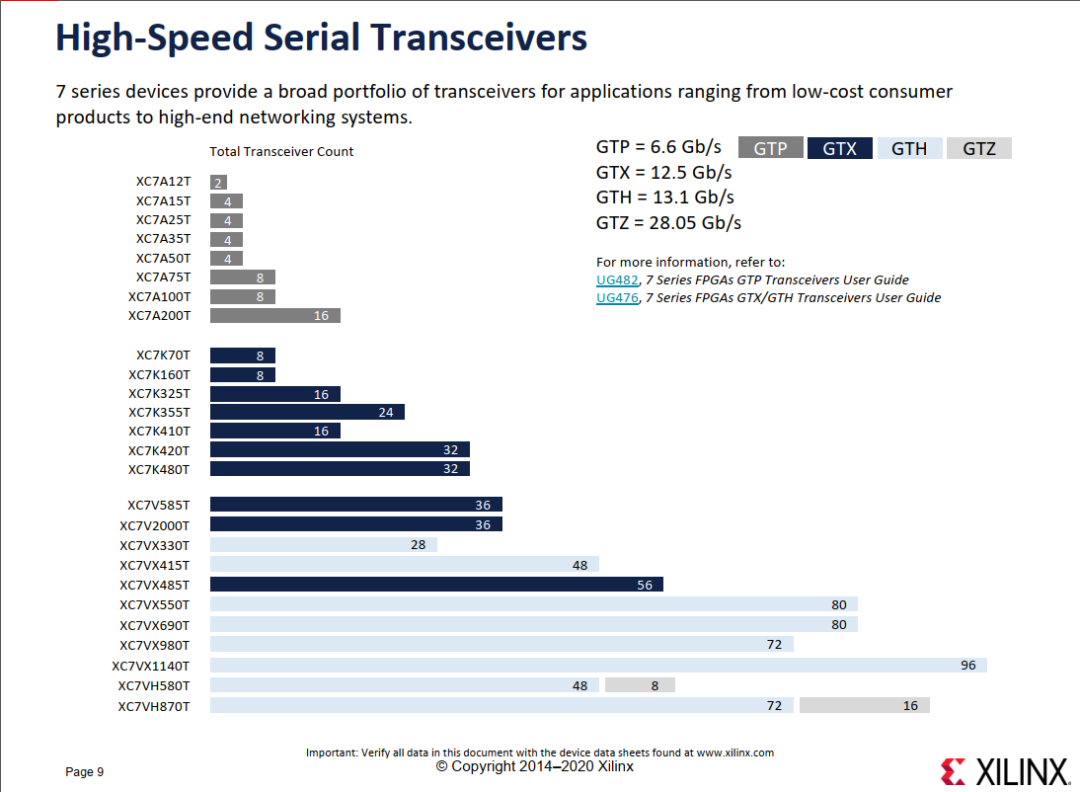
High-speed serial transceiver resource bar chart
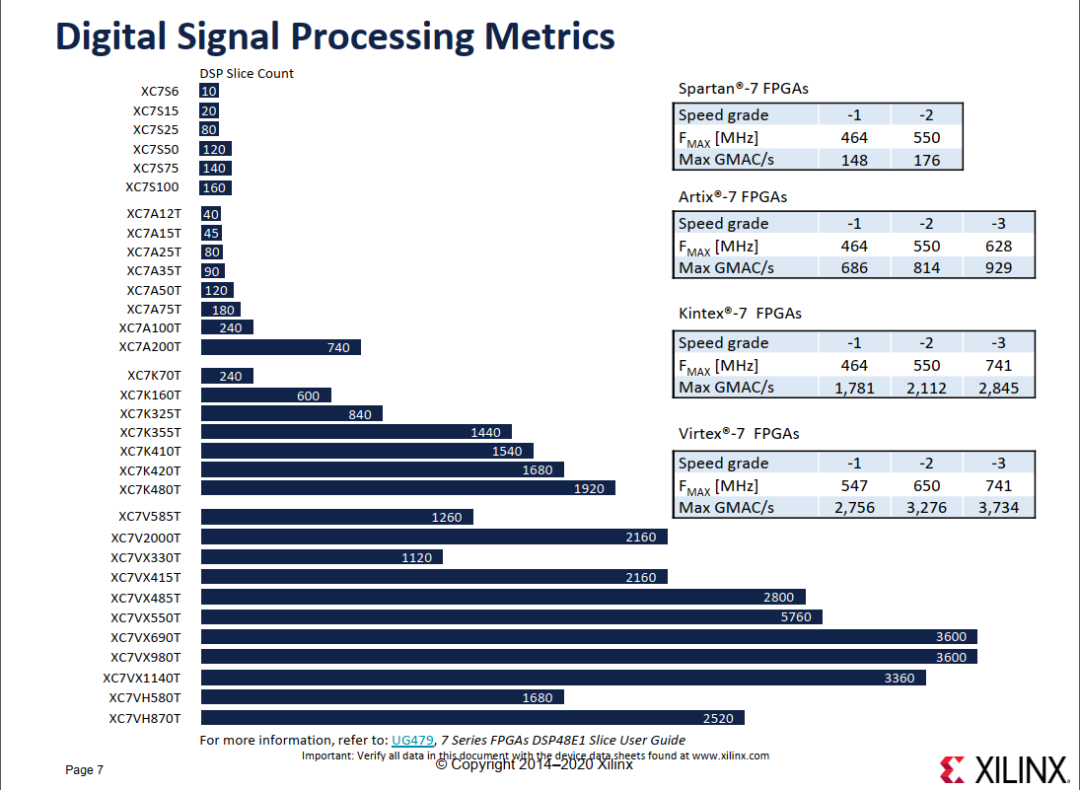
DSP resource bar chart
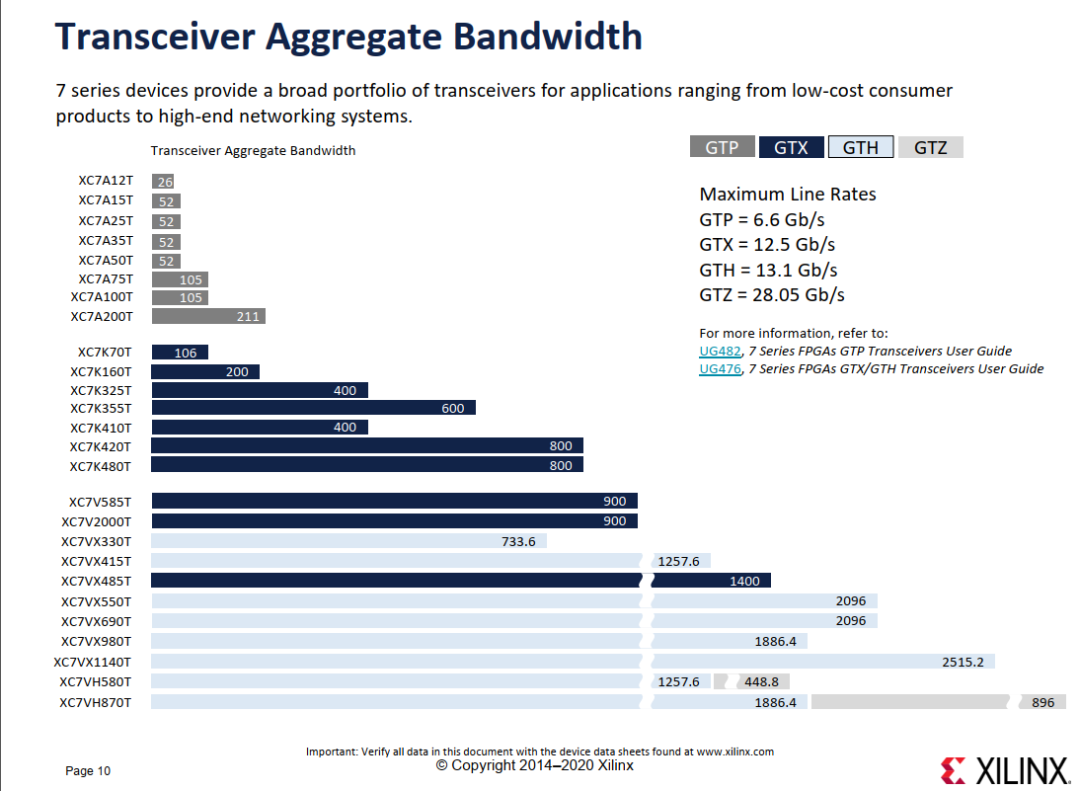
Transceiver total bandwidth bar chart

 Follow Us For More Information