
Author Wang Lei
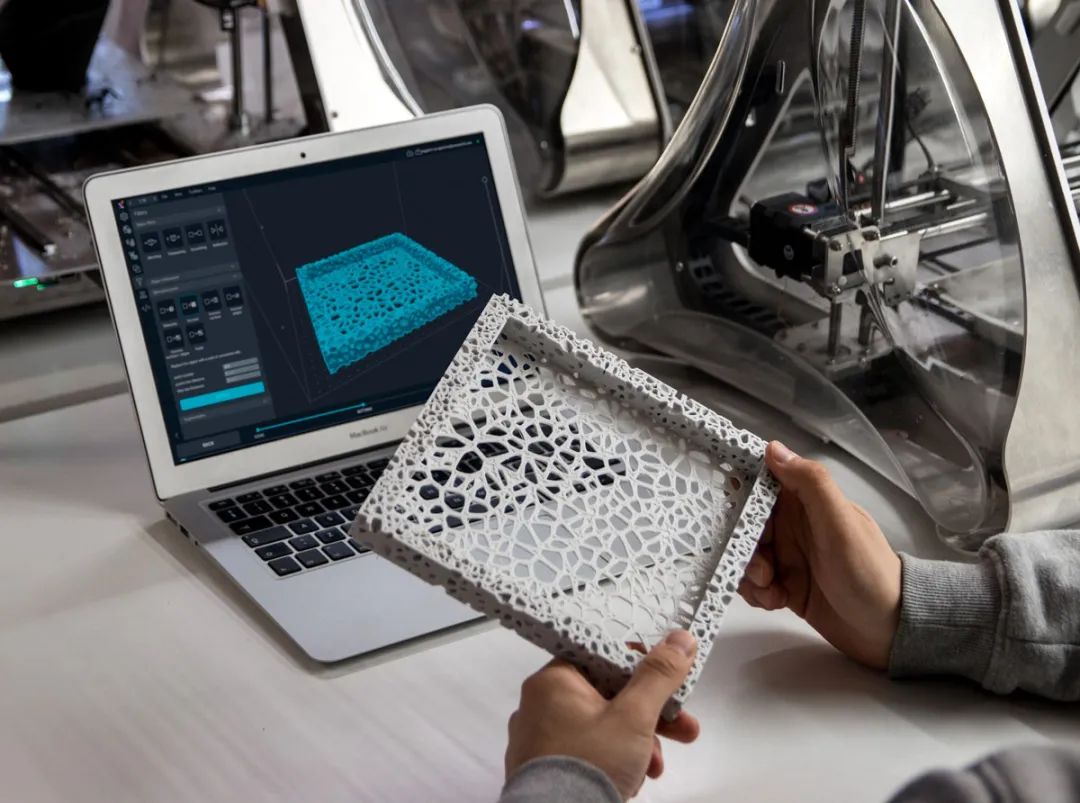
3D printing, also known as “additive manufacturing,” is an advanced manufacturing technology that meets people’s personalized and customized needs for tangible items through “layered manufacturing and incremental forming.” It is considered an important engine of the “third industrial revolution.” Metal 3D printing technology is at the forefront of the 3D printing manufacturing system and has significant engineering application potential, making it a key development direction for accelerating the development of new technologies and equipment for intelligent manufacturing. Among them, the specialized metal printing materials, process technology levels, and innovation and transformation of manufacturing equipment and core components are critical technical nodes for the development of 3D printing. In recent years, liquid metals have emerged in the advanced manufacturing field, demonstrating unique technological advantages.
The unique advantages of liquid metal 3D printing technology
Originating from over a decade of exploration and practice in the field of liquid metals, our laboratory was one of the first to recognize the significant value of liquid metals in 3D printing and advanced manufacturing on a broader scale. We were the first to propose relevant academic concepts and technical ideas and developed a series of manufacturing equipment, even launching marketable products [1]. Since then, research and development activities around liquid metal 3D printing and functional device manufacturing have entered a vigorous phase, indicating that a vibrant advanced manufacturing field is taking shape. The advantage of combining liquid metals with 3D printing technology lies in the use of low-melting-point liquid metal inks, allowing the entire manufacturing process to alternate with non-metallic materials for rapid prototyping of various electronic circuit functional devices, such as wearable devices. This makes the full automatic manufacturing and assembly of target terminal equipment possible. Corresponding research results are expected to change the traditional rules of electronic and integrated circuit manufacturing, providing transformative pathways for the development of modern electronic industries, with the entire process being fast, green, and low-cost. At the same time, such technologies will significantly enhance the development process of flexible intelligent machines and bionic robots, making it highly valuable for developing advanced flexible power and mechanical drive systems. It is evident that, based on the existing technical challenges faced by the 3D printing industry in materials, equipment, and applications, focusing on the research and development of advanced liquid metal 3D printing technology, raw ink, and popular desktop printing equipment will provide ample motivation and material foundation for meeting significant demands in aerospace, biomedical, and cultural creative fields, pushing 3D metal printing from niche to mainstream, and ultimately achieving an industrial explosion.
Liquid Metal Laser 3D Printing Technology
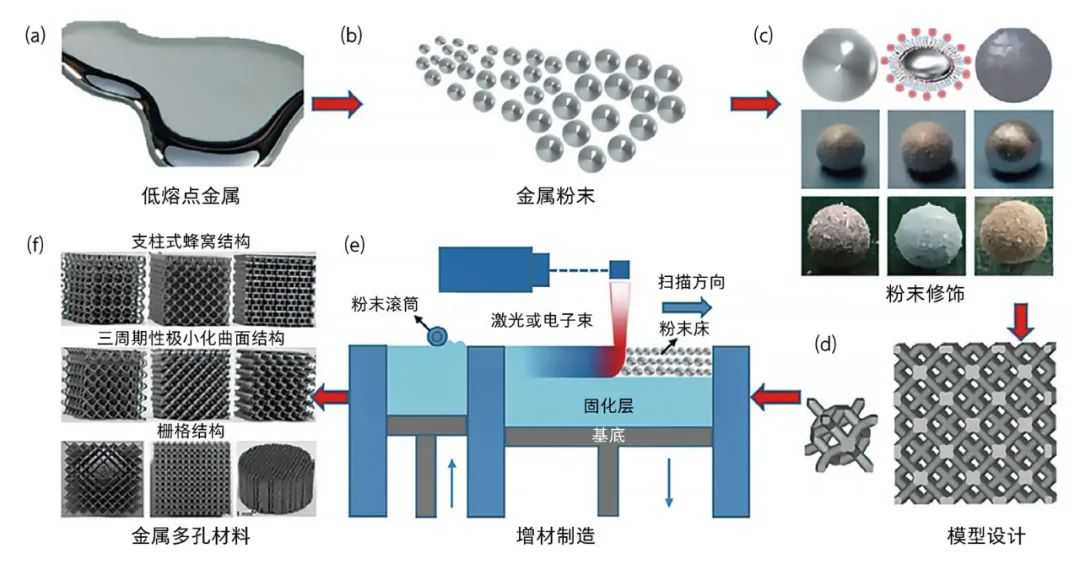
For low-melting-point liquid metals, laser additive manufacturing methods can be used to shape target objects. The specific manufacturing process includes five steps: preparation of low-melting-point metal powder, surface modification of powder particles, design of printing models, laser additive manufacturing, and forming and demolding processes. Among them, the preparation of low-melting-point metal powder has currently developed methods such as ball milling, gas flow atomization, ultrasonic atomization, microfluidics, and continuous electrowetting jet breakage [2], which can produce uniform metal powders with particle sizes of tens of microns. Particle surface modification mainly involves electrical, magnetic, and other performance modifications through coating and doping methods. The modeling design and additive manufacturing processes are consistent with traditional high-melting-point metal manufacturing methods:① Using slicing software to layer the model of the printed object, converting it into a computer control program for the laser’s movement path;② Placing the substrate on an elevating printing platform, filling the printing chamber with inert gas to expel oxygen from the chamber;③ Rolling a layer of metal powder less than 100 microns thick onto the substrate;④ The laser beam moves under computer control and scans the powder layer on the substrate, sintering the powder in the areas where the beam passes;⑤ The printing substrate descends one layer, and the roller lays another layer of powder for the next print.After the structure is formed and demolded, the printed structure needs surface treatment, which mainly includes chemical treatment (such as cleaning with hydrochloric acid or sodium hydroxide solution), electrochemical polishing, physical sandblasting, and coating deposition technologies.
Liquid Metal Melt Deposition Printing Technology
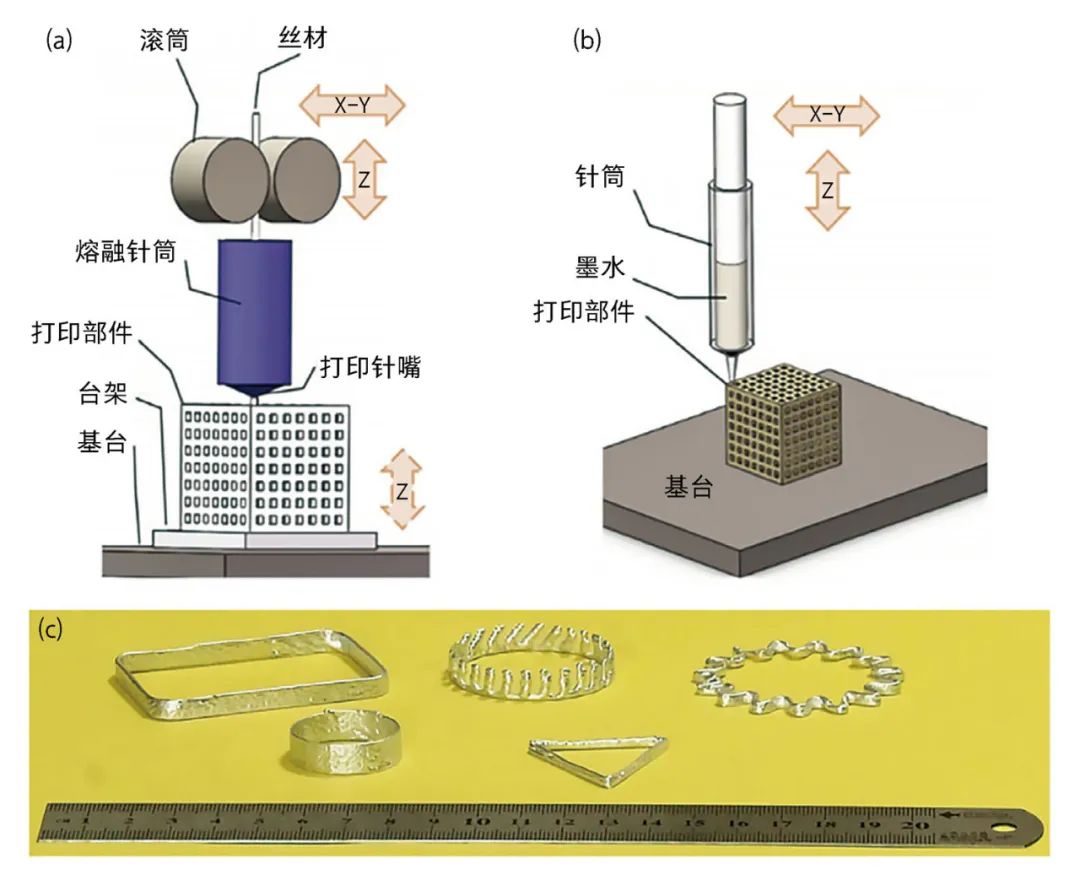
Among various 3D printing technologies, melt deposition printing is a basic and widely applied printing method. It involves sequentially depositing and solidifying molten ink on a substrate to print objects from the bottom up. Melt deposition printing methods can be divided into extrusion and inkjet printing. In extrusion printing, the ink is in filament form, fed into the nozzle by a feed roller, while inkjet printing directly heats the ink in the nozzle and deposits it drop by drop. For inkjet printing, the printing speed is related to the nozzle’s movement speed and the time interval of droplet ejection. When the interval is short, the ink is continuously ejected without forming individual droplets. Common inks used in melt deposition printing technologies include plastics, metals, and metal-based composites. Among different types of metal inks, low-melting-point liquid metals have unique advantages due to their low melting point, which facilitates the melting and solidification of the ink. Research on this printing process also opens new directions for composite printing of various materials and direct manufacturing and assembly of functional terminal devices.
Liquid Metal Liquid Phase 3D Printing Technology
In traditional metal 3D printing, the cooling environment is often air or vacuum, referred to as “dry printing,” which has a slow cooling rate. To accelerate the cooling of metal parts, our laboratory has established a liquid-phase cooling 3D printing method [5], which operates on the principle of conducting the metal deposition process in a liquid-phase fluid. The liquid-phase fluid can be water, anhydrous ethanol, or acidic or alkaline electrolytes, while the metal used for printing is liquid metal. This printing mechanism allows for rapid formation of 3D metal structures.
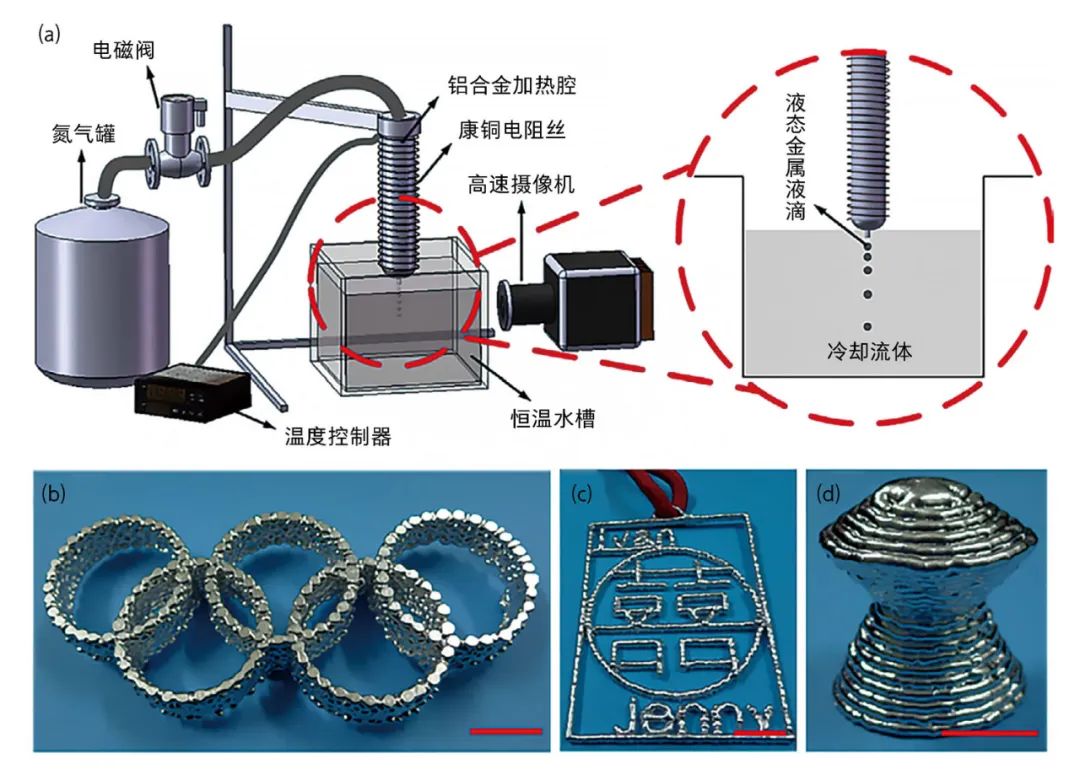
Compared to traditional gas-phase fluid cooling, the liquid metal liquid phase 3D printing method has the following advantages: ① Rapid and flexible printing. During the printing process, the fluid control mechanism allows for printing various three-dimensional structures, and the temperature and flow rate of the cooling fluid can be flexibly controlled. For example, by adjusting the flow rate and direction of the cooling fluid, unique three-dimensional structures (such as rotational bodies) can be printed. ② Higher cooling rates can be achieved, effectively avoiding or reducing the oxidation of metal inks, which is a technical challenge that is difficult to overcome in traditional printing. ③ The energy consumption of printing metal parts will be greatly reduced, and the manufacturing difficulty will be significantly lowered compared to traditional high-melting-point metal printing. In the future, rapid manufacturing of target objects from zero-dimensional to three-dimensional can be realized by combining pump arrays with printing nozzle arrays. Liquid phase 3D printing is a conceptual innovation of traditional printing technologies, which will raise many fundamental technical questions.
Liquid Metal Suspended 3D Printing Technology
In exploring liquid metal printing technologies, our laboratory has established a suspended 3D printing method [6]. Without the influence of external field effects, high surface tension and low fluid viscosity are the main factors determining the extrusion process and shape of liquid metal through the nozzle. These characteristics cause the extruded liquid metal to often hang at the nozzle tip in the form of droplets, making it easy for droplets to merge upon contact, which limits the formation of macroscopic three-dimensional structures. To overcome the influence of surface tension and viscosity on liquid metal forming, self-recovering hydrogels are used as support materials. The hydrogel can freely convert between fluid and solid states, allowing the printing nozzle to move back and forth in a pre-set path within the gel support environment and continuously extrude liquid metal. The gel material supports and fixes the extruded liquid metal shape, forming complex macroscopic three-dimensional structures through layer-by-layer accumulation. During the nozzle’s movement, the gel material is locally liquefied due to the nozzle’s extrusion, allowing the nozzle to easily penetrate the gel and move freely. After the nozzle passes, the liquefied gel rapidly solidifies and returns to a stable form.
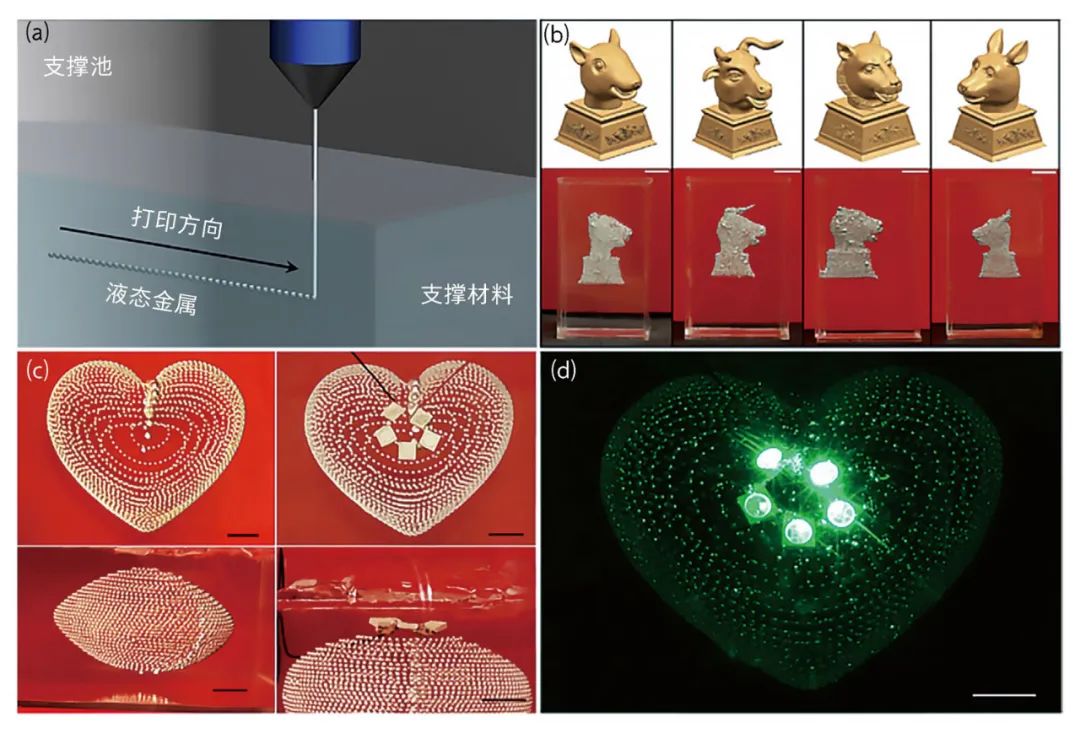
During the printing process, liquid metal is continuously extruded through the printing nozzle, and the high surface tension causes the extruded liquid metal to hang at the nozzle tip in the form of spherical droplets. As the nozzle moves relative to the gel, the extruded metal droplets neck and eventually break away from the nozzle, supported and fixed by the gel, leaving a series of independent liquid metal microspheres along the path of the printing nozzle. Through layer-by-layer accumulation of liquid metal microspheres in the gel support environment, three-dimensional structures are ultimately formed. We used this method to print liquid metal three-dimensional circuits, relying on the extruded liquid metal microspheres to achieve circuit connections for electronic devices, thus forming three-dimensional circuits. Experimental results show that liquid metal microspheres have good conductivity, enabling effective connections for electronic devices even within the supporting gel.
Metal-Nonmetal Composite Printing Technology
Due to significant differences in material properties, metals and nonmetals such as plastics and polymers often require different printing methods for shaping. Therefore, can different printing methods or materials be combined for composite printing? The answer is affirmative. Our laboratory was the first to propose and establish composite 3D printing technology between liquid metals and nonmetals [7]. Here, “composite” can refer to the mixing or combination of different structures, different inks, or different printing methods. The metals and nonmetals selected here are bismuth-indium-tin alloy and 705 silicone rubber: the melting point of bismuth-indium-tin alloy is around 60°C, appearing solid at room temperature; 705 silicone rubber is a neutral, transparent, single-component room-temperature curing silicone rubber that can absorb moisture from the air to cure at room temperature, exhibiting non-toxic, corrosion-resistant, insulating, anti-arcing, and excellent bonding properties, primarily used for encapsulating electronic devices and circuits to prevent moisture, shock, and stabilize device performance; bismuth-indium-tin alloy and 705 silicone rubber have good compatibility. The composite printing process for the two materials involves first printing a layer of silicone rubber a few millimeters thick on a circular petri dish substrate. Due to its self-leveling property, the silicone rubber fills the bottom of the petri dish. After curing for 5 hours, a layer of metal structure is printed using bismuth-indium-tin alloy ink, followed by another layer of 705 silicone rubber printed. After another 5 hours of curing, the printed object is removed from the petri dish. This method allows for printing flat and three-dimensional structures, such as a three-layer LED three-dimensional circuit composed of 6 LED lights and 6 current-limiting resistors. The circuit is divided into three layers, with LED lights emitting red, yellow, and green. The entire printed object includes three layers of metal structures and four layers of nonmetal structures, as well as connecting pillars between adjacent metal layers. Connecting to a DC power source, the LED lights in the circuit light up brightly. The performance of this three-dimensional circuit depends on the properties of the two printing materials, with the mechanical properties such as hardness and shear strength primarily determined by the 705 silicone rubber, while the electrical properties depend on the bismuth-indium-tin alloy ink.
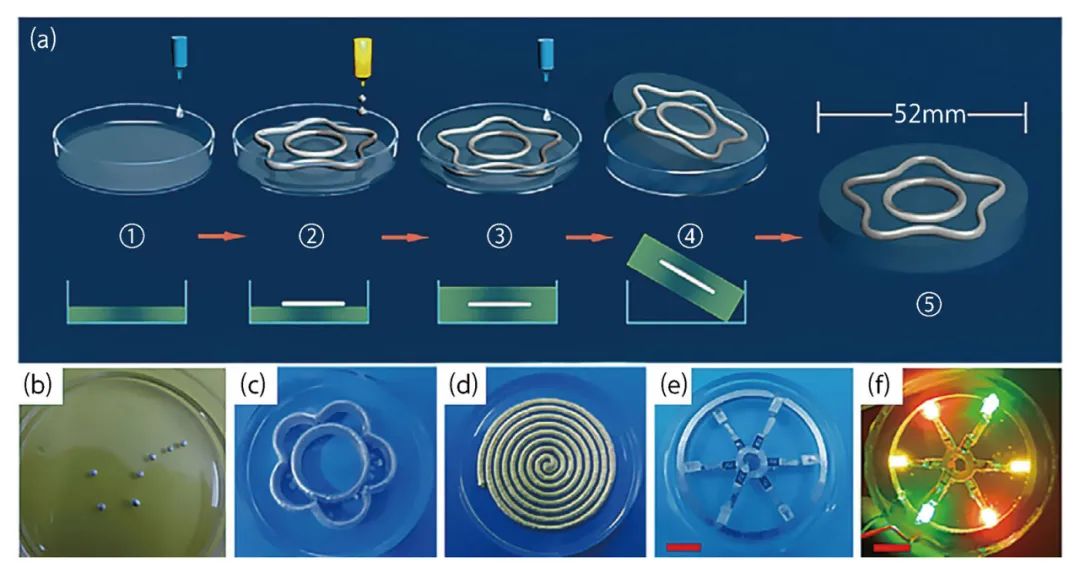
Composite printing can involve interactive printing of multiple inks or a combination of various printing methods. Low-melting-point metals, especially room-temperature liquid metals (such as gallium-based and bismuth-based alloys), typically have printing temperatures below 150°C, close to those of plastics and bio inks, making it easy to realize low-cost one-stop manufacturing of terminal objects in combination with these materials [8]. It is foreseeable that composite printing will be an important direction for the future development of 3D printing technology. Integrating 3D printing technology with liquid metal materials can explore more innovative printing technologies and processes, expanding the application scope and bringing more innovations to the development of industrial manufacturing, biomedical fields, and many others.。

Wang Lei: Associate Researcher, Technical Institute of Physics and Chemistry, Chinese Academy of Sciences, Beijing 100190. [email protected]
Wang Lei: Associate Professor, Technical Institute of Physics and Chemistry, Chinese Academy of Sciences, Beijing 100190.

-
Liu Jing, Wang Lei. Liquid Metal 3D Printing Technology: Principles and Applications. Shanghai: Shanghai Scientific and Technical Publishers, 2019.
-
Gao J Y, Chen S, Liu T Y, et al. Additive manufacture of low melting point metal porous materials: capabilities, potential applications and challenges. Materials Today, 2021, 49: 201-230.
-
Lewis J A, Gratson G M. Direct writing in three dimensions. Materials Today, 2004, 7(7-8): 32-39.
-
Yu Y Z, Liu F J, Liu J. Direct 3D printing of low melting point alloy via adhesion mechanism. Rapid Prototyping Journal, 2017, 23(3): 642-650
-
Wang L, Liu J. Liquid phase 3D printing for quickly manufacturing conductive metal objects with low melting point alloy ink. Science China-Technological Sciences, 2014, 57(9): 1721-1728.
-
Yu Y Z, Liu F J, Zhang R C, et al. Suspension 3D printing of liquid metal into self-healing hydrogel. Advanced Materials Technologies, 2017, 2(11): 1700173.
-
Wang L, Liu J. Compatible hybrid 3D printing of metal and nonmetal inks for direct manufacture of end functional devices. Science China-Technological Sciences, 2014, 57(11): 2089-2095.
-
Liu J, Wang L, Yi L T, et al. Direct fabrication of ending functional devices through hybrid 3D printing of liquid metal and allied Inks. In Proceedings of the ASME InterPACK/ICNMM2015, 2015, Paper No. InterPACK/ICNMM2015-48700.
Keywords:Liquid Metal 3D Printing Additive Manufacturing Ink Materials ■

END

This article was published in Volume 74, Issue 2 of the journal “Science” in 2022 (P27)
“Science” magazine was first published in Shanghai in January 1915,
and was edited and written by scholars such as Ren Hongjun, Yang Xingfo, Hu Mingfu, and Zhao Yuanren in its early years,
making it the longest-running comprehensive scientific publication in China.
The magazine is positioned as a high-level popular science journal, dedicated to the dissemination of scientific knowledge, concepts, and spirit, with an interaction between science and humanities, and a balance between history and cutting-edge developments, serving to enhance the scientific literacy of the Chinese populace and contribute to building an innovative nation. The current editor-in-chief is Mr. Bai Chunli, an academician of the Chinese Academy of Sciences, and it is sponsored by Shanghai Scientific and Technical Publishers Co., Ltd.
To purchase “Science” magazine, please call the mail order department of Shanghai Scientific and Technical Publishers:021-53203260Contact: Mr. Wang Working hours: Monday to Friday, 8:30-16:00


Submission email: [email protected]
Some images are sourced from pixabay, and the copyright of the article belongs to the Science magazine
This article is original to the “Science” magazine, please indicate details when reprinting
This color block is a reprint statement link, please read first when reprinting

Volume 74, Issue 2 of “Science” 2022 will be published soon


Don’t forget to like / follow!