The full text contains 3984 words
Estimated reading time: 16 minutes
01
Market Background
Market background
With the transformation and upgrading of the manufacturing industry and the continuous advancement of technological innovation, 3D printing technology, as a revolutionary manufacturing method, is gradually moving from concept to widespread application. In the development of 3D printing technology, non-metal materials, with their diverse characteristics and wide applicability, have become an important force in promoting the popularization of this technology.
Non-metal 3D printing materials include various types such as plastic-based, ceramic-based, resin-based, wax-based, and bio-based, playing an irreplaceable role in fields such as medical, consumer electronics, construction, education, and cultural creativity.In the medical field, bio-based non-metal materials can be used to manufacture personalized tissue scaffolds; in the consumer electronics field, plastic-based materials can quickly produce complex structural shell parts; in the construction field, special non-metal composite materials can be used to print architectural models or even small components. This wide range of application scenarios has led to a continuous increase in the demand for non-metal 3D printing materials as the installed capacity of 3D printing equipment continues to rise.
As a key material basis for the realization of 3D printing technology, the variety, performance, and cost of non-metal materials directly affect the further popularization and application depth of 3D printing technology in non-metal applications.In terms of cost composition, in 3D printing applications primarily using non-metal materials, the cost of materials can account for 30%-40%, making it one of the core cost items, with demand rapidly increasing as the 3D printing industry develops in the non-metal field.
02
Market Scale
Market scale
From a global perspective, the market for non-metal 3D printing materials is showing a vigorous development trend. Among them, plastic-based materials, as the most widely used non-metal materials, lead the market scale. According to MarketsandMarkets data, the global market size for plastic-based 3D printing materials was $1.28 billion in 2022, and it is expected to grow to $2.37 billion by 2028, with a CAGR of 10.8%.
Although the market scale for ceramic-based non-metal materials is relatively small, it is growing rapidly. According to MarketsandMarkets data, the global market size for ceramic-based 3D printing materials was $210 million in 2022, and it is expected to grow to $430 million by 2028, with a CAGR of 12.9%. Additionally, the markets for resin-based and bio-based non-metal materials are also steadily growing, collectively driving the expansion of the global non-metal 3D printing materials market.
The Chinese market occupies an increasingly important position in the global non-metal 3D printing materials market and has huge growth potential.According to data from the Qianzhan Industry Research Institute, in 2023, the market size related to non-metal materials in China’s 3D printing market accounts for over 60% of the overall 3D printing market size, approximately 3.81 billion yuan.Considering the increasing demand for non-metal 3D printing technology due to the transformation and upgrading of China’s manufacturing industry, as well as the rapid development in fields such as consumer electronics and healthcare, it is expected that by 2028, the market size for non-metal 3D printing materials in China will significantly increase along with the growth of the overall 3D printing market, with a CAGR expected to remain above 18%.
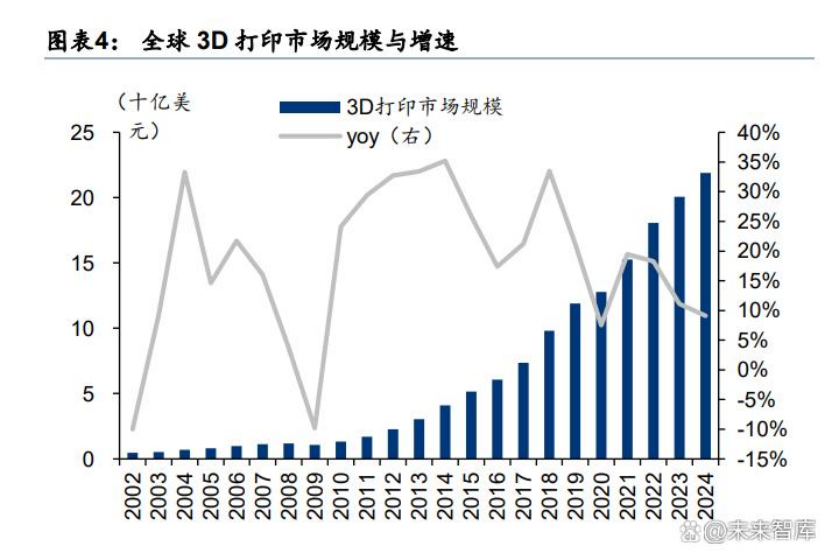
Driven by industrial demand, high-strength polymer powders and metals occupy the main market for 3D printing materials, with market shares of $1.8 billion and $900 million respectively in 2024, accounting for 41% and 21%; polymer filaments and photopolymer resins each account for 18%.In recent years, with the rapid growth of consumer-grade 3D printing devices such as FDM/SLA, plastic filaments and photopolymer resins have experienced rapid development.
03
Major Types and Applications of Non-metal 3D Printing Materials
Main types and applications
Non-metal 3D printing materials are diverse and can be categorized into several types such as plastic-based, ceramic-based, resin-based, and bio-based, depending on material characteristics and application scenarios, each type having its unique properties and applicable fields.
3.1 Plastic-based Materials: The Most Widely Used Basic Material
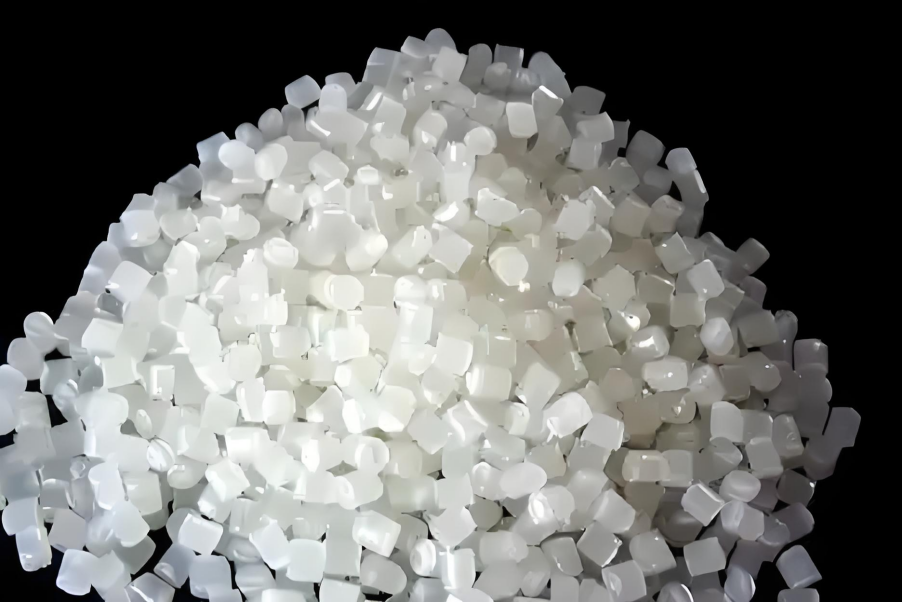
Plastic-based materials are low-cost and easy to shape, making them the most commonly used non-metal 3D printing materials, primarily including PLA, ABS, PETG, and nylon.
-
PLA (Polylactic Acid):A biodegradable thermoplastic polyester with good biocompatibility, mechanical properties, and processing performance, widely used in desktop 3D printing, educational model making, and medical assistive devices. Due to its degradable nature, it is favored in environmentally sensitive applications.
-
ABS (Acrylonitrile-Butadiene-Styrene Copolymer):With high strength, toughness, and corrosion resistance, it is commonly used in industrial manufacturing for shell parts, electronic device components, and automotive interior parts. Its good processing and mechanical properties make it widely used in industrial-grade 3D printing.
-
PETG (Polyethylene Terephthalate Glycol):With good transparency, strength, and chemical resistance, it is suitable for food packaging prototypes, medical device housings, and jewelry models. Its transparent properties give it an advantage in model making where internal structures need to be displayed.
-
Nylon:With excellent wear resistance, oil resistance, and chemical resistance, it is commonly used to manufacture mechanical parts, gears, connectors, and other components that require certain strength and wear resistance, playing an important role in industrial applications.
3.2 Ceramic-based Materials: Key Materials in Specialized Fields
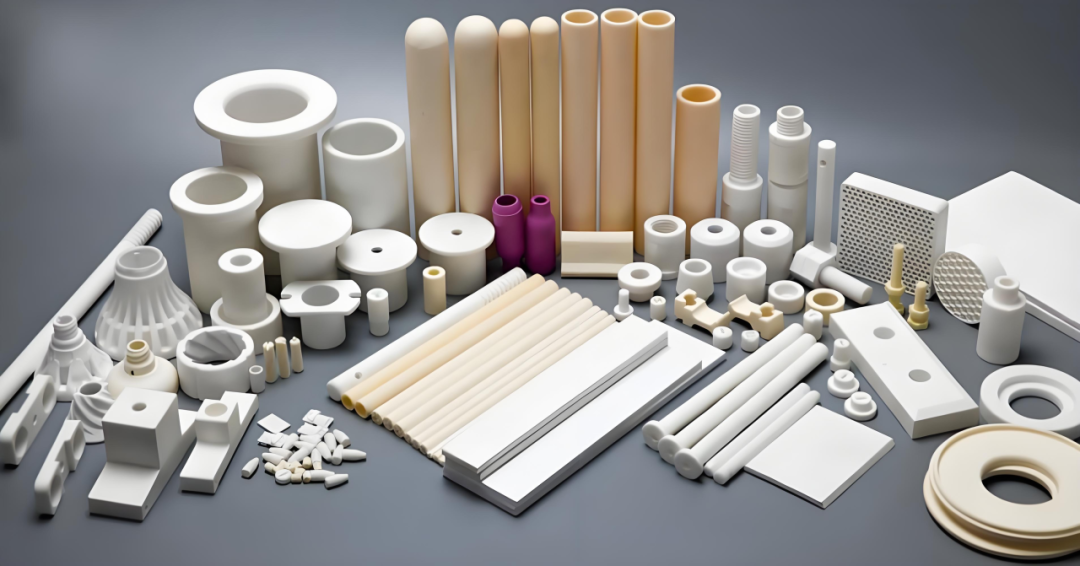
Ceramic-based materials have high hardness, high-temperature resistance, corrosion resistance, and good insulation properties, making them valuable in specialized fields such as electronics, aerospace, and biomedicine, primarily including alumina, zirconia, silicon carbide, and silicon nitride.
-
Alumina Ceramics:High hardness, high strength, high-temperature resistance, and corrosion resistance, widely used in electronic industry insulation components, mechanical industry wear-resistant parts, and chemical industry corrosion-resistant pipelines.
-
Zirconia Ceramics:Good toughness, strong wear resistance, and excellent biocompatibility, commonly used in dental restorations, biomedical implants, and structural components of precision instruments.
-
Silicon Carbide Ceramics:High hardness, high strength, high-temperature resistance, strong corrosion resistance, and good thermal conductivity, commonly used in aerospace high-temperature components and electronic industry heat dissipation components.
-
Silicon Nitride Ceramics:High hardness, high strength, high-temperature resistance, corrosion resistance, and good insulation properties, commonly used in electronic industry insulation ceramic components and mechanical industry high-speed bearings.
3.3 Resin-based Materials: Important Choices for High-Precision Molding
Resin-based materials are typically liquid and achieve rapid molding through technologies such as photopolymerization, characterized by high precision and good surface quality, primarily including photopolymer resins and thermosetting resins.
-
Photopolymer Resins:Can rapidly cure under ultraviolet light, with high molding precision and smooth surfaces, widely used in jewelry casting prototypes, precision part models, and dental models where high precision is required.
-
Thermosetting Resins:Exhibit good high-temperature resistance and mechanical properties, with stable performance after curing, commonly used in structural components and matrix materials for composites in industrial fields.
3.4 Bio-based Materials: New Forces in Medical and Environmental Fields
Bio-based materials use natural biomass as raw materials, offering good biocompatibility and degradability, with broad application prospects in medical and environmental fields.
-
Bio-based Materials from Natural Polymers:Such as starch-based and cellulose-based, can be used in packaging material prototypes and disposable environmentally friendly products.
-
Medical Bio-based Materials:Such as gelatin-based and chitosan-based, with good biocompatibility, can be used in tissue engineering scaffolds and drug carriers in the medical field, providing possibilities for personalized medicine.
04
Industry Map (Industrial Chain and Competitive Landscape)
Industry map (Industrial chain and competitive landscape)
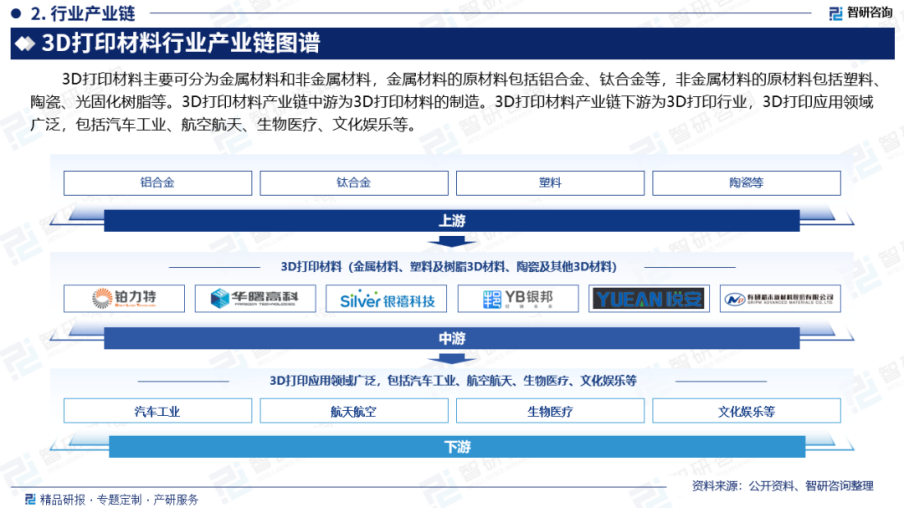
The industrial chain of the non-metal 3D printing materials industry is clear, covering three major links: upstream raw material supply, midstream material processing and manufacturing, and downstream application scenarios.
-
Upstream:Primarily involves the production and processing of basic materials. For plastic-based materials, upstream includes petrochemical companies (providing basic resin raw materials) and biomass material planting and processing companies (providing raw lactic acid for PLA); for ceramic-based materials, upstream includes ceramic ore mining and processing companies (providing powder raw materials such as alumina and zirconia); for bio-based materials, upstream includes agricultural product processing companies (providing biomass raw materials such as starch and cellulose). For example, Sinopec and PetroChina in the petrochemical field provide basic resins for plastic-based materials; ceramic raw material processing companies provide high-purity powders for ceramic-based materials.
-
Midstream:Companies processing and manufacturing non-metal 3D printing materials, responsible for processing upstream raw materials into consumables that meet 3D printing requirements. In the plastic-based field, there are companies focused on producing filament and powder plastic materials, such as Yinxin Technology in China; in the ceramic-based field, there are companies engaged in modifying ceramic powders and producing consumables; in the resin-based field, there are companies developing and producing various photopolymer resins, such as a company specializing in photopolymer materials. Midstream companies produce consumable products that meet different 3D printing technology requirements through processes such as raw material modification, mixing, and molding.
-
Downstream:Application fields are extremely broad, including consumer electronics, healthcare, construction, education, and cultural creativity. In the consumer electronics field, plastic-based and resin-based materials are used to produce product shells, models, etc.; in the healthcare field, bio-based and ceramic-based materials are used to make medical models, implants, etc.; in the construction field, special non-metal composite materials are used to print architectural models; in the education field, plastic-based materials are used for 3D printing teaching practices; in the cultural creativity field, resin-based materials are used to create personalized accessories and artworks.
4.2 Competitive Landscape
-
Regional Competition
Globally,North America and Europe have a head start in the non-metal 3D printing materials field, with mature technology, especially leading in high-end resin-based and bio-based materials. North America has many well-known 3D printing material companies, with advantages in material research and market application; Europe has developed well in environmentally friendly plastic-based materials and high-precision resin-based materials.
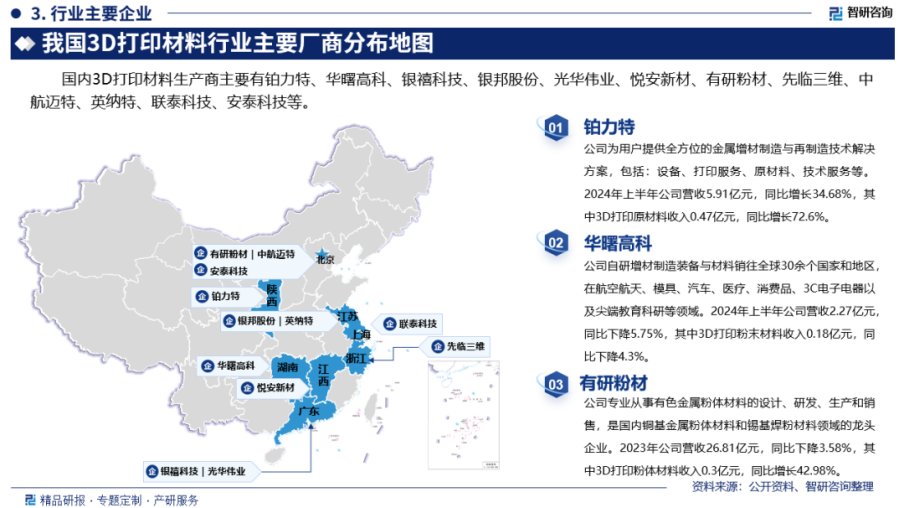
In the domestic market,3D printing non-metal material companies are mainly concentrated in developed manufacturing areas such as the Yangtze River Delta and the Pearl River Delta, where the industrial chain is well-equipped and market demand is strong. Provinces such as Guangdong, Jiangsu, and Zhejiang have gathered a large number of plastic-based and resin-based material production companies, possessing strong competitiveness in the mid-to-low-end market while gradually breaking into the high-end market.
-
Enterprise Competition
▪️Global market competition is showing a diversified trend.In the plastic-based materials field, large chemical companies occupy a certain market share due to their advantages in raw material supply and large-scale production capabilities, while specialized 3D printing material companies compete in niche areas through technological innovation; in the resin-based materials field, companies focusing on photopolymer materials occupy the high-end market due to their technological advantages; in the bio-based materials field, companies with a background in biomaterials research have strong competitiveness.
▪️In the domestic market, companies like Yinxin Technology have a certain scale and market share in the plastic-based materials field; some companies focusing on resin-based materials have made progress in developing high-precision, high-performance resin products; at the same time, with the increasing awareness of environmental protection, a number of startups engaged in the research and development of bio-based 3D printing materials have emerged, continuously driving industry innovation.
05
Future Development Trends
Future development trends
5.1 High Performance and Functionalization:As 3D printing technology is increasingly applied in high-end manufacturing, the performance requirements for non-metal materials are continuously increasing. In the future, plastic-based materials with high strength, high-temperature resistance, and aging resistance, as well as non-metal materials with special functions such as conductivity, thermal conductivity, and antibacterial properties will become key research focuses to meet broader industrial application needs.
5.2 Green and Sustainable:The enhancement of environmental awareness is driving the development of green and sustainable non-metal materials. Biodegradable plastic-based materials, bio-based materials derived from renewable resources, and material recycling technologies will receive more attention and application, reducing environmental impact and achieving sustainable development in the industry.
5.3 Customization and Specialization:Different industries have varying demands for non-metal materials, and customized and specialized materials will become a trend. For example, bio-based materials tailored for specific surgical needs in the medical field, and resin-based materials designed for high precision requirements in the electronics industry, can better meet customer personalized needs and enhance the effectiveness of 3D printing applications.
5.4 Technological Integration and Innovation:Digital and intelligent technologies will be deeply integrated with the research and production of non-metal materials. By analyzing the relationship between material performance and application scenarios through big data, and utilizing artificial intelligence to optimize material formulations and production processes, the stability of material performance and production efficiency will be improved, driving innovative development in the non-metal 3D printing materials industry.
References:
1. MarketsandMarkets: “Plastic 3D Printing Materials Market – Forecast (2023-2028)” “Ceramic 3D Printing Materials Market – Forecast (2023-2028)”
2. Qianzhan Industry Research Institute: “Analysis Report on the Market Outlook and Investment Strategy of China’s 3D Printing Industry”
3. QYResearch: “Global Consumer 3D Printing Consumables Market Report, 2024-2031”
4. Huashu High-tech Prospectus (Draft)
5. Industry Financing Information: Public Reports and Company Announcements
6. Huatai Securities: “3D Printing Industry Special Report: The Era of Personal Manufacturing Begins, Riding the Wave of 3D Printing Consumables”
7. Market Analysis Reports on Non-metal 3D Printing Materials Released by Relevant Industry Associations
Image sources from the internet, please delete if infringing
— END —