Ceramic3D printing technology breaks the limitations of traditional ceramic processing methods, with advantages such as high printing efficiency and the ability to process complex parts, and is becoming well-known. However, I often get asked, is the printed part strong? What is the accuracy? Can it print ceramic clay? With these questions in mind, I would like to share the process characteristics of ceramic3D printing technology.
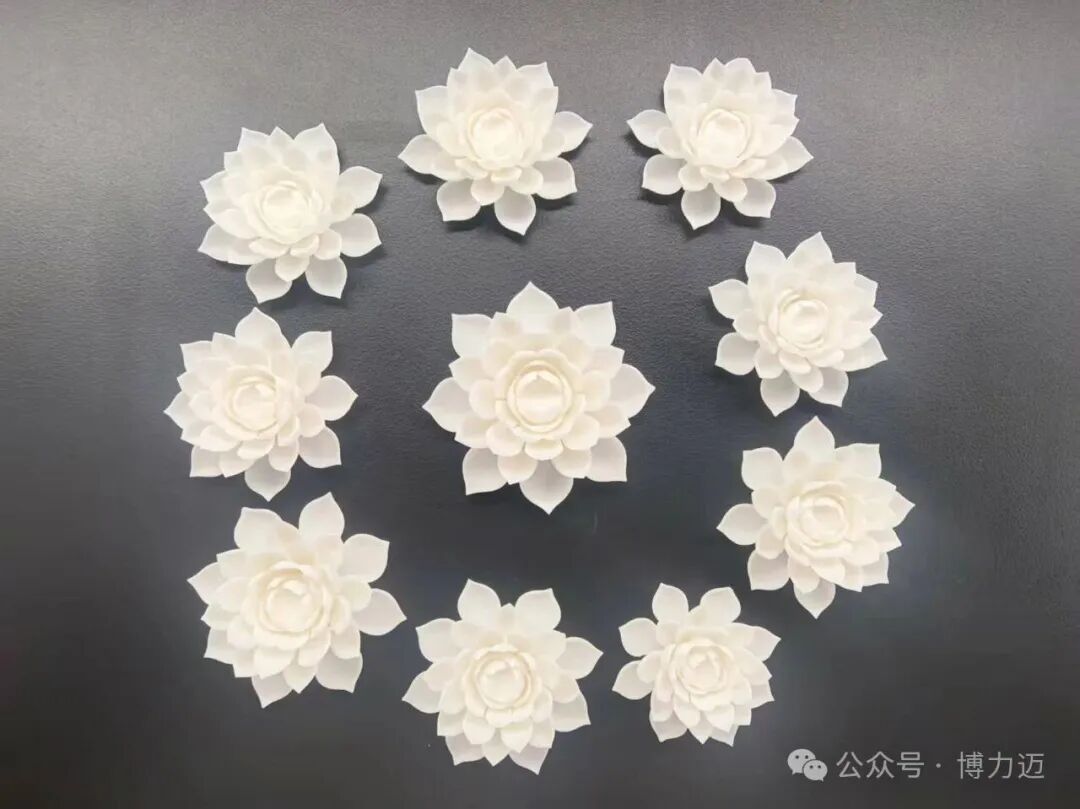
The development of3D printing technology has a history of40 years. Among the currently mainstream3D printing technologies, there are SLM technology for printing metals, SLS technology for printing non-metal powders, SLA technology for printing photosensitive materials, and DLP technology, as well as the most widely used and popular FDM technology. Of course, in addition to these, there are also binder jetting and laminated printing technologies.
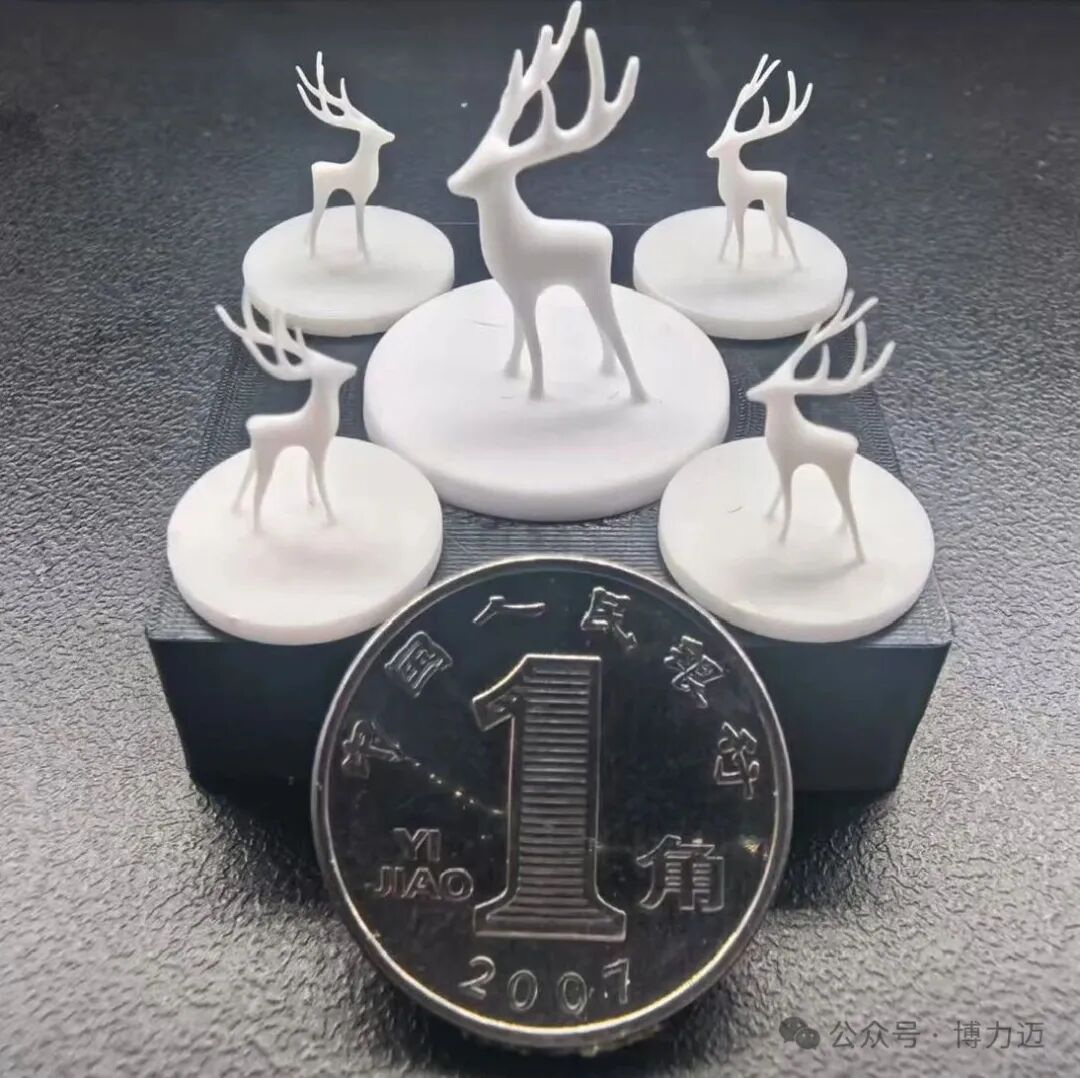
Each3D printing technology has its own advantages and disadvantages; no single technology can stand alone. Different application scenarios can choose suitable3D printing technologies to maximize their utility and fully leverage the advantages of3D printing technology.
Among the many3D printing technologies, ceramic3D printing technology involves the most fields and takes the longest time. Therefore, the difficulty of popularization also increases accordingly.
Ceramic3D printing commonly uses two technologies: SLA technology and DLP technology. The biggest difference between the two is that SLA technology uses point light source curing, while DLP uses area light source curing. Below are the characteristics of each technology.
DLP technology characteristics:
1、High forming efficiency. Because it uses area exposure and does not require point scanning, the printing speed is very fast.
2、Compared to SLA machines of the same price range, the accuracy is lower than that of SLA machines. DLP machines use optical engines, and their accuracy depends on the resolution of the optical engine; the higher the resolution, the higher the accuracy, but the price also increases.
SLA technology characteristics:
1、High accuracy. The spot diameter can be as small as50 microns or even smaller, ensuring the accuracy of printed parts. However, this brings another problem: the printing speed is much lower than that of DLP machines.
2、More adjustable parameters, suitable for material process experiments. For example, spot scanning speed, spot intensity, scanning line spacing, etc.
In summary, it cannot be simply said which technology is better; the choice of which type of machine to use for printing depends on what kind of parts are being printed.
The parts printed by ceramic3D printers are called “green bodies,” with a strength of only about20MPa. Next, they need to be cleaned and sintered, generally to a temperature of about1500°C.
It is important to emphasize that what we commonly refer to as “ceramic” actually consists of two materials. “Ceramic” refers to earthenware, which uses low-silica, low-alumina, high-iron clay (such as purple clay), with a sintering temperature generally between800-1100°C. “Porcelain” refers to fine china, which uses high-silica, high-alumina, low-iron kaolin as material, with a sintering temperature generally around1400°C.
Ceramic3D printing uses ceramic slurry as the printing material, which is different from ordinary photosensitive resin materials; the flowability of ceramic slurry is much worse than that of photosensitive resin. We usually measure the characteristics of ceramic slurry using the volume solid content ratio.
The volume solid content ratio refers to the ratio of ceramic material to photosensitive resin material. When the ceramic volume content exceeds52%, the viscosity of the ceramic slurry rises sharply, resulting in almost no flowability. The higher the volume solid content ratio, the smaller the volume of resin contained in the slurry, making it easier to vaporize and remove during the subsequent debinding process, resulting in lower shrinkage, less warping, higher density, and better strength of the sintered ceramic parts. However, as the solid content ratio of the ceramic slurry increases, the viscosity of the slurry will significantly rise.
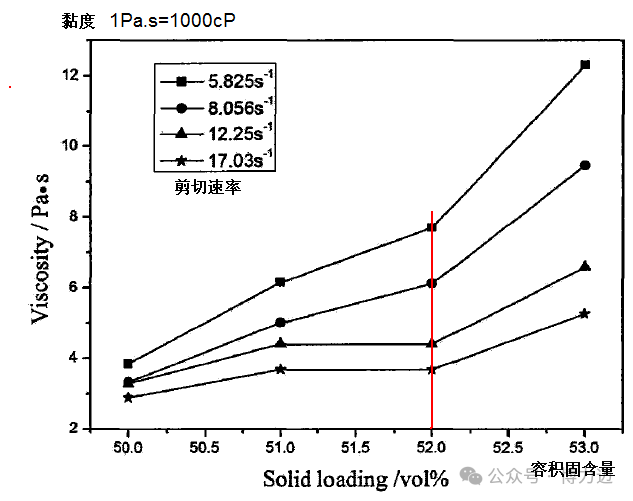
Therefore, using high solid content ceramic slurry is the development trend of ceramic3D printing technology, but it is necessary to solve the accompanying slurry mixing technology to ensure that the components in the slurry are evenly distributed and stable without sedimentation, and to overcome the difficulties of feeding and spreading caused by high-viscosity ceramic slurry. This is also why the price of ceramic printers is higher than that of ordinary photosensitive resin printers.
Reducing the volume solid content of the ceramic slurry will greatly improve the flowability of the material, but the printed parts are prone to cracking, and the strength of the printed parts will also be very low.
Therefore, not all ceramic parts are suitable for forming using3D printing methods. The following summarizes the parts suitable for ceramic3D printing:
1、Parts with wall thickness less than6mm. Because if the wall thickness is too large, the printed parts will shrink and deform during the debinding and sintering processes, leading to cracking;
2、Parts with an accuracy within ±0.02mm tolerance range. Currently, the accuracy of ceramic3D printing can reach ±0.01mm, but the dimensions after sintering can be controlled within ±0.02mm.
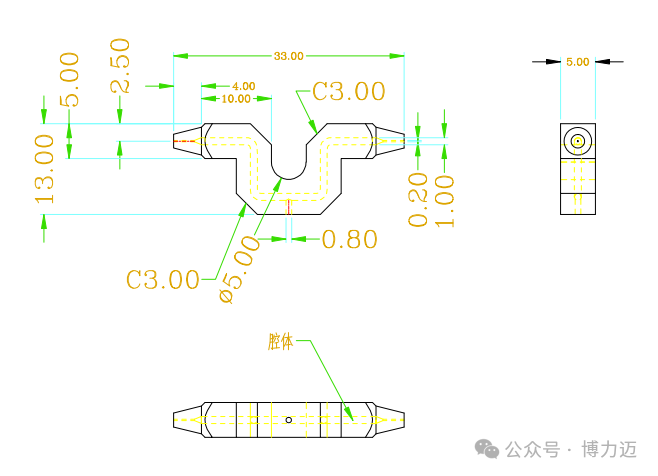
3、Parts with irregular structures. Similar to the image below, parts with irregular internal cavities that cannot be processed by traditional methods.
4、Integrated assembly parts. For ceramic parts assembly, it is usually done by processing individual parts and then assembling them. However, ceramic3D printing technology fundamentally solves the assembly problem of multiple parts, especially for precision-fit parts. As shown in the image below, multiple gear parts can be formed in one go without assembly.
5、Crafts. This type of product is usually made from clay, but ceramic3D printing technology opens up another method for traditional ceramic processing, meeting the needs for personalized, small-batch, and complex part customization.
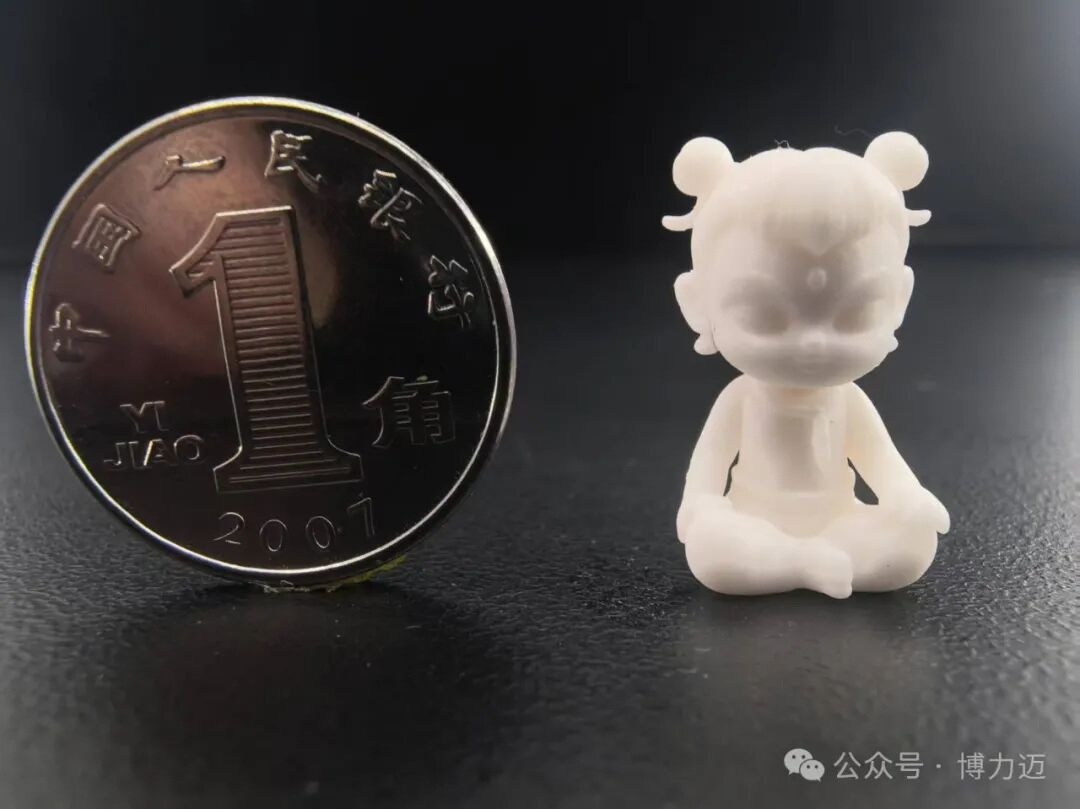
Understanding the above ceramic3D printing technology process is essential for users to make the right choices. Currently, each ceramic3D manufacturer on the market produces different slurries. Bolimai 3D Printing Technology Co., Ltd. currently uses high solid content slurry, and the strength of the parts after sintering can reach1100MPA. Although the ceramic parts produced by different manufacturers may look the same, their strength and accuracy can vary greatly.