
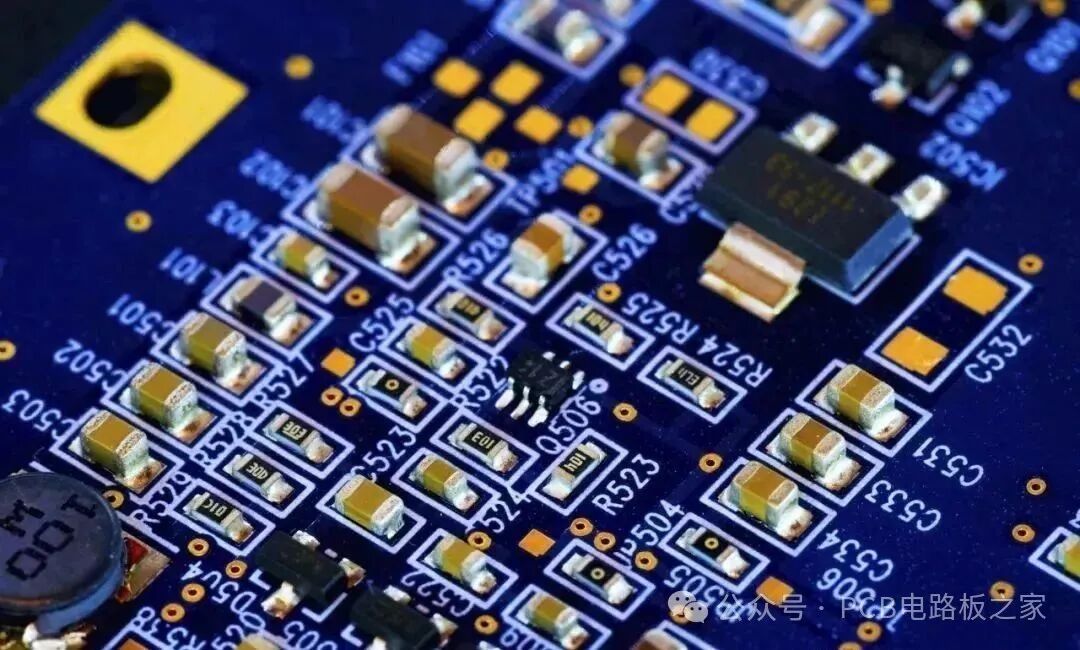
Today, we will not discuss PCB design. Everyone knows that “circuit short circuits” are problems that PCB manufacturers encounter almost daily, and they are relatively difficult to solve. The improvement of this issue directly relates to production costs and the qualification rate of finished products. The first step in improvement is inspection. Below, I will share the inspection steps for PCB circuit board short circuits.
01
If manual soldering is used, it is essential to develop good habits. First, visually inspect the PCB before soldering and use a multimeter to check if there are short circuits in critical circuits (especially power and ground); secondly, after soldering each chip, use a multimeter to check if there is a short circuit between power and ground; additionally, do not swing the soldering iron carelessly, as solder may be splashed onto the chip’s pins (especially for surface-mounted components), making it difficult to detect.
02
Open the PCB diagram on the computer, highlight the short-circuit network to see which areas are closest, as they are most likely to be connected. Pay special attention to internal short circuits in ICs.
03
When a short circuit is detected, take a board and cut the traces (especially suitable for single/double-layer boards). After cutting, power each functional block separately to eliminate one part at a time.
04
Use a short circuit locator analyzer, such as the Singapore PROTEQ CB2000 short circuit tracer, Hong Kong Lingzhi Technology QT50 short circuit tracer, or the UK POLAR ToneOhm950 multilayer board short circuit detector.
05
If there is a BGA chip, since all solder points are covered by the chip and it is a multilayer board (more than 4 layers), it is best to separate the power supply for each chip during design, connecting them with ferrite beads or 0-ohm resistors. This way, when a short circuit occurs between power and ground, disconnecting the ferrite bead makes it easy to locate the specific chip. Due to the difficulty of soldering BGA, if not done by machine, it is easy to accidentally short the adjacent power and ground solder balls.
06
Be cautious when soldering small surface-mounted capacitors, especially power filter capacitors (103 or 104), as they are numerous and can easily cause short circuits between power and ground. Of course, sometimes, due to bad luck, the capacitor itself may be shorted, so the best practice is to test the capacitors before soldering.
The above are the inspection steps for PCB circuit board short circuits. Have you mastered them? Just like our engineers during PCB design, attention to detail and patience are required for the process to become more standardized.

Some screenshots from electronic books

【Complete Set of Hardware Learning Materials Collection】