The Internet of Things (IoT) is an important component of the new generation of information technology. It connects any object to the internet through various information sensing devices, following agreed protocols for information exchange and communication, enabling intelligent identification, location, tracking, monitoring, and management of objects.

1. Core Components of the Internet of Things
Sensing Layer:This is the “skin and sensory organs” of the IoT, responsible for identifying objects and collecting information. It includes various types of sensors (such as temperature sensors, humidity sensors, light sensors, etc.), Radio Frequency Identification (RFID) technology, Global Positioning System (GPS), etc. For example, in smart agriculture, temperature sensors can monitor the temperature in greenhouses in real-time, providing data support for crop growth.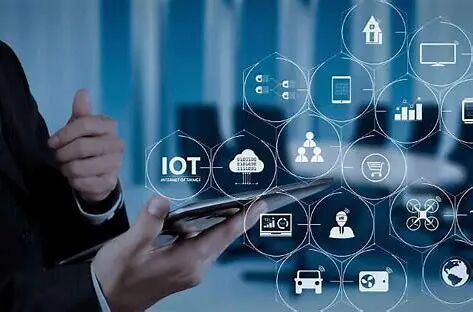 Network Layer:This is the “nerve center” of the IoT, responsible for transmitting and processing the information obtained from the sensing layer. It includes various communication networks, such as the internet, mobile communication networks, and local area networks, enabling long-distance data transmission and interaction. For instance, the temperature and humidity data collected by the sensing layer is transmitted to cloud servers for processing through the network layer.Application Layer:This is the “brain and limbs” of the IoT, responsible for integrating IoT technology with industry needs to realize specific application scenarios. It covers multiple fields such as smart transportation, smart healthcare, smart homes, and smart cities. For example, in smart homes, the application layer enables remote control of lighting and appliances, enhancing convenience in daily life.
Sensor technology is the foundation of information perception in the IoT, capable of converting various parameters from the physical world into electrical or digital signals. The performance of sensors, including accuracy, reliability, and power consumption, directly affects the effectiveness of IoT applications.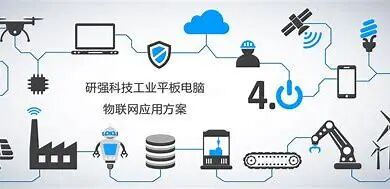
Wireless Sensor Networks (WSNs) consist of numerous micro-sensor nodes deployed within a monitoring area, forming a multi-hop self-organizing network system through wireless communication. Its core function is to collaboratively perceive, collect, and process information about the sensed objects within the network coverage area and transmit the data to observers or users.

2. Core Components of Wireless Sensor Networks
The basic unit of a wireless sensor network is the sensor node, each typically containing four key modules.
Sensing Module:
This module is responsible for collecting physical or chemical information from the monitoring area, such as temperature, humidity, light, pressure, and concentration of harmful gases. The core components are various types of sensors (e.g., temperature and humidity sensor SHT31, light sensor BH1750, etc.).Processing Module:This module is usually composed of microprocessors (such as low-power chips like MSP430, STM32) and is responsible for simple processing of the data collected by the sensing module (e.g., filtering, compression) and coordinating the operation of various modules within the node. Communication Module:This module enables data transmission between nodes through wireless radio frequency technologies (such as ZigBee, Bluetooth, LoRa, etc.), which is essential for forming the “network” while balancing power consumption and transmission distance.Power Module:This module is generally powered by batteries (such as button batteries, lithium batteries). Since nodes are often deployed in environments where battery replacement is difficult, low-power design is crucial. Additionally, the network may also include Sink Nodes, which are responsible for collecting data transmitted by sensor nodes and interfacing with external networks (such as the internet, satellite networks) to achieve final data upload.
Wireless sensor networks achieve fine-grained, real-time monitoring of the physical world through “distributed sensing + wireless communication,” playing a key role in strategies such as smart earth and smart cities. With the development of Low Power Wide Area Network (LPWAN) technologies (such as LoRaWAN, NB-IoT), their application scenarios will further expand, and when combined with artificial intelligence and big data, they are expected to upgrade from “data collection” to “intelligent decision-making.”
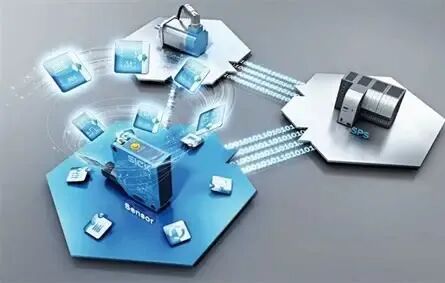
A sensor is a device that can convert various non-electrical signals (such as temperature, humidity, pressure, light, sound, displacement, etc.) from the physical world into measurable electrical signals (or other signals that are easy to transmit and process). It serves as a “bridge” connecting the physical world with electronic systems and plays a crucial role in various fields such as industrial automation, smart homes, medical devices, and environmental monitoring.

3. Basic Components of Sensors
Sensors typically consist of three core parts that work together to complete the signal conversion function:
Sensitive Element:
This element directly senses the measured quantity (such as temperature, pressure, etc.) and outputs a physical quantity that has a definite relationship with the measured quantity (e.g., the resistance of a metal changes with temperature). For example, the thermoelectric junction of a thermocouple is the sensitive element that converts temperature changes into potential changes.Conversion Element:This element converts the non-electrical signals output by the sensitive element into electrical signals (such as resistance, current, voltage, etc.). For instance, a strain gauge is a conversion element that converts mechanical deformation into resistance changes.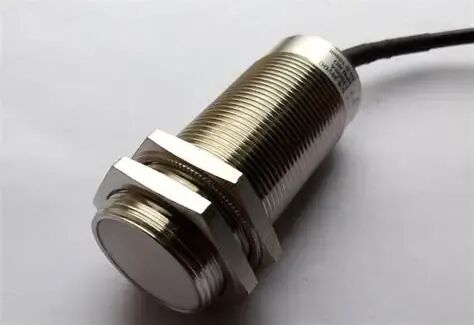 Conversion Circuit:This circuit processes the electrical signals output by the conversion element through amplification, filtering, modulation, etc., making them standard signals (such as 4-20mA current signals, 0-5V voltage signals) that are easy to transmit, display, or further process. Some sensors have their sensitive and conversion elements integrated (such as photoresistors), eliminating the need for separate distinction.
Classification of Sensors
1. Classification by Measured Physical Quantity (Most Common)
Temperature Sensors: Detect temperature changes, such as thermocouples (suitable for high-temperature environments), resistance temperature detectors (like PT100, high accuracy), and semiconductor temperature sensors (like DS18B20, digital output).Humidity Sensors: Measure environmental humidity, such as capacitive humidity sensors (SHT30, high accuracy, fast response) and resistive humidity sensors (low cost, suitable for civilian applications).Pressure Sensors: Detect gas or liquid pressure, such as piezoelectric pressure sensors (suitable for dynamic pressure measurement) and strain gauge pressure sensors (widely used in industrial pressure monitoring).Optical Sensors: Perceive light signals, such as photoresistors (used for automatic streetlight control), photodiodes (used for fiber optic communication), and image sensors (like CMOS, CCD, used in cameras).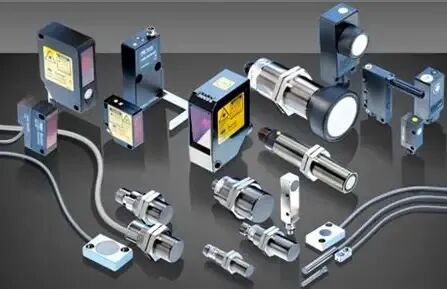 Acoustic Sensors: Detect sound signals, such as microphones (which convert sound waves into electrical signals) and ultrasonic sensors (used for distance measurement, such as parking sensors).Displacement Sensors: Measure changes in object position, such as inductive displacement sensors (suitable for high-precision machine tools) and Hall sensors (used for motor speed detection).Chemical Sensors: Detect the composition or concentration of chemical substances, such as gas sensors (detecting harmful gases like CO, formaldehyde) and pH sensors (measuring the acidity or alkalinity of solutions).
2. Classification by Working Principle
Physical Sensors: Based on physical effects (such as photoelectric effect, piezoelectric effect, thermal expansion and contraction, etc.), such as the aforementioned temperature, pressure, and optical sensors.Chemical Sensors: Based on chemical reactions (such as ion exchange, redox, etc.), such as gas sensors and pH sensors.Biological Sensors: Utilize specific reactions between bioactive substances (such as enzymes, antibodies, microorganisms) and the measured substances, such as blood glucose sensors (detecting glucose concentration in blood) and DNA sensors.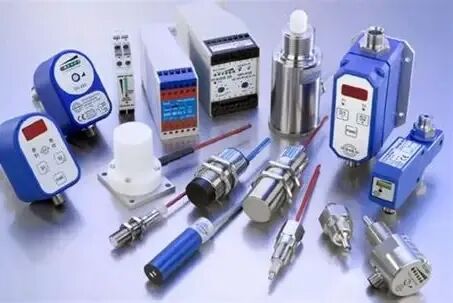
3. Classification by Output Signal Type
Analog Sensors: Output continuously varying analog electrical signals (such as voltage, current), such as thermocouples and photoresistors.Digital Sensors: Output discrete digital signals (such as binary codes) that can communicate directly with microprocessors, such as DS18B20 (temperature) and SHT31 (temperature and humidity).