Click the blue text Follow us
The automotive electronics industry is undergoing a fundamental transformation from distributed control to domain control and centralized computing power. The choice of hardware is no longer just a comparison of single-chip performance or the number of peripherals, but a systematic decision regarding functional safety, long-term supply, software ecosystem, and integration efficiency. The MCU (Microcontroller Unit), as the lowest-level execution unit in the vehicle control link, undertakes multiple responsibilities such as network communication, real-time control, fault diagnosis, and safety assurance, and its selection directly affects the development cycle, certification costs, and product reliability.
This article focuses on two representative platforms: one is the NXP S32K144 aimed at body and general control, and the other is the Infineon AURIX (TC275 and TC397) aimed at high safety and domain control.
We will gradually analyze the engineering practices of S32K144 and the positioning of AURIX in high safety and domain control from the perspectives of supply chain and ecosystem, helping engineers establish an executable capability curve from beginner to advanced.
——————-Automotive Embedded Classroom——————-
ENTER TITLESupply Chain and Ecosystem: Core Dimensions of Selection and Industry Status
The selection of automotive-grade MCUs must place “long-term availability” at its core.
Unlike consumer chips that undergo short-cycle iterations, the lifecycle of automotive platforms often exceeds ten years, and there are strict requirements for supplier traceability, mass production stability, and version support during the vehicle certification process.
Therefore, evaluating a chip must start from long-term supply policies, automotive certification (AEC-Q), functional safety support (ISO 26262), software toolchains, and reference designs.
The MCAL, BSW, example projects, and validation kits provided by manufacturers often determine the friction costs from prototype validation to mass production.
Secondly, the integrity of the ecosystem includes third-party middleware, operating system support (such as FreeRTOS / AUTOSAR Classic / Adaptive), and the manufacturer’s commitments regarding security updates and vulnerability responses.
In the current market landscape, NXP, Infineon, Renesas, and TI form the main force in automotive MCUs. They complement each other’s advantages in different market segments:
-
NXP’s S32 series is widely deployed in body, gateway, and general control fields, with a user-friendly toolchain;
-
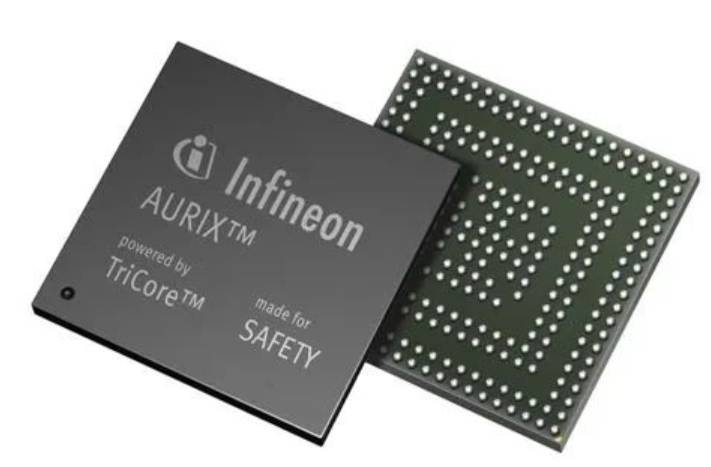
Infineon’s AURIX series has established barriers in high safety and power control fields through its TriCore architecture and hardware security module (HSM);
-
Renesas still holds traditional advantages in certain automotive segments (such as instrumentation and power), while TI maintains a presence in high-reliability industrial and automotive cross-applications.
Therefore, engineering decisions should be made based on the project’s functional safety level, network topology (CAN/CAN-FD/Ethernet), computing power requirements, and compatibility with the manufacturer’s ecosystem, rather than simply relying on single-core frequency or the number of peripherals.
Additionally, the reusability of the software ecosystem is key to reducing total costs. If manufacturers can provide a comprehensive functional safety library (diagnostics, watchdog, memory protection), secure boot and encryption support, as well as long-term security patches and documentation, it equates to taking on a significant amount of certification and validation work at the system level for the development team.
For OEMs and Tier 1 suppliers, choosing an MCU with a mature ecosystem and numerous case studies can significantly shorten validation cycles and reduce risks.
——————-Automotive Embedded Classroom——————-
ENTER TITLENXP S32K144: Engineering Practices and Project Implementation Recommendations
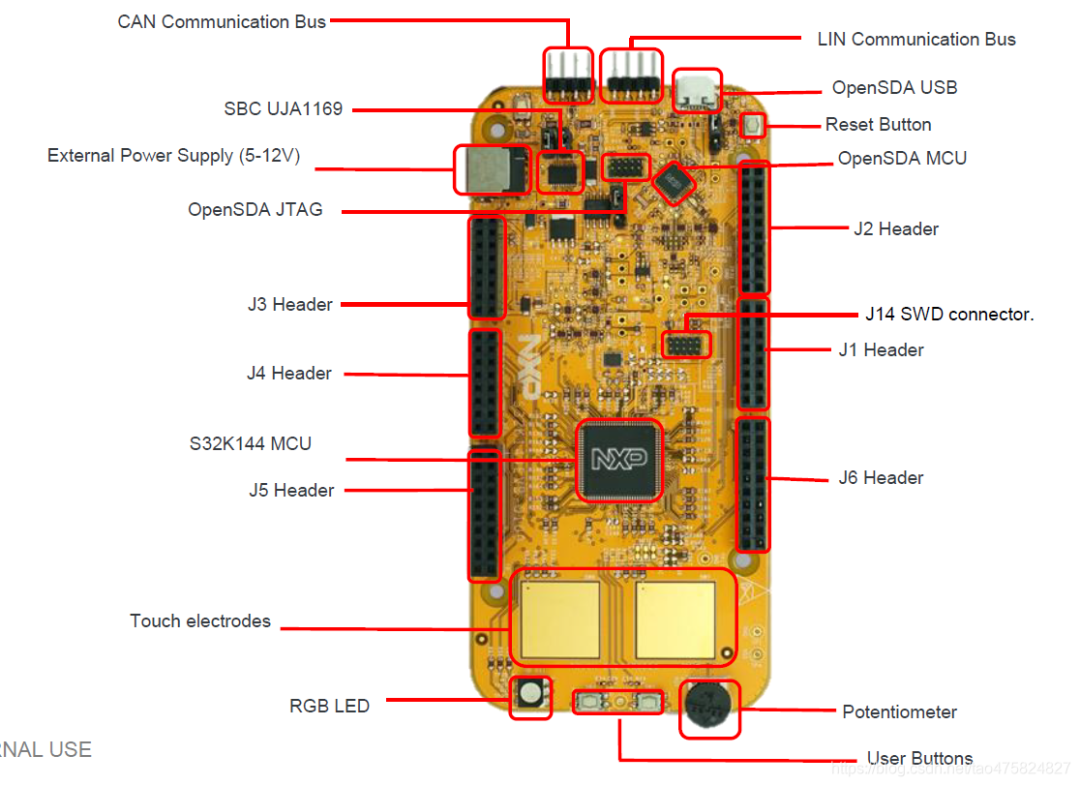
The S32K144, as a representative model of the NXP S32K series, is centered around the Cortex-M4F core, with balanced performance and storage in body and lightweight control applications. The engineering value of S32K144 lies not in extreme computing power, but in the maturity of its development ecosystem, peripheral integration, and mass production cases.
Typical application scenarios include door control modules, lighting control, body gateways, low-voltage BMS auxiliary logic, and vehicle communication nodes. For teams that need to quickly transition from prototype to vehicle validation, the advantages of S32K144 are particularly evident: NXP provides S32 Design Studio, a rich SDK, and FlexCAN drivers and examples, significantly compressing the soft and hardware debugging cycle.
In practical engineering, using S32K144 requires focusing on the following aspects:
First is communication robustness, especially the handling strategies of FlexCAN during error codes and peak bus occupancy (retransmission, isolation, error counting, and port switching);
Second is power management and wake-up strategies, as body controllers typically need to switch between low-power standby and instantaneous wake-up scenarios. Proper use of low-power domains and interrupt wake-up is key to ensuring vehicle standby current and user experience;
Third is functional safety practices. Although S32K144 is commonly found in ASIL-B scenarios, it still requires the implementation of necessary fault detection, redundancy checks, and software-in-the-loop and hardware-in-the-loop validation processes.
By controlling these engineering details, S32K144 can support high-stability mass production projects with relatively low system complexity.
For talent and team capability building, S32K144 is an ideal training platform: it helps engineers systematically master driver development based on the manufacturer’s SDK, peripheral interrupts and DMA coordination, CAN protocol tuning, and BSW (Basic Software) integration, laying a solid foundation for subsequent migration to AutoSAR or higher safety-level MCUs. It is recommended that projects establish a reusable Peripheral Abstraction Layer (HAL) and error reporting framework early on to reduce module coupling and validation workload when switching chips or upgrading functions.
——————-Automotive Embedded Classroom——————-
ENTER TITLEInfineon AURIX (TC275 / TC397): High Safety Architecture and Domain Control Implementation Path
The AURIX family is known for its TriCore multi-core architecture and rich hardware security features, making it the preferred platform for high safety and high real-time control.
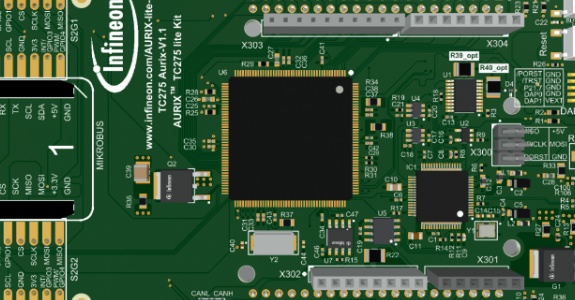
Although TC275 belongs to the previous generation, it is still widely used in power control, VCU, BMS, etc., due to its stability, cost, and balance of real-time performance.
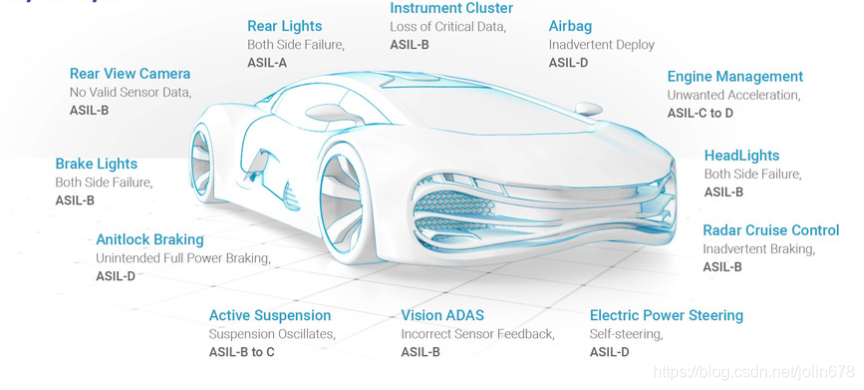
The three-core design and hardware diagnostic mechanisms of TC275 are suitable for separating real-time control tasks, diagnostics, and communication across different cores, thereby reducing the risk of mutual interference through hardware isolation, thus meeting high-level safety requirements such as ASIL-D.
Using TC275 in engineering means that during the system design phase, task scheduling, inter-core communication schemes (IPC), and fault degradation strategies must be clearly defined to ensure that the system can enter a safe state or degradation mode in the event of a single core failure.
TC397 represents the evolutionary direction of AURIX, offering higher clock speeds, richer peripherals (such as CAN FD, Ethernet), and enhanced security modules (HSM, encryption acceleration).
In scenarios aimed at centralized EE architecture and domain controllers, TC397 can undertake more control logic on a single chip and reduce the overall number of ECUs, thereby simplifying the software management and OTA strategies of the entire vehicle. However, this also places higher demands on the software architecture: static timing analysis, hardware lock-step synchronization, and strict memory and task isolation strategies need to be conducted at the system level.
To ensure functional safety and real-time performance, engineering teams need to collaborate with the manufacturer’s toolchain (such as safety verification tools, trace instruments, and automated testing platforms) to carry out progressively deepening validation work.
In terms of organizational capability building, it is recommended to adopt a phased migration approach:
The first phase completes the migration and validation of high real-time and high safety modules on TC275;
The second phase implements domain-level integration and performance expansion on TC397, while building automated regression testing and system-level fault injection tools;
The third phase deepens the implementation of OTA and security update mechanisms to meet the long-term maintenance needs under future centralized architectures.
Through this progressive strategy, teams can gradually master multi-core concurrency, ASIL-D certification processes, and security encryption mechanisms while ensuring that project risks remain controllable.
——————-Automotive Embedded Classroom——————-
ENTER TITLEConclusion: Building a Sustainable MCU Capability Loop
The selection and application of MCUs are not isolated actions but a system engineering process that runs through the product lifecycle.
The S32K144 provides the best path for entry and engineering implementation, suitable for rapid output in body and general control;
TC275 offers stable mid-to-high-end power control capabilities, serving as a reliable stepping stone into high safety fields;
TC397 is aimed at domain control and future centralized EE architectures, representing a necessary path for teams to achieve high computing power and high safety.
For individuals and teams, a reasonable growth path should be: first mastering the engineering practices and communication protocols of the S32 series, then gradually migrating to the multi-core and safety systems of AURIX, ultimately establishing a complete capability loop from driver layer, communication middleware to system-level safety strategies.
This article aims to provide a systematic and executable path to help readers transform abstract judgments on chip selection into actionable technical routes and validation strategies.
 Join the group chat to obtain
Interview
Materials
100+ enterprise interview cases
Learning
Route
Automotive development learning route
Learning
Guidance
Many engineers with over 10 years of experiencefrom large companies
Online guidance
Learning
Communication
Many developers communicate together
Helping you improve your skills
Scan to add WeChat Teacher Wang’s mini program👇👇 Click to access!!!Scan to directly enter the automotive embedded exchange group