Application Research of LoRa-Based Wireless Sensor Networks in Large Bridge Health Monitoring
This article mainly discusses the advantages and practical applications of LoRa technology in bridge health monitoring systems. Below is a detailed analysis:
1.Characteristics of LoRa Technology:
LoRa (Long Range) is a low-power, long-distance wireless communication technology, particularly suitable for the communication needs of Internet of Things (IoT) devices. It achieves long-distance communication through single-hop frequency hopping transmission while featuring low power consumption and low cost. These characteristics make LoRa very suitable for bridge health monitoring systems, as these systems typically require coverage over a large geographical area and demand long-term stable operation.
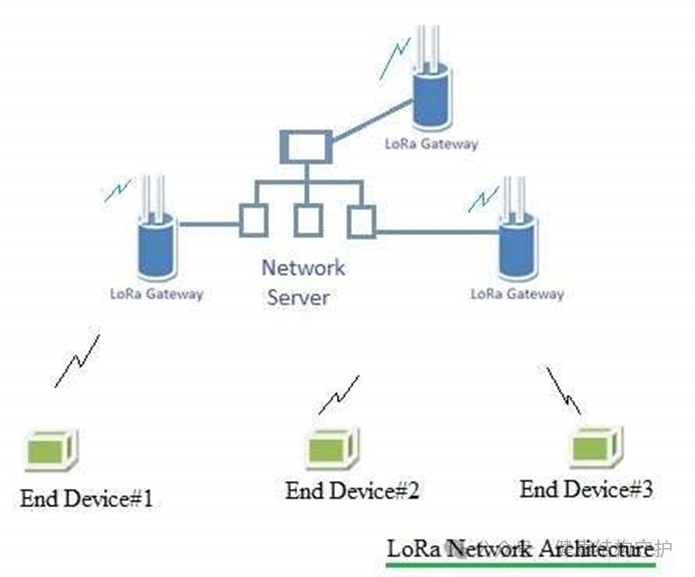
2.Application of LoRa in Bridge Health Monitoring:
Multiple studies have shown that LoRa technology has been widely used in bridge health monitoring systems. For example, on the Yongguang Bridge in South Korea, researchers developed a wireless sensor network based on LoRa LPWAN (Low Power Wide Area Network) to monitor parameters such as cable tension. Experimental results showed that the system performed excellently in terms of data rate, accuracy, and cost-effectiveness, making it an effective technology for monitoring bridge structural integrity. Additionally, LoRa technology has been used in remote monitoring data collection systems for urban overpasses, addressing the wiring difficulties and high maintenance costs of traditional wired monitoring systems.
3.Comparison of LoRa with Other Technologies:
Although LoRa technology has significant advantages in bridge health monitoring, other technologies such as Zigbee and RFID have also been used in similar scenarios. For instance, Zigbee technology is applied in bridge health monitoring due to its low power consumption and high reliability. However, LoRa, with its longer transmission distance and lower power consumption, is more advantageous for monitoring large-span bridges.
4.Future Development Directions:
With the development of IoT technology, the combination of LoRa and cloud services has become a trend. This combination leverages LoRa’s long-distance transmission capability and the data processing capabilities of cloud platforms to achieve more efficient data sharing and management. Furthermore, with advancements in sensor technology, future LoRa-based bridge health monitoring systems may integrate more types of sensors to provide more comprehensive monitoring data.
LoRa-based wireless sensor networks for large bridge health monitoring offer significant advantages, including low cost, low power consumption, and long-distance transmission. These features make it an ideal choice for bridge health monitoring and provide new development directions for future bridge monitoring systems.
Based on the provided information, the specific application cases of LoRa technology in bridge health monitoring include the following aspects:
1.Bridge Structural Health Monitoring System (SHM):
LoRa technology is widely used in bridge structural health monitoring systems for remote monitoring of bridge health. These systems achieve comprehensive monitoring of bridges through wireless low-power LoRa transmission, long-lasting battery-powered sensors, low-cost sensors, high-precision displacement measurement, vibration frequency detection, and advanced data analysis and algorithms.
Specific application cases include bridge monitoring cases in Indonesia and a white paper study on the Vespucci Bridge in Florence, Italy, showcasing the value of LoRa technology in practical applications.
2.Intelligent Bridge Health Monitoring Platform:
In the application of a cable-stayed bridge on the Yangtze River, the intelligent bridge health monitoring platform adopted the LoRa communication protocol, enabling real-time, continuous provision of internal force and deformation evolution information of the bridge structure, identifying the location and extent of structural damage, and endowing the bridge with intelligent operational capabilities.
This platform uses artificial neural network information processing technology to monitor cable force in real-time, with predicted values consistent with actual observed values, and an error margin within ±5%, validating the effectiveness of the LoRa communication protocol in intelligent prediction of measured values in bridge health monitoring.
3.Prevention of the Wuxi Overpass Collapse Incident:
In the Wuxi overpass collapse incident, IoT technology was used to monitor the health status of the bridge. Specific measures included installing surface pressure sensors at both ends of the bridge to monitor vehicle load and type in real-time, and embedding sensing devices within the bridge for daily health monitoring.
4.Application of Tilt Sensors in Railways and Sea-Crossing Bridges:
Near the Fuzhou High-Speed Railway Station, LoRa wireless tilt sensors have been used to monitor railway posture, featuring low system costs, simple installation, high precision, and ease of maintenance.
At the Hangzhou Bay Cross-Sea Bridge, the ZTT303-SNP-W-NYK sensor has been used to monitor the verticality of bridge piers, ensuring bridge safety through scheduled monitoring and real-time early warning.
5.Smart Bridges and Intelligent Manhole Covers:
LoRa technology has also been applied in smart bridges and intelligent manhole covers, reducing the probability of accidents and risks of vehicle accidents and casualties by timely assessing bridge conditions and monitoring manhole cover positions.
What are the performance comparison results of LoRa with other wireless communication technologies (such as Zigbee, RFID) in bridge health monitoring?
The performance comparison results of LoRa with other wireless communication technologies (such as Zigbee, RFID) in bridge health monitoring are as follows:
1.Transmission Distance and Coverage:
LoRa has a longer transmission distance, suitable for long-distance, low-power, and large-scale connection applications. The carrier frequency used by LoRa is lower, which slows down channel attenuation and enhances wall penetration capability.
Zigbee has a shorter transmission distance, usually between 10-75 meters, suitable for smaller range networks.
RFID typically has a shorter transmission distance, generally ranging from a few centimeters to a few meters, mainly used for close-range identification and tracking.
2.Data Transmission Rate:
LoRa has a lower data transmission rate, but its low power consumption characteristics make it very suitable for bridge health monitoring. The data transmission rates for LoRa are 20 kbps (868 MHz), 40 kbps (915 MHz), and 250 kbps (433 MHz).
Zigbee’s data transmission rate is 250 Kbps, significantly higher than that of LoRa.
RFID typically has a higher data transmission rate, but specific values are not clearly mentioned in the evidence.
3.Energy Consumption:
LoRa has very low energy consumption, suitable for long-term, all-weather monitoring. LoRa’s energy consumption is 300 bps for 37.5 kbps.
Zigbee’s energy consumption is relatively high, making it unsuitable for long-term low-power applications.
RFID also has high energy consumption, typically requiring external power supply.
4.Anti-Interference Capability:
LoRa uses CSS communication technology, which can optimize the transmission path to overcome obstacles, thus providing better transmission stability in complex environments.
Zigbee has poorer transmission stability in complex environments, especially when many walls obstruct the signal.
RFID has weak anti-interference capability and is easily affected by environmental factors.
5.Application Scenarios:
LoRa is suitable for scenarios requiring long-distance, low-power, and large-scale deployment, such as bridge health monitoring.
Zigbee is suitable for smaller range networks, such as smart homes and environmental monitoring.
RFID is mainly used for close-range identification and tracking, such as logistics management and inventory management.
In summary, LoRa performs excellently in bridge health monitoring, characterized by long-distance transmission, low power consumption, high anti-interference capability, and suitability for large-scale deployment.
How does the LoRa-based bridge health monitoring system achieve secure data transmission and processing?
Based on the provided information, it is not possible to answer how the LoRa-based bridge health monitoring system achieves secure data transmission and processing. The materials I found mainly focused on the architecture, functions, and applications of bridge health monitoring systems, but did not specifically mention the implementation details of LoRa technology in data security transmission and processing.
However, some relevant background information can be referenced to speculate on the possible applications of LoRa technology in bridge health monitoring systems:
1.Data Transmission:
LoRa technology, with its low power consumption and long-distance transmission features, is suitable for data transmission in bridge health monitoring systems. For example, it was mentioned that LoRa networks can achieve wireless transmission of earthquake response and health monitoring data for tall buildings, with a packet loss rate of less than 8% within 3 kilometers in urban open environments. This indicates that LoRa technology can effectively support the data transmission needs of bridge health monitoring systems.
2.Data Processing and Analysis:
Although there was no direct mention of LoRa technology’s application in data processing and security, it can be speculated that data collected by LoRa nodes would be transmitted through gateways to cloud platforms or remote servers for further processing and analysis. For instance, it was mentioned that data transmitted to cloud platforms or remote servers undergoes analysis and early warning generation. This indicates that LoRa technology can serve as a means of data transmission, while the security and integrity of the data depend on the subsequent security measures of cloud platforms or servers.
3.Security:
Regarding the secure transmission and processing of data, it is usually necessary to consider security mechanisms such as encryption, authentication, and access control. For example, it was mentioned that tunnel structure health automation monitoring systems upload data to Alibaba Cloud platforms for remote online monitoring. Although specific security measures for LoRa technology were not explicitly mentioned, it can be speculated that encryption techniques would be employed during data transmission to protect data security.
In summary, although the materials I found did not directly answer how the LoRa-based bridge health monitoring system achieves secure data transmission and processing, it can be speculated that LoRa technology has advantages in data transmission, while the security and integrity of the data depend on the subsequent security measures of cloud platforms or servers.
What are the main challenges faced by LoRa technology in bridge health monitoring and their solutions?
Based on the provided information, it is not possible to answer the question regarding the main challenges faced by LoRa technology in bridge health monitoring and their solutions. The materials I found mainly focused on the overall technical difficulties in bridge health monitoring, the applications of IoT and artificial intelligence in bridge monitoring, and some specific technical implementations and cases, but did not directly mention the specific applications and challenges of LoRa technology in bridge health monitoring.
However, some relevant information can be referenced to indirectly answer this question:
1.Sensor Lifespan and Stability:
Traditional bridge structural safety monitoring technologies face issues such as short sensor lifespan and insufficient long-term stability. LoRa technology, as a low-power wide-area network (LPWAN) communication technology, has a longer battery life and better environmental adaptability, which can effectively address this issue.
2.Data Transmission and Collection:
Bridge health monitoring systems require efficient data transmission and collection mechanisms. LoRa technology, with its ultra-long endurance and various power supply modes, can achieve remote, low-power data transmission, making it suitable for data collection in bridge health monitoring.
3.Deployment and Maintenance:
Traditional bridge structural safety monitoring technologies face issues such as sparse sensor deployment and poor flexibility. LoRa technology can simplify the deployment and maintenance of sensors, improving the flexibility and reliability of the system.
4.Real-Time Monitoring and Early Warning:
LoRa technology can achieve real-time monitoring and automatic early warning of bridge structures, enhancing the response speed and accuracy of bridge health monitoring systems.
Future trends and technological innovations in LoRa-based bridge health monitoring systems include:
1.Intelligence and Automation:
With the continuous development of IoT, big data, and artificial intelligence technologies, bridge health monitoring systems will become more intelligent and automated. By introducing advanced AI technologies, new types of sensors, and wireless communication networks, future bridge health monitoring systems will achieve more efficient and accurate monitoring and early warning functions. For example, using machine learning and deep learning algorithms, large amounts of data can be analyzed and processed to improve the accuracy and response speed of monitoring systems.
2.Optimization of Sensor Technology:
Sensor technology is a core component of bridge health monitoring systems. Future research will focus on the development of high-precision, high-durability, and high-accuracy testing devices and sensors. Additionally, optimizing sensor deployment will also be an important direction for the future to ensure comprehensive and accurate data collection.
3.Innovation in Data Collection and Transmission Technologies:
To achieve real-time data transmission and remote monitoring, innovations in communication technologies are crucial. LoRa, as a low-power wide-area network (LPWAN) technology, has long-distance transmission, low power consumption, and low cost characteristics, making it very suitable for data transmission in bridge health monitoring systems. Through LoRa technology, real-time monitoring of small changes in bridge structures can be achieved, with data transmitted to central processing systems for analysis and processing.
4.Advances in Data Processing and Analysis Technologies:
Future bridge health monitoring systems will place greater emphasis on the development of data processing and analysis technologies. By introducing advanced data analysis methods and algorithms, potential problems in bridges can be better identified and predicted. For example, using big data analysis and machine learning technologies, in-depth analysis of bridge vibration, deformation, and other data can be conducted to improve the safety and reliability of bridges.
5.Integration and Multifunctionality:
Future bridge health monitoring systems will be more integrated, capable of simultaneously monitoring multiple parameters such as structural displacement, cracks, stress and strain, pier deformation, support settlement, and temperature. This integrated monitoring system can provide comprehensive bridge health information and offer more scientific data support for bridge management and maintenance.
6.Policy Support and Market Demand:
Technological innovation, growing market demand, and policy support are the three driving forces behind the development of bridge health monitoring systems. With the increasing number of bridges and public concern about bridge safety, market demand will continue to grow, further promoting technological innovation and application.
Related Events
|
Event Name |
Event Time |
Event Overview |
Type |
|
LoRa LPWAN-Based Bridge Structural Health Monitoring |
Not specified |
The research team developed an IoT sensor network based on LoRa LPWAN for bridge structural health monitoring and tested it on Yongguang Bridge. |
Technology Application |
|
Application of Wireless Sensor Networks in Bridge Monitoring |
Not specified |
Wireless sensor networks are widely used in bridge health monitoring to improve the efficiency and cost-effectiveness of monitoring systems. |
Technology Application |
|
Measurement of Acceleration Hysteresis Curve of High-Speed Railway Bridges |
Not specified |
Measured the acceleration hysteresis curve of high-speed railway bridges to assess the stability and safety of bridge structures. |
Scientific Research |
|
Remote Monitoring Data Collection System for Urban Overpasses |
2021-02-03 |
Designed and developed a remote monitoring data collection system for urban overpasses based on LoRa wireless network technology, which has been applied in engineering. |
Technology Application |
|
Zigbee-Based Bridge Health Monitoring System |
2009-04-01 |
Proposed and implemented a bridge health monitoring system based on Zigbee technology to enhance the flexibility and cost-effectiveness of monitoring systems. |
Technology Application |
|
Application of IoT Technology in Large Infrastructure Health Monitoring |
Not specified |
Discussed the application of IoT technology in the health monitoring of large public infrastructures such as bridges. |
Technology Application |
Related Organizations
|
Organization Name |
Overview |
Type |
|
Clarkson University |
The Smart Infrastructure and Transportation Technology Laboratory at Clarkson University designed a wireless sensor solution for structural health monitoring. |
Education/Research Institution |
|
Korean Society of Structural Engineering |
Published an article on the installation and maintenance plan for wireless measurement sensors based on LoRa LPWAN, discussing the necessity of safety assessments for large structures such as bridges and tunnels in the context of rapid aging of infrastructure in South Korea. |
Academic Organization |
|
UC Berkeley |
Sukun Kim and others designed a wireless sensor network system based on TinyOS for monitoring the structural health of the Golden Gate Bridge. |
Education/Research Institution |
|
Stanford |
Jerome P. Lynch and others designed a Wireless Modular Monitoring System (WMiMS) and conducted tests on a bridge in Alamosa Canyon, USA. |
Education/Research Institution |
Related People
|
Person Name |
Overview |
Type |
|
Bhuiyan MZA, Cao JN, Wang GJ |
Published research on deploying fault-tolerant wireless sensor networks for structural health monitoring at the IEEE International Conference on Distributed Computing in Sensor Systems. |
Researchers |
|
Koushik Roy, Harutoshi Ogai, Bishakh Bhattacharya, Samit Ray-Chaudhuri, Jianan Qin |
Studied the efficiency of multi-hop wireless sensor networks in remotely monitoring bridge health and applied various damage detection techniques based on vibration and features. |
Researchers |
Summary Table
|
Title |
Author |
Article Type |
Key Technologies |
Application Scenario |
Main Results |
|
Design of a Low Power Consumption Wireless Sensor Network for Structural Monitoring of Bridges |
– |
Research |
LoRa, DHT22, ADXL345, Anemometers, The Things Network (TTN), Ubidots |
Bridge Structural Health Monitoring |
Designed and implemented a LoRa-based wireless sensor network for monitoring parameters such as temperature, humidity, vibration, and wind speed of bridges. Data is transmitted via LoRa to The Things Network (TTN) for processing and storage, followed by real-time visualization and analysis through the Ubidots platform. |
|
Journal of Computational Structural Engineering |
Computational Structural Engineering Society (J. Comput. Struct. Eng. Inst. Korea) |
Paper |
LoRa LPWAN, Sensor Board, Data Acquisition Board, Smart Sensor Node |
Bridge Structural Health Monitoring |
Developed sensor boards and data acquisition boards for cable tension monitoring, designed and manufactured smart sensor nodes suitable for LoRa communication, and established a monitoring sensor network. Tests conducted on Yongguang Bridge showed that the LoRa LPWAN-based sensor network performed excellently in data rate, accuracy, and cost-effectiveness. |
|
Research on Structural Health Monitoring Based on Finite Element Method |
J. Comput. Struct. Eng. Inst. Korea |
Article Summary |
LoRa LPWAN, Wireless Measurement Sensors |
Bridge Structural Health Monitoring |
Studied the trends of wireless measurement sensor technology based on LoRa LPWAN, proposed installation and maintenance plans, and analyzed the installation costs of wireless and wired bridge monitoring systems, indicating that the wireless system costs about 38%, while the wired system costs about 43%. Discussed application cases of LoRa LPWAN in high-speed railway bridges. |
|
LoRa-Based Remote Monitoring Data Collection System for Urban Overpasses |
– |
Research |
LoRa, Sensor Data Acquisition Node, Wireless Transmission Node, Monitoring Cloud Platform |
Urban Overpass Structural Health Monitoring |
Designed and developed a remote monitoring data collection system for urban overpasses based on LoRa, achieving automated data collection, wireless transmission, remote monitoring, and intelligent early warning. |
|
LoRa Networking 4G Base Station Bridge Daily Data Indicator Remote Monitoring |
– |
Technical Deployment |
LoRa, DTU, NB-IoT, Tilt Sensors, Vibration Sensors, Cable Force Sensors, Temperature and Humidity Meters, Ultrasonic Sensors |
Small and Medium Bridge Structural Health Monitoring |
Achieved data collection through wireless low-power sensors and uploaded data to servers via operator network wireless data transmission terminals, integrating with the detection system management center PC for unmanned monitoring and big data visualization analysis monitoring system. |
References
1. Aloys Augustin, Jiazi Yi et al. “A Study of LoRa: Long Range & Low Power Networks for the Internet of Things.” Sensors (Basel, Switzerland)(2016).
2. Application of Wireless Sensor Networks in Bridge Health Monitoring.
3. Jhanes Pineda, Renato Torres et al. “Design of a low power consumption wireless sensor network for structural monitoring of bridges.” IOP Conference Series: Earth and Environmental Science(2024).
4. Journal of Computational Structural Engineering.
5. Research on Structural Health Monitoring Based on Finite Element Method.
6. Sheng Weiwei. Research on the Application of IoT RFID Technology in the Health Monitoring of Large Span Bridges [J]. Railway Construction Technology, 2024.
7. Xiao Shihui, Mei Minzhang, Tang Mengxiong, et al. Remote Monitoring Data Collection System for Urban Overpasses Based on LoRa [J]. Highway, 2021.
8. Zheng Pengfei, Yang Kang, Han Jiashan, et al. Research on Bridge Health Monitoring System Based on LoRa + Cloud Services [J]. Shanxi Architecture, 2023.
9. Ma Huiyu, Li Jian, Su Xinyan, et al. Design of an All-Weather Health Monitoring System for Bridges Based on Wireless Sensor Networks [J]. Foreign Electronic Measurement Technology, 2021.
10. Overview of Bridge Health Monitoring and Diagnosis Research.
11. Zhao Xiang, Du Saisai, Xie Liming, et al. Research on the Application of LoRa Technology in Bridge Health Monitoring Systems [J]. Anhui Architecture, 2019.
12. Wang Ting. Research on the Application of Wireless Sensor Networks Based on Zigbee in Bridge Health Monitoring Systems [D]. Chongqing University, 2009.
13. LoRa Networking 4G Base Station Bridge Daily Data Indicator Remote Monitoring [2024-07-12].
14. The Development and Field Evaluation of an IoT System of Low-Power Vibration for Bridge Health Monitoring.
15. Research Progress of SHM System for Super High-Rise Buildings.
16. Bridge Monitoring System Based on Wireless Sensor Networks [2020-04-13].
17. Tanvir Mustafy, R. Ahsan. “Structural Health Monitoring of Large-Scale Bridges: A Synopsis of the Padma Bridge.” MIST INTERNATIONAL JOURNAL OF SCIENCE AND TECHNOLOGY(2022).
18. Wu Qisheng, Wang Dan, Wang Qiucai. Wireless Monitoring System for Large Bridge Health [J]. Journal of Chang’an University (Natural Science Edition), 2007.
19. Shen Yunhai, Ma Qianli, Bian Chunhua, et al. Bridge Health Monitoring System Based on the Integration of Wired and Wireless Heterogeneous Networks [J]. Modern Computer (Professional Edition), 2011.
20. Spatial Clustering in Slotted ALOHA Two-Hop Random Access for Machine Type Communications.
21. Hao Hongmei. Research on Key Technologies of Wireless Monitoring Systems for Bridge Health [D]. Chang’an University, 2007.
22. Wu Lixin, Sun Yuguo. Design of a Remote Monitoring System for Bridge Cable Tension Based on LoRa [J]. Software, 2020.
23. Qian Yang. Research and Design of Bridge Health Monitoring System Based on Wireless Sensor Networks [D]. Guangxi University, 2019.
24. Current Status of High-Speed Railway Bridge Development and Health Monitoring Research [2014].
25. Damage Detection of Bridge Using Wireless Sensors [2012].
26. The Value of Heterogeneous Wireless Sensor Networks in Bridge Health Monitoring [2020-05-07].
27. Application of LoRa Wireless Temperature and Humidity Collection Sensors in the Laboratory [2020-04-02].
28. Bridge Health Monitoring System [2024-07-24].
29. Opportunities and Challenges of Wireless Sensor Network Technology in Bridge Health Monitoring Applications [2019-12-13].
30. Introduction to Bridge and Large Building Health Monitoring Systems [2021-04-10].
31. Structural Health Monitoring Sensors & Applications (D) – Cody Corporation [2024-08-21].
32. Research on the Current Status of Intelligent Health Monitoring Technology and Applications for Bridges [2023-05-25].
33. The Wuxi Overpass Collapse Tragedy Rings Alarm! Can We Use IoT Technology to Save Lives in the Future? [2019-10-11].
34. Design and Implementation of a ZigBee-Based Agricultural Field Detection System [2023-10-06].
35. Analysis of the