 With the development of sensor technology, embedded technology, distributed information processing technology, and wireless communication technology, wireless sensor networks (WSN), composed of a large number of micro-sensor nodes with micro-processing capabilities, have gradually become a research hotspot.
Compared to traditional wireless communication networks such as Ad Hoc networks, the self-organization, dynamism, reliability, and data-centric features of WSN allow it to be applied in places inaccessible to personnel, such as battlefields, deserts, etc. Therefore, it can be concluded that the future of wireless sensor networks will have a broader prospect.

Wireless Sensor Networks
Wireless Sensor Networks (WSN) are a type of distributed sensing network formed by a large number of stationary or mobile sensors that create a wireless network in a self-organizing and multi-hop manner to collaboratively perceive, collect, process, and transmit information about the sensed objects within the geographical area covered by the network, ultimately sending this information to the network owner. Sensors, sensed objects, and observers constitute the three elements of a wireless sensor network.
The various types of sensors in wireless sensor networks can detect diverse phenomena in the surrounding environment, including earthquakes, electromagnetic fields, temperature, humidity, noise, light intensity, pressure, soil composition, and the size, speed, and direction of moving objects. Potential application areas can be summarized as: military, aviation, explosion-proof, disaster relief, environment, medical care, health care, home, industry, and commerce.
Compared to traditional wired networks, wireless sensor network technology has significant advantages, with primary requirements including: low energy consumption, low cost, universality, network topology, security, real-time capabilities, and data-centricity.
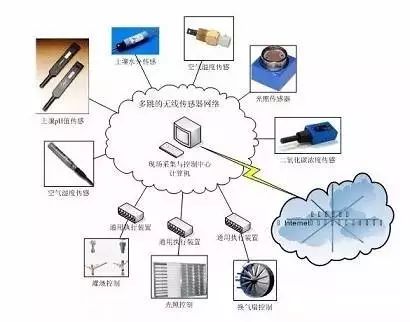
Typical Structure of Wireless Sensor Network Systems
The typical structure of wireless sensor network systems for remote monitoring, implemented using a homogeneous network, consists of four main hardware components: sensor nodes, aggregation nodes, server-side PCs, and client-side PCs. The functions of each component are as follows.
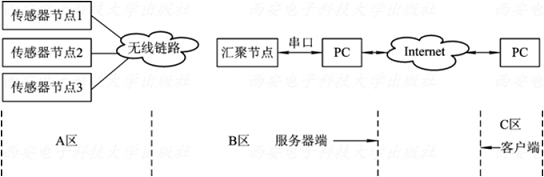
Figure 1: Structure Diagram of Remote Monitoring Wireless Sensor Network System
Sensor Nodes
Deployed in the monitoring area (Area A), the sensor nodes form a wireless network through self-organization. The data monitored by the sensor nodes is wirelessly transmitted in a multi-hop manner, reaching the aggregation node (Area B) after several hops.
Aggregation Node
This is a network coordinator responsible for building the wireless network and transmitting the information and data received from the sensor nodes via SCI (Serial Communication Interface) to the server-side PC.
Server-Side PC
This is a management node located in Area B and also serves as an independent Internet gateway node. On the LabVIEW software platform, there are two software components: one is the software platform VI for monitoring and managing the wireless sensor network, which is a virtual instrument VI for monitoring the wireless sensor network; the second is the Web Server software module and Remote Panel technology, which can connect the sensor wireless network to the Internet.
Client-Side PC
No software design is required on the client-side PC; the front panel of the server PC’s wireless sensor network monitoring virtual instrument can be called up in the browser, enabling remote monitoring and management of the sensor wireless network (Area A) from a remote location (Area C).
Sensor Nodes in Wireless Sensor Networks
1. Sensors and Conditioning Circuits
Sensors should be selected based on the environmental characteristics of the area where the wireless sensor network is located, to meet special requirements such as environmental temperature range and size. The conditioning circuits connected to the sensors convert the output variations from the sensors into voltage signals compatible with A/D converters, typically 0~2.5 V or 0~5 V. When in areas without grid power supply, both the sensors and their conditioning circuits should be low-power.
2. Data Acquisition, A/D Converters, and Microprocessor SystemsThe computer system in the sensor node is a low-power single-chip microprocessor system, capable of operating under harsh conditions in remote areas far from the testing center. For example, the MSP430-F149A ultra-low-power mixed-signal processor produced by Texas Instruments (TI) has an internal sample/hold circuit and a 12-bit A/D converter, capable of sampling, converting signals, and controlling the entire node system’s instructions and data processing.
3. RF ModuleThe RF module receives external wireless commands and wirelessly transmits the measurement data detected by the sensor, such as TI’s CC2420 wireless transceiver chip.
4. Power SupplyPower supply for sensor nodes in wireless sensor networks is a highly specialized technical issue currently under research. If nodes are located in remote areas away from the power grid, battery power or wireless RF power supply methods are generally used.
Aggregation Nodes in Wireless Sensor Networks
The aggregation node in the wireless sensor network shown in Figure 1 acts as a network coordinator, operating the panel controls of the monitoring management software platform on the PC, responsible for configuring and building the wireless sensor network, and transmitting the data received from the sensor nodes to the PC. Typically, the coordinator consists of four main components: a microprocessor system, an RF module, a communication interface, and a power supply, as shown in the hardware composition diagram.
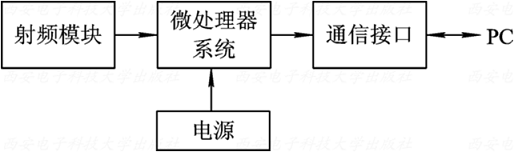
Hardware Composition Diagram of Wireless Network Coordinator
1. Communication InterfaceThe communication interface in the coordinator is responsible for communication with the PC. On one hand, when the corresponding controls on the wireless sensor network monitoring platform VI front panel of the operating PC are activated, the communication interface transmits the corresponding commands, such as network retrieval, data sending, etc.; on the other hand, when the coordinator receives data information wirelessly sent from the sensor nodes, it also uploads this information to the PC through the communication interface.
2. Microprocessor SystemThe microprocessor in the coordinator is the main controller of the entire wireless sensor network, serving as the core of the coordinator.
3. RF ModuleThis RF module receives the data information wirelessly sent by the sensor nodes and uploads it to the PC via the communication interface; on the other hand, it issues operational commands to the sensor nodes via wireless transmission.
Wireless Sensor Network Communication Protocol
Currently, the IEEE 802.15 working group for wireless personal area networks has completed the formulation of the following standards:
Medium-speed wireless personal area network standard IEEE 802.15.1 – Bluetooth;
High-speed wireless personal area network standard IEEE 802.15.3 – Ultra Wideband (UWB);
Low-speed wireless personal area network standard IEEE 802.15.4. The low-speed wireless personal area network primarily provides simple, low-cost network connections for wireless applications with limited power capabilities and lower throughput requirements, with the main goal of constructing a short-range wireless communication network that is easy to install, has reliable data transmission, extremely low device cost, and low energy consumption.
The low-speed wireless personal area network meets the requirements of wireless sensor networks regarding low energy consumption, low cost, universality, network topology, security, real-time capabilities, and data-centricity; therefore, the physical layer and MAC layer protocols of the wireless sensor networks currently under research and application often adopt the IEEE 802.15.4 standard.
The network layer protocols based on the IEEE 802.15.4 standard primarily include the ZigBee protocol stack proposed by the ZigBee Alliance established in September 2001 and the embedded micro-IPv6 protocol stack suitable for wireless sensor network nodes. Among them, the ZigBee protocol has gained widespread research and application due to its low cost and compatibility of products from different manufacturers.
Interconnection of Wireless Sensor Networks and the Internet
Homogeneous networks introduce one or more wireless sensor network nodes as independent gateway nodes to connect to the internet, placing the interface for the internet standard IP protocol at the gateway node outside the wireless sensor network. This approach aligns well with the data flow patterns of wireless sensor networks, making management easier, and does not require significant adjustments to the wireless sensor network itself; however, it may lead to rapid energy depletion of nodes near the gateway and could cause a certain degree of information redundancy.
The characteristics of heterogeneous networks are: some high-energy nodes are assigned IP addresses to serve as interfaces to the internet standard IP protocol. These high-capacity nodes can complete complex tasks and bear more loads, but the difficulty lies in the inability to clearly define what constitutes a “high capability” node. Additionally, enabling communication between IP nodes through other ordinary nodes is also a technical challenge.
Characteristics and Advantages of WSN Wireless Sensor Networks
WSN should not be simply understood as a network formed by multiple sensor nodes using wireless communication; it has its own characteristics and advantages.
1. Large Network Scale (Many Nodes)
For example, monitoring forest and grassland fire prevention, wildlife activity, and environmental monitoring often requires deploying a large number of wireless sensor nodes, covering an area far exceeding that of a typical local area network.
The advantages of deploying a large number of wireless sensor nodes include:
(1) Improved overall monitoring accuracy
(2) Reduced precision requirements for individual nodes
(3) The presence of numerous redundant nodes provides strong fault tolerance for the system.
2. Self-Organizing Network
Unlike the layout of local networks, the positions of wireless sensor nodes cannot be predetermined (aircraft scattering, random deployment by personnel), and the neighbor relationships between nodes cannot be established in advance.
This requires wireless sensor nodes to have self-organizing capabilities, enabling automatic configuration management. The method for achieving this is through topology control mechanisms and network routing protocols that automatically form a multi-hop wireless network system capable of forwarding data.
3. Dynamic Network
The topology of wireless sensor networks frequently changes. Reasons include:
(1) Passive changes: sensor nodes running out of power; environmental changes causing communication failures; sensor nodes themselves experiencing failures.
(2) Active changes: adding new nodes; changes made based on routing algorithm optimizations.
4. Strong Reliability
(1) The hardware structure of sensor nodes is reliable
During deployment: may be scattered by aircraft or randomly by personnel
During operation: affected by wind, sunlight, rain, extreme cold, and heat.
Maintenance: very difficult (almost impossible).
(2) Reliable network structure
Self-organizing and dynamic characteristics ensure basic information transmission remains normal.
(3) Software reliability
(4) Strong information confidentiality
5. Data-Centric
In the internet, terminals, hosts, routers, servers, and other devices all have their own IP addresses. To access resources on the internet, one must first know the IP address of the server storing the resources. Thus, the internet is an address-centric network, while the wireless sensor network is a task-oriented network.
In WSN, although nodes also have numbers, whether these numbers are unified throughout the entire WSN depends on specific needs. Additionally, there is no inherent link between node numbering and node location. When users query events using WSN, they report the events of interest to the entire network rather than to a specific node. Often, the focus is on how the result data is generated rather than which node produced the data.
WSN employs micro sensor nodes to collect information, with each node possessing self-organizing and collaborative working capabilities. The network utilizes wireless multi-hop communication methods, presenting the following advantages over traditional sensor networks (SN):
1. High Precision: Achieving dense spatial sampling and close-range monitoring that a single sensor cannot accomplish.
2. High Flexibility: Once deployed, no human intervention is required.
3. High Reliability: Can avoid single point failure issues.
4. High Cost-Effectiveness: Reducing wired transmission costs, with sensor costs decreasing as technology advances.
Application Areas of WSN
Due to the uniqueness of WSN, its application areas significantly differ from those of ordinary networks, primarily including the following categories:
(1) Military Applications
WSN can be rapidly deployed, self-organizing, covert, and highly fault-tolerant, making it widely applicable on the battlefield.
Includes: monitoring enemy troop movements and weaponry, real-time battlefield surveillance, target location and locking, and battle outcome assessment, etc.
(2) Emergency and Temporary Situations
After being struck by natural disasters, fixed communication network facilities may be completely destroyed or unable to function normally. In remote or isolated outdoor areas, or nature reserves where vegetation cannot be damaged, fixed or preset network equipment cannot be used for communication. These situations can be addressed by utilizing the rapid deployment and self-organizing features of WSN.
(3) Environmental Monitoring
For instance: monitoring irrigation in farmland, soil composition analysis, environmental pollution monitoring, forest fire alarms, water condition monitoring, temperature monitoring, and data collection of illumination time, among many other scenarios.
(4) Medical Care
Includes: collecting physiological data from patients, managing medical equipment, distributing medications, and tracking and locating key personnel, etc.
(5) Smart Homes
Embedding sensor nodes within household appliances and connecting them to the internet can provide a more comfortable, convenient, and user-friendly home environment.
(6) Factory Monitoring
For example: chemical, petroleum, power, mechanical processing, textile dyeing, etc., industries can easily implement monitoring using WSN technology.
Problems and Research Hotspots in WSN Applications
In the design and application process of wireless sensor networks, several foundational technologies are crucial for enabling sensor networks to perform tasks; resolving these key technologies is essential for ensuring the normal operation of network user functions.
(1) Network Protocols
In the study of network protocols for wireless sensor networks, MAC protocols and routing protocols are the focal points.
Commonly used MAC protocols include: IEEE802.15.4, S-MAC, and T-MAC protocols; routing protocols include: SPIN, DO, GEM, LEACH, and others.
(2) Time Synchronization
In WSN, sensor nodes typically need to collaborate to complete complex detection and perception tasks, which requires maintaining time consistency among nodes to facilitate time-related operations; some energy-saving schemes in WSN are also implemented through time synchronization.
Currently, the more mature time synchronization protocols applied in WSN include RBS (Reference Broadcast Synchronization), Tiny/mini-Sync (Micro/Mini Synchronization), and TPSN (Time Synchronization Protocol for Sensor Networks).
(3) Localization Technology
In WSN, the detection data obtained by sensor nodes is generally associated with location; users are interested in knowing from which location the received data is sent. In some applications, it is necessary to coordinate sensors at different spatial locations to achieve measurement functions. Therefore, localization technology in WSN includes both node self-localization and target localization.
Localization technology can utilize existing GPS and other positioning technologies or adopt suitable and effective positioning algorithms based on the characteristics of WSN. Currently, main algorithms include DV2hop, location distribution algorithms, DV2distance algorithms, etc.
(4) Data Fusion
Due to the various limitations of WSN, there is a demand for fusion processing of monitoring data to meet user needs, saving communication bandwidth and energy, and improving information collection efficiency; from an energy consumption perspective, communication energy consumption between nodes is much higher than that of computational processing.
Currently, there are many methods for data fusion, commonly used methods include averaging, Kalman filtering, Bayesian methods, neural networks, statistical decision theory, fuzzy logic, production rules, and D-S evidence theory.
(5) Energy Management
Charging and replacing batteries for nodes in WSN is challenging. Therefore, when designing, it is essential to focus on efficient and practical energy use of nodes, making energy management an important research topic in WSN.
Currently, the main energy management strategies include sleep mechanisms, data fusion, etc., primarily applied in computing, storage units, and communication units. Sleep mechanisms can be implemented through various measures such as corresponding hardware chips, network protocol coordination, dynamic power management, and dynamic voltage scheduling.
(6) Security Management
In WSN, security management primarily manifests in two aspects: communication security and information security. Communication security mainly concerns the safety of nodes, passive resistance to intrusion, and active countermeasures against invasions, while information security mainly focuses on data confidentiality, data authentication, data integrity, and timeliness.
Currently, the research content of WSN security mainly includes: a) efficient encryption algorithms at the physical layer, anti-interference through spread spectrum, etc.; b) secure MAC protocols at the data link layer; c) secure routing protocols at the network layer; d) key management and secure multicast at the application layer. Currently, dedicated security protocols in WSN include: SNEP (Secure Network Encryption Protocol) and uTESLA (micro-Timed Efficient Stream Loss-tolerant Authentication Protocol).
Wireless sensor networks are one of the current research hotspots in the information field, capable of signal acquisition, processing, and transmission in special environments. Wireless sensor networks represent a novel information acquisition and processing technology, increasingly applied in real life. At present, as a new technology for obtaining and processing information, wireless sensor networks are undergoing extensive research. With the development of communication technology, embedded technology, and sensor technology, sensors are gradually evolving towards intelligence, miniaturization, and wireless networking.
– END –
The future of manufacturing is intelligent, and the foundation of intelligence is sensors; the direction of the internet is the Internet of Things, and the cornerstone of the Internet of Things is also sensors;
The “Sensor Technology” compilation includes a set of basic knowledge of various sensors, introducing the principles of various sensors.
[ClickBlue Title to access the article]
1, Understand MEMS Sensors in One Article
2, Understand Proximity Sensors in One Article
3, Understand Magnetic Sensors in One Article
4, Understand Flow Sensors in One Article
5, Understand Pressure Sensors’ Principles and Classifications in One Article
6, Understand Acceleration Sensors in One Article
7, Understand Ultrasonic Sensors in One Article
8, Understand Displacement Sensors in One Article
9, Understand Photoelectric Sensors in One Article
10, Understand Optical Fiber Sensors in One Article
11, Understand Temperature and Humidity Sensors in One Article
12, Understand Image Sensors in One Article
13, Understand Biosensors in One Article
14, Understand Hall Sensors in One Article
15, Understand Distance Sensors in One Article
16, Understand Oxygen Sensors in One Article
17, Understand Wind Direction and Speed Sensors in One Article
18, Understand Nano Sensors in One Article
19, Understand Infrared Sensors in One Article
20, Understand Infrared Sensors and Thermal Imaging in One Article
21, Understand Gas Sensors in One Article
23, Today’s Talk on Automotive Sensors
24, Understand Mobile Phone Sensors in One Article
25, Understand Medical Sensors in One Article
26, Understand Chemical Sensors in One Article
27, Understand Angular Velocity Sensors (Gyroscopes) in One Article
28, Understand Transducers in One Article
29, Understand Rotary Encoders in One Article
30, Understand Gearboxes in One Article
31, Understand Vibration Sensors in One Article
32, Understand Capacitive Sensors in One Article
33, Understand Eddy Current Sensors in One Article
34, Understand Inductive Sensors in One Article
35, Understand Grating Sensors in One Article
36, Understand Piezoelectric Sensors in One Article
37, Understand Smoke Sensors in One Article
38, Understand Resistive Sensors in One Article
39, Detailed Explanation of Wireless Network Sensors
40, Current Status and Major Manufacturers of MEMS Sensors
41, Current Status and Major Manufacturers of Image Sensors
42, Current Status and Major Manufacturers of Gas Sensors
43, Current Status and Major Manufacturers of Fingerprint Sensors
44, Current Status and Major Manufacturers of Automotive MEMS Sensors

To publish your products, please click “Read Original”