▲Click “Three Points Design“Follow, reply “Community“Join Us
Welcome to the professional designer learning and exchange community
Three Points Design | Connecting Knowledge, Helping 100 Million Designers Grow Worldwide
Source: Alibaba Design
Editor: Zhang Chengyu
Total 2649 words, estimated reading time 7 minutes
The design types involved in the IoT field cover software design, hardware design, and service design. As the design team of Alibaba’s IoT division, how do we establish a user experience monitoring system that meets business needs? How do we improve the efficiency of user experience collection? How do we effectively close the loop between user experience and business value? In this article, we will share our experience in user research: how to create an “Experience Sensor Network” for IoT products.
01 What Are the Challenges of Experience Monitoring for IoT Products?
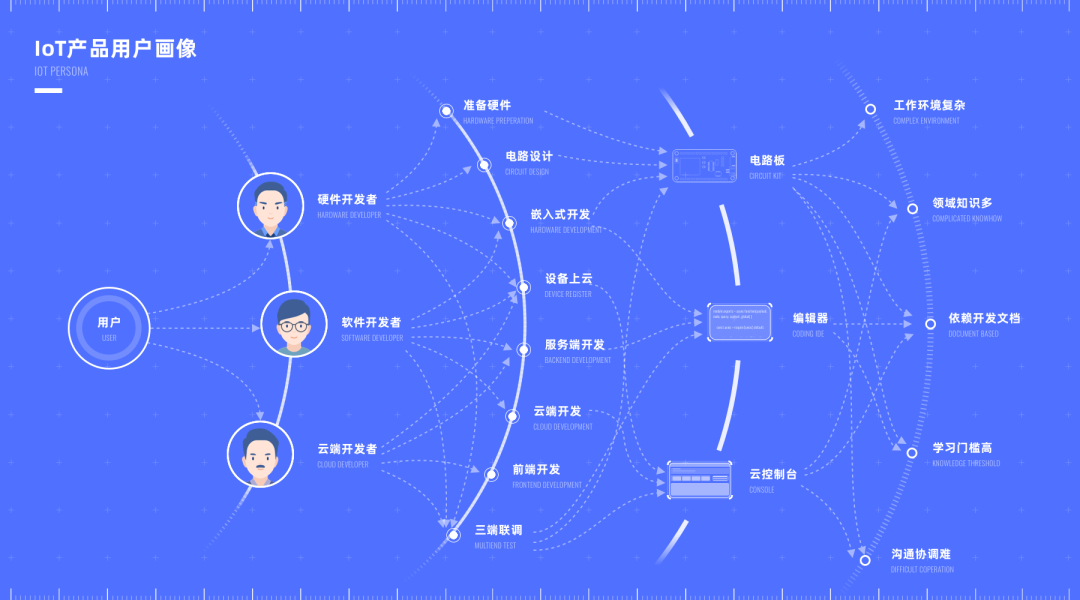
Traditional IoT development requires three steps: hardware development, software development, and cloud deployment. This requires at least three technology stacks and a development process lasting more than three months. The long chain and multi-role nature of this business can lead to several challenges in experience monitoring:
-
Many Offline Steps: Most products in the IoT division have “broken chains” in their usage links, making it impossible to fully complete online tracking;
-
High Learning Threshold: Most users require a long learning path, and the products are highly specialized;
-
New Industry Models: The overall industry is in its early stages, and products do not necessarily have fixed user paths.
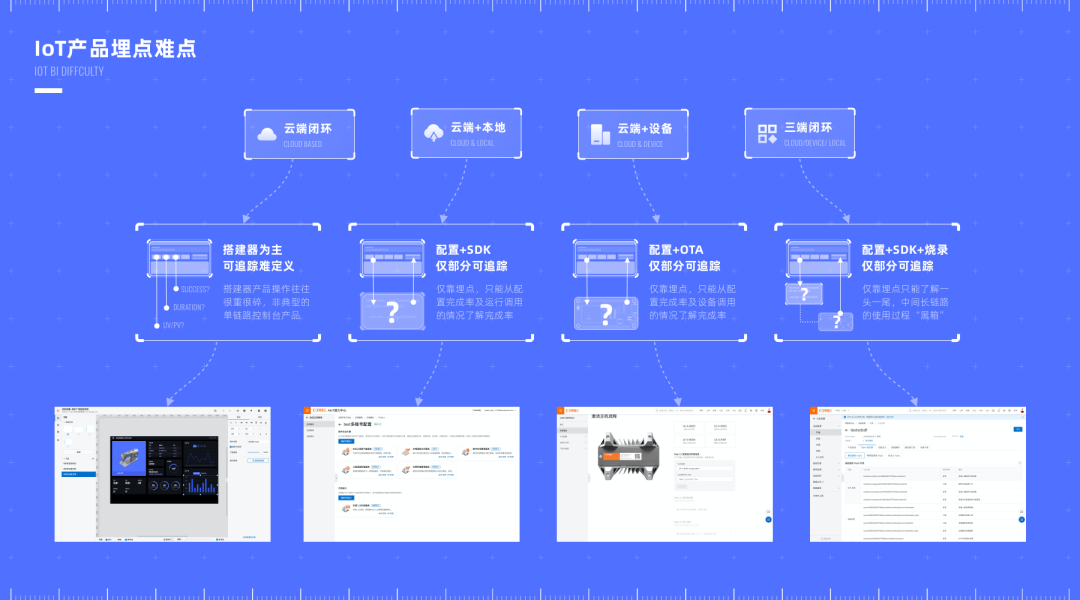
 In the past, most experience monitoring systems were built on fully online product processes, single-role short links, and stable usage paths, using research based on Google’s HEART model and constructing systems centered on front-end data points and back-end data. However, in the context of IoT business characteristics, in addition to these classic construction methods, we need to expand the types of feedback collected and broaden the channels for user collection.02 Building an “Experience Sensor Network”Faced with the IoT division’s matrix of over 100 products under “cloud management, edge, and end usage”, how do we lay out our experience monitoring system?Research analysis commonly uses quantitative data points, but different types of IoT products make quantitative data point methods not particularly applicable. We categorize the issues of data points based on the operational environment of IoT technology products:
-
Cloud Closed Loop: Using an Alibaba Cloud account in the browser can complete the overall usage link, generally for workstation-type products. User operations are entirely on the cloud, and certain data can be obtained through data points. However, workstation-type products often have heavy and fragmented operations, not typical single-link console products;
-
Cloud + Local: After completing configuration in the browser, secondary development is done in the local environment. The cloud portion of such products is mainly based on console configuration. Relying solely on data points can only provide insights into task completion rates and the final execution calls;
-
Cloud + Device End: After completing configuration in the browser, the cloud directly sends commands to the IoT device end. This is also a characteristic usage path of IoT products. Data points can also provide insights into task completion rates from the cloud and device calls, while the intermediate long link usage process becomes a “black box”;
-
Cloud + Local + Device End: After completing configuration in the browser, the SDK is downloaded to the local environment for secondary development, and finally burned into the IoT device end. This is the most typical usage path for IoT products. Data points can only provide insights from one end to the other—namely, the task completion rate from the cloud and device calls, while errors occurring in the intermediate “black box” are difficult to locate.
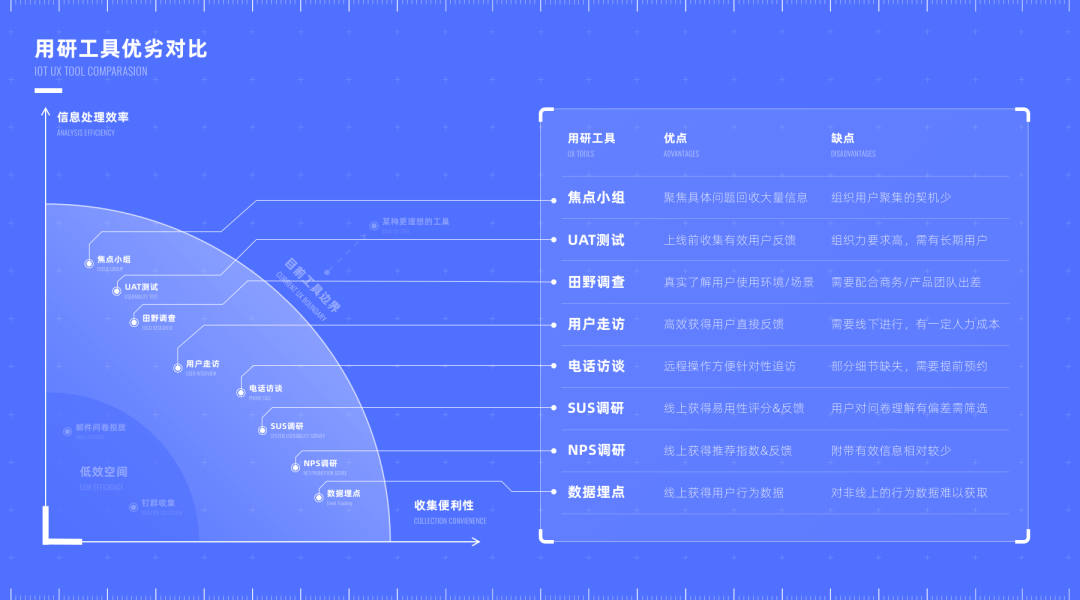
 Combining the business characteristics mentioned above, we have tried various research methods and corresponding research tools over the years, including data points, user visits, focus groups, and questionnaire surveys, and have developed a standard operating procedure (SOP) for the use of over 10 research tools. We compared the advantages and disadvantages of various tools and their investment returns as shown in the figure below.
 Finally, we chose to use tools like XSurvey/Uone for certain operations that can be online, completing plugin-based light interference deployment. For offline issues, we collaborated with the operations team to collect data through questionnaires/interviews/DingTalk group robots/tickets. This formed an IoT-specific experience sensor network that continuously collects experience data.For example, with XSurvey, previous research on the experience of builders could only obtain relatively effective information through offline workshops and user visits. We used XSurvey to shift the offline “manual” research part to online “automated” research. At the same time, we set conditional triggers to ensure that only the opinions of users who completed the “exploration” phase were collected, improving the quality of feedback. Compared to before, this not only reduced labor input by 90% but also increased the effective sample rate by 30%.
 These experience data became the foundation of our experience monthly reports/special reports. The experience monthly report includes user feedback, usability experience data, core conversion metrics, etc., used to form a fixed monthly summary.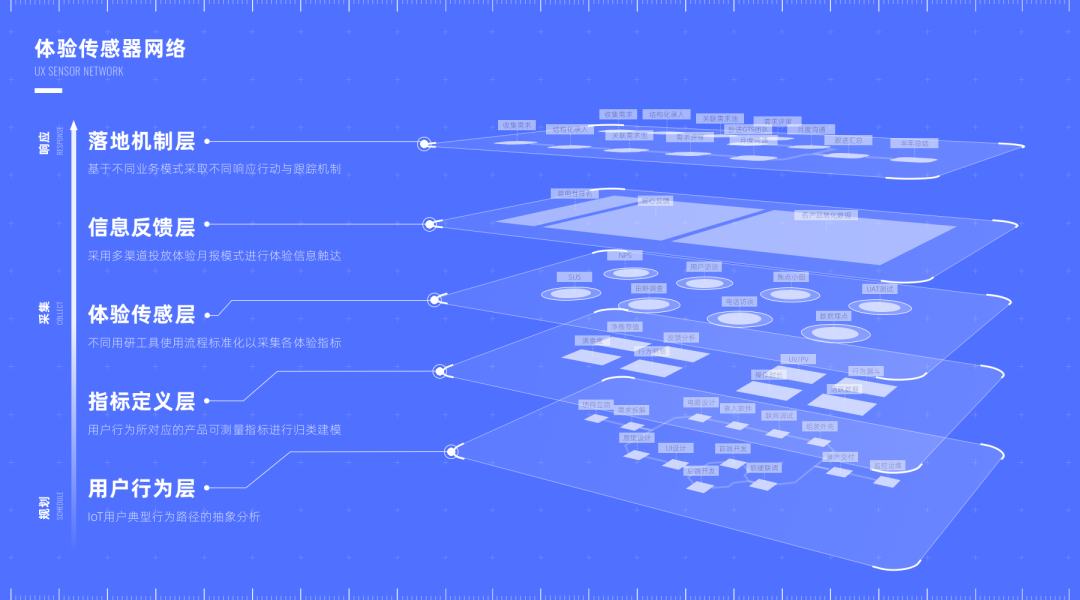
03 Tool-based Empowerment of Experience Value Closure
After completing the collection of experience data and the experience monthly report, in order to ensure that experience information can better influence business, we formed a Reach – Response – Tracking experience information flow closure through multiple rounds of collaboration.In the operation of a mechanism, in addition to the rationality and effectiveness of its design, the maintenance cost of the mechanism is also very important. To reduce everyone’s burden, we used a tool-based approach to ensure the mechanism can operate quickly and efficiently.
-
Reach: Using a low-code builder IoT Studio to build the experience monthly report, completing automated generation. Key experience information is regularly pushed to the group via DingTalk robots;
-
Response: Empowering business parties with professional experience insight tools to tackle core issues;
-
Tracking: Discussing cooperation with Alibaba Cloud’s major customer experience team, using the same pool for tracking, avoiding separate battles between experience design and customer service teams, achieving convergence.
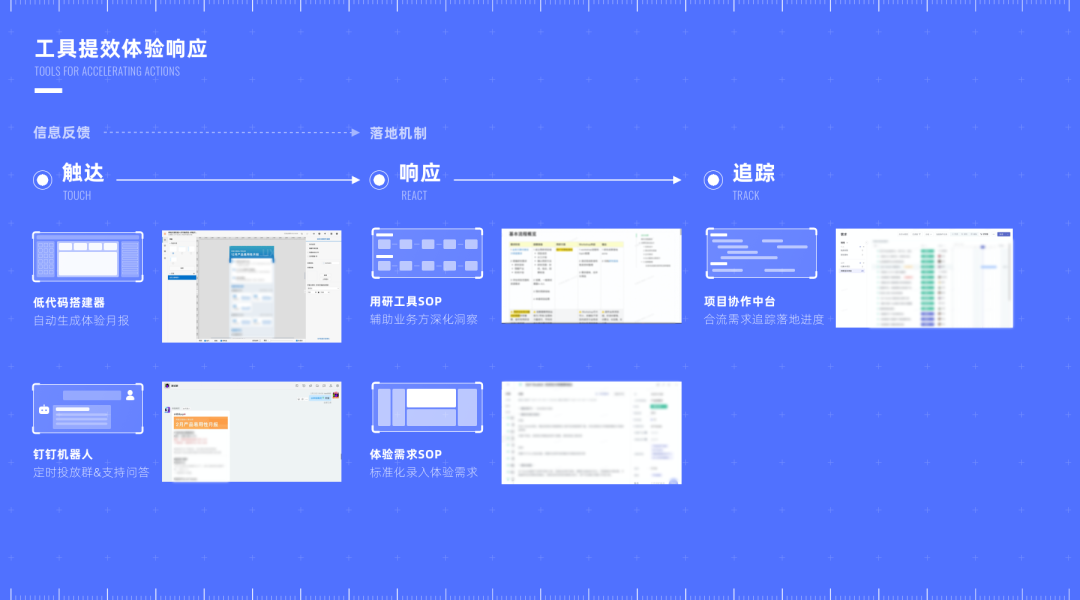 The tool-based approach reduced the maintenance cost of the experience mechanism by about 50%. At the same time, it doubled the reach rate of experience information and achieved cross-departmental reach and response. The implementation rate of experience needs reached 100%.Taking the low-code IoT application building tool IoT Studio as an example, after the launch of the conditional questionnaire automated collection tool, we collected user feedback and found that many users lacked the ability to develop mobile applications, but their business required rapid development of mobile applications. Based on this feedback, we conducted in-depth follow-ups with core users, forming a complete research report that greatly accelerated the priority of launching the new version of the mobile workstation. After the workstation was launched, it received widespread user approval, with 60% of active users using the new version of the mobile workstation, becoming one of the key features of IoT Studio.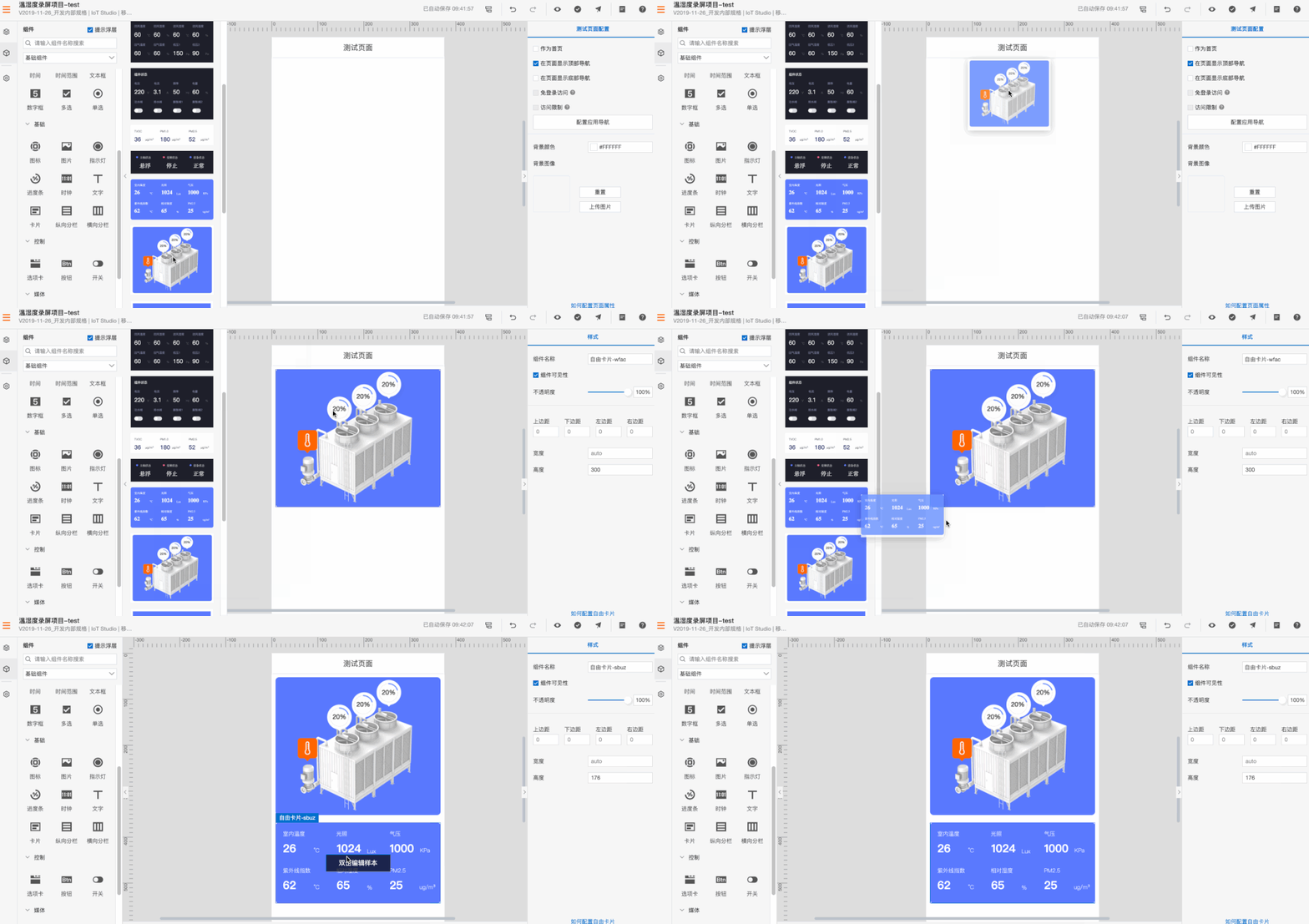
04 Conclusion
There are various indicator systems and research tools in the industry, but they all aim to promote the landing of experience value in business. We should choose appropriate research tools based on our own business characteristics to complete the value closure of experience monitoring, ultimately delivering valuable user feedback to the business side. Knowing is easy, doing is hard, let’s work together!
Recommended Courses
Building Methods for Huawei User Experience Design System How do products with over 1 billion users achieve user experience? Uncovering User Experience Design Strategies of Major Companies like Didi and NIORecommended Original ArticlesTen Tips to Help You Design an Online Learning APPHow to Prioritize Products? Master 5 Useful Prioritization FrameworksAnalysis of the New Spotify Social Feature ConstructionWeb Vitals – Google’s Next Generation Web Performance Experience and Quality MetricsAn APP That Brings You an Unforgettable ExperienceHow to Create a Portfolio That Impresses Interviewers, Here’s a Complete GuidePaying Tribute to Benchmarks: 7 Design Principles for Mobile User ExperienceWelcome everyone to follow Three Points Design, sharing high-quality design, creative inspiration, and new knowledge every day, with regular live sessions from industry experts for close interaction and Q&A.