
PCB manufacturing is rapidly evolving, driven by factors such as miniaturization, stringent reliability requirements, and increasing pressure for sustainable production.
Addressing these challenges requires not only incremental improvements but also a combination of sophisticated equipment and real-time process intelligence.
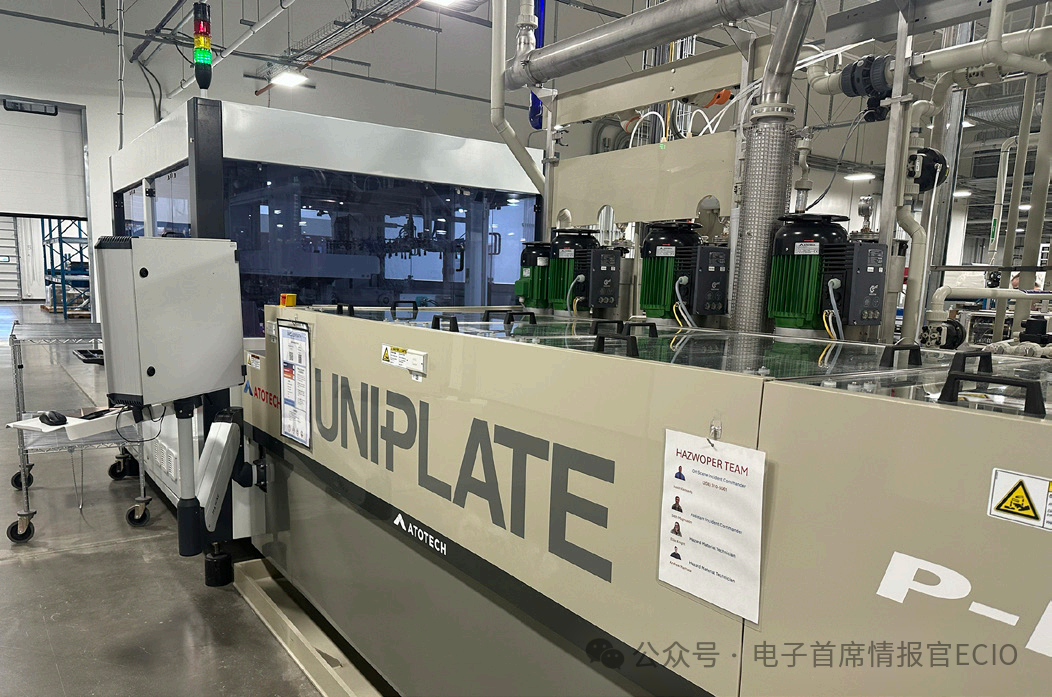
The integration of Uniplate® PLBCu6 with the Digital Factory Suite (DFS) demonstrates how hardware and software can work together to achieve more responsive and resource-efficient manufacturing.
Authors
Giovanni Obino is the Senior Director of Industrial Digital Solutions at MKS’Atotech;
Andreas Schatz is the Global Product Manager for Electronic Equipment at MKS’Atotech.


Giovanni Obino
Andreas Schatz

Increasing Complexity and Sustainability Pressures
Modern PCB and HDI manufacturing features finer design characteristics, stricter tolerances, and complex layer structures, pushing the boundaries of technology.
At the same time, environmental regulations compel manufacturers to reduce chemical usage, manage waste, and minimize energy consumption.
Many traditional automation systems, relying on programmable logic controllers and disjointed MES platforms, were not designed to cope with this level of adaptability. They lack real-time responsiveness and closed-loop control, failing to fully realize performance improvements and efficiency gains.
A more interconnected approach—combining precision plating processes with intelligent digital monitoring—provides a pathway to overcome these challenges.
The above is an advertisement and is not related to the main content.

Precision Online Metallization
Uniplate PLBCu6 is designed for high-density, high-reliability PCB production, utilizing modified semi-additive processes (mSAP).
It operates a fully online process, seamlessly transferring panels from the de-drilling treatment directly to flash plating. This design reduces manual handling, minimizes contamination risks, and maintains consistent production efficiency.
Its transport system supports ultra-thin panels, which are critical for next-generation fine line designs.
A well-designed liquid delivery system ensures uniform treatment of surfaces, through-holes, and blind vias, while advanced filtration and cleaning mechanisms minimize particle accumulation.
Inert segmented anode design effectively prevents sludge formation and maintains stable copper replenishment. The Oxamat® regeneration process sustains continuous decontamination performance, while the built-in electrolyte monitoring system ensures uniform plating while reducing unnecessary chemical and water consumption.
By combining these elements, batch production becomes more stable and resource-efficient.

The Role of Digital Intelligence
DFS is based on the capabilities of Uniplate equipment and transforms it into an interconnected, data-driven system. DFS not only relies on fixed process settings but also continuously collects and analyzes data from the production line, including flow rates, pump speeds, and chemical concentrations.
This information allows for dynamic adjustments to the system, helping to maintain consistent quality without manual intervention.
Predictive maintenance is another benefit. By identifying early signs of wear or deviation, DFS can intervene before issues lead to downtime.

Energy optimization programs can reduce power consumption during the plating process, while remote diagnostics can provide faster troubleshooting without needing to be on-site.
All process data will be digitally recorded to support audits, traceability, and integration with more advanced MES or ERP systems.

Closed-Loop Approach
When Uniplate and DFS operate together, they form a closed-loop manufacturing environment.
Process parameters can be adjusted in real-time to stay within technical specifications, dynamically optimizing chemical dosing and rinsing, and enabling earlier detection of potential issues.
This synergy can improve yield, reduce resource usage, and simplify scaling production across multiple lines or plants.

On-Site Deployment Results
Manufacturers implementing DFS alongside Uniplate equipment report significant improvements. Energy consumption during the plating process has been reduced by up to 15%.
The time required for troubleshooting and root cause analysis has been greatly reduced, and condition-based maintenance has decreased unplanned downtime.
These results showcase the benefits of combining proven equipment technology with intelligent data systems.

Adapting to Changing Demands
Both Uniplate PLBCu6 and DFS feature a modular design that can be configured to meet varying production needs.
Optional controls for pH, conductivity, and consumption monitoring can be added, and batch automation can be enhanced through barcode-driven processes.
This flexibility allows manufacturers to incrementally improve and evolve their systems as new demands and sustainability standards arise.

Conclusion
The integration of Uniplate PLBCu6 with the Digital Factory Suite demonstrates that PCB manufacturing is moving towards greater precision, higher efficiency, and stricter environmental responsibility.
By combining reliable metallization technology with intelligent, data-driven monitoring, production lines can meet the increasing complexity demands while reducing waste and energy consumption.
This approach provides manufacturers with a practical pathway to achieve consistent, scalable, and sustainable PCB production.



The above is a collaboration partner of the Chief Electronic Officer(partial)
Order does not imply priority.