A Brief Chronology of 3D Printing
Author:
Geng ChenGraduated from the School of Optoelectronics, Beijing Institute of Technology in 2011 with a Bachelor of Engineering; graduated in 2014 with a Master’s degree. Currently works at the Medical Imaging Technology Research Room of the Suzhou Institute of Biomedical Engineering and Technology, Chinese Academy of Sciences, mainly engaged in remote medical systems and three-dimensional analysis of medical images.
Printing: From Recording to Creation
Printing technology
is an important invention for humanity to record this world.
From woodblock printing in 200 AD

to movable type printing recorded in history
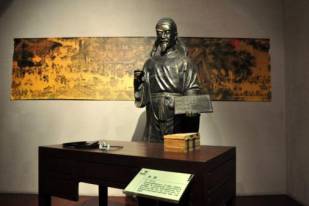
then to offset printing
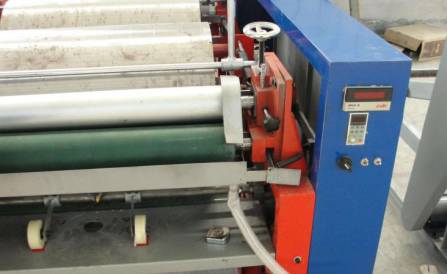
and electrostatic copying
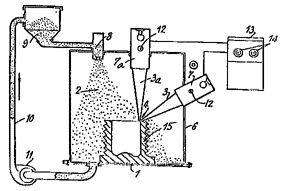
up to the most common laser printing today
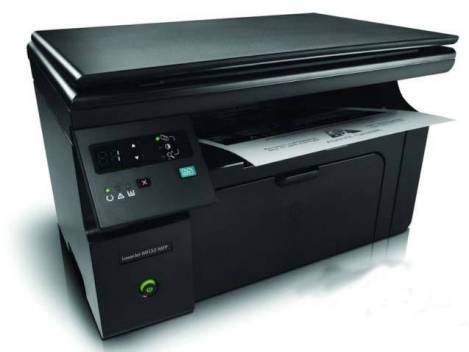
Humanity is increasingly clearly recording the world and history through technology. In the 1980s, a new technology emerged, but even its inventors at the time likely did not realize that this invention would give printing technology a meaning beyond mere recording for the first time.
This type of technology is what we now call 3D printing.
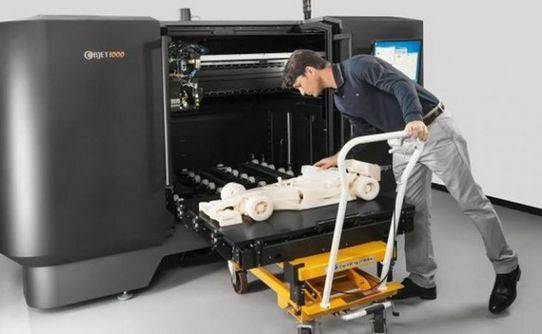
As a revolutionary technology, although it is hailed as the starting point of the third industrial revolution[1], for a long time after its invention, the terminology describing this technology was varied, such as Rapid Prototyping, Additive Manufacturing (AM), etc. Even today, one can still find more information on this type of technology through these keywords. This article intends to explore the reasons for the current situation.
If you have noticed, in the previous descriptions, 3D printing has always been referred to as “a type of technology”. Then you may somewhat understand the difficulty in defining this name at present. Unlike historical printing technologies, while all printing technologies undergo changes in specific devices and materials used as the technology progresses and materials are optimized, such as the laser in laser printing or the clay and wood used in movable type printing, various technologies ultimately use different materials based on the same principle for target production. Of course, 3D printing does not fall outside this category; however, the differences in the devices and materials it uses may far exceed those of its predecessors.
3D Printing Technology Principle
3D printing technology refers to a category of techniques that manufacture three-dimensional objects through layer-by-layer stacking under computer control. The earliest known technology related to 3D printing can be traced back to a patent applied for by Frenchman François Willème in 1860, related to a multi-camera physical sculpture. In this patent, multiple cameras surrounding the target object were used to capture images, obtaining a 360-degree view of the target, and then the sculptor created the sculpture based on the photographs obtained, resulting in a highly realistic sculptural effect. This method in the patent, although limited by the scientific and technological level of the time, ultimately adopted a manual method for producing results, yet the entire process reflected an advanced idea of capturing three-dimensional object features by manufacturing technicians (yes, we can consider sculptors as not just artists at that time). They recorded the first time an automated technology was introduced into the manufacturing process of three-dimensional objects, especially since this technology was an essential part of this manufacturing process. As science and technology developed and times changed, the vague concept of three-dimensional objects gradually took shape. In 1892, American Joseph E. Blanther applied for a patent for a method of making three-dimensional map models using a layered approach. He layered maps according to contour lines, using cutting wax disks for each layer’s flat surface, and then stacking these surfaces together to obtain a three-dimensional map model. This method has gradually approached the fundamental principles of modern 3D printing technology.
Figure 1 François Willème’s patent (front) and Blanther’s patent (back)
In 1935, 1940, 1964, and 1973, Morioka[5], Perera[6], Zang[7], and Gaskin[8] further optimized Blanther’s technology. Among them, Morioka proposed a method that combined Willème and Blanther’s methods, first using structured light to obtain the target’s outline, and then using cuttable materials for layer-by-layer cutting and stacking. Perera replaced the wax disk used in the original technology with cardboard; Zang further changed it to transparent and drawable sheets, while Gaskin proposed a geographical teaching device based on three-dimensional map models. During this exploratory phase of 3D printing technology principles, Japanese researchers and technicians also made direct and significant contributions. In 1972, Matsubara, who worked at Mitsubishi Motors, proposed mixing photosensitive resin with refractory particles, applying them in thin sheets, and using selective light exposure to cure some of them, then removing the uncured parts with solvent. These sheets could be bonded layer by layer to obtain a solid model. In 1979, Professor Nakagawa of the University of Tokyo invented the photopolymerization process, using ultraviolet light to cure photosensitive resin layer by layer and bond it together. With the movement of the manufacturing platform, a three-dimensional model was ultimately formed. Professor Nakagawa applied this process for physical manufacturing, including various stamping molds and injection molds, and during the research on the manufacturing method of injection molds, he proposed specific methods for optimizing the design and implementation of complex cooling channels in injection molds. On the other hand, in 1972, when Matsubara proposed the initial idea of photopolymerization, Ciraud proposed a method for producing three-dimensional objects using meltable particles, applying the meltable particles in a fixed shape onto a plane through gravity, magnetism, electrostatic adsorption, or a nozzle, and then using laser, electron beams, or plasma beams—precision heating methods available at the time—to melt and tightly adhere the particles together, forming bonding within the single layer of particles and also between adjacent layers, ultimately obtaining a three-dimensional model. Subsequently, in 1976, Dematteo studied the technology of using this method for complex machining and found it could be used to manufacture metal components that conventional machining processes found difficult to produce.
Figure 2 Ciraud’s method of making three-dimensional models using laser and metal powder
Looking at it from today’s perspective, it can be said that before 1980, technicians in Europe and Japan made significant contributions in selective laser sintering and photopolymerization forming, which also determined the future research directions for 3D printing in these two regions. At this time, 3D printing, although still far from the general public, was rapidly developing in the field of engineering technology. First, in 1982, Hideo Kojima of the Nagoya Institute of Technology and Herbert from 3M independently proposed several technologies for rapid manufacturing using photosensitive resin layer by layer. Among them, Kojima proposed three technologies, all using a hollow panel with ultraviolet light and photosensitive resin, adjusting the relationship between the light source, hollow panel, and manufacturing platform, and based on the different movement directions of the manufacturing platform, divided into three means for producing three-dimensional models. Herbert did not adopt the hollow panel method but used a computer-controlled movable fiber optic head to cure the liquid photosensitive polymer added layer by layer in a container. As the manufacturing platform gradually descended, the model was also produced layer by layer.
Figure 3 Three methods in Kojima’s patent (front) and Herbert’s method (back)
From the laboratory to the market took thirty years
Not long after Herbert proposed this technology, in 1984, Alain Le Méhauté, Olivier De Witte, and Jean Claude André applied for a patent for stereolithography, and just weeks later, Chuck Hull also applied for his stereolithography patent. However, the French commercial application was rejected by then French General Electric (now Alcatel-Lucent) and CILAS (Laser Consortium) on the grounds of “lack of commercial prospects”. For a long time afterward, the front line of 3D printing technology applications concentrated on the American market. With today’s perspective, it is hard to say whether the decision of French companies at the time was right or wrong, as the 3D printing market indeed did not flourish as it is today for a long time. Shifting the perspective to the United States, when Chuck Hull applied for his patent, he also made a prototype machine based on stereolithography technology and founded 3D Systems. Although many articles claim that Hull invented 3D printing technology, as previously explained, the principles of 3D printing were already essentially formed in the 1980s. Later technicians and researchers, including Hull, optimized engineering prototypes based on this principle. However, Hull’s contribution lies in the establishment of the STL file format used to describe 3D printed objects, which is still in use today and is one of the most common three-dimensional model data formats. At the same time, 3D Systems is also one of the giants in the field of 3D printing today.
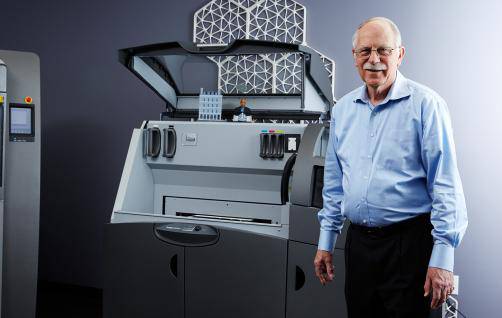
Figure 4 Chuck Hull and his stereolithography
Before the last decade of the 20th century, in 1989, the most representative technology in the 3D printing field appeared, FDM (fused deposition modeling), invented by S. Scott Crump. Although the FDM technology at that time was still crude, it laid the foundation for most of the 3D printers we see today. Perhaps sensing the market potential of this technology, S. Scott and his wife Lisa Crump founded Stratasys, which is also one of the giants in the field of 3D printing today. The inspiration for the FDM technology came from Crump’s process of making toys for his daughter using a glue gun, polyethylene, and wax. This application is still one of the best scenarios for FDM. After the establishment of these two giants, in 1991, just two years after Stratasys was founded, they launched the first 3D printer based on FDM technology, and in 1992, 3D Systems also launched the first industrial 3D printer based on stereolithography technology.
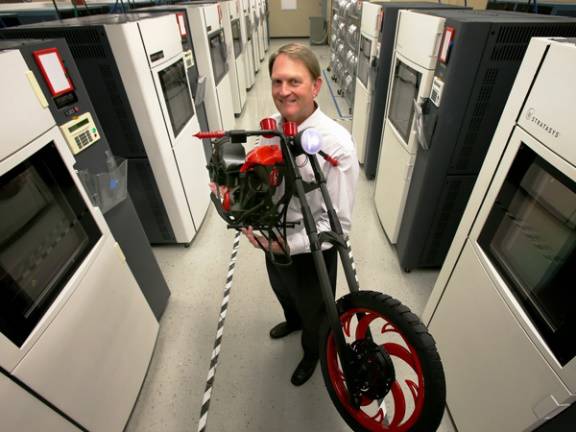
Figure 5 S. Scott Crump and his printing achievements
If you still remember the previous descriptions, you may wonder why the technology of using molten metal particles for complex part manufacturing that existed in the 1970s did not develop later? Things are not so simple. In the mid-1980s, Professor Carl Deckard and Professor Joe Beaman from the University of Texas at Austin, with funding from DARPA (Defense Advanced Research Projects Agency), invented Selective Laser Sintering (SLS) technology and founded DTM company. At this time, metal 3D printing technology had not yet formed a system, and several inventors or institutions independently developed technologies for metal 3D printing in the mid-1980s and early 1990s. In addition to the aforementioned SLS, there was also Selective Laser Melting technology invented by the Fraunhofer Institute in Germany around 1995.
As we entered the last decade of the 20th century, the field of 3D printing also welcomed the dawn of commercialization. In 1991, Helisys launched the first layered solid manufacturing (LOM) system, and in 1992, DTM launched its first selective laser sintering printer. In 1993, two senior students from MIT were inspired by traditional inkjet printers while making their graduation design and invented the 3DP technology by using nozzles to bond powder together to create three-dimensional models, founding Z Corporation in 1995. Although 3DP technology is not the only technology in the field of 3D printing, nor can it be said to be the most popular technology, it was indeed from this time that people gradually became accustomed to referring to such technologies as 3D printing.
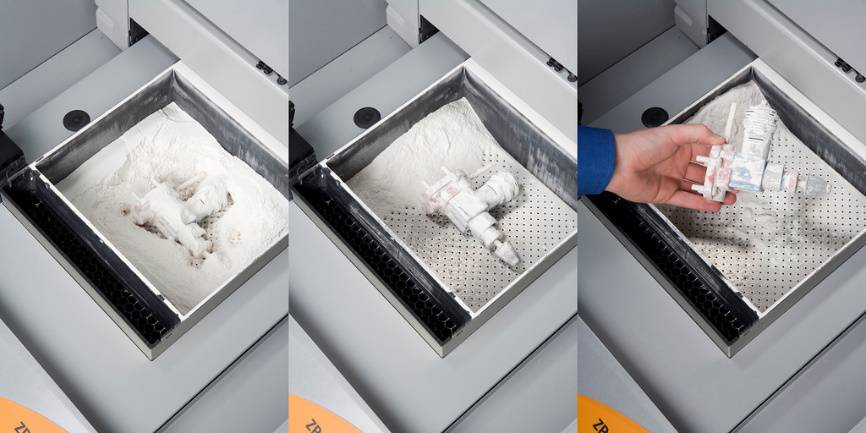
Figure 6 Z Corporation’s ZPrinter 650
In 1996, 3D Systems, Stratasys, and Z Corporation launched ACTUA 2100, Genisys, and Z402 respectively, and for the first time used the term “3D printer” in a product name. With the continuous launch of new products, this term eventually became synonymous with this type of technology. Entering the new century, Stratasys launched the ABS plastic 3D printer “Dimension” in 2002, using ABS plastic as printing material, which could print not only ordinary models but also automotive parts and even components in the aerospace and medical fields. In 2005, Z Corporation released the world’s first high-precision color 3D printer, the Spectrum Z510, which was a remarkable achievement. However, that year, another revolutionary event of great significance for the 3D printing field occurred. Hull, a 3D printer designed and made by Dr. Adrian Bowyer from the University of Bath, UK, was based on the principle of fused deposition modeling, melting ABS plastic or PLA (polylactic acid) materials and applying them with a nozzle in a predetermined shape on the manufacturing plane. The materials would harden and bond as they cooled, and layer by layer, a three-dimensional model could be obtained. Technically, Hull did not innovate much, but it was the world’s first open-source 3D printer. In fact, Hull can be seen as a complete 3D printing solution, including modeling software, drivers, and a complete set of open-source plans for the 3D printer, with corresponding software having respective open-source codes following the GNU General Public License (GPL). Hull’s obvious significance lies in making 3D printers accessible products for technicians, with low costs, ease of use, and high extensibility. Consequently, the domestic and international markets for 3D printing experienced unprecedented popularity, and the general public began to come into contact with 3D printers after Hull’s project was made public. This project perfectly achieved its original goal, “to let the printer continuously replicate itself.”

Figure 7 Hull Version 1 (Darwin)
Following this, there was also a shift in people’s perceptions. In 2007, the 3D printing service company Shapeways was officially established, providing users with a personalized product customization platform, allowing people to enjoy the convenience brought by 3D printing without needing to understand its complex technology. In 2008, Objet Geometries launched its revolutionary Connex500 rapid prototyping system, which was the first 3D printer in history capable of using several different printing materials simultaneously. Also in that year, a company in San Francisco, USA, for the first time customized all components of prosthetics for clients through 3D printing technology, opening a new application direction for 3D printing technology. In 2009, Bre Pettis led a team to establish the well-known desktop 3D printer company—Makerbot, which originated from Hull’s open-source project. Makerbot sells DIY kits that buyers can assemble themselves. In addition, Makerbot operates the world’s largest 3D printing community, Thingiverse, which has countless shared 3D models and many 3D printing plans from participants, thus fostering a booming personal 3D printer market.
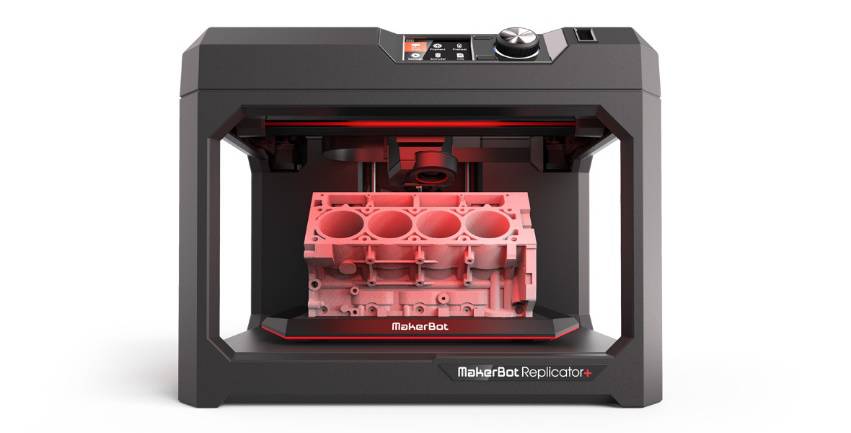
Figure 8 Makerbot Replicator+
Future Application Fields of 3D Printing
Since then, up to the present, the 3D printing market has been rapidly developing, with new printing achievements and printers emerging one after another, ranging from airplanes and cars to chocolate and precious metal jewelry, even to racing models less than 0.3mm in size. On the other hand, industry giants 3D Systems and Stratasys have become the two oligarchs in the industry through numerous acquisitions, together occupying 34% of the market share. The aforementioned Z Corporation was also acquired by 3D Systems in 2012. Globally, the major companies include 3D Systems (USA), Stratasys (USA), Exone (USA), EOS (Germany), Solido (Israel), Envisiontec (Germany), etc., which occupy 90% of the global market share. Without paying attention to the heated 3D printing market, the advancements made by researchers applying 3D printing technology in the biomedical field are also evident. In December 2010, Organovo, a regenerative medicine research company focusing on bioprinting technology, publicly released the first data resource for printing complete blood vessels using bioprinting technology. In 2012, Dutch doctors and engineers used a 3D printer made by Layerwise to print a custom jaw prosthesis, which was then implanted into an 83-year-old woman suffering from chronic bone infection. This technology is currently used to promote the growth of new bone tissue. In November of the same year, Scottish scientists used human cells for the first time to print artificial liver tissue with a 3D printer. In February 2014, researchers at Harvard University’s WYSS Institute, led by Jennifer A. Lewis, invented a new 3D printing method capable of printing tissues composed of multiple cells and extracellular matrices, rich in blood vessels. The team led by Adam W. Feinberg at Carnegie Mellon University used MRI images of coronary arteries and 3D images of embryonic hearts to print collagen, alginate, and fibrin-based materials into non-living arterial blood vessels, aiming to improve current cardiovascular disease treatment techniques. Slightly different from the above purposes for human repair or disease treatment, Professor Shaochen Chen at the University of California, San Diego, used induced pluripotent stem cells (iPSCs), induced adipose-derived stem cells, and umbilical vein endothelial cells to jointly print simulated livers for drug testing, significantly reducing the costs of drug development. Among the 3D printing achievements in the biomedical field, the most exciting numbers come from Anthony Atala’s team at Wake Forest University. They developed a new printing scheme (Itop bioprinter) capable of printing bones, muscles, cartilage, and other human tissues, with the printed tissues containing uniformly distributed small channels. Itop uses polycaprolactone as a printing matrix to ensure the orderly stacking of cells, and uses hydrogel structures as support to ensure the formation of cavities within the tissue. After transplantation and the cells achieve stable metabolism, the hydrogel structure is degraded, allowing the space created by the hydrogel to become a cavity for blood vessels to expand and develop, ensuring nutrient delivery between tissues. Atala’s team has already printed ears, bones, and other structures that can survive on mice, as well as a bladder that works normally in patients, and has printed a non-living prototype of a human kidney. In terms of bone repair, the team led by Gordon G. Wallace at the University of Wollongong in Australia explored from another perspective, developing a handheld 3D printing pen, 3Doodler, using a “bio-ink” of alginate and stem cells, applying it under UV light to cure, allowing stem cells to differentiate into nerve cells, muscle cells, and osteoblasts during proliferation for cartilage repair, with a reported cell survival rate of up to 97%.
From the initial vague concept of the three-dimensional features of objects to manual layer stacking, to photopolymerization, laser melting, powder bonding, fused deposition, or cell printing and vascular printing, in an era where material science and manufacturing technology are constantly reshaping people’s understanding, various 3D printers are continuously emerging, and their application scope is gradually involving all aspects of our research and life. As a technology with a relatively short history, 3D printing is currently in its vigorous period. Occasionally looking back at the people who contributed to it, it is not a long journey, but it is the culmination of many people’s hard work. Ideas from the last century, technologies from the last century, and the market of this century—actually, the journey of 3D printing has just begun.
References
[1] J. Rifkin, “A third industrial revolution,” The Economist, 2012-04-21.
[2] J. Excell, “The rise of additive manufacturing,” in the Engineer, ed.
[3] F. Willème, “Photo-sculpture,” ed: Google Patents, 1864.
[4] J. E. Blanther, “Manufacture of contour relief-maps,” ed: Google Patents, 1892.
[5] I. Morioka, “Process for manufacturing a relief by the aid of photography,” ed: Google Patents, 1935.
[6] V. P. Bamunuarchige, “Process of making relief maps,” ed: Google Patents, 1940.
[7] Z. E. E, “Vitavue relief model technique,” ed: Google Patents, 1964.
[8] G. T, “Earth science teaching device,” ed: Google Patents, 1973.
[9] F. B. Prinz, C. L. Atwood, R. F. Aubin, J. J. Beaman, R. L. Brown, P. S. Fussell, et al., “Rapid prototyping in Europe and Japan,” Center for Advanced Technology, vol. 102, 1997.
[10] C. R. Deckard, “Method and apparatus for producing parts by selective sintering,” ed: Google Patents, 1989.
[11] R. Jones, P. Haufe, E. Sells, P. Iravani, V. Olliver, C. Palmer, et al., “Hull–the replicating rapid prototyper,” Robotica, vol. 29, pp. 177-191, 2011.
[12] Wu Huaiyu, 3D Printing: Intelligent Digital Creation: Electronics Industry Press, 2014.
[13] D. B. Kolesky, R. L. Truby, A. Gladman, T. A. Busbee, K. A. Homan, and J. A. Lewis, “3D bioprinting of vascularized, heterogeneous cell‐laden tissue constructs,” Advanced materials, vol. 26, pp. 3124-3130, 2014.
[14] T. J. Hinton, Q. Jallerat, R. N. Palchesko, J. H. Park, M. S. Grodzicki, H.-J. Shue, et al., “Three-dimensional printing of complex biological structures by freeform reversible embedding of suspended hydrogels,” Science advances, vol. 1, p. e1500758, 2015.
[15] X. Ma, X. Qu, W. Zhu, Y.-S. Li, S. Yuan, H. Zhang, et al., “Deterministically patterned biomimetic human iPSC-derived hepatic model via rapid 3D bioprinting,” Proceedings of the National Academy of Sciences, vol. 113, pp. 2206-2211, 2016.
[16] H.-W. Kang, S. J. Lee, I. K. Ko, C. Kengla, J. J. Yoo, and A. Atala, “A 3D bioprinting system to produce human-scale tissue constructs with structural integrity,” Nature biotechnology, vol. 34, pp. 312-319, 2016.
[17] D. Cathal, C. Di Bella, F. Thompson, C. Augustine, S. Beirne, R. Cornock, et al., “Development of the Biopen: a handheld device for surgical printing of adipose stem cells at a chondral wound site,” Biofabrication, vol. 8, p. 015019, 2016.
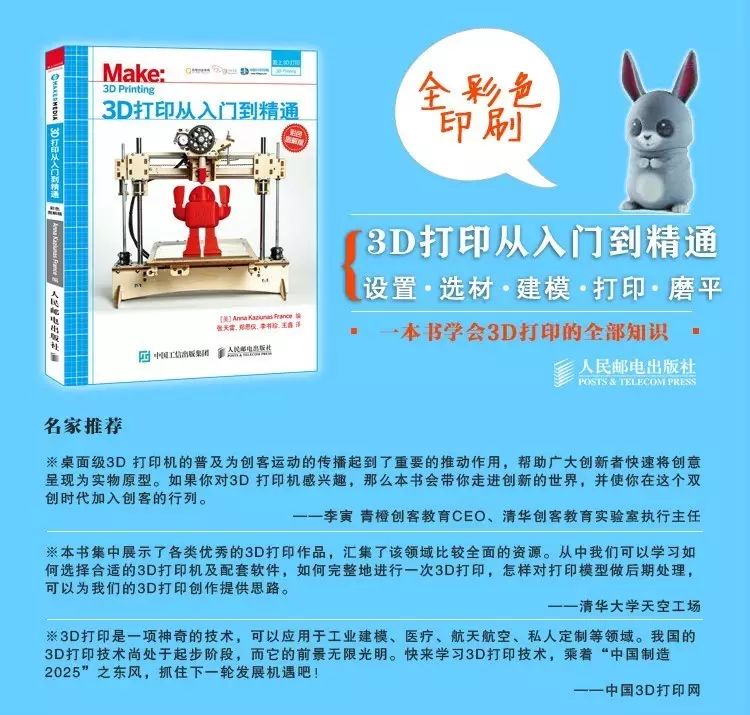
“3D Printing from Beginner to Expert”
If you want to take this book home, just
FollowSteam Camp WeChat public account.
Click on the lower right corner“Write a message”, tell usyour thoughts on 3D printing, and let your friendslike your message.
WeChat reposts to Moments, the friends with the highest number of likes on the messageswill receive this popular science book.(Statistics end one day before the announcement of the list)
Important Notice: Readers who receive the book as a gift in this eventshould post a pictureto Moments, and next time’s book giveaway will haveextra points!
For more content, please follow the Chinese Society of Biomedical Engineering Science Popularization Committee’s self-media: Steam Camp

Steam Camp
Three minutes, gain knowledge!

Long press to identify the QR code to follow
 Click on the original text for more information!