As a long-time player in the digital industry, engaged in DJI leasing and second-hand recycling business, I have always regarded DJI as the “king of aerial technology”: the stability of drones and the portability of stabilizers have truly elevated the technological quality of “Made in China”. This time, however, they have jumped out of their comfort zone and dived headfirst into the 3D printing arena, and what’s even more surprising is that the investment target they chose is not a “fellow insider”!
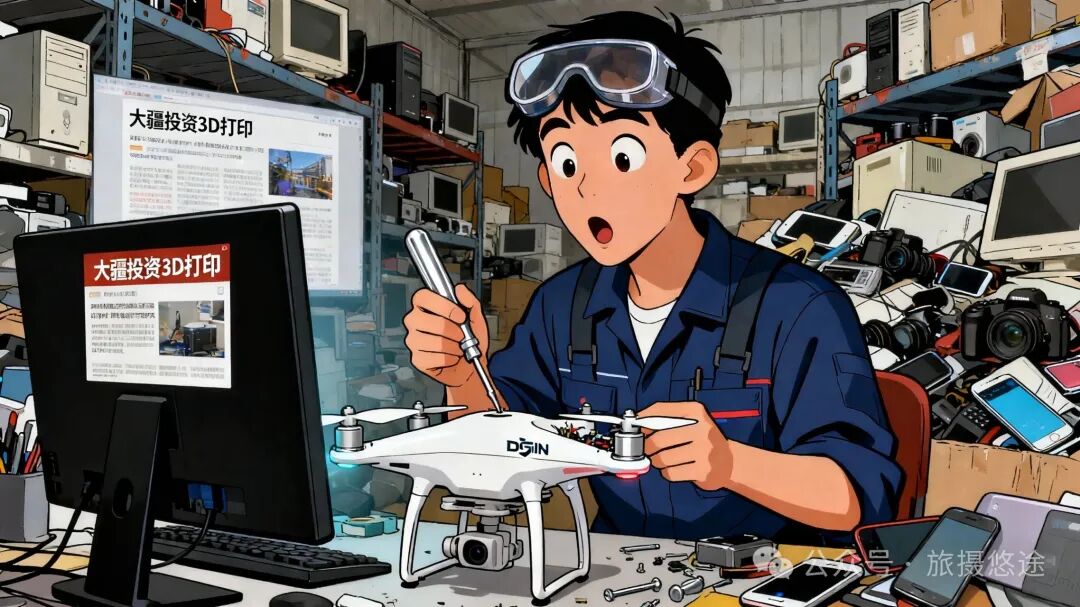
First, let’s clarify this complex “relationship” in the industry: TuoZhu Technology, a leader in the 3D printing sector, can be considered a genuine “direct disciple” of DJI—its founder, Tao Ye, was the head of DJI’s consumer drone division, and he led the development of the wildly popular Mavic Pro. Key members like CTO Gao Xiufeng and COO Liu Huaiyu are all technical backbones who came from critical departments such as algorithms and gimbals at DJI. It’s like the “disciples” have set up their own shop and have achieved a revenue scale of 5.5 to 6 billion yuan in the new track, truly a case of “the student surpassing the master”. On the other hand, the company chosen by DJI, Smart派, has no “blood relationship” with DJI whatsoever: its founder, Hong Yingsheng, a post-90s from Chaoshan, established the company in 2015, initially making a living by exporting STEM education kits, and later transitioned to 3D printing. In 2024, 95% of its projected revenue of 1.6 billion yuan will come from overseas markets, and there isn’t a single former DJI employee in the team. Even more intriguingly, the founder of TuoZhu directly revealed in a social media post that the investment agreement between DJI and Smart派 actually includes restrictive clauses specifically targeting TuoZhu, clearly indicating a sense of “encirclement”. Netizens commented sharply: “This isn’t just an investment in a new track; it’s clearly the old employer fearing that the disciple is too strong and turning to support a competitor to balance things out!” “DJI’s move is even more thrilling than a drone hovering in strong winds!” To be honest, the trillion-yuan market for consumer-grade 3D printing is indeed tempting, but DJI’s actions are truly puzzling: why not invest in the industry leader they have nurtured and who has already established a foothold, but instead choose an “outsider” with no prior connection? Are they really afraid that the “disciple” will develop too quickly and eventually steal their spotlight? Or do they simply want to stir the pot with capital and grab a share of the 3D printing pie? As someone who deals with DJI products daily, I want to complain: can DJI first refine their core business? Customers often complain about insufficient battery life when renting drones, and many report that stabilizers are too heavy and data transmission occasionally lags when recycling second-hand equipment. These practical issues haven’t been thoroughly resolved, so why are they already thinking about making a “big move” in a different field? Are they planning to venture into new energy next, or directly cross into 3D printing digital accessories, forcing us in the leasing and recycling business to relearn our trade?
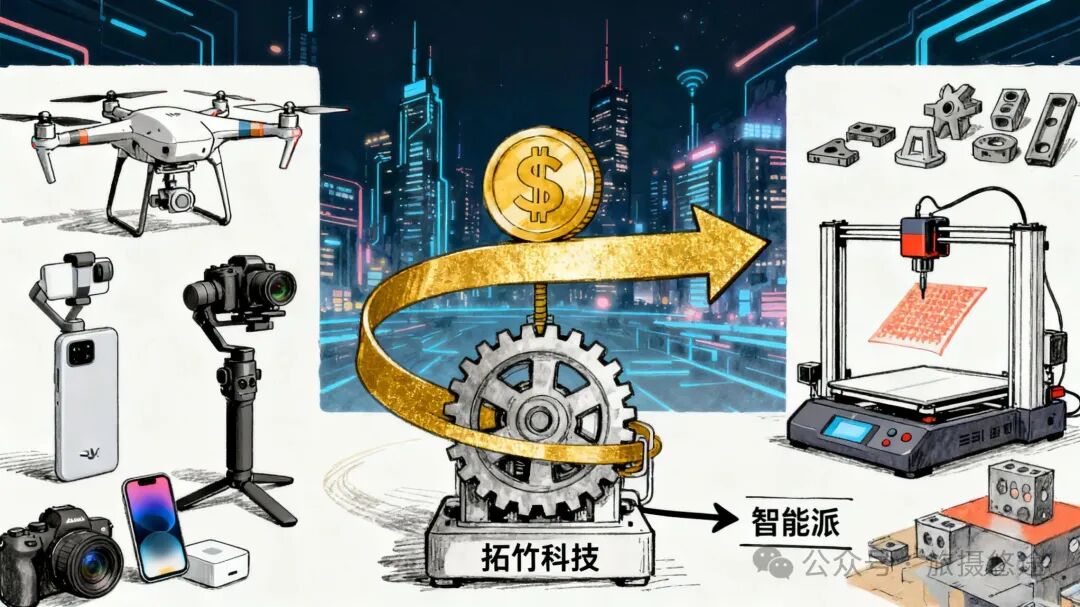
Complaints aside, one cannot help but admire DJI’s boldness—daring to carve out a new battlefield outside of a mature track and engaging in such a complex capital layout is indeed worthy of respect. Perhaps in a couple of years, when the second-hand DJI equipment we recycle breaks down, we won’t have to struggle to find original parts; we could just use Smart派’s 3D printer to accurately print replacements, which would be quite convenient. What do you think about DJI’s operation of “bypassing direct disciples to invest in competitors”? Do you believe TuoZhu will continue to lead the 3D printing sector, or can Smart派 leverage DJI’s support to catch up? Let’s discuss in the comments!