DJI’s investment direction and founder Frank Wang’s social media posts have unexpectedly brought the niche market of consumer-grade 3D printing into the spotlight.
Recently, a post by Frank Wang, the founder of desktop 3D printing unicorn Bambu Lab, has thrust his former employer DJI into the public eye.
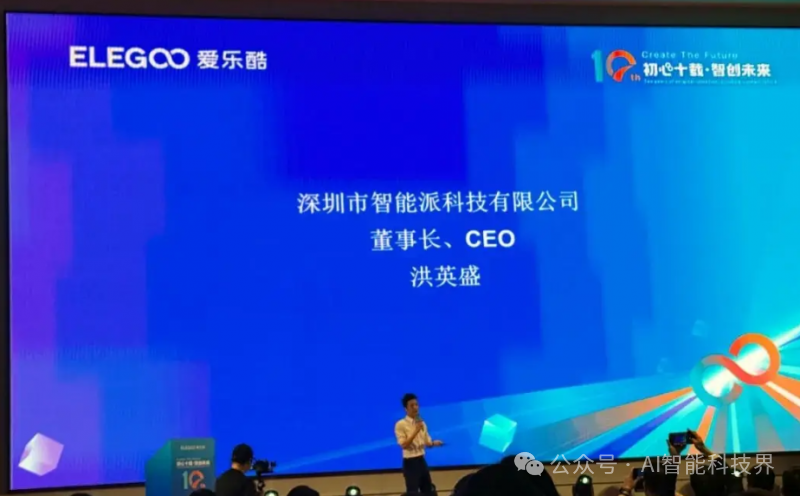
This controversy stems from DJI’s investment in the 3D printing company Elegoo. After DJI officially confirmed the investment, discussions about the landscape of the 3D printing industry have continued to evolve in the venture capital circle.
What is even more intriguing is that many core founding members of Bambu Lab also come from DJI. This raises the question: why would DJI invest in a company that directly competes with its ‘own child’?
01 Industry Explosion: The ‘iPhone Moment’ of 3D Printing Has Arrived
DJI’s foray into 3D printing is not a spur-of-the-moment decision. According to a report by CONTEXT, global shipments of entry-level 3D printers surpassed 1 million units for the first time in the first quarter of this year, setting a historical record. Meanwhile, China’s 3D printer export value is expected to reach $610 million in 2024, a significant year-on-year increase of 77.2%.
The consumer-grade 3D printing market is entering a period of rapid growth. Data from institutions indicate that driven by the dual engines of artificial intelligence and improved printer performance, the consumer-grade 3D printing market is projected to reach $4.1 billion in 2024, with an expected growth to $16.9 billion by 2029, reflecting a compound annual growth rate of 33.0%.
AI technology has become a key variable in promoting the popularization of 3D printing. Guosheng Securities points out that with the in-depth application of generative AI technology in 3D design, the professional threshold for 3D modeling and printing operations has been significantly lowered.
Users can automatically generate and optimize 3D models through simple input methods such as text descriptions or images.
AI is deeply empowering the 3D printing industry, driving it towards three major directions: popularization, intelligence, and autonomy. Li Fangzheng, deputy secretary-general of the China Additive Manufacturing Industry Alliance, stated that several capabilities of artificial intelligence align well with the industrial characteristics of 3D printing, helping the latter become one of the main application scenarios for ‘artificial intelligence + manufacturing.’
02 Competitors: The ‘Internal War’ Pattern of the DJI Ecosystem
In this competition of 3D printing, one undeniable fact is that the leading companies are almost all closely connected to Shenzhen, China.
According to CONTEXT’s Q2 2024 report, in the global entry-level 3D printer market, four Shenzhen manufacturers—Creality, Bambu Lab, Anycubic, and Elegoo—account for over 90% of global shipments.
Bambu Lab, as an industry dark horse, has shown particularly impressive performance. According to Shenzhen Commercial Daily, Bambu Lab achieved revenue of 5.5 to 6 billion yuan in 2024, with a net profit close to 2 billion yuan and a net profit margin exceeding 30%; in the first quarter of 2025, the single-quarter revenue was nearly 2 billion yuan.
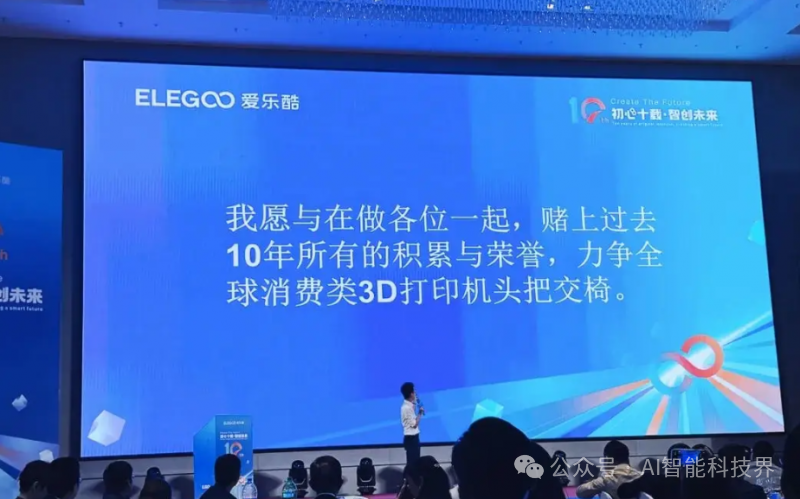
Elegoo, which DJI invested in, was established in 2015 and is one of the early entrants in the domestic consumer-grade 3D printing field. Its business covers the entire industrial chain of smart hardware, focusing on SLA (Stereolithography) and FDM (Fused Deposition Modeling) 3D printing technologies.
It is worth noting that while Bambu Lab and Elegoo are both in the 3D printing arena, their market positioning is different. The Matthew effect is becoming increasingly evident in the consumer-grade 3D printing industry.
From last year’s shipment data, Bambu Lab shipped about 1.2 million units, capturing a market share of 29%; while Creality’s shipment was only 700,000 units, less than 60% of Bambu Lab’s.
03 Talent Wars: The ‘Huangpu Military Academy’ Effect of the DJI Ecosystem
This 3D printing battle also hides a ‘talent war’ within the DJI ecosystem.
Frank Wang, the founder of Bambu Lab, has an 8-year work history at DJI, where he rose from engineer to head of the consumer drone division, leading the development of star products including the Mavic Pro.
Bambu Lab’s CTO, Gao Xiufeng, was previously the head of DJI’s systems engineering department; COO Liu Huaiyu served as the product manager for DJI’s FPV goggles, digital FPV systems, and FPV drones; chief engineer Chen Zihan previously managed DJI’s gimbal department.
Wang analyzes that one reason for DJI’s investment in 3D printing companies is that some candidates may choose Bambu Lab over DJI under equal conditions, which could impact DJI.
The second reason is that the capital market exhibits a FOMO (Fear of Missing Out) sentiment towards ‘DJI ecosystem’ entrepreneurial projects, granting high premiums, leading to a surge of entrepreneurs with DJI backgrounds and driving key personnel to leave, a trend that may be attributed to Bambu Lab.
In the venture capital circle, the consensus has become that ‘hardware looks to DJI.’ DJI is not just a company; it is regarded as the ‘Huangpu Military Academy of hardware entrepreneurship,’ continuously nurturing the talent and methodologies that sustain the entire hardware venture capital ecosystem.
04 Investment Logic: DJI’s Defense and Offense
DJI’s investment in Elegoo is backed by deep strategic considerations.
Investors focusing on the hardware sector analyze that, based on the timing of the investment and the current industry landscape, DJI’s move exhibits a more ‘defensive’ characteristic, ‘more like responding to the competitive pressure brought by Bambu Lab’s rapid expansion, influencing the competitive landscape through investment at a critical juncture.’
As a giant in the consumer drone market, DJI has also been actively expanding into new categories, launching its first panoramic camera, the Osmo 360, and its first robotic vacuum, the DJI ROMO, this year, in an attempt to find new growth points.
Consumer-grade 3D printing, as a rapidly growing emerging sector, naturally falls within DJI’s investment vision.
From the perspective of sector potential, Guojin Securities points out that the production characteristics of 3D printing, which allow for small orders and quick returns, align with the rising consumer demand for personalization, differentiation, and limited editions, continuously raising the industry’s ceiling.
As an industry veteran established in 2015, Elegoo is a cost-effective investment target in the primary market. With Bambu Lab almost not opening up financing and Creality’s IPO in Hong Kong being more suitable for secondary market investment strategies, Elegoo undoubtedly stands out as the best choice.
05 Future Direction: Product Strength as the Ultimate Competitive Barrier
Despite the investment event causing a stir in public opinion, the 3D printing industry ultimately relies on products to speak for themselves.
In the face of competitive pressure, Wang stated that he has been preparing for intense competition for the past five years. He originally expected the industry to enter a highly competitive phase by the end of 2023, which is why he completed a round of financing at the end of 2022, even though funding was not lacking at that time.
If they ultimately fail in the competition, it can only be attributed to their own inadequacies, not to DJI or other competitors.
The 3D printing industry ultimately relies on products, and Bambu Lab remains confident in its product development.
As AI and 3D printing continue to integrate deeply, the competitive landscape of the industry will continue to evolve. Wang Xiaoyan, founder of 3D Science Valley, believes: ‘AI is like placing a nuclear power station in everyone’s hands; whether you can effectively utilize nuclear power will create an essential gap between you and your peers and competitors.’
She predicts: ‘Hardware will become cheaper, all 3D printing equipment will become more competitive, prices will definitely drop, and the only distinguishing factor will be software capabilities.’
In Shenzhen, known as the world’s ‘capital of consumer-grade 3D printing,’ 3D printing companies can achieve an efficient production capacity of ‘assembling a 3D printer every 2 minutes.’
With DJI’s entry, this city, which has already gathered leading companies like Bambu Lab, Creality, Anycubic, and Elegoo, is staging an exciting ‘local derby.’