In underground coal mines, a highly toxic gas is silently spreading, while a group of loyal “electronic sentinels” vigilantly guards the safety of miners 24 hours a day.
During the mining process,hydrogen sulfide (H₂S) is a dangerous gas that is highly toxic, flammable, and has a rotten egg smell, posing a significant threat to mining safety. Statistics show that when the concentration of hydrogen sulfide reaches0.01%, it can irritate the respiratory tract, and when the concentration rises to0.1%,it can lead to death within a short period. Mining hydrogen sulfide sensors are the “frontline sentinels” that monitor this deadly gas, becoming an indispensable key device in mining safety monitoring systems.
Hydrogen Sulfide: The “Invisible Killer” in Mines
The hydrogen sulfide in mines mainly originates fromthe decay of organic matter,the hydrolysis of sulfur-containing minerals, andblasting operations. This gas ishighly toxic,explosive (explosive limits of 4.3%-45.5%), and has a density greater than air, often accumulating in the lower parts of tunnels, posing a serious threat to miners’ health.
The “Coal Mine Safety Regulations” clearly state that the maximum allowable concentration of hydrogen sulfide underground is0.00066% (6.6ppm). This extremely low threshold places high demands on monitoring equipment, and mining hydrogen sulfide sensors are the key devices that meet these requirements.
Core Technology: Electrochemical Principle for Accurate Detection
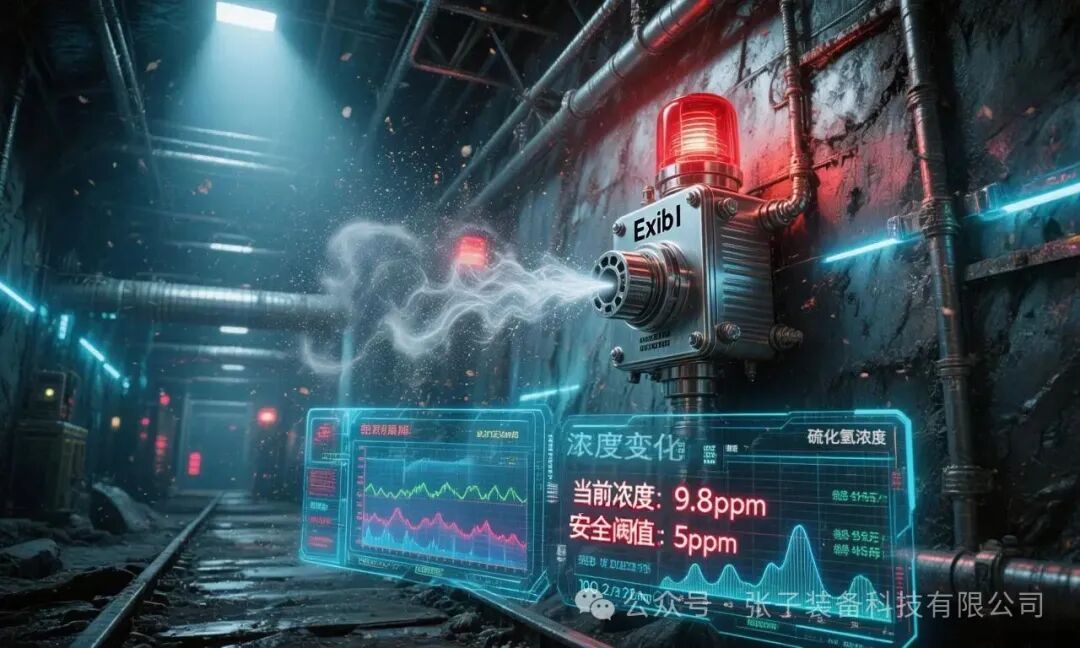
Mining hydrogen sulfide sensors primarily useelectrochemical sensing principles for detection. When hydrogen sulfide gas diffuses through the sensor’s permeable membrane to the working electrode surface, a redox reaction occurs:H₂S + 4H₂O → H₂SO₄ + 8H⁺ + 8e⁻.
The electrons generated from this reaction form a current signal, the strength of which is proportional to the concentration of hydrogen sulfide. The sensor can accurately calculate the gas concentration by measuring this current.
The three-electrode design is key to ensuring measurement accuracy. The sensor contains a working electrode, a counter electrode, and a reference electrode, with the reference electrode providing a stable potential reference to ensure consistent reaction conditions. This design allows the sensor to detectppm-level trace amounts of hydrogen sulfide, with a response time reduced towithin 30 seconds.
For example, the Songbai H4H₂S sensor has sensitivity that even surpasses some foreign brands, maintaining stable operation in extreme environments of high temperature and humidity.
Technical Advantages: Innovative Design Solving Industry Pain Points
1. High Precision Measurement
Modern mining hydrogen sulfide sensors typically have a measurement range of0-100ppm, with a basic error of no more than±3ppm in the range of 0-49ppm, accurately capturing minute concentration changes.
2. Strong Environmental Adaptability
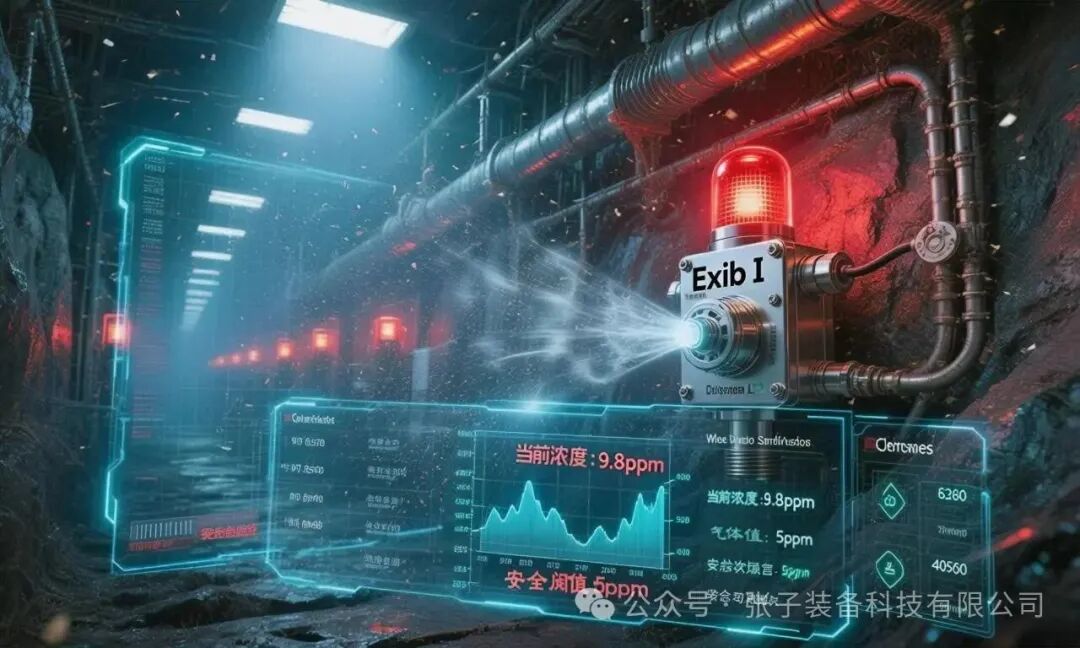
Mining sensors adoptintrinsically safe explosion-proof designs (explosion-proof mark ExibI), with a protection level ofIP54 or higher, capable of withstanding the harsh conditions of high humidity and dust in mines.
3. Intelligent Self-Diagnosis Function
The new sensors are equipped withself-diagnostic capabilities, allowing real-time monitoring of their operational status and proactively alerting when performance declines.Infrared remote calibration functionality enables parameter settings to be completed without opening the cover, greatly enhancing safety and convenience.
4. Long Lifespan Design
High-quality sensors can have a lifespan of up to2 years, significantly reducing maintenance costs. For instance, the Alphasense H2S-A4 sensor can maintain long-term stability even in complex underground environments.
Key Applications in Mining Safety Production
1. Monitoring in Mining WorkfacesIn the areas where coal cutters and tunneling machines operate, sensors monitor changes in hydrogen sulfide concentration in real-time to prevent gas accumulation. Once the concentration exceeds the limit, they immediately issue audible and visual alarms, providing valuable time for personnel evacuation.
2. Blind Tunnels and Goaf Areas
These areas have poor ventilation and are prone to hydrogen sulfide accumulation. Sensors can timely monitor gas overflow situations to prevent accidents. Theircompact size and flexible installation methods allow them to be deployed in various hard-to-monitor corners.
3. Emergency Rescue Support
In the event of a disaster, portable hydrogen sulfide detectors can help rescuers quickly identify hazardous areas, guiding scientific rescue efforts and avoiding secondary casualties caused by blind rescues.
Installation and Maintenance: Ensuring Reliable Sensor Operation
1. Correct Installation
Sensors should be installed in locations withsteady airflow that can represent the average concentration of the monitoring area, ideally 30-50 centimeters from the tunnel floor (due to the density of hydrogen sulfide being greater than air). They should avoid ventilation openings and dead corners to ensure monitoring accuracy.
2. Regular Calibration
Calibration should be performed using standard gas samples every3-6 months to ensure measurement accuracy. During calibration, different concentrations of standard gases such as10ppm and50ppm should be used to comprehensively verify sensor performance.
3. Daily Maintenance
Monthly cleaning of the sensor housing and air holes is necessary to prevent dust blockage. Inhigh humidity environments, the status of the permeable membrane should be checked particularly to ensure its normal operation.
Future Outlook: Towards Intelligent and Multifunctional Development
With technological advancements, mining hydrogen sulfide sensors are moving towardsintelligent and multifunctional directions.Wireless transmission technology applications make sensor deployment more flexible, enabling real-time remote data transmission.
Multi-parameter fusion is becoming an important trend, with the emergence of composite sensors that can simultaneously monitor multiple gases such as hydrogen sulfide, carbon monoxide, and oxygen, providing more comprehensive environmental information for mines.
Predictive maintenance capabilities are continuously improving, allowing systems to predict sensor performance degradation trends through historical data analysis, transitioning from “reactive maintenance” to “predictive maintenance”.
Although small, mining hydrogen sulfide sensors are an indispensable part of the mining safety system. They act as loyal “sentinels”, constantly guarding the safety of miners. As the construction of intelligent mines progresses, these devices will become more precise and reliable, providing a stronger guarantee for safe mining operations.