How do foldable smartphones sense folding force? How do smartwatches capture heart rate pulses? How do diabetic insoles provide early warnings for foot ulcers? The answer lies in flexible thin-film pressure sensors. Unlike traditional rigid sensors, these devices can be integrated into various fields such as daily life, healthcare, and automotive, making them key sensing components in flexible electronics.
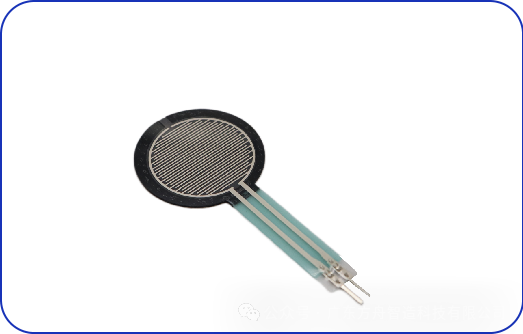
Image of FSR flexible thin-film pressure sensor
What is a flexible thin-film pressure sensor?
A flexible thin-film pressure sensor is a device that converts mechanical pressure, such as pressing and touching, into measurable electrical signals. It endows electronic devices with “flexible pressure sensing capabilities,” addressing the issues of traditional rigid sensors (like piezoelectric ceramics) that cannot bend and have poor adaptability.



Core Technology: Structure and Working Principle
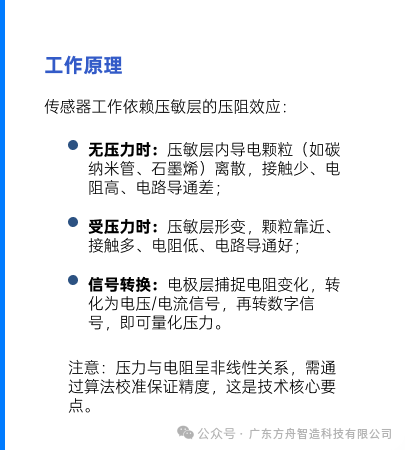
The core structure of a flexible thin-film pressure sensor consists of three layers: a flexible substrate (made of PET, silicone, etc., providing support), a pressure-sensitive layer (the core sensing unit), and an electrode layer (for transmitting electrical signals).
Application Scenarios: Intelligent Transformation from Daily Life to Industry
The core structure of a flexible thin-film pressure sensor consists of three layers: a flexible substrate (made of PET, silicone, etc., providing support), a pressure-sensitive layer (the core sensing unit), and an electrode layer (for transmitting electrical signals).
Consumer Electronics

Foldable Smartphones: Hinge-integrated sensors can measure folding force and identify touch positions; VR/AR Gloves: Built-in sensors simulate virtual touch, enhancing immersion.
Healthcare

Smart Insoles: Real-time monitoring of foot pressure for diabetic patients, with threshold alarms to prevent ulcers; Rehabilitation Gloves: Capture grip strength data to assist doctors in adjusting rehabilitation plans; Minimally Invasive Surgical Instruments: Integrated sensors perceive operational force to avoid tissue damage.
Automotive Sector

Smart Seats: Detect passenger seating status and automatically adjust airbags; Touch Buttons on Steering Wheel: Operate with a light touch, enhancing driving convenience; Future Autonomous Driving: Assist collision detection systems.
Industrial and Home Applications

Industrial Robots: “Flexible grippers” can gently grasp eggs and precision parts; Smart Mattresses: Monitor turning frequency and breathing rate; Smart Curtains: Sense pulling force to prevent jamming.
Conclusion: From Rigid to Flexible, an Upgrade in Perception of the World
From traditional rigid sensors to flexible thin-film pressure sensors that can conform to the skin and withstand deformation, the development represents an upgrade in how humans perceive the world. This technology is driving us into a more intelligent and interconnected world.
In the future, flexible thin-film pressure sensors are expected to be made into 20-micron thick “invisible films” that can adhere to the skin for real-time health monitoring; they may also construct a global sensing network with over 10 billion nodes, promoting smart cities, industries, and healthcare. This cutting-edge technology is quietly changing our lives and is worth looking forward to!
This article is organized and published by a popular science public account | Please indicate the source when reprinting

Click below to follow us for more cutting-edge technology news