From “invisible sensors” to “visible efficiency improvements,” smart HVAC technology is driving the HVAC industry from traditional models to digital and intelligent systems…
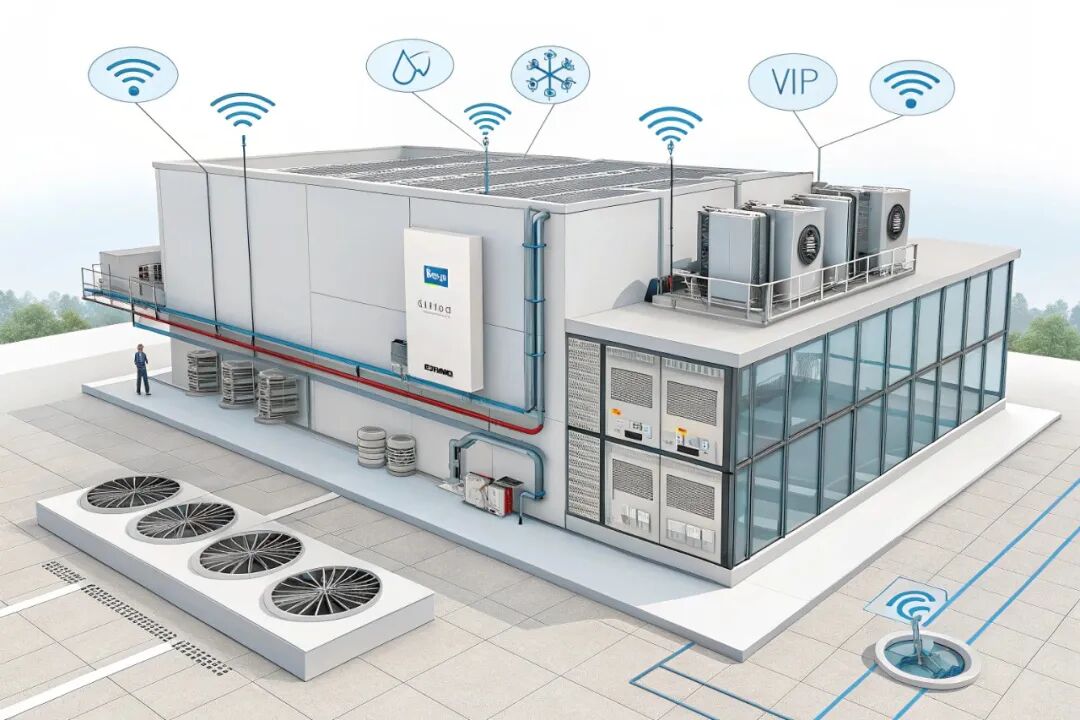
In recent years, “smart buildings” and “smart homes” have gradually become high-frequency terms in both public and industry discussions. When many consumers think of “smart homes,” they first think of voice-controlled lighting, smart speakers, touch screens, and smart thermostats. However, the core devices that truly support the intelligent operation of buildings are often not conspicuous; they are hidden within walls, ducts, and units as sensor systems.
These sensors are reshaping the installation, operation, and service models of HVAC systems, providing contractors and operation teams with unprecedented efficiency tools. From adaptive commissioning during installation to real-time remote monitoring during operation, and enhancing user experience, sensors and data platforms are becoming the “nervous system” of HVAC systems.
At the same time, with the surge in data volume, user privacy and information security have also become essential questions in the development of intelligence. Today, we will observe the development trends and challenges of smart HVAC in the Chinese market from multiple perspectives, including sensor capabilities, remote operation platforms, privacy protection, and contractor value.
1. Sensors: From Passive Detection to Active Diagnosis
In traditional models, HVAC equipment failures often rely on user perception, such as “insufficient airflow,” “inadequate cooling,” or “abnormal noise.” Technicians would then arrive on-site and gradually troubleshoot using tools. This process is time-consuming and labor-intensive, often requiring multiple visits.
Now, with the development of smart sensing technology, equipment is integrated with various sensors at the factory, capable of real-time monitoring of temperature, humidity, air pressure, load, refrigerant parameters, and even indoor air quality (IAQ). After these data are aggregated through IoT gateways, they can not only present a comprehensive view of system operation in the background but also utilize edge computing for preliminary diagnosis, identifying potential fault risks.
For example:
-
Installation Phase: Sensors can monitor refrigerant charging, air pressure, and operating curves in real-time, automatically calibrating parameters to reduce energy efficiency losses caused by installation errors.
-
Operation Phase: If issues such as duct blockage, filter dust accumulation, or refrigerant leakage occur, the system can issue early warnings through abnormal pressure or temperature fluctuations.
-
Maintenance Phase: By comparing data, technicians can remotely pinpoint problem areas, significantly reducing diagnosis time.
This means that the past reliance on experience for “manual diagnosis” is gradually being replaced by data-driven “smart diagnosis.”
2. Remote Operation Platforms: Reorganizing Data Value
The value of a single sensor’s data is limited, but when signals from dozens of sensors are integrated into a professional platform, the true value of information can be released. Currently, the common approach in the industry is to build dedicated portals and mobile applications for contractors or operation teams, transforming complex operational parameters into intuitive charts and alert information. For example:
-
Real-time Monitoring: The system’s operational status is clear at a glance, including key indicators such as compressor speed, indoor and outdoor heat exchanger temperatures, and static pressure changes.
-
Fault Codes and Alerts: The platform can automatically aggregate the device’s self-diagnostic codes and prioritize them based on sensor data, helping the operation team assess urgency.
-
Trend Analysis: Historical curves can identify long-term energy efficiency risks, such as abnormally long operating cycles or temperature fluctuations.
-
Proactive Maintenance: Based on operating hours, load changes, and other conditions, the platform can recommend maintenance on demand rather than relying solely on fixed maintenance cycles, thus improving operational efficiency.
This platform-based management model shifts the service logic of HVAC from “reactive repairs” to “proactive prevention,” reducing user complaints caused by unexpected failures and creating new value-added opportunities for contractors.
3. Privacy and Security: An Essential Question in Intelligent Development
As data becomes a new type of “energy,” user concerns about privacy and security are increasing. For systems like HVAC that penetrate into home and office environments, the scope and duration of data collection are extensive, and if not managed properly, it can easily lead to user skepticism.
Currently, common security measures in the industry include:
-
Data Encryption and Authentication: Data transmission between sensors and gateways uses encrypted channels and identity authentication to prevent unauthorized access.
-
Access Control: Only authorized service providers and operation personnel can access device data, and users can adjust the data sharing scope at any time.
-
Data Minimization Principle: The system only collects parameters related to operation, without involving residents’ behavioral preferences or personal information.
-
Compliance Standards: An increasing number of manufacturers are referencing international cybersecurity standards to conduct full-process reviews of software development and vulnerability management.
For the Chinese market, with the implementation of the “Data Security Law” and the “Personal Information Protection Law,” HVAC manufacturers and contractors need to be more cautious regarding data compliance. In terms of user education, proactive communication is also necessary to clarify that sensor data is only used for optimizing equipment operation and preventive maintenance to avoid misunderstandings.
4. Enhancing Contractor Value
For HVAC contractors, smart sensing and remote operation are not just “add-ons” but are becoming indispensable tools in competition.
Their value is primarily reflected in the following aspects:
-
Reducing Service Calls: Remote diagnostics can determine the type of problem before arriving on-site, avoiding unnecessary visits and lowering operational costs.
-
Shortening Installation and Commissioning Time: Automated calibration and adaptive configuration reduce manual adjustments, improving the success rate of first-time installations.
-
Improving Repair Accuracy: By pinpointing issues through data, technicians can bring the necessary tools and parts, solving problems in one visit and reducing rework.
-
Achieving Differentiated Services: Contractors can offer annual maintenance packages or energy efficiency optimization consultations based on remote monitoring platforms, creating ongoing revenue.
-
Enhancing User Trust: Transparent data reports and proactive services can help users genuinely feel the improvements in energy efficiency and comfort, increasing brand loyalty.
5. Market Opportunities and Challenges
In China, the promotion of smart buildings and the “dual carbon” policy provides a fertile ground for the development of smart HVAC systems. Especially in large public buildings, green residential communities, and emerging industrial parks, the demand for energy-saving and intelligent management is rapidly growing.
Opportunities:
-
The national policy’s stringent requirements for building energy efficiency will accelerate the adoption of sensors and remote operations.
-
Consumers’ increasing focus on air quality and living comfort provides market space for IAQ sensors and smart temperature control.
-
The integration of cloud computing and local edge computing provides technical support for data analysis and predictive maintenance.
Challenges:
-
High initial investment costs may deter some small contractors who lack financial and technical reserves.
-
Industry standards are not yet fully unified, leading to barriers in interoperability between different systems.
-
Increased user privacy and data compliance requirements necessitate that industry participants possess more robust security management capabilities.
Conclusion
From “invisible sensors” to “visible efficiency improvements,” smart HVAC technology is driving the HVAC industry from traditional models to digital and intelligent systems. For contractors, this represents both a technical challenge and an opportunity for service upgrades.
In the coming years, as sensor costs continue to decline, operation platform functionalities become more refined, and data privacy protection mechanisms are continuously strengthened, smart HVAC is expected to achieve large-scale adoption in the Chinese market.
For contractors, seizing this trend not only means reducing operational costs and improving customer satisfaction but also winning long-term trust and market share in a competitive landscape.
-Recommended Reading-

-Summit Preview-