|
|
Route One Workshop Work Summary |
|
Work Name: |
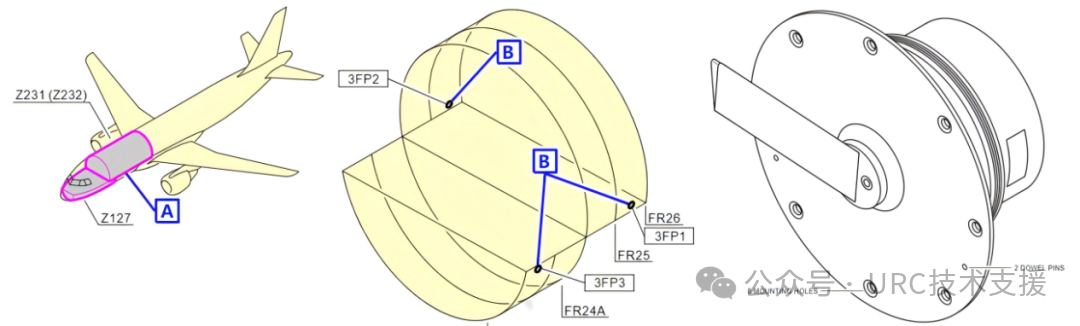
A320 Angle of Attack Sensor Replacement (AOA) (3FP1/3FP2/3FP3) |
|
Special Qualifications (Mutual Inspection/Mandatory Inspection/Test Flight/Metalworking/Other Special Qualifications): |
Mutual Inspection |
|
1. Failure Phenomenon: AOA travel card stuck/NAV AOA DISAGREE/NAV AOA FAULT. |
|
|
2. Reference Materials: TSM: 34-11-00-810-861, 22-66-00-810-899-A, 22-66-00-810-898-A, 22-66-00-810-901-A AMM: 34-11-19-04, 34-11-19-200-001-A, 20-28-00-912-803, 20-28-00-912-802, 30-31-00-710-001, 34-13-00-740-003 AIPC: 34-11-02-01A, 34-11-01-13A
|
|
|
3. Tools: Wrench, magnetic handle, plastic scraper, small hook, utility knife, rubber gloves, plug pliers, 6 jump switch clips, headlamp.
|
|
|
4. Chemicals: 1. Non-Aqueous Cleaner-General: 08BAA9 2. Polysulfide Sealant-General Purpose Fillet: 06AAB1 3. Polysulfide Sealant-Fuel Tank Quick Curing: 06ABF1 (Fast Dry) 4. Varnish– Electrical Bonding Structure: 04TMB2
|
|
|
5. Materials: 1. AOA1/AOA2 (3FP1 3FP2): C16291AB; AOA3 (3FP3): 0861ED 2. SEAL: A9232075320000 (as needed) 3. SCREW: NAS1153E10 (as needed) 4. SCREW: NAS1153E8 (as needed)
|
|
|
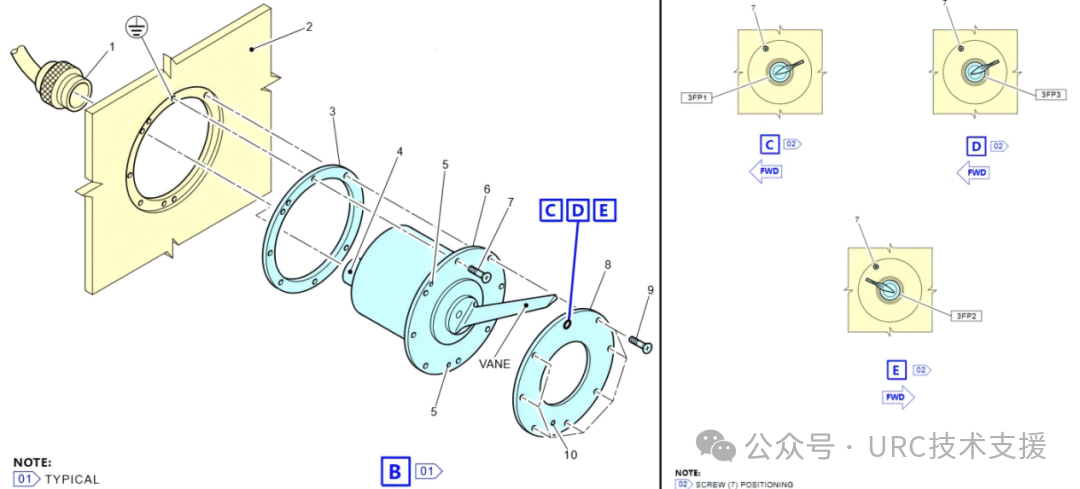
6. System/Component Principles: 1. Overview: The aircraft is equipped with three angle of attack sensors. Two are located on the left side of the fuselage, and one is on the right side. Each angle of attack sensor is connected to each ADR part of the ADIRU. The angle of attack sensors are vane-type. Their sensing element is a small wing located in the airflow direction. The small wing is mechanically connected to a freely rotating shaft, which drives the device that transmits the local angle of attack signal. These transmission devices consist of rotary transformers that convert angle information into proportional electrical signals (sine and cosine of the angle). The rotary transformers are powered by 26 volts AC. The same signals are also received by the ADIRU as a reference for decoding the angle of attack value. Each sensor has three rotary transformer outputs, but only two are connected to the ADIRU. The entire mechanism is stabilized around the rotating axis. Additionally, a damping device provides satisfactory dynamic response. Self-regulating heating elements (PTC resistors: positive temperature coefficient) in the inserted blades can eliminate or prevent icing. They are powered by PHC at 115 volts AC.
|
|
|
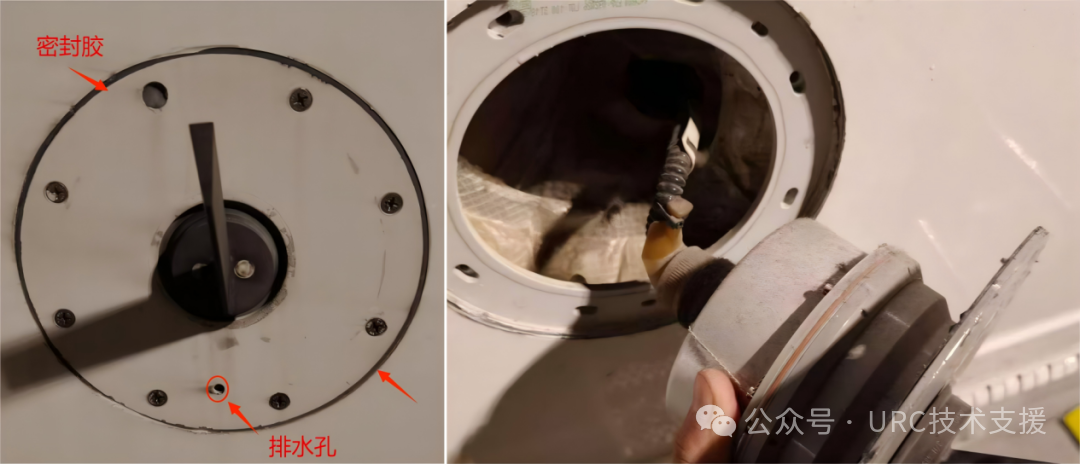
7. Key Steps: 1. Before removing the fixed bolts, use a small hook or utility knife to remove the sealant from the gap between the blanking plate and the fuselage surface. Care must be taken not to scratch the paint layer on the fuselage surface. 2. After removing the fixed bolts of the AOA according to the manual, if the sensor cannot be removed due to internal sealing and tight adhesion to the fuselage structure, do not attempt to pry the sensor’s small blade with your hands. Instead, use a plastic scraper to pry the sensor along the gap between the sensor and the fuselage.
3. After removing the electrical plug, you can temporarily secure it to the fuselage with masking tape to prevent it from falling into the internal cavity due to cable stress. 4. After removing the sensor, check if the sealing is damaged or broken. If damaged, replace it with a new part. If not, according to the manual’s standards, the old part can continue to be used for 8 flight cycles. 5. When installing the blanking plate, pay attention to whether the manual specifies different construction steps for drainage holes. After installation, check if the drainage holes are blocked. 6. When sealing, the choice of sealant part number should be based on actual conditions, judging the curing time according to the weather temperature. Fast-drying sealants generally cure in 2 hours, while regular ones take about 4 hours or more. If objective factors prevent sealing, the manual also states that the aircraft can continue to operate, but for no more than 48 hours. Therefore, if sealing cannot be done, a retention procedure must be followed to control the time interval after installation. 7. When sealing, pay attention to personal protection by wearing rubber gloves, goggles, and masks. The sealant has a pungent odor that can harm the respiratory tract if inhaled.
|
|
|
Risk Assessment |
Mitigation Measures |
|
1. There is a risk of tools falling during ladder operations. 2. Incorrect disassembly and removal sequence of jump switches may cause abnormal heating of the probe and damage to components. 3. The work involves critical atmospheric data areas.
|
|
|
1. Use a small tool box to avoid dropping and losing small parts. Return tools to the toolbox promptly after use to prevent accidents. 2. Strictly follow the manual’s sequence for removing jump switches, and do not skip steps. 3. Disassembly and testing must be strictly executed with mutual inspection by two people, with different personnel for each task, and proper manual signing.
|
|
|
Written by: Yang Shunchang |
Reviewed by: Yuan Shengcai |

Note: This document is subject to continuous updates. Contributions are welcome.
Note: This log is for internal communication and learning at HNA Technology Xinjiang Base and is not to be used as a work reference.