Recently, Tesla CEO Elon Musk stated on the X platform that the design of the Tesla AI5 chip is nearing the final tape-out stage, with mass production expected to begin in mid-2027. At the same time, Tesla has also initiated the development of the next-generation AI6 chip.
He set an ambitious goal of releasing a new AI chip every 12 months and advancing mass production at a steady pace. Musk even claimed that the number of AI chips produced by Tesla in the future will exceed the total of all other AI chip manufacturers combined.
Musk emphasized that Tesla has had its own top-notch AI chip and motherboard design team for many years, which has completed the design of millions of AI chips deployed in vehicles and data centers. He believes that these in-house chip capabilities have allowed Tesla to maintain a leading position in the real-world AI field.
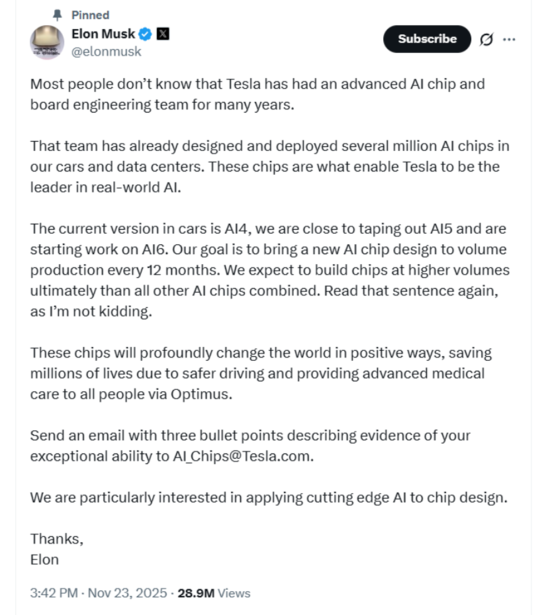
Image source: Screenshot from Musk’s X account
The nearing tape-out of AI5 indicates that the design is essentially finalized, marking the last step before formal production. According to Musk’s previous statements, AI5’s speed on certain tasks can be up to 40 times faster than AI4.
This chip utilizes TSMC’s 3nm process, targeting a computing power of 2000 to 2500 TOPS, which is about five times that of the current HW4. With a focus on low power consumption design, AI5 will primarily serve the Optimus humanoid robot, enabling it to operate more efficiently in complex environments. On the data center side, AI5 will support Tesla’s FSD training and inference, forming a complete training ecosystem with Dojo.
AI5 has a very clear positioning, taking on the core computing power tasks for Tesla’s next phase of autonomous driving, further enhancing energy efficiency, neural network processing, and data throughput, while continuing to reduce model inference and decision-making latency, allowing vehicles to make faster judgments in complex traffic scenarios.
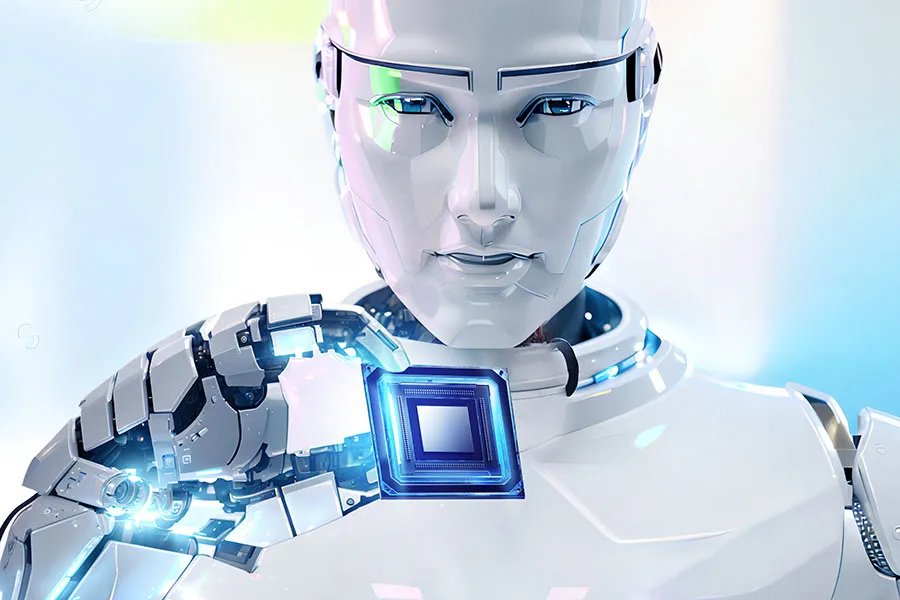
Image source: Tesla
Meanwhile, Tesla has begun developing AI6, which is planned to be manufactured by Samsung. The design focus of AI6 is expected to further revolve around energy efficiency, parallel processing capabilities, and thermal optimization. Musk revealed that AI6’s performance will be twice that of AI5.
However, rapid iteration also brings real challenges. Such frequent hardware upgrades inevitably raise concerns among existing vehicle owners about their vehicles becoming outdated too quickly.
As early as 2016, Tesla claimed that all subsequent vehicles would be equipped with the hardware necessary for future autonomous driving, but in 2023, Musk stated in a financial report meeting that due to high retrofit costs, Tesla would no longer provide upgrade services for older chips. This has caused dissatisfaction among many early owners.
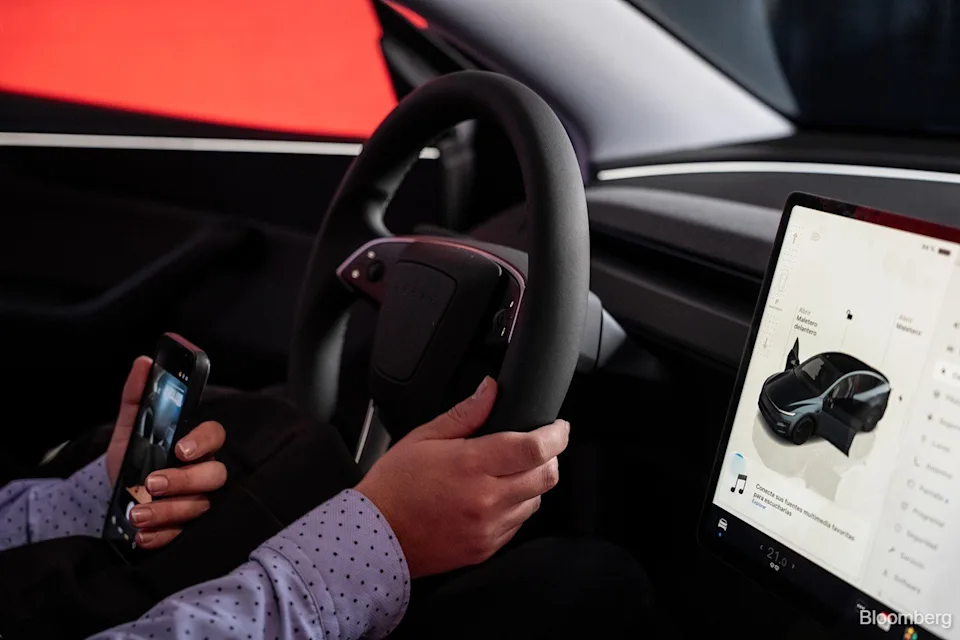
Image source: Bloomberg
However, for potential car buyers, Tesla’s chip iteration means that vehicles will remain competitive through OTA updates and hardware iterations in the coming years.
Chips are just one part of the equation, but they are becoming an important support point for the stable expansion of the intelligent driving system.
Source of news data: Musk’s X account, Bloomberg, Reuters

*The content of this article is for sharing and discussion only and does not represent our endorsement or agreement. Some images and text materials are sourced from the internet,If there is any infringement, pleasecontact us for deletion.!
End
__
Selected Articles
_
-
The first domestically produced DDR5 chip officially released!
-
Breaking news, semiconductor equipment giant denies supply cut!
-
Just now, the Netherlands returns control to Anshi!
-
Founded only three years ago, this company claims its new lithography machine rivals ASML’s EUV.

Read the original articleRegister to enjoy an 8 yuan shipping coupon
“Looking”、“Like”